 ワークシート
 ぬりえ
 迷路
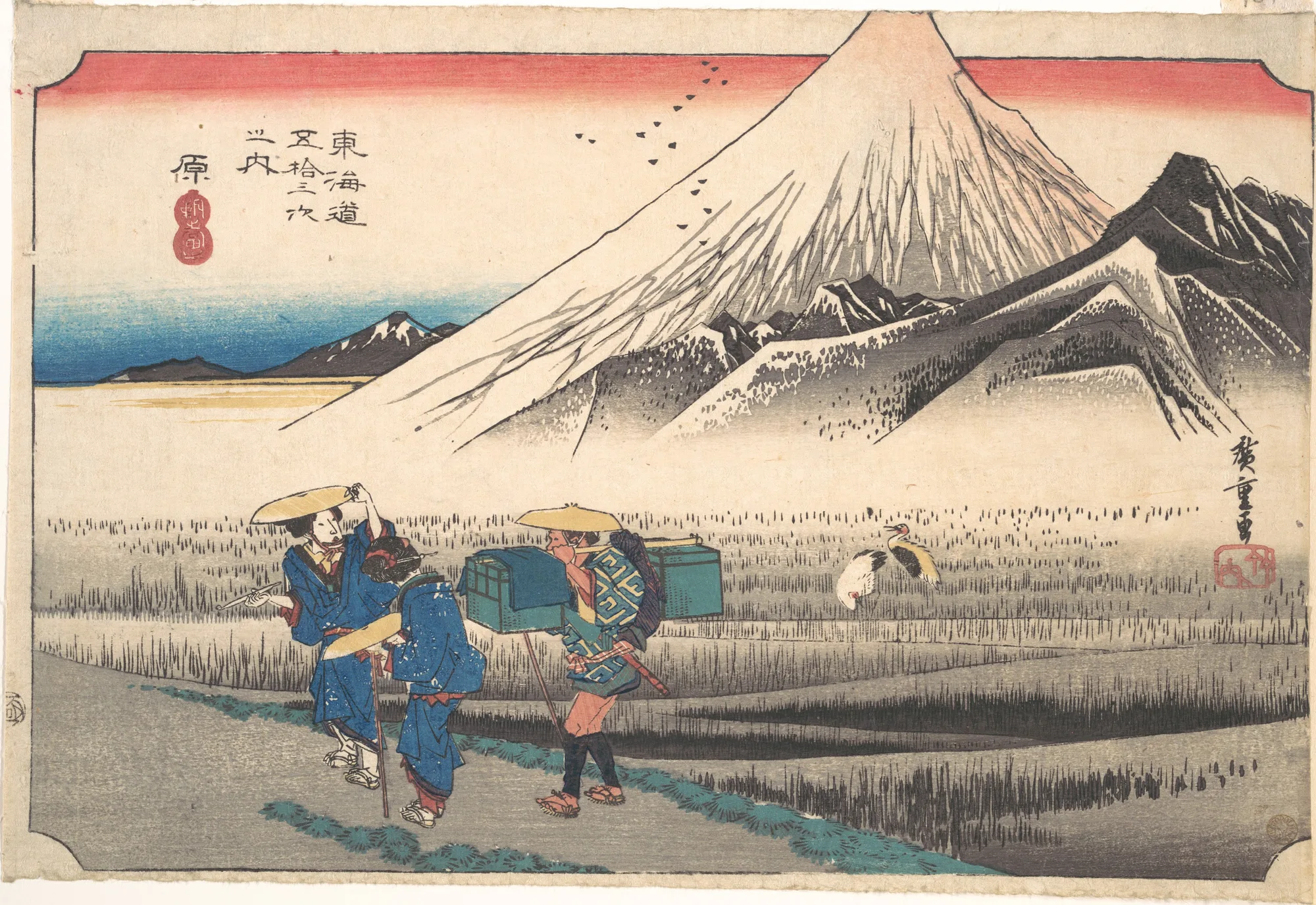
富士山が大きすぎて、枠をつきやぶった!朝日に染まる名場面。Mount Fuji is so tall it breaks through the frame! A rosy morning view.
 美術館アンテナ:歌川広重の作品に会える展覧会
この作品のお話
Story朝日にほんのり染まった富士山が、画面いっぱいにそびえています。手前の田んぼのあぜ道を、二人の女性とお供の男が歩き、田んぼには二羽のツル。歌川広重の「東海道五十三次」(保永堂版)の一枚で、江戸から13番目の宿場・原(今の静岡県沼津市)を描いています。画像の摺りはメトロポリタン美術館の所蔵です。
Mount Fuji, softly pink in the morning sun, fills the picture. In front, two women and a male servant walk along a path between rice fields, and two cranes stand in the field. This is from Utagawa Hiroshige's Fifty-three Stations of the Tōkaidō (Hōeidō edition). It shows Hara, the 13th post town from Edo. This impression is in the Metropolitan Museum of Art.
原は、富士山がとてもよく見える宿場として知られていました。広重は富士の高さを強調するため、山頂を画面の枠の外までつき出して描きました。右のごつごつした山は愛鷹山(あしたかやま)で、なめらかな富士とくらべるように置かれています。旅の女性たちは足を止め、思わず富士を見上げているようです。
Hara was known as a post town with a wonderful view of Mount Fuji. To show how tall Fuji is, Hiroshige let the top of the mountain break out of the picture frame. The rough mountain on the right is Mount Ashitaka, placed there to contrast with Fuji's smooth slopes. The women seem to stop and look up at Fuji in surprise.
枠を破る大胆なアイデアは、見る人に「絵に入りきらないほど大きい」と感じさせる名案でした。原のあたりには浮島ヶ原(うきしまがはら)という広い湿地があり、ツルなどの鳥が見られたといいます。浮世絵は同じ版木から何枚も摺られたので、この図柄も世界中の美術館にあります。
Breaking the frame was a clever idea. It makes viewers feel that Fuji is too big to fit in the picture. Around Hara there was a wide marsh called Ukishimagahara, where cranes and other birds could be seen. Many prints were made from the same blocks, so this design is in museums all over the world.
これは朝の富士山です。二人の女性が立ち止まって山を見ています。田んぼには二羽のツルがいます。山のてっぺんを見てください。絵の外に飛び出しています!
This is Mount Fuji in the morning. Two women stop and look at it. Two cranes are in the field. Look at the top of the mountain. It goes out of the picture!
英語のレベルは上の「やさしい/ふつう」で切りかえられます。
えっ!?な裏ネタ
Secrets画面の上には赤い帯のふちどりがありますが、富士山の頂上だけはその外まで飛び出しています。ルールを破って枠をこえることで、山の大きさを感じさせる工夫です。一度気づくと、目がはなせなくなります。
There is a red border at the top of the picture, but Fuji's peak pokes out beyond it. By breaking the rule of the frame, Hiroshige makes us feel the mountain's size. Once you notice it, you cannot stop looking.
原には、江戸時代の名僧・白隠(はくいん)がいました。「駿河には過ぎたるものが二つあり 富士のお山に原の白隠」とうたわれたほどです。白隠はユーモアのある禅画でも有名で、その絵は今も人気があります。
Hara was home to Hakuin, a famous Zen monk of the Edo period. People said that Suruga had two treasures too great for it: Mount Fuji and Hakuin of Hara. Hakuin is also famous for his funny Zen paintings, which are still popular today.
右のごつごつした愛鷹山は、今の富士山よりも古い火山です。長いあいだ雨や風にけずられて、とがった形になりました。若くてなめらかな富士と、年上でごつごつした愛鷹山。広重は二つを並べて対比させています。
Mount Ashitaka, the rough mountain on the right, is a volcano older than today's Mount Fuji. Rain and wind wore it into a sharp shape over a long time. Hiroshige placed the young, smooth Fuji next to the older, rugged Ashitaka.
今では、ツルがたくさん集まる場所は北海道や鹿児島県出水市などにかぎられていますが、江戸時代には本州の田んぼや湿地にもやってきたと言われます。原の湿地にいるツルの姿は、当時の旅人にとっても見なれた冬の景色だったのかもしれません。
Today, large gatherings of cranes are found only in limited areas, such as Hokkaido and Izumi in Kagoshima. But in the Edo period, they are said to have visited rice fields and marshes on the main island too. For travelers then, cranes at Hara may have been a familiar winter sight.
ここを見て!
Look Closer1枠を破る山頂Peak beyond the frame
富士山の頂上が、上の赤いふちどりの外へつき出しています。
The top of Fuji pokes out above the red border.
2二羽のツルTwo cranes
田んぼにおり立ったツル。一羽はえさをつつき、一羽は羽を広げています。
Two cranes in the field. One pecks for food, and one spreads its wings.
3富士を見上げる女性たちWomen looking up at Fuji
笠に手をやって富士を見上げる旅の女性。足を止めた一瞬をとらえています。
A woman holds her hat and looks up at Fuji. Hiroshige caught the moment she stopped walking.
4愛鷹山Mount Ashitaka
ごつごつと黒っぽい愛鷹山。なめらかな富士と対照的です。
The dark, rugged Mount Ashitaka. It contrasts with the smooth slopes of Fuji.
英語で名画を語ろう
Talk about Art in EnglishThe top of Mount Fuji sticks out of the frame.
富士山の頂上が枠からはみ出しています。
💡 枠や箱から一部が「出っぱる」ときに使います。舌を出すのは stick out one's tongue。
英語で説明すると… Describe it
これは朝の富士山の景色です。手前では、二人の女性と一人の男性が道を歩いています。そのうしろには田んぼと二羽のツルがいます。富士山はとても大きく、頂上が枠から出ています。
This is a morning view of Mount Fuji. In the foreground, two women and a man are walking on a path. Behind them, there are rice fields and two cranes. Mount Fuji is so big that its top goes out of the frame.
考えてみよう Think & Talk
- 絵の枠を破って描くのは、よいアイデアだと思いますか?それはなぜ?Is it a good idea to break the frame of a picture? Why or why not?
- この女性たちに一つ質問できるとしたら、何を聞きますか?If you could ask the women one question, what would you ask?
この作品の英単語
WordsThe top of the mountain goes outside the frame.
山の頂上が枠の外に出ています。
Two cranes are standing in the rice field.
二羽のツルが田んぼに立っています。
The mountain on the right looks rugged.
右の山はごつごつしています。
Hiroshige emphasizes the height of Fuji.
広重は富士の高さを強調しています。
ミニクイズ
QuizQ. この絵の富士山の、いちばんびっくりするところは?What is most surprising about Mount Fuji in this print?
富士の高さを強調するため、山頂を枠の外までつき出して描いています。
Hiroshige let the peak break the frame to show how tall Fuji is.
ウソ?ホント? 絵の中には二羽のツルが描かれている。There are two cranes in this picture.
田んぼの中に、二羽のツルがいます。
Yes, two cranes stand in the rice field.
ウソ?ホント? 右のごつごつした山は、富士山よりも新しい火山だ。The rough mountain on the right is a younger volcano than Fuji.
愛鷹山は、今の富士山より古い火山です。
Mount Ashitaka is older than today's Mount Fuji.
 画像の出典とライセンス / Image credit
- CC0東海道五十三次之内 原 朝の富士-Hara; Asa no Fuji MET DP122187.jpg(Wikimedia Commons)
ライセンス:CC0(パブリックドメイン提供)/作者・撮影者の表記:Utagawa Hiroshige
この作品は、作者の死後長い年月がたち著作権の保護期間が終わった「パブリックドメイン」の作品です。画像は平面の作品を忠実に写したもので、新しい著作権は生じません(Wikimedia Commons の PD-Art の考え方)。 所蔵:メトロポリタン美術館(画像の摺り)(The Metropolitan Museum of Art (this impression))。画像は表示のために縮小・WebP 形式に変換しています。
歌川広重のほかの作品