 ワークシート
 ぬりえ
 迷路
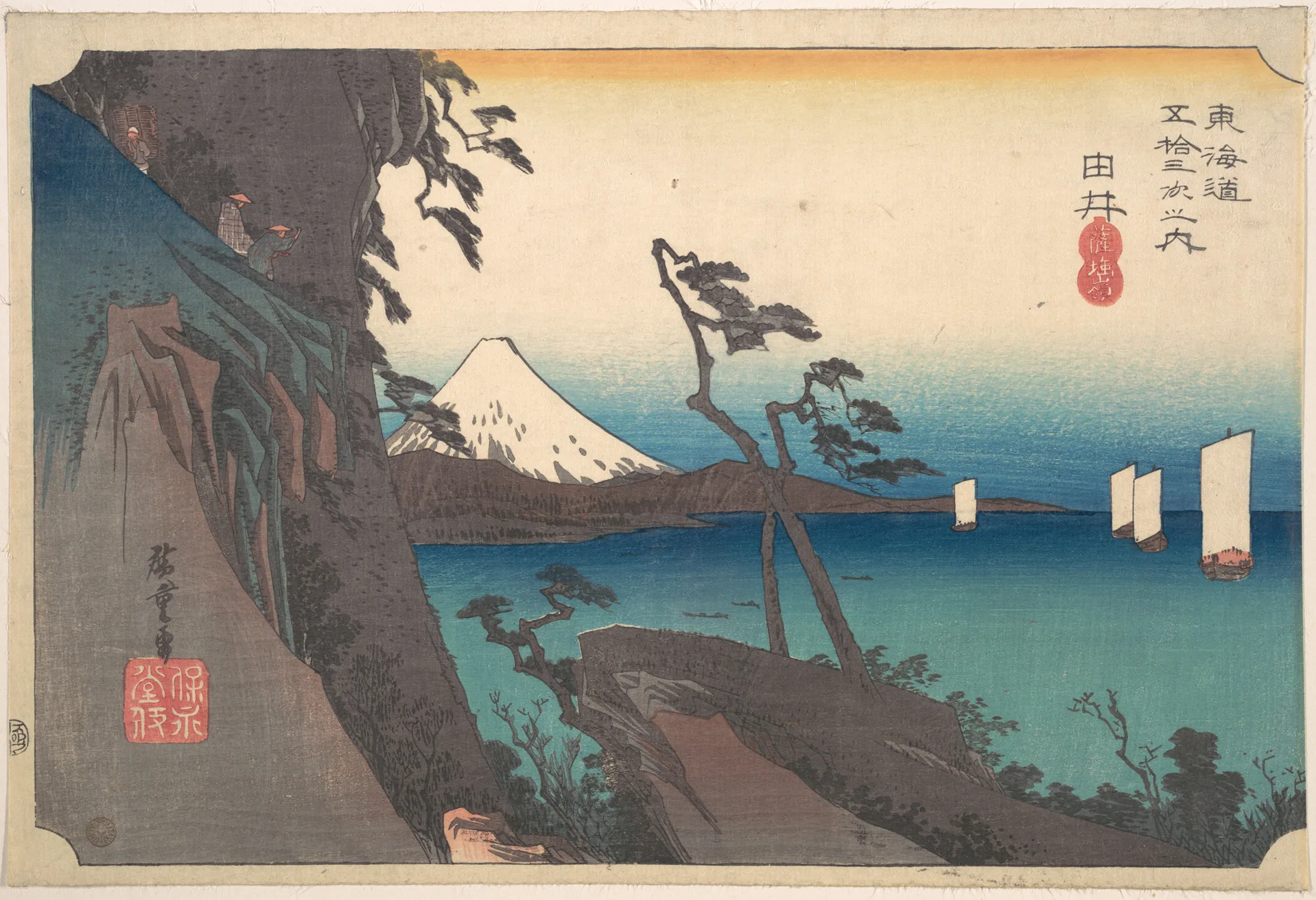
がけっぷちから、こわごわのぞく旅人!海の向こうに白い富士。Travelers peek nervously over a cliff! White Fuji shines across the sea.
 美術館アンテナ:歌川広重の作品に会える展覧会
この作品のお話
Story左にそそり立つ断崖、右には青い駿河湾と白い帆の船、そして海の向こうに雪をかぶった富士山。左上のがけの道では、旅人たちが岩につかまりながら下をのぞきこんでいます。歌川広重の「東海道五十三次」(保永堂版)の一枚で、由井(今の静岡市清水区由比)と興津のあいだにある薩埵峠(さったとうげ)を描いています。
A steep cliff rises on the left. On the right are blue Suruga Bay, ships with white sails, and snowy Mount Fuji across the water. On the cliff path at the top left, travelers hold onto the rocks and peek down. This is from Utagawa Hiroshige's Fifty-three Stations of the Tōkaidō (Hōeidō edition). It shows Satta Pass, between Yui and Okitsu.
由井は江戸から16番目の宿場です。薩埵峠は、山が海までせまる難所で、昔は波打ちぎわの道を、波が引くすきに走りぬけていました。広重は、画面の左半分をがけで大きく占め、右半分に広い海と富士を置きました。高いところから見下ろす目線で、こわさと絶景の両方を味わわせてくれます。
Yui was the 16th post town from Edo. At Satta Pass, the mountains come right down to the sea. In the past, travelers ran along the beach between the waves. Hiroshige filled the left half with the cliff and put the wide sea and Fuji on the right. Looking down from high above, we feel both fear and the beauty of the view.
薩埵峠からの富士山と駿河湾のながめは今も有名で、多くの人が写真をとりに訪れます。ただし今は、がけの下に国道や高速道路、鉄道が通り、車や電車が行きかっています。浮世絵は同じ版木から何枚も摺られたので、この図柄も世界中の美術館にあります。画像の摺りはメトロポリタン美術館の所蔵です。
The view of Fuji and Suruga Bay from Satta Pass is still famous, and many people visit to take photos. But today, a highway, an expressway and a railway run below the cliff, full of cars and trains. Many prints were made from the same blocks, so this design is in museums worldwide. This impression is in the Metropolitan Museum of Art.
これは海のそばの高いがけです。旅人たちが上から下を見ています。こわそうですね!海は青く、富士山は白です。海には船が走っています。
This is a high cliff by the sea. Travelers look down from the top. They look scared! The sea is blue, and Mount Fuji is white. Boats sail on the water.
英語のレベルは上の「やさしい/ふつう」で切りかえられます。
えっ!?な裏ネタ
Secretsがけの上の峠道が開かれたのは1655年。朝鮮から来る外交使節団「朝鮮通信使」が東海道を通るのに合わせて、山をけずって道を作ったとされています。それまでは海ぞいの危険な道しかありませんでした。
The road over the cliff was opened in 1655. It is said to have been cut through the mountain for the Korean diplomatic missions, called Chōsen Tsūshinshi, that traveled along the Tōkaidō. Before that, there was only a dangerous road by the sea.
峠道ができる前、旅人はがけの下の波打ちぎわを通りました。大波が来るとさらわれる危険があり、北陸のおそろしい難所「親不知・子不知」になぞらえて、こわがられたと言われます。
Before the pass road was built, travelers walked along the beach below the cliff. Big waves could sweep them away. It is said people feared it as much as Oyashirazu, a famous dangerous coast in the north.
「薩埵」は、菩薩を意味する仏教のことばです。漁師が海から地蔵菩薩の像を引き上げ、この山にまつったことが名前の由来だという言い伝えがあります。絶景の峠に、仏さまの名前がついているのです。
'Satta' is a Buddhist word for a bodhisattva, a holy being. There is a legend that fishermen pulled a statue of Jizō Bodhisattva out of the sea and placed it on this mountain. So this beautiful pass carries a Buddhist name.
今、薩埵峠の下のせまい海岸には、国道1号線、東名高速道路、JR東海道線がぎゅっと並んで走っています。広重の旅人がこわごわのぞいた崖の下を、今は毎日たくさんの車と電車が通りぬけているのです。
Today, National Route 1, the Tōmei Expressway and the JR Tōkaidō Line run side by side on the narrow coast below Satta Pass. Where Hiroshige's travelers looked down in fear, many cars and trains now pass every day.
ここを見て!
Look Closer1のぞきこむ旅人Travelers peeking down
がけの道で、岩につかまりながら下をのぞく旅人たち。高さが伝わってきます。
Travelers on the cliff path hold onto the rocks and look down. You can feel how high it is.
2富士山Mount Fuji
駿河湾の向こうに見える、雪をかぶった白い富士。
Snowy white Fuji, seen across Suruga Bay.
3帆かけ船Sailing ships
白い帆を張って海を進む船。手前の大きな船ほど近くにあります。
Ships with white sails cross the bay. The bigger ones are closer to us.
英語で名画を語ろう
Talk about Art in EnglishThe travelers look down at the sea from the cliff.
旅人たちはがけから海を見下ろしています。
💡 高いところから下を見るときの表現。反対は look up at(〜を見上げる)です。
英語で説明すると… Describe it
これは海辺の峠からのながめです。左には高いがけがあります。何人かの旅人が、その上から下を見ています。右には青い海に船が浮かび、遠くに富士山があります。
This is a view from a mountain pass by the sea. On the left, there is a tall cliff. Some travelers are looking down from the top of it. On the right, there are boats on the blue sea, and Mount Fuji is in the distance.
考えてみよう Think & Talk
- このがけの道を歩いてみたいですか?それはなぜ?Would you like to walk on this cliff road? Why or why not?
- 広重はなぜ、がけを画面の中でこんなに大きく描いたと思いますか?Why do you think Hiroshige made the cliff so big in the picture?
この作品の英単語
WordsA steep cliff rises on the left.
左には切り立ったがけがそびえています。
Travelers cross the mountain pass.
旅人たちが山の峠をこえていきます。
The path on the cliff is very steep.
がけの道はとても急です。
Sailing ships float on the bay.
帆かけ船が湾に浮かんでいます。
ミニクイズ
QuizQ. 薩埵峠の山道が開かれたきっかけは?Why was the mountain road at Satta Pass opened?
1655年、朝鮮通信使が東海道を通るのに合わせて開かれたとされます。
It is said to have been opened in 1655 for the Korean envoys on the Tōkaidō.
ウソ?ホント? 峠道ができる前は、がけの下の波打ちぎわを通っていた。Before the pass road, travelers walked along the beach below the cliff.
波にさらわれる危険のある、こわい道でした。
It was a scary road where waves could sweep people away.
ウソ?ホント? 今の薩埵峠からは、もう富士山は見えない。You cannot see Mount Fuji from Satta Pass anymore.
今も富士山と駿河湾の絶景ポイントとして人気です。
It is still a popular spot for views of Fuji and Suruga Bay.
 画像の出典とライセンス / Image credit
- CC0東海道五十三次之内 由井 薩埵嶺-Satta Peak at Yui MET DP122190.jpg(Wikimedia Commons)
ライセンス:CC0(パブリックドメイン提供)/作者・撮影者の表記:Utagawa Hiroshige
この作品は、作者の死後長い年月がたち著作権の保護期間が終わった「パブリックドメイン」の作品です。画像は平面の作品を忠実に写したもので、新しい著作権は生じません(Wikimedia Commons の PD-Art の考え方)。 所蔵:メトロポリタン美術館(画像の摺り)(The Metropolitan Museum of Art (this impression))。画像は表示のために縮小・WebP 形式に変換しています。
歌川広重のほかの作品