

 ワークシート
 ぬりえ
 迷路
光と影の魔術師は、北斎の娘!提灯の中に、こっそり自分の名前。A master of light and shadow: Hokusai's daughter! She hid her name in the lanterns.
 美術館アンテナ:この作品に会える展覧会
この作品のお話
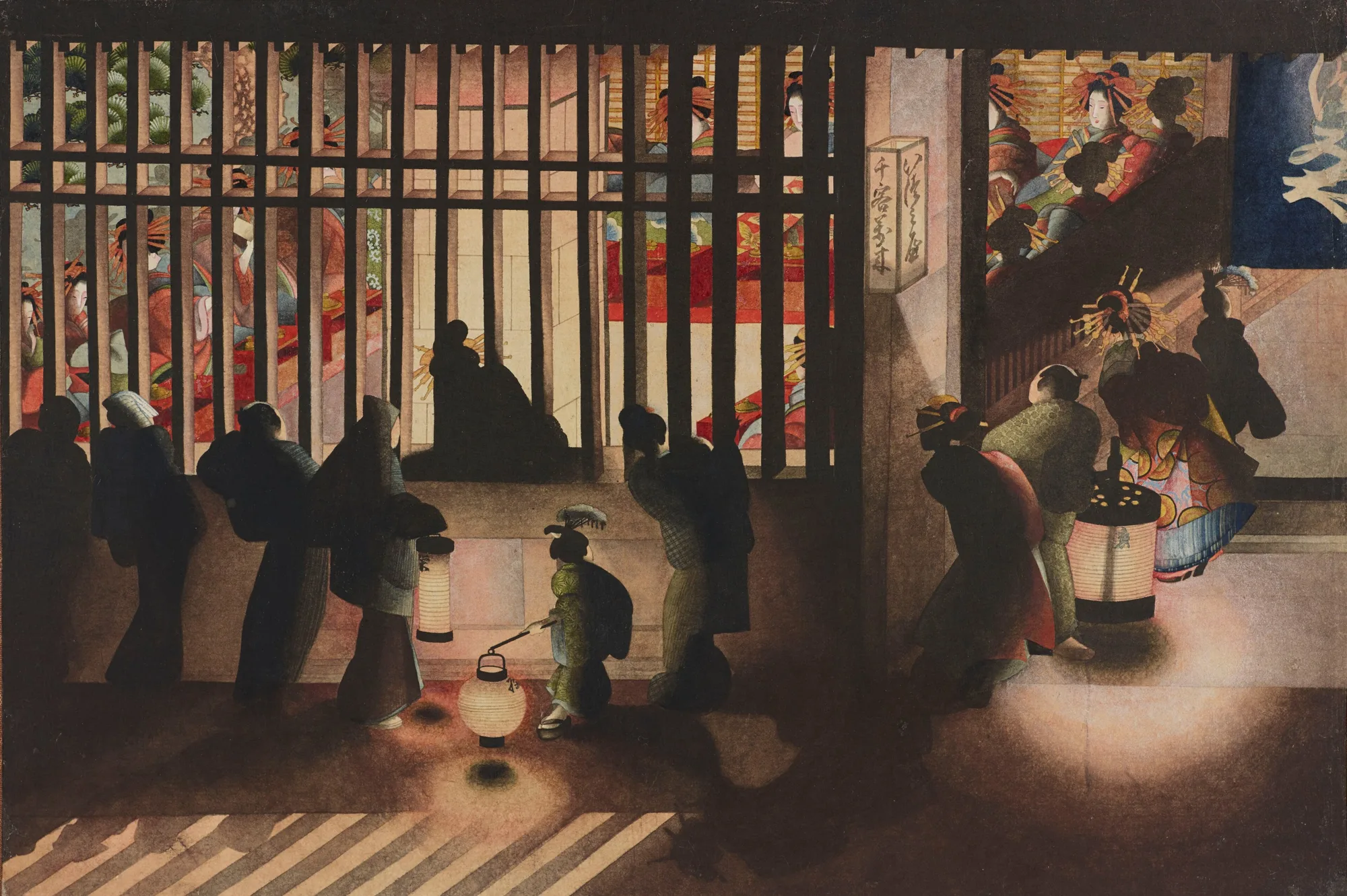
Story葛飾北斎の娘・応為が筆で描いた肉筆画です。江戸の町・吉原の夜。格子(こうし)の向こうの明るい部屋には、きらびやかな着物の女性たちがならび、外の暗い通りでは、人々が影になって中をのぞいています。手もとの提灯がぼうっと光り、足もとに丸い影を落とします。東京の太田記念美術館が所蔵しています。
Katsushika Ōi, the daughter of Hokusai, painted this by hand. It is a night in the Yoshiwara district of Edo. Behind a wooden lattice, women in splendid kimono sit in a bright room. Outside on the dark street, people stand as shadows and look in. Lanterns glow softly and cast round shadows at their feet. It belongs to the Ota Memorial Museum of Art in Tokyo.
この絵の主役は「光」と「影」です。浮世絵では影をはっきり描くことはあまりありませんでしたが、応為は明るい室内と暗い外、格子が床に落とす縞模様の影まで描きました。西洋画の明暗法を学んだかのような表現で、「江戸のレンブラント」と呼ばれることもあります。
The real stars of this picture are light and shadow. Ukiyo-e artists rarely painted clear shadows. But Ōi painted the bright room, the dark street, and even the striped shadows of the lattice on the ground. It looks as if she had studied Western light and dark painting. She is sometimes called 'the Rembrandt of Edo'.
応為の本名は栄(えい)。一度結婚しましたが家にもどり、年をとった父・北斎の仕事を助けながら絵を描きました。残る作品は十数点ほどと少なく、亡くなった年もわかっていません。近年は小説やドラマ、映画の主人公にもなり、なぞの女性絵師として注目を集めています。
Ōi's real name was Ei. She married once but came back home. She painted and helped her old father Hokusai with his work. Only about a dozen or so of her works survive, and we do not know when she died. In recent years she has appeared as the main character in novels, TV dramas and films, drawing attention as a mysterious woman artist.
昔の江戸の町の夜です。木の格子の向こうの部屋がとても明るいです。外の人たちは黒い影のように見えます。これは北斎の娘が描きました。彼女は紙の提灯に自分の名前を隠したのです!
It is night in an old Edo town. A room behind wooden bars is very bright. The people outside look like dark shadows. Hokusai's daughter painted this. She hid her name on the paper lanterns!
英語のレベルは上の「やさしい/ふつう」で切りかえられます。
えっ!?な裏ネタ
Secrets北斎が娘を「おーい」と呼んだことが、画号「応為(おうい)」の由来と言われます。また、北斎の画号の一つ「為一(いいつ)」にちなむという説もあります。どちらが正しいのか、由来ははっきりしていません。
It is said that Hokusai called his daughter by shouting 'Ōi!', meaning 'Hey!', and that became her art name. Another idea links it to one of Hokusai's names, Iitsu. No one knows for sure which is true.
この絵には、ふつうの署名がありません。そのかわり、3つの提灯に「応」「為」「栄」の字がそれぞれ書かれ、こっそり作者名を入れているのです。光の中に名前をとけこませる、なんとも粋な署名のしかたです。
This picture has no normal signature. Instead, three lanterns carry the kanji 応 (Ō), 為 (I) and 栄 (Ei), from her art name and her real name. She hid her name in the picture. She melted her name into the light. What a stylish way to sign!
明治時代の伝記『葛飾北斎伝』には、北斎が「美人画では、わしは応為にかなわない」と語ったという逸話が記されています。後の時代の聞き書きなので本人の言葉とは言いきれませんが、応為が美人画の名手と見られていたことを伝えています。
A Meiji-period biography of Hokusai records a story that he said, 'When it comes to beautiful women, I can't match Ōi.' It was written down long after his death, so we cannot be sure he really said it. But it shows that Ōi was admired for painting women.
北斎と応為は、絵を描くことに夢中で、家事はほとんどせず、部屋はいつも散らかっていたと伝えられます。北斎の作品の中には、応為が手伝ったものもあると考えられています。
It is said that Hokusai and Ōi were so busy painting that they hardly did housework, and their room was always messy. Experts think Ōi helped with some of Hokusai's works.
ここを見て!
Look Closer1格子の向こうの明るい部屋Bright room behind the lattice
格子のすきまから、華やかな着物の女性たちが見えます。
Through the lattice, we see women in colorful kimono.
2名前を隠した提灯Lantern with a hidden character
少女が持つ丸い提灯。名前の一字が書かれた提灯の一つです。
A round lantern held by a girl. It is one of the lanterns with a hidden character.
3光る大きな提灯Big glowing lantern
右の大きな提灯。まわりの床を明るく照らしています。
A big lantern on the right. It lights up the floor around it.
4格子の影Shadows of the lattice
床に落ちた、縞模様の影。光がどこから来ているかがわかります。
Striped shadows on the ground. They show where the light comes from.
英語で名画を語ろう
Talk about Art in EnglishŌi was a master of light and shadow.
応為は光と影の名人でした。
💡 絵の明暗を語る定番表現。the contrast between light and shadow もよく使います。
英語で説明すると… Describe it
これは夜の場面です。奥には、木の格子の向こうに明るい部屋があります。手前では、人々が暗い通りを歩いています。光る提灯を持っている人もいます。
This is a night scene. In the background, there is a bright room behind a wooden lattice. In the foreground, people are walking in the dark street. Some people are holding glowing lanterns.
考えてみよう Think & Talk
- 応為はなぜ、署名をするかわりに名前を隠したと思いますか?Why do you think Ōi hid her name instead of signing it?
- 光と暗さは、絵の雰囲気をどう変えると思いますか?How do light and darkness change the mood of a picture?
この作品の英単語
WordsThe lattice casts long shadows on the ground.
格子が地面に長い影を落としている。
A girl is carrying a paper lantern.
少女が紙の提灯を持っている。
The lanterns glow in the dark street.
暗い通りで提灯がぼうっと光る。
People look through the wooden lattice.
人々が木の格子ごしに中を見ている。
ミニクイズ
QuizQ. 応為は、この絵のどこに自分の名前を隠した?Where did Ōi hide her name in this picture?
3つの提灯に「応」「為」「栄」の字があります。
Three lanterns carry the kanji 応 (Ō), 為 (I) and 栄 (Ei).
ウソ?ホント? 応為は葛飾北斎の娘だ。Ōi was Hokusai's daughter.
北斎の三女とされ、父の仕事を助けながら絵を描きました。
She is said to be his third daughter. She painted and helped her father.
ウソ?ホント? この絵は木版画で、たくさん摺られた。This picture is a woodblock print, and many copies were made.
筆で直接描いた一点ものの肉筆画です。
It is a one-of-a-kind painting made with a brush.
 画像の出典とライセンス / Image credit
- PDYoshiwara Kōshisakinozu.jpg(Wikimedia Commons)
ライセンス:Public domain(パブリックドメイン)/作者・撮影者の表記:Katsushika Ōi, Japanese Ukiyo-e artist of the 19th century/提供元:Ōta Memorial Museum
この作品は、作者の死後長い年月がたち著作権の保護期間が終わった「パブリックドメイン」の作品です。画像は平面の作品を忠実に写したもので、新しい著作権は生じません(Wikimedia Commons の PD-Art の考え方)。 所蔵:太田記念美術館(Ota Memorial Museum of Art)。画像は表示のために縮小・WebP 形式に変換しています。
