

 PDF をダウンロード
Let's Look at Art!
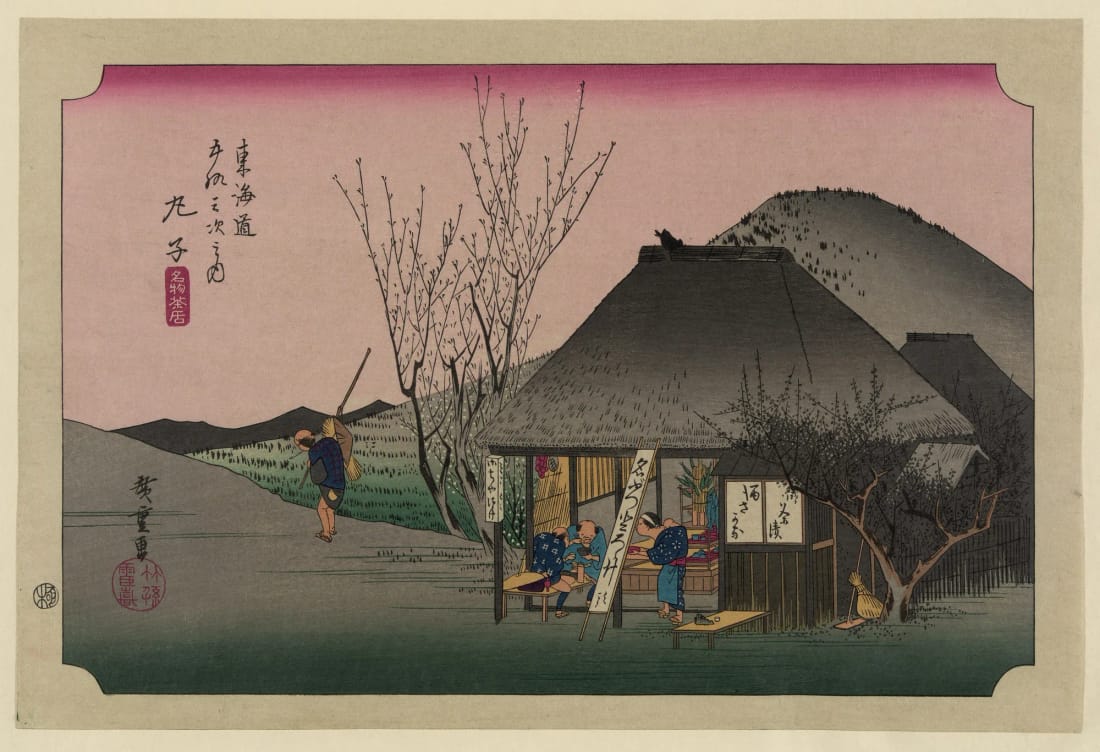
Title: Mariko: Famous Teahouse (The Fifty-three Stations of the Tōkaidō)
Artist: Utagawa Hiroshige (1797–1858)
Year: design c. 1833–1834, reprinted Shōwa era
Medium: Woodblock print; ink and color on paper
Museum: Library of Congress (the image shows a Shōwa-era Adachi reprint), Washington, D.C.
1 Find it! 絵の中から見つけて、○でかこもう。
- ☐ The 'Famous Tororo Soup' sign
- ☐ Customers eating soup
- ☐ Woman with a baby
- ☐ A traveler
2 First look 最初に見たときの感想を書こう。
When I first saw this painting, I felt ______________ because ______________________.
Three colors I can see: ①__________ ②__________ ③__________
3 Words — Match them. 英語と日本語を線で結ぼう。
- traveler ●
- specialty ●
- serve ●
- peaceful ●
- ● (料理を)出す
- ● 名物・特産品
- ● 旅人
- ● のどかな・平和な
Mariko: Famous Teahouse (The Fifty-three Stations of the Tōkaidō)
4 Fill in the blanks. 下の箱から選んで、( )に入れよう。形を変えるものもあります。
- Tired stop at the teahouse.
- Yam soup is the of Mariko.
- A woman soup to the customers.
- The village looks in spring.
5 Read and answer — True or False? 英文を読んで、正しければ T、ちがえば F。
This is a small shop on a long road. Travelers stop here and eat. The shop is famous for yam soup. A woman with a baby brings the food. This shop is still open today in Shizuoka!
At a teahouse with a thatched roof, travelers eat the local specialty, tororo-jiru, a soup of grated yam. The sign in front says 'Famous Tororo Soup'. A woman carrying a baby on her back serves the food, and outside, a traveler walks by with his load. This is from Hiroshige's Fifty-three Stations of the Tōkaidō, the Hōeidō edition. It shows Mariko, the 20th stop from Edo, now part of Shizuoka City.
- Mariko was the 20th station from Nihonbashi in Edo. T / F
- The teahouse in the print is serving ramen. T / F
6 Quiz — Choose the best answer. 正しいものを選ぼう。
What is the famous food at this teahouse?
- Eel
- Oden
- Soba noodles
- Grated yam soup
Mariko: Famous Teahouse (The Fifty-three Stations of the Tōkaidō)
7 Put the words in order. 語を正しく並べかえて、文を書こう。
- is / yam / famous / its / soup / for / grated / Mariko .
- the / is / teahouse / country / a / in / This .
8 Complete the description. 箱の語を(1)〜(4)に入れて、絵の説明を完成させよう。
This is a (1) in the (2). In the (3), there is a shop with a big straw roof. Two (4) are eating at the shop. A woman with a baby on her back is serving food. On the left, a man is walking with a load.
9 Describe the painting in English. この絵を英語で説明しよう(3文以上)。
10 Think & Talk 考えて、ペアやグループで話し合おう。
What food would you want to eat on a long walk? Why?
How is traveling in the Edo period different from traveling today?
11 My favorite part いちばん好きなところを英語で。
I like the ____________ because ____________________________.
Answers & Notes
1 Find it!
The 'Famous Tororo Soup' sign=「名ぶつとろろ汁」の看板/Customers eating soup=とろろ汁を食べる客/Woman with a baby=赤ちゃんをおぶった女の人/A traveler=旅人
2 First look
自由に書けたら正解。I felt calm / surprised / happy … などの形容詞を使おう。
3 Words
1–c(traveler=旅人) 2–b(specialty=名物・特産品) 3–a(serve=(料理を)出す) 4–d(peaceful=のどかな・平和な)
4 Fill in the blanks
- travelers Tired travelers stop at the teahouse.
つかれた旅人たちが茶店に立ち寄ります。 - specialty Yam soup is the specialty of Mariko.
とろろ汁は鞠子の名物です。 - serves A woman serves soup to the customers.
女の人がお客にとろろ汁を出しています。 - peaceful The village looks peaceful in spring.
春の村はのどかに見えます。
5 Read — T / F
【本文の訳】これは長い道ぞいの小さなお店です。旅人がここで止まって食事をします。このお店はとろろ汁で有名です。赤ちゃんをおぶった女の人が料理を運びます。とろろ汁のお店は、今も静岡で営業しています!
【本文の訳】わらぶき屋根の茶店で、旅人が名物の「とろろ汁」を食べています。店先の看板には「名ぶつとろろ汁」の文字。赤ちゃんをおぶった女の人が料理を運び、外では荷物をかついだ旅人が歩いていきます。歌川広重の「東海道五十三次」(保永堂版)の一枚で、江戸から20番目の宿場・鞠子(今の静岡市)を描いています。
- T 鞠子は、江戸の日本橋から20番目の宿場である。
解説:東海道五十三次の20番目の宿場です。 - F 絵の茶店で出されているのは、ラーメンである。
解説:出しているのは、山いもをすりおろしたとろろ汁です。
6 Quiz
D 問:この茶店の名物は?
選択肢:A うなぎ/B おでん/C そば/D とろろ汁
解説:看板に「名ぶつとろろ汁」とあります。芭蕉の句にもよまれた名物です。
7 Put the words in order
- Mariko is famous for its grated yam soup.
鞠子はとろろ汁で有名です。 - This is a teahouse in the country.
これはいなかの茶店です。
💡 is famous for(〜で有名だ):町や店の名物を紹介する定番表現。自分の町の紹介にもそのまま使えます。
8 Complete the description
(1) teahouse (2) country (3) middle (4) travelers
9 Describe(模範解答)
This is a teahouse in the country. In the middle, there is a shop with a big straw roof. Two travelers are eating at the shop. A woman with a baby on her back is serving food. On the left, a man is walking with a load.
これはいなかの茶店です。真ん中に、大きなわらぶき屋根の店があります。二人の旅人が店で食べています。赤ちゃんをおぶった女の人が料理を出しています。左では、男の人が荷物をかついで歩いています。
10 Think & Talk(問いの訳)
- What food would you want to eat on a long walk? Why?
長い旅を歩くとき、どんな食べ物を食べたいですか?なぜでしょう? - How is traveling in the Edo period different from traveling today?
江戸時代の旅と今の旅は、どこがちがうでしょう?
正解のない問いです。理由をつけて話せたら◎。
Fun Fact(訳)
お客さんは、あの弥次さん喜多さん? 江戸の大ベストセラー『東海道中膝栗毛』で、弥次さん・喜多さんは鞠子でとろろ汁を食べようとしますが、店の夫婦げんかに巻きこまれて食べそこねます。この絵の二人の客は、その弥次喜多だと見る人もいます。
