 ワークシート
 ぬりえ
 迷路
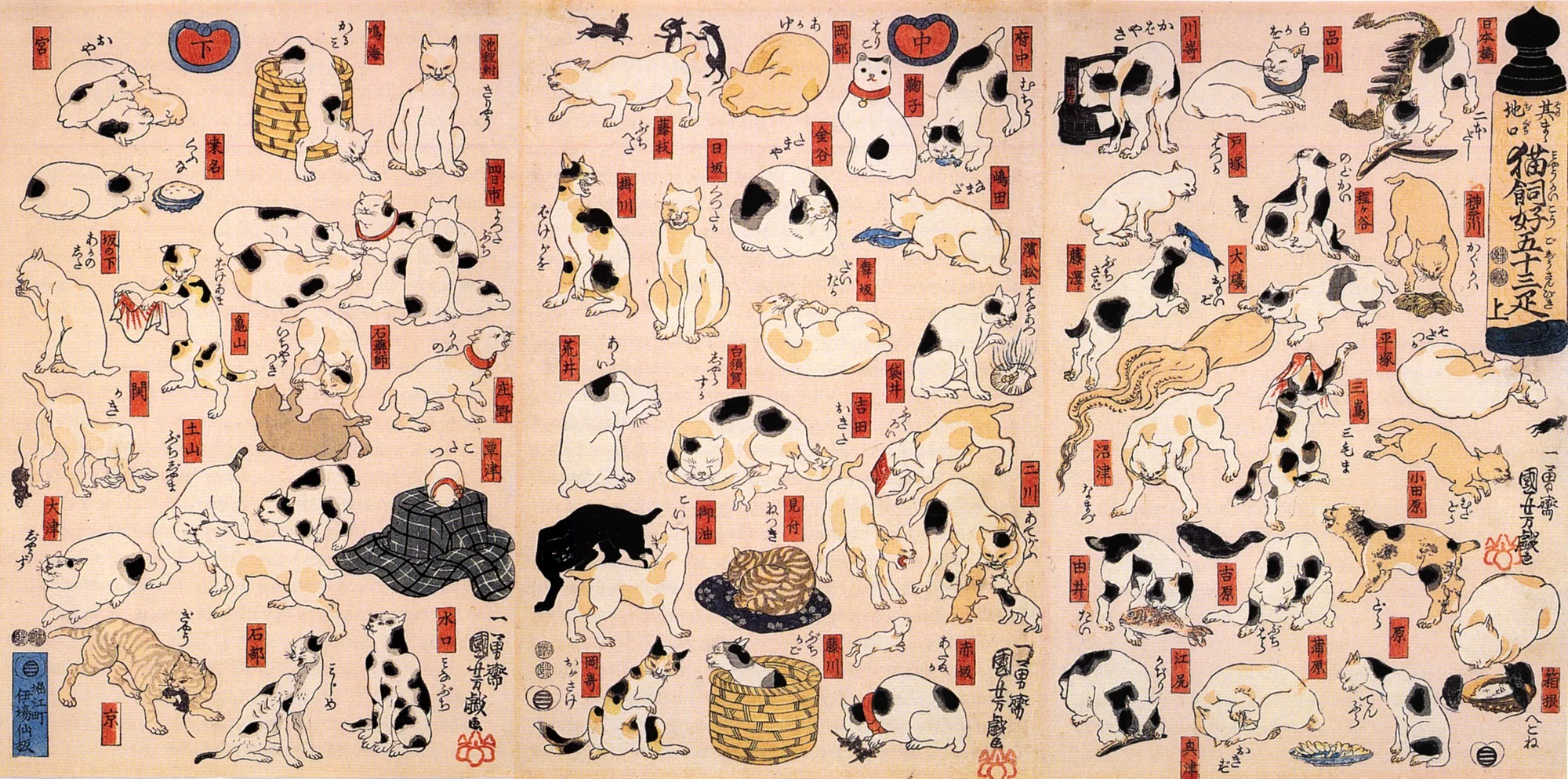
東海道の宿場を、ぜんぶネコのダジャレで!ネコ好き国芳の大傑作。Every stop on the Tōkaidō road turned into a cat pun! A masterpiece by a true cat lover.
 美術館アンテナ:歌川国芳の作品に会える展覧会
この作品のお話
Story画面いっぱいに、寝たり、魚をくわえたり、じゃれ合ったりするネコたち。それぞれの場面のそばには、東海道の宿場の名前が書かれた赤い札があります。じつはこれ、江戸の日本橋から京都までの宿場の名前を、ネコのしぐさのダジャレ(地口)で表した絵なのです。歌川国芳が1848年ごろに出した三枚続の浮世絵です。
Cats sleep, carry fish and play all over the picture. Next to each scene is a red label with the name of a stop on the Tōkaidō road. In fact, the picture turns the names of the stations from Nihonbashi in Edo to Kyoto into puns about cats. Utagawa Kuniyoshi published this three-sheet print around 1848.
たとえば右上のスタート地点「日本橋」は、かつお節を二本出しているネコで「二本だし」。次の「品川」は、白い顔のネコで「白かお」。こうして宿場の名前の音をもじり、ネコの絵とことばで当てていきます。当時の人々は、東海道の宿場名をよく知っていたので、絵と札を見くらべながら謎ときを楽しんだのでしょう。
For example, the starting point, Nihonbashi, at the top right, becomes 'nihon dashi' (taking out two sticks), with a cat pulling out two pieces of dried bonito. The next stop, Shinagawa, becomes 'shiro kao' (white face), with a white-faced cat. People in Edo knew the station names well, so they enjoyed matching the cats with the labels like a puzzle.
国芳は大のネコ好きで、ネコを主役にした絵をたくさん残しました。ゴールの「京」は、ネズミをくわえたトラネコで締めくくられています。浮世絵は何枚も摺られたので、この図柄はボストン美術館やアムステルダム国立美術館など各地にあります(画像の一枚の所蔵先はわかっていません)。
Kuniyoshi loved cats and made many pictures starring them. The final stop, Kyoto, ends with a tabby cat holding a mouse. Many copies were printed, so this design is in places like the Museum of Fine Arts, Boston and the Rijksmuseum. We do not know who owns the copy in this image.
この絵には、たくさんたくさんのネコがいます。寝ているネコもいます。魚を食べているネコもいます。ネコのそれぞれの小さな場面が、宿場名のダジャレになっています。画家はネコが大好きでした。着物のふところにネコを入れて絵を描いたと言われています!
This picture has many, many cats. Some cats sleep. Some cats eat fish. Each little cat scene is a joke about a station name. The artist loved cats very much. People say he painted with a cat in his kimono!
英語のレベルは上の「やさしい/ふつう」で切りかえられます。
えっ!?な裏ネタ
Secrets国芳はいつも何匹ものネコを飼い、ふところにネコを入れたまま絵を描いていたと伝えられます。ネコが死ぬと寺でとむらい、戒名までつけたという話も残っています。この絵のネコたちが生き生きしているのも納得です。
It is said that Kuniyoshi always kept many cats and painted with a cat tucked inside his kimono. There is also a story that he held funerals for his cats at a temple. No wonder the cats here look so alive.
題名の「猫飼好」には、昔のかなづかいで「みやうかいこう」と振り仮名があり、今の読み方なら「みょうかいこう」です。この「みやう」がネコの鳴き声を思わせる、ことば遊びになっているという見方もあります。
The title word for 'cat lovers' has the reading miyau-kaikō in old-style kana. Today it would be read myō-kaikō. Some say miyau also suggests a cat's meow, as another play on words.
東海道は宿場が53ありますが、出発の日本橋とゴールの京都を加えると55か所になります。この絵もその全部を描いているので、題名の「五十三疋(ひき)」よりネコの場面が多いのです。
The Tōkaidō had 53 stations. With the start, Nihonbashi, and the goal, Kyoto, there are 55 places. This print shows all of them, so there are more cat scenes than the '53' in the title.
東海道五十三次は、歌川広重の風景版画シリーズで大人気になった題材です。国芳は同じ題材を、風景ではなくネコとダジャレで描きました。人気シリーズをネタにした、江戸のパロディ作品ともいえます。
The Fifty-three Stations of the Tōkaidō became very popular through Hiroshige's landscape prints. Kuniyoshi took the same subject and drew cats and puns instead of views. It is a kind of Edo-period parody of a hit series.
ここを見て!
Look Closer1日本橋「二本だし」Nihonbashi: 'two sticks out'
スタート地点。かつお節の束から二本を引き出すネコで「にほんだし」。
The start. A cat pulls two sticks of dried bonito out of a bundle: 'nihon dashi'.
2品川「白かお」Shinagawa: 'white face'
首に布を巻いた、顔の白いネコ。「しながわ」を「しろかお」ともじっています。
A white-faced cat with cloth around its neck. 'Shinagawa' becomes 'shiro kao' (white face).
3ゴールの京The goal: Kyoto
左下の最後の宿は、ネズミをくわえたトラネコ。長い旅のゴールです。
The last stop, at the bottom left, is a tabby cat with a mouse in its mouth. The end of a long trip.
4題名の札The title
右はしの細長い札に「其のまゝ地口 猫飼好五十三疋」と書かれています。
The long label at the right edge shows the title of the print.
英語で名画を語ろう
Talk about Art in EnglishEach cat scene is a play on words based on a station name.
ネコのそれぞれの場面が、宿場名をもとにしたことば遊びになっています。
💡 pun とほぼ同じ意味。日本文化の「地口」「語呂合わせ」を説明するときに便利です。
英語で説明すると… Describe it
この絵はネコでいっぱいです。寝ているネコもいれば、魚を食べているネコもいます。それぞれの小さな場面には、宿場名を書いた赤い札があります。右には、題名が書かれた細長い札があります。左下では、ネコがネズミをくわえています。
This picture is full of cats. Some cats are sleeping and some are eating fish. Each small scene has a red label with a station name. On the right, there is a long label with the title. On the bottom left, a cat is holding a mouse.
考えてみよう Think & Talk
- 知っている地名を使って、動物のダジャレを作れますか?Can you make a pun about an animal using the name of a place you know?
- 江戸の人々は、なぜこういう絵の謎ときを楽しんだのだと思いますか?Why do you think people in Edo enjoyed picture puzzles like this?
この作品の英単語
WordsEach cat scene is a pun on a station name.
ネコのそれぞれの場面が、宿場名のダジャレになっています。
There were 53 stations on the Tōkaidō road.
東海道には53の宿場がありました。
The cats are playful and funny.
ネコたちは遊び好きで、おもしろいです。
Match each cat scene with its label.
ネコの場面と札を照らし合わせてみましょう。
ミニクイズ
QuizQ. スタートの「日本橋」は、ネコの何でダジャレにした?What cat pun was used for Nihonbashi, the starting point?
かつお節の束から二本出しているネコで「にほんだし」です。
A cat pulls two bonito sticks out of a bundle: 'nihon dashi'.
ウソ?ホント? 国芳はネコが大好きで、ネコの絵をたくさん描いた。Kuniyoshi loved cats and drew many of them.
ネコを何匹も飼い、ネコが主役の絵をたくさん残しました。
He kept many cats and made lots of cat pictures.
ウソ?ホント? 絵の中のネコの場面は、ちょうど53だけである。There are exactly 53 cat scenes in the picture.
日本橋と京都も入れて、55か所の場面があります。
With Nihonbashi and Kyoto, there are 55 places.
 画像の出典とライセンス / Image credit
- PDCats suggested as the fifty-three stations of the Tokaido.jpg(Wikimedia Commons)
ライセンス:Public domain(パブリックドメイン)/作者・撮影者の表記:歌川国芳 (Utagawa Kuniyoshi, 1798 - 1861)
この作品は、作者の死後長い年月がたち著作権の保護期間が終わった「パブリックドメイン」の作品です。画像は平面の作品を忠実に写したもので、新しい著作権は生じません(Wikimedia Commons の PD-Art の考え方)。 所蔵:所蔵先不明の摺り(同じ図柄はボストン美術館・アムステルダム国立美術館などにも)(Collection of this impression unknown (other impressions in the Museum of Fine Arts, Boston, the Rijksmuseum and elsewhere))。画像は表示のために縮小・WebP 形式に変換しています。
歌川国芳のほかの作品