

 PDF をダウンロード
Let's Look at Art!
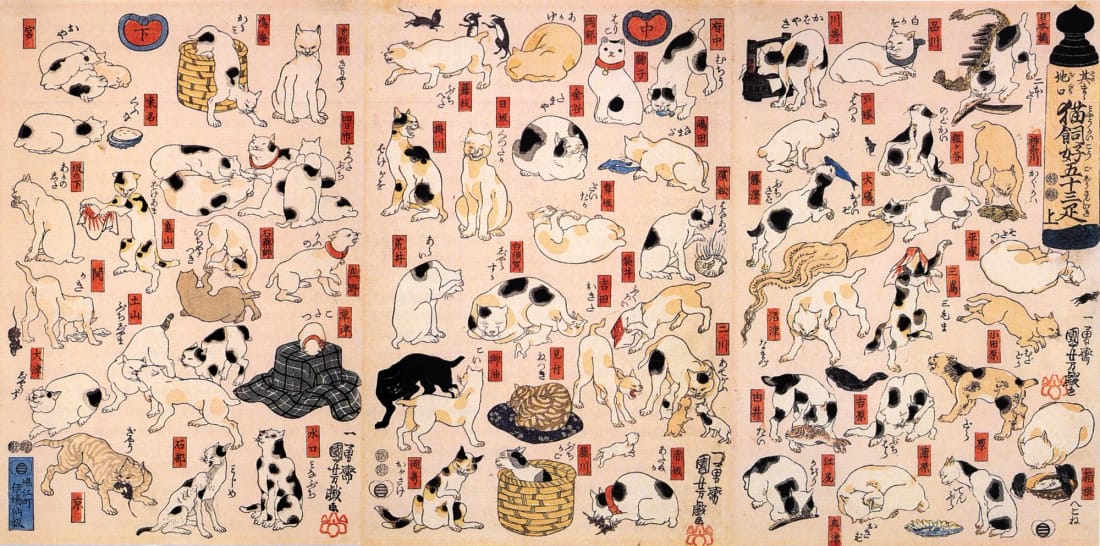
Title: Cats as the Fifty-three Stations of the Tōkaidō
Artist: Utagawa Kuniyoshi (1798–1861)
Year: c. 1848
Medium: Woodblock print triptych; ink and color on paper
Museum: Collection of this impression unknown (other impressions in the Museum of Fine Arts, Boston, the Rijksmuseum and elsewhere)
1 Find it! 絵の中から見つけて、○でかこもう。
- ☐ Nihonbashi: 'two sticks out'
- ☐ Shinagawa: 'white face'
- ☐ The goal: Kyoto
- ☐ The title
2 First look 最初に見たときの感想を書こう。
When I first saw this painting, I felt ______________ because ______________________.
Three colors I can see: ①__________ ②__________ ③__________
3 Words — Match them. 英語と日本語を線で結ぼう。
- pun ●
- station ●
- playful ●
- match ●
- ● 組み合わせる・照らし合わせる
- ● ダジャレ・語呂合わせ
- ● 遊び心のある・じゃれる
- ● 宿場・駅
Cats as the Fifty-three Stations of the Tōkaidō
4 Fill in the blanks. 下の箱から選んで、( )に入れよう。形を変えるものもあります。
- Each cat scene is a on a station name.
- There were 53 on the Tōkaidō road.
- The cats are and funny.
- each cat scene with its label.
5 Read and answer — True or False? 英文を読んで、正しければ T、ちがえば F。
This picture has many, many cats. Some cats sleep. Some cats eat fish. Each little cat scene is a joke about a station name. The artist loved cats very much. People say he painted with a cat in his kimono!
Cats sleep, carry fish and play all over the picture. Next to each scene is a red label with the name of a stop on the Tōkaidō road. In fact, the picture turns the names of the stations from Nihonbashi in Edo to Kyoto into puns about cats. Utagawa Kuniyoshi published this three-sheet print around 1848.
- Kuniyoshi loved cats and drew many of them. T / F
- There are exactly 53 cat scenes in the picture. T / F
6 Quiz — Choose the best answer. 正しいものを選ぼう。
What cat pun was used for Nihonbashi, the starting point?
- Two cats: 'nihon'
- A cat crossing a bridge
- A cat looking at a map
- Taking out two bonito sticks: 'nihon dashi'
Cats as the Fifty-three Stations of the Tōkaidō
7 Put the words in order. 語を正しく並べかえて、文を書こう。
- name / cat / a / words / scene / station / a / play / based / Each / is / on / on .
- cats / of / is / picture / full / This .
8 Complete the description. 箱の語を(1)〜(4)に入れて、絵の説明を完成させよう。
This picture is full of cats. Some cats are sleeping and some are eating fish. Each (1) scene has a red (2) with a station name. On the right, there is a long label with the title. On the (3) left, a cat is (4) a mouse.
9 Describe the painting in English. この絵を英語で説明しよう(3文以上)。
10 Think & Talk 考えて、ペアやグループで話し合おう。
Can you make a pun about an animal using the name of a place you know?
Why do you think people in Edo enjoyed picture puzzles like this?
11 My favorite part いちばん好きなところを英語で。
I like the ____________ because ____________________________.
Answers & Notes
1 Find it!
Nihonbashi: 'two sticks out'=日本橋「二本だし」/Shinagawa: 'white face'=品川「白かお」/The goal: Kyoto=ゴールの京/The title=題名の札
2 First look
自由に書けたら正解。I felt calm / surprised / happy … などの形容詞を使おう。
3 Words
1–b(pun=ダジャレ・語呂合わせ) 2–d(station=宿場・駅) 3–c(playful=遊び心のある・じゃれる) 4–a(match=組み合わせる・照らし合わせる)
4 Fill in the blanks
- pun Each cat scene is a pun on a station name.
ネコのそれぞれの場面が、宿場名のダジャレになっています。 - stations There were 53 stations on the Tōkaidō road.
東海道には53の宿場がありました。 - playful The cats are playful and funny.
ネコたちは遊び好きで、おもしろいです。 - Match Match each cat scene with its label.
ネコの場面と札を照らし合わせてみましょう。
5 Read — T / F
【本文の訳】この絵には、たくさんたくさんのネコがいます。寝ているネコもいます。魚を食べているネコもいます。ネコのそれぞれの小さな場面が、宿場名のダジャレになっています。画家はネコが大好きでした。着物のふところにネコを入れて絵を描いたと言われています!
【本文の訳】画面いっぱいに、寝たり、魚をくわえたり、じゃれ合ったりするネコたち。それぞれの場面のそばには、東海道の宿場の名前が書かれた赤い札があります。じつはこれ、江戸の日本橋から京都までの宿場の名前を、ネコのしぐさのダジャレ(地口)で表した絵なのです。歌川国芳が1848年ごろに出した三枚続の浮世絵です。
- T 国芳はネコが大好きで、ネコの絵をたくさん描いた。
解説:ネコを何匹も飼い、ネコが主役の絵をたくさん残しました。 - F 絵の中のネコの場面は、ちょうど53だけである。
解説:日本橋と京都も入れて、55か所の場面があります。
6 Quiz
D 問:スタートの「日本橋」は、ネコの何でダジャレにした?
選択肢:A ネコが二匹で「二本」/B ネコが橋をわたる/C ネコが日本地図を見る/D かつお節を二本出して「二本だし」
解説:かつお節の束から二本出しているネコで「にほんだし」です。
7 Put the words in order
- Each cat scene is a play on words based on a station name.
ネコのそれぞれの場面が、宿場名をもとにしたことば遊びになっています。 - This picture is full of cats.
この絵はネコでいっぱいです。
💡 a play on words(ことば遊び・ダジャレ):pun とほぼ同じ意味。日本文化の「地口」「語呂合わせ」を説明するときに便利です。
8 Complete the description
(1) small (2) label (3) bottom (4) holding
9 Describe(模範解答)
This picture is full of cats. Some cats are sleeping and some are eating fish. Each small scene has a red label with a station name. On the right, there is a long label with the title. On the bottom left, a cat is holding a mouse.
この絵はネコでいっぱいです。寝ているネコもいれば、魚を食べているネコもいます。それぞれの小さな場面には、宿場名を書いた赤い札があります。右には、題名が書かれた細長い札があります。左下では、ネコがネズミをくわえています。
10 Think & Talk(問いの訳)
- Can you make a pun about an animal using the name of a place you know?
知っている地名を使って、動物のダジャレを作れますか? - Why do you think people in Edo enjoyed picture puzzles like this?
江戸の人々は、なぜこういう絵の謎ときを楽しんだのだと思いますか?
正解のない問いです。理由をつけて話せたら◎。
Fun Fact(訳)
国芳はふところにネコを入れて絵を描いた? 国芳はいつも何匹ものネコを飼い、ふところにネコを入れたまま絵を描いていたと伝えられます。ネコが死ぬと寺でとむらい、戒名までつけたという話も残っています。この絵のネコたちが生き生きしているのも納得です。
