

 PDF をダウンロード
Let's Look at Art!
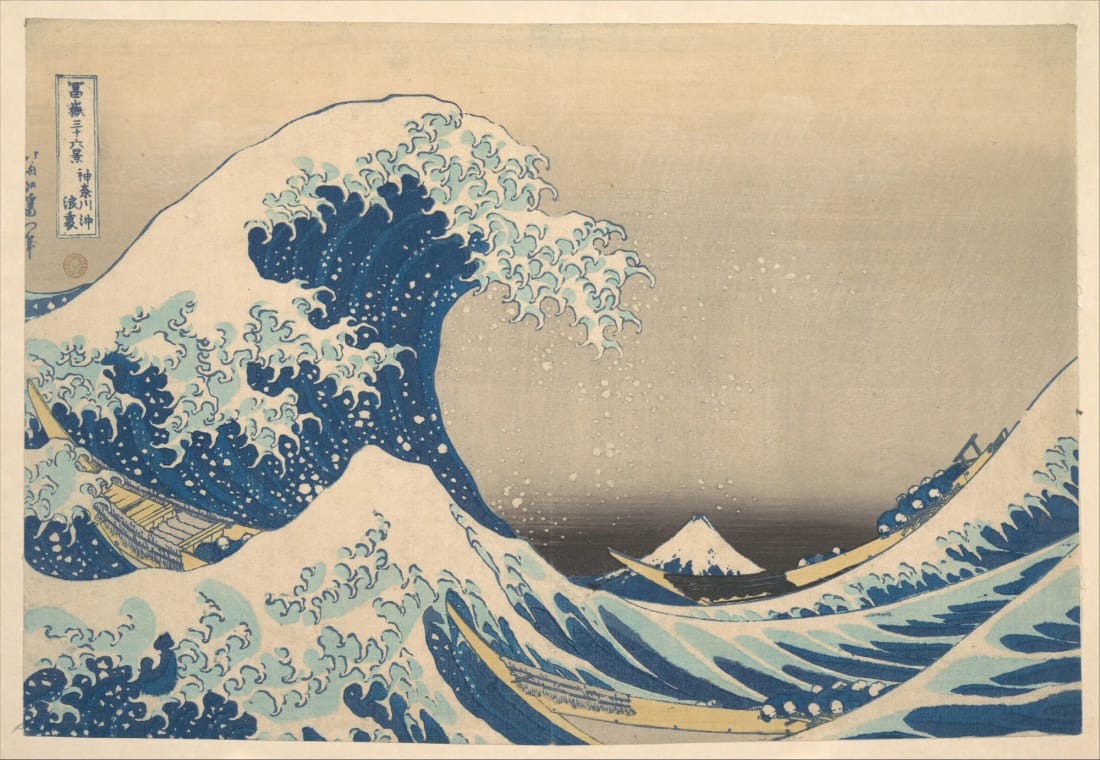
Title: Under the Wave off Kanagawa (The Great Wave), from Thirty-six Views of Mount Fuji
Artist: Katsushika Hokusai (1760–1849)
Year: c. 1830–32
Medium: Woodblock print, ink and color on paper
Museum: The Metropolitan Museum of Art, New York
1 Find it! 絵の中から見つけて、○でかこもう。
- ☐ Claw-like crest
- ☐ Tiny Mount Fuji
- ☐ Fast boats with fish
- ☐ Title and signature
2 First look 最初に見たときの感想を書こう。
When I first saw this painting, I felt ______________ because ______________________.
Three colors I can see: ①__________ ②__________ ③__________
3 Words — Match them. 英語と日本語を線で結ぼう。
- wave ●
- crash ●
- pigment ●
- impression ●
- ● 顔料・絵の具
- ● (版画の)摺り・1枚
- ● 波
- ● くだける・ぶつかる
Under the Wave off Kanagawa (The Great Wave), from Thirty-six Views of Mount Fuji
4 Fill in the blanks. 下の箱から選んで、( )に入れよう。形を変えるものもあります。
- A huge rises over the boats.
- The wave is about to down.
- Prussian blue is a from Europe.
- Many museums have an of this print.
5 Read and answer — True or False? 英文を読んで、正しければ T、ちがえば F。
This is a very big wave. Three boats are under it. Can you find Mount Fuji? It is very small! The blue color came from Europe. Today, you can see this wave on the Japanese 1,000-yen bill.
Katsushika Hokusai made this print in his early seventies. It is from his series Thirty-six Views of Mount Fuji. A giant wave is about to crash down on three fast boats of a type used to carry fresh fish. Far behind, Mount Fuji looks tiny. This impression is in The Metropolitan Museum of Art. Because it is a woodblock print, many impressions exist. Museums all over the world, like the British Museum and the Tokyo National Museum, have them.
- Impressions of this design are in museums around the world. T / F
- Hokusai made this picture when he was about 20. T / F
6 Quiz — Choose the best answer. 正しいものを選ぼう。
Where was the bright blue pigment in The Great Wave first made?
- China
- Edo
- Europe (Berlin)
- America
Under the Wave off Kanagawa (The Great Wave), from Thirty-six Views of Mount Fuji
7 Put the words in order. 語を正しく並べかえて、文を書こう。
- boats / the / The / down / to / crash / on / about / giant / wave / is .
- is / sea / This / picture / a / rough / of / a .
8 Complete the description. 箱の語を(1)〜(4)に入れて、絵の説明を完成させよう。
This is a picture of a (1) sea. On the left, there is a huge blue wave. Under the wave, there are three long (2). In the (3), there is a (4) Mount Fuji with snow.
9 Describe the painting in English. この絵を英語で説明しよう(3文以上)。
10 Think & Talk 考えて、ペアやグループで話し合おう。
Why do you think Hokusai made Mount Fuji so small?
What do you think happens to the boats after this moment?
11 My favorite part いちばん好きなところを英語で。
I like the ____________ because ____________________________.
Answers & Notes
1 Find it!
Claw-like crest=つめのような波頭/Tiny Mount Fuji=小さな富士山/Fast boats with fish=押送船/Title and signature=題名と署名
2 First look
自由に書けたら正解。I felt calm / surprised / happy … などの形容詞を使おう。
3 Words
1–c(wave=波) 2–d(crash=くだける・ぶつかる) 3–a(pigment=顔料・絵の具) 4–b(impression=(版画の)摺り・1枚)
4 Fill in the blanks
- wave A huge wave rises over the boats.
巨大な波が舟の上にそびえている。 - crash The wave is about to crash down.
波が今にもくだけ落ちそうだ。 - pigment Prussian blue is a pigment from Europe.
プルシアンブルーはヨーロッパの顔料だ。 - impression Many museums have an impression of this print.
多くの美術館がこの版画の摺りを持っている。
5 Read — T / F
【本文の訳】これはとても大きな波です。その下に舟が3そうあります。富士山を見つけられますか?とても小さいですね!この青い色はヨーロッパから来ました。今では、日本の千円札でもこの波を見ることができます。
【本文の訳】葛飾北斎が70歳を過ぎたころに出した「冨嶽三十六景」シリーズの1枚です。巨大な波が、鮮魚を運ぶのに使われた「押送船(おしおくりぶね)」3そうに、おそいかかろうとしています。そのはるか奥に、小さな富士山。画像の摺りはニューヨークのメトロポリタン美術館の所蔵です。木版画なので同じ図柄の摺りが何枚もあり、大英博物館や東京国立博物館など、世界中の美術館が持っています。
- T 同じ図柄の摺りが、世界中の美術館にある。
解説:木版画なので同じ図柄がたくさん刷られました。画像はメトロポリタン美術館の1枚です。 - F 北斎はこの絵を20歳のころに描いた。
解説:70歳を過ぎてからの作品です。北斎は90歳近くまで描き続けました。
6 Quiz
C 問:神奈川沖浪裏の鮮やかな青い絵の具は、どこで生まれた?
選択肢:A 中国/B 江戸/C ヨーロッパ(ベルリン)/D アメリカ
解説:プルシアンブルーはベルリンで生まれ、日本では「ベロ藍」と呼ばれました。
7 Put the words in order
- The giant wave is about to crash down on the boats.
巨大な波が、今にも舟の上にくだけ落ちそうです。 - This is a picture of a rough sea.
これは波の荒い海の絵です。
💡 is about to(今にも〜しそうだ):be about to +動詞 で「まさに〜しようとしている」。止まった絵の中の「次の瞬間」を語れます。
8 Complete the description
(1) rough (2) boats (3) background (4) small
9 Describe(模範解答)
This is a picture of a rough sea. On the left, there is a huge blue wave. Under the wave, there are three long boats. In the background, there is a small Mount Fuji with snow.
これは波の荒い海の絵です。左には、巨大な青い波があります。波の下には、細長い舟が3そうあります。奥には、雪をかぶった小さな富士山があります。
10 Think & Talk(問いの訳)
- Why do you think Hokusai made Mount Fuji so small?
北斎はなぜ富士山をこんなに小さく描いたと思いますか? - What do you think happens to the boats after this moment?
この瞬間のあと、舟はどうなると思いますか?
正解のない問いです。理由をつけて話せたら◎。
Fun Fact(訳)
青の正体は「ベロ藍」 深い青はプルシアンブルー。18世紀のはじめにベルリンで生まれた合成絵の具で、日本では「ベルリンの藍」がなまって「ベロ藍」と呼ばれました。北斎の青い波は、じつは国際的な色なのです。
