 ワークシート
 ぬりえ
 迷路
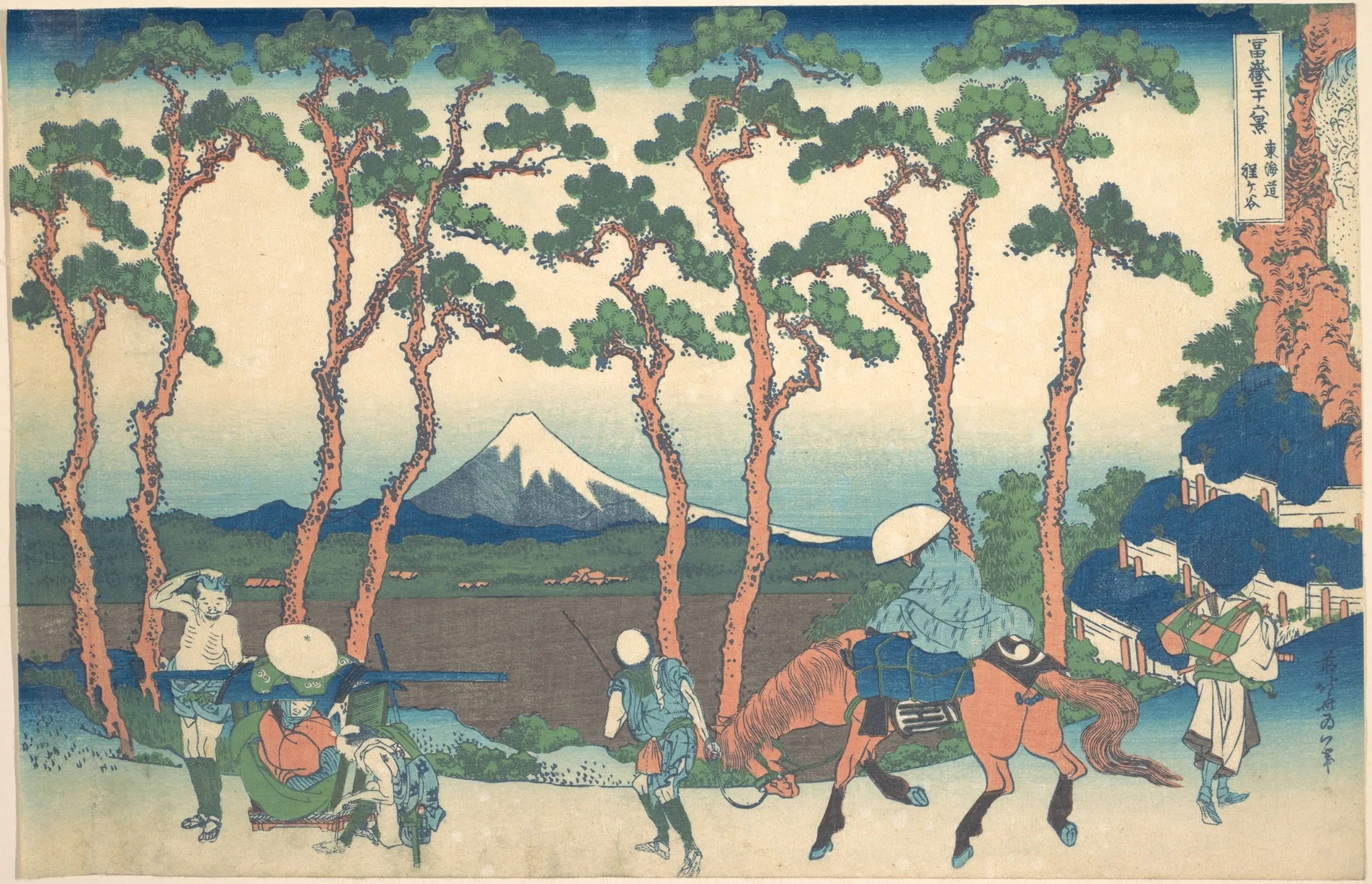
松並木のすきまから富士!旅人たちの「ひと休み」をのぞこう。Fuji between the pines! Let's watch the travelers take a break.
 美術館アンテナ:葛飾北斎の作品に会える展覧会
この作品のお話
Story東海道の程ヶ谷(今の横浜市保土ケ谷区)あたりの松並木の道を、旅人たちが行きかう場面です。まっすぐのびる松の幹のあいだから、遠くに富士山が見えます。北斎の「冨嶽三十六景」の1枚で、1830〜32年ごろの作。この画像はニューヨークのメトロポリタン美術館の摺りです。
Travelers come and go along a road lined with pine trees near Hodogaya on the Tōkaidō, now Hodogaya Ward in Yokohama. Between the tall pine trunks, Mount Fuji can be seen far away. This print is from Hokusai's 'Thirty-six Views of Mount Fuji,' made around 1830–32. This impression is in the Metropolitan Museum of Art in New York.
程ヶ谷は、江戸の日本橋から数えて東海道4番目の宿場でした。近くの品濃坂には、みごとな松並木があったといわれます。松並木は、夏は日かげを作り、冬は風をさえぎる、旅人のための並木でした。北斎は、松の幹をカーテンのようにならべ、そのすきまに富士山を置いています。
Hodogaya was the fourth post town on the Tōkaidō, counting from Nihonbashi in Edo. Nearby Shinano Slope is said to have had a splendid row of pines. Pine-lined roads gave travelers shade in summer and shelter from the wind in winter. Hokusai lines up the pine trunks like a curtain and places Fuji in the gap.
画面には、かごをかつぐ人、馬をひく人、荷物をせおった旅人などが描かれ、それぞれが思い思いに動いています。北斎は名所の景色だけでなく、そこを行く人びとのリアルな姿を描くのが得意でした。江戸の旅のようすを生き生きと伝える記録としても楽しめる、にぎやかな1枚です。
The print shows palanquin bearers, a man leading a horse and a traveler with a pack, each moving in his own way. Hokusai was good at showing not only famous views but also the real people passing through them. You can enjoy this print as a record of travel in the Edo period.
これは背の高い松の木がならぶ道です。旅人たちが道を歩いています。1人は馬に乗っています。かごの中の人は眠っています!木のあいだに富士山が見えるかな?
This is a road with tall pine trees. Travelers walk on the road. One man rides a horse. A passenger in a palanquin is sleeping! Can you see Mount Fuji between the trees?
英語のレベルは上の「やさしい/ふつう」で切りかえられます。
えっ!?な裏ネタ
Secrets今の地名は「保土ケ谷」ですが、北斎は題名に「程ヶ谷」と書いています。江戸時代には「程ヶ谷」「保土ヶ谷」など、いくつもの書き方がありました。地名の漢字は音をあてただけ、ということがよくあったのです。
Today the place is written 保土ケ谷, but Hokusai wrote 程ヶ谷 in the title. In the Edo period, the name was written in several ways. Kanji for place names were often chosen just for their sounds.
左のかごをよく見ると、中のお客は気持ちよさそうに眠っています。その横では、かごかきが汗をふき、もう一人はわらじのひもを結び直しています。旅の大変さと、のんびりした空気が同時に伝わってきます。
Look closely at the palanquin on the left. The passenger inside is sleeping comfortably. Next to it, one bearer wipes his sweat, and another reties the strings of his straw sandals. We can feel both the hard work of travel and a relaxed mood.
江戸時代の日本では、馬に鉄のていてつを打つことはふつうではなく、わらで編んだ「馬のわらじ」をはかせていました。すり切れるとはきかえるため、街道ぞいでは馬のわらじも売られていたといわれます。
In Edo-period Japan, horses usually did not wear iron horseshoes. Instead, they wore straw sandals made for horses. Because they wore out quickly, horse sandals are said to have been sold along the highways.
北斎の少しあと、歌川広重も「東海道五拾三次」で程ヶ谷を描きました。広重が選んだのは松並木ではなく、宿場の入口の「新町橋」と茶店のある風景。同じ場所でも、画家によって見どころがちがうのです。
A little after Hokusai, Utagawa Hiroshige also drew Hodogaya in 'Fifty-three Stations of the Tōkaidō.' He chose not the pines but Shinmachi Bridge at the entrance to the town, with tea shops. Different artists find different highlights in the same place.
ここを見て!
Look Closer1松のすきまの富士Fuji between the pines
まっすぐな松の幹のあいだに、白い富士山がのぞいています。
White Mount Fuji peeks out between the straight pine trunks.
2休むかごThe resting palanquin
かごの中のお客は眠り、かごかきは汗をふいたり、わらじを直したりしています。
The passenger sleeps, while the bearers wipe sweat and fix their sandals.
3馬に乗った旅人A traveler on a horse
大きな笠の旅人が馬にゆられています。馬は首を下げて歩いています。
A traveler in a wide hat rides a horse. The horse walks with its head down.
4松並木The row of pines
赤茶色の幹の松が、カーテンのように画面いっぱいにならんでいます。
Pines with red-brown trunks stand across the picture like a curtain.
英語で名画を語ろう
Talk about Art in EnglishTall pine trees line the road to Hodogaya.
背の高い松の木が、程ヶ谷への道ぞいにならんでいます。
💡 line は動詞で「〜にそって列をなす」。並木道の説明にぴったりです。
英語で説明すると… Describe it
これは背の高い松の木がならぶ道です。木々のあいだから、遠くに富士山が見えます。左では、2人の男がかごのそばでひと休みしています。右では、旅人が馬に乗っています。
This is a road with tall pine trees. Between the trees, you can see Mount Fuji in the distance. On the left, two men are taking a break with a palanquin. On the right, a traveler is riding a horse.
考えてみよう Think & Talk
- この絵の中のだれになってみたいですか?それはなぜ?Which person in this picture would you like to be? Why?
- 北斎はなぜ、富士山を木のあいだに置いたのだと思いますか?Why do you think Hokusai put Fuji between the trees?
この作品の英単語
WordsTall pines line the road.
背の高い松が道にならんでいます。
Many travelers walked along the Tōkaidō.
たくさんの旅人が東海道を歩きました。
A man wipes the sweat from his face.
男が顔の汗をふいています。
The pine trees make the road shady.
松の木が道を日かげにしています。
ミニクイズ
QuizQ. 程ヶ谷は、江戸の日本橋から数えて東海道の何番目の宿場?Counting from Nihonbashi, which post town on the Tōkaidō was Hodogaya?
品川・川崎・神奈川に続く、4番目の宿場でした。
It came after Shinagawa, Kawasaki and Kanagawa, so it was the fourth.
ウソ?ホント? 北斎は、題名に「程ヶ谷」と書いた。Hokusai wrote the place name as 程ヶ谷 in the title.
江戸時代には、いくつもの書き方がありました。
In the Edo period, the name was written in several ways.
ウソ?ホント? 江戸時代の日本の馬は、みんな鉄のていてつをつけていた。In the Edo period, Japanese horses all wore iron horseshoes.
わらで編んだ「馬のわらじ」をはかせるのがふつうでした。
They usually wore straw sandals made for horses.
 画像の出典とライセンス / Image credit
- CC0冨嶽三十六景 東海道保土ケ谷-Hodogaya on the Tōkaidō (Tōkaidō Hodogaya), from the series Thirty-six Views of Mount Fuji (Fugaku sanjūrokkei) MET DP141068.jpg(Wikimedia Commons)
ライセンス:CC0(パブリックドメイン提供)/作者・撮影者の表記:Katsushika Hokusai
この作品は、作者の死後長い年月がたち著作権の保護期間が終わった「パブリックドメイン」の作品です。画像は平面の作品を忠実に写したもので、新しい著作権は生じません(Wikimedia Commons の PD-Art の考え方)。 所蔵:メトロポリタン美術館(The Metropolitan Museum of Art)。画像は表示のために縮小・WebP 形式に変換しています。
葛飾北斎のほかの作品