

 PDF をダウンロード
Let's Look at Art!
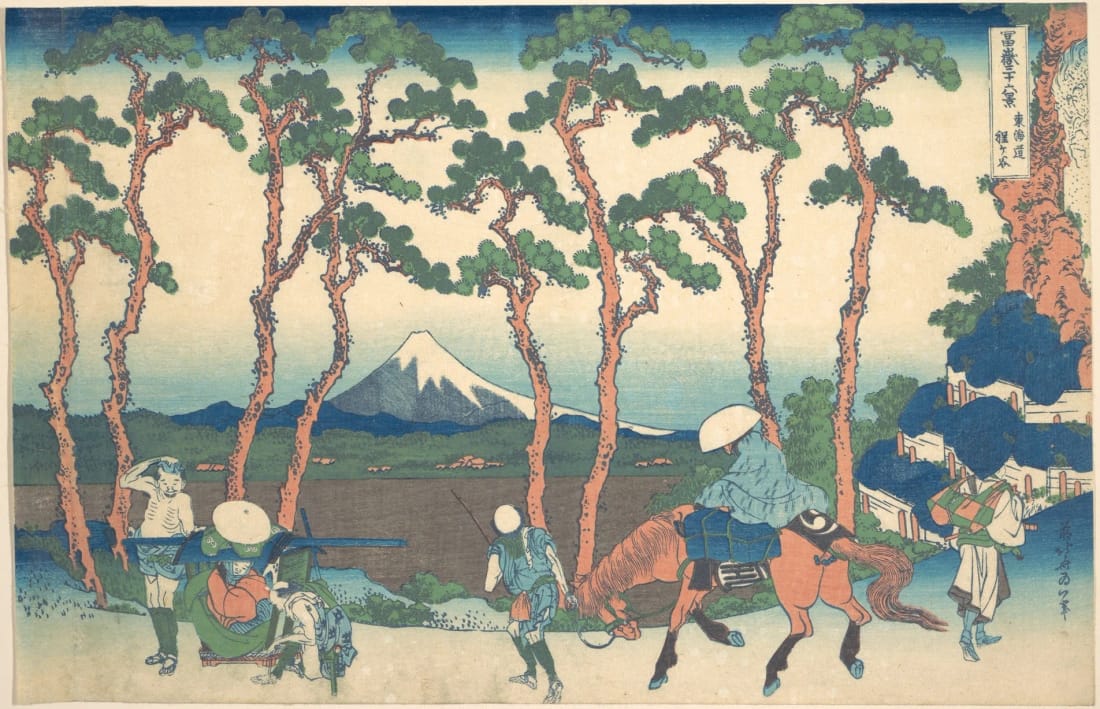
Title: Hodogaya on the Tōkaidō, from Thirty-six Views of Mount Fuji
Artist: Katsushika Hokusai (1760–1849)
Year: c. 1830–32
Medium: Woodblock print, ink and color on paper
Museum: The Metropolitan Museum of Art, New York
1 Find it! 絵の中から見つけて、○でかこもう。
- ☐ Fuji between the pines
- ☐ The resting palanquin
- ☐ A traveler on a horse
- ☐ The row of pines
2 First look 最初に見たときの感想を書こう。
When I first saw this painting, I felt ______________ because ______________________.
Three colors I can see: ①__________ ②__________ ③__________
3 Words — Match them. 英語と日本語を線で結ぼう。
- pine ●
- traveler ●
- wipe ●
- shady ●
- ● 日かげの多い
- ● 旅人
- ● 松
- ● ふく・ぬぐう
Hodogaya on the Tōkaidō, from Thirty-six Views of Mount Fuji
4 Fill in the blanks. 下の箱から選んで、( )に入れよう。形を変えるものもあります。
- Tall line the road.
- Many walked along the Tōkaidō.
- A man the sweat from his face.
- The pine trees make the road .
5 Read and answer — True or False? 英文を読んで、正しければ T、ちがえば F。
This is a road with tall pine trees. Travelers walk on the road. One man rides a horse. A passenger in a palanquin is sleeping! Can you see Mount Fuji between the trees?
Travelers come and go along a road lined with pine trees near Hodogaya on the Tōkaidō, now Hodogaya Ward in Yokohama. Between the tall pine trunks, Mount Fuji can be seen far away. This print is from Hokusai's 'Thirty-six Views of Mount Fuji,' made around 1830–32. This impression is in the Metropolitan Museum of Art in New York.
- Hokusai wrote the place name as 程ヶ谷 in the title. T / F
- In the Edo period, Japanese horses all wore iron horseshoes. T / F
6 Quiz — Choose the best answer. 正しいものを選ぼう。
Counting from Nihonbashi, which post town on the Tōkaidō was Hodogaya?
- The 53rd
- The 10th
- The 4th
- The 1st
Hodogaya on the Tōkaidō, from Thirty-six Views of Mount Fuji
7 Put the words in order. 語を正しく並べかえて、文を書こう。
- to / pine / road / Hodogaya / Tall / line / the / trees .
- a / tall / This / with / is / pine / road / trees .
8 Complete the description. 箱の語を(1)〜(4)に入れて、絵の説明を完成させよう。
This is a road with tall pine (1). Between the (2), you can see Mount Fuji in the distance. On the left, two men are taking a break with a palanquin. On the right, a traveler is (3) a (4).
9 Describe the painting in English. この絵を英語で説明しよう(3文以上)。
10 Think & Talk 考えて、ペアやグループで話し合おう。
Which person in this picture would you like to be? Why?
Why do you think Hokusai put Fuji between the trees?
11 My favorite part いちばん好きなところを英語で。
I like the ____________ because ____________________________.
Answers & Notes
1 Find it!
Fuji between the pines=松のすきまの富士/The resting palanquin=休むかご/A traveler on a horse=馬に乗った旅人/The row of pines=松並木
2 First look
自由に書けたら正解。I felt calm / surprised / happy … などの形容詞を使おう。
3 Words
1–c(pine=松) 2–b(traveler=旅人) 3–d(wipe=ふく・ぬぐう) 4–a(shady=日かげの多い)
4 Fill in the blanks
- pines Tall pines line the road.
背の高い松が道にならんでいます。 - travelers Many travelers walked along the Tōkaidō.
たくさんの旅人が東海道を歩きました。 - wipes A man wipes the sweat from his face.
男が顔の汗をふいています。 - shady The pine trees make the road shady.
松の木が道を日かげにしています。
5 Read — T / F
【本文の訳】これは背の高い松の木がならぶ道です。旅人たちが道を歩いています。1人は馬に乗っています。かごの中の人は眠っています!木のあいだに富士山が見えるかな?
【本文の訳】東海道の程ヶ谷(今の横浜市保土ケ谷区)あたりの松並木の道を、旅人たちが行きかう場面です。まっすぐのびる松の幹のあいだから、遠くに富士山が見えます。北斎の「冨嶽三十六景」の1枚で、1830〜32年ごろの作。この画像はニューヨークのメトロポリタン美術館の摺りです。
- T 北斎は、題名に「程ヶ谷」と書いた。
解説:江戸時代には、いくつもの書き方がありました。 - F 江戸時代の日本の馬は、みんな鉄のていてつをつけていた。
解説:わらで編んだ「馬のわらじ」をはかせるのがふつうでした。
6 Quiz
C 問:程ヶ谷は、江戸の日本橋から数えて東海道の何番目の宿場?
選択肢:A 53番目/B 10番目/C 4番目/D 1番目
解説:品川・川崎・神奈川に続く、4番目の宿場でした。
7 Put the words in order
- Tall pine trees line the road to Hodogaya.
背の高い松の木が、程ヶ谷への道ぞいにならんでいます。 - This is a road with tall pine trees.
これは背の高い松の木がならぶ道です。
💡 line the road(道ぞいにならぶ):line は動詞で「〜にそって列をなす」。並木道の説明にぴったりです。
8 Complete the description
(1) trees (2) trees (3) riding (4) horse
9 Describe(模範解答)
This is a road with tall pine trees. Between the trees, you can see Mount Fuji in the distance. On the left, two men are taking a break with a palanquin. On the right, a traveler is riding a horse.
これは背の高い松の木がならぶ道です。木々のあいだから、遠くに富士山が見えます。左では、2人の男がかごのそばでひと休みしています。右では、旅人が馬に乗っています。
10 Think & Talk(問いの訳)
- Which person in this picture would you like to be? Why?
この絵の中のだれになってみたいですか?それはなぜ? - Why do you think Hokusai put Fuji between the trees?
北斎はなぜ、富士山を木のあいだに置いたのだと思いますか?
正解のない問いです。理由をつけて話せたら◎。
Fun Fact(訳)
題名は「保土ケ谷」じゃない 今の地名は「保土ケ谷」ですが、北斎は題名に「程ヶ谷」と書いています。江戸時代には「程ヶ谷」「保土ヶ谷」など、いくつもの書き方がありました。地名の漢字は音をあてただけ、ということがよくあったのです。
