 ワークシート
 ぬりえ
 迷路
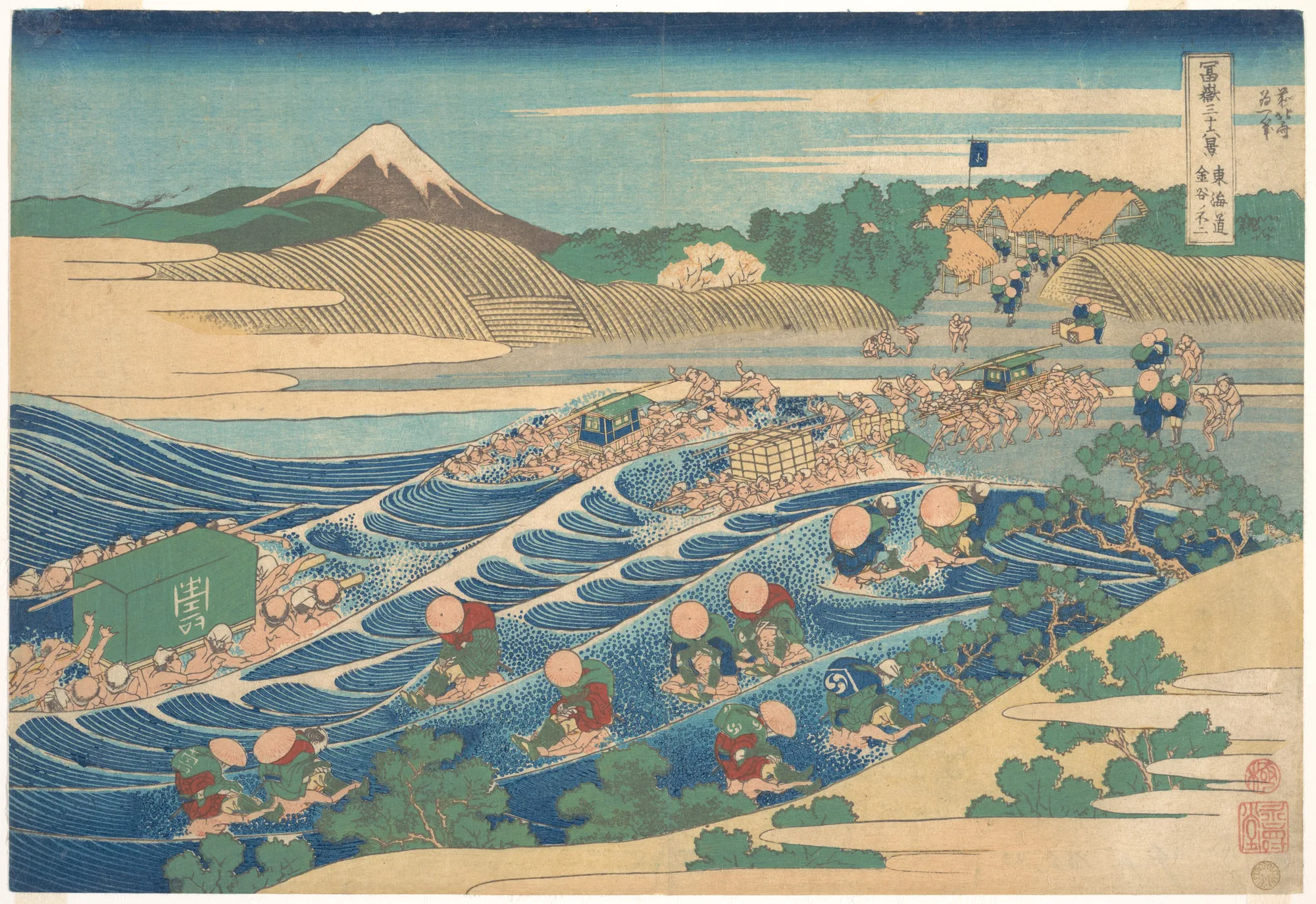
橋がない!?大井川を肩車でわたる、江戸の旅人たち。No bridge!? Edo travelers cross the Ōi River on porters' shoulders.
 美術館アンテナ:葛飾北斎の作品に会える展覧会
この作品のお話
Story東海道の大井川を、大勢の人がわたっている場面です。川のむこうには宿場の家並みがあり、そのさらに奥に富士山がそびえます。題名の金谷は、大井川の西の岸にあった宿場です。北斎のシリーズ「冨嶽三十六景」の1枚で、1830〜32年ごろの作。同じ図柄の摺りは各地にありますが、この画像はニューヨークのメトロポリタン美術館の摺りです。
Crowds of people are crossing the Ōi River on the Tōkaidō road. Beyond the river are the houses of a post town, and far behind them rises Mount Fuji. Kanaya, in the title, was a post town on the west bank of the Ōi River. This print is from Hokusai's series 'Thirty-six Views of Mount Fuji,' made around 1830–32. Impressions of this design are in many places, and this one is in the Metropolitan Museum of Art in New York.
江戸時代、大井川には橋がかけられず、渡し舟も許されていませんでした。旅人は「川越人足(かわごしにんそく)」に肩車をしてもらうか、「蓮台(れんだい)」という台にのせてもらって川をわたりました。北斎は、うろこのように重なる波と、ぎっしりの人びとで、川わたりの大さわぎをにぎやかに描いています。
In the Edo period, there was no bridge over the Ōi River, and ferry boats were not allowed. Travelers crossed on the shoulders of river porters, or sat on wooden platforms carried by them. Hokusai shows the busy crossing with waves layered like fish scales and crowds of people.
大雨で水が増えると「川留め」となり、旅人は何日も宿場で足止めされました。「箱根八里は馬でも越すが、越すに越されぬ大井川」という歌が生まれたほどです。明治時代になると川越しの制度は終わり、やがて橋もかけられて、肩車の川わたりは歴史の中の風景になりました。
When heavy rain made the water rise, crossing was stopped, and travelers could be stuck in the post town for days. A song even said that you can cross the Hakone mountains on horseback, but you cannot cross the Ōi River. In the Meiji period, the porter system ended, bridges were built, and crossing on shoulders became a scene from history.
この川には橋がありません。人びとはどうやってわたるのでしょう?力持ちの男たちが肩にのせて運ぶのです!水は荒れて見えます。富士山は遠くにあります。
There is no bridge on this river. How do people cross? Strong men carry them on their shoulders! The water looks rough. Mount Fuji is far away.
英語のレベルは上の「やさしい/ふつう」で切りかえられます。
えっ!?な裏ネタ
Secrets川越しの料金は、その日の水の深さで決まりました。水がひざまでか、帯の高さか、わきの下までかによって値段が変わり、深いほど高くなったのです。水がわきの下をこえるほどになると、川留めになったとされます。
The fare for crossing depended on how deep the water was that day. The price changed depending on whether the water reached the knees, the waist or the armpits. Deeper water meant a higher price. When it rose above the armpits, crossing was stopped.
大井川に橋がなかったのは、江戸を守るための防衛の意味があった、という説がよく知られています。ほかに、川幅が広く流れが変わりやすいため、橋をかけにくかった、という見方もあります。
A well-known theory says there was no bridge for defense, to protect Edo from armies coming from the west. Another view is that the river was wide and often changed its course, so a bridge was hard to build.
身分の高い人は、かごに乗ったまま、大きな台にのせられて川をわたりました。画面のまん中や左にも、大勢の人足にかつがれたかごが見えます。かつぐ人足の数が多いほど、料金も高くなりました。
Important people stayed inside their palanquins, which were placed on large platforms and carried across. In the middle and on the left of the print, you can see palanquins carried by many porters. The more porters needed, the higher the fare.
大井川の東の岸、静岡県島田市には「島田宿大井川川越遺跡」があり、料金を決めた「川会所」や人足の待合所などが残されています。江戸の川わたりのしくみを、今も見学できる貴重な場所です。
On the east bank of the Ōi River, in Shimada City, Shizuoka, there is a historic site of the old river crossing. The office that set the fares and the porters' waiting houses remain. You can still learn how people crossed the river in the Edo period.
ここを見て!
Look Closer1富士山Mount Fuji
川と丘のずっと奥に、雪をかぶった富士山がそびえています。
Snowy Mount Fuji rises far beyond the river and hills.
2台にのったかごA palanquin on a platform
大勢の人足が、かごをのせた台をかついで川をわたっています。
Many porters carry a platform with a palanquin across the river.
3肩車の旅人Travelers on shoulders
旅人が人足の肩にのって、波の中を進んでいます。
Travelers ride on porters' shoulders through the waves.
4宿場の家並みThe post town
川のむこうの宿場。旗が立ち、人びとが行きかっています。
The post town across the river. A flag stands, and people come and go.
英語で名画を語ろう
Talk about Art in EnglishTravelers cross the river on the porters' shoulders.
旅人たちは人足の肩にのって川をわたります。
💡 on someone's shoulders で「肩車されて」。人がどう運ばれているかを言えます。
英語で説明すると… Describe it
これはにぎやかな川の場面です。手前では、たくさんの人足が人びとをかついで川をわたっています。肩にのっている人もいます。奥には、村と富士山があります。
This is a busy river scene. In the foreground, many porters are carrying people across the river. Some people sit on their shoulders. In the background, there is a village and Mount Fuji.
考えてみよう Think & Talk
- こんなふうに川をわたってみたいですか?それはなぜ?Would you like to cross a river like this? Why or why not?
- 北斎はなぜ、この絵にこんなにたくさんの人を描いたのだと思いますか?Why do you think Hokusai put so many people in this picture?
この作品の英単語
WordsTravelers cross the river on porters' shoulders.
旅人は人足の肩にのって川をわたります。
Many porters work in the river.
たくさんの人足が川の中で働いています。
The fare was higher when the water was deep.
水が深いときは料金が高くなりました。
The river was too deep to cross after heavy rain.
大雨のあと、川は深すぎてわたれませんでした。
ミニクイズ
QuizQ. 江戸時代、旅人は大井川をどうやってわたった?How did travelers cross the Ōi River in the Edo period?
橋も渡し舟もなく、川越人足にわたしてもらいました。
There was no bridge or ferry, so river porters carried them across.
ウソ?ホント? 大井川の川越しの料金は、水の深さで変わった。The fare for crossing the Ōi River changed with the depth of the water.
深いほど高くなり、深すぎると川留めになりました。
Deeper water cost more, and if it was too deep, crossing was stopped.
ウソ?ホント? 江戸時代、大井川には立派な石の橋がかかっていた。In the Edo period, there was a fine stone bridge over the Ōi River.
橋はかけられず、人足が旅人をわたしていました。
There was no bridge. Porters carried travelers across.
 画像の出典とライセンス / Image credit
- CC0冨嶽三十六景 東海道金谷の不二-Fuji Seen from Kanaya on the Tōkaidō (Tōkaidō Kanaya no Fuji), from the series Thirty-six Views of Mount Fuji (Fugaku sanjūrokkei) MET DP141002.jpg(Wikimedia Commons)
ライセンス:CC0(パブリックドメイン提供)/作者・撮影者の表記:Katsushika Hokusai
この作品は、作者の死後長い年月がたち著作権の保護期間が終わった「パブリックドメイン」の作品です。画像は平面の作品を忠実に写したもので、新しい著作権は生じません(Wikimedia Commons の PD-Art の考え方)。 所蔵:メトロポリタン美術館(The Metropolitan Museum of Art)。画像は表示のために縮小・WebP 形式に変換しています。
葛飾北斎のほかの作品