

 PDF をダウンロード
Let's Look at Art!
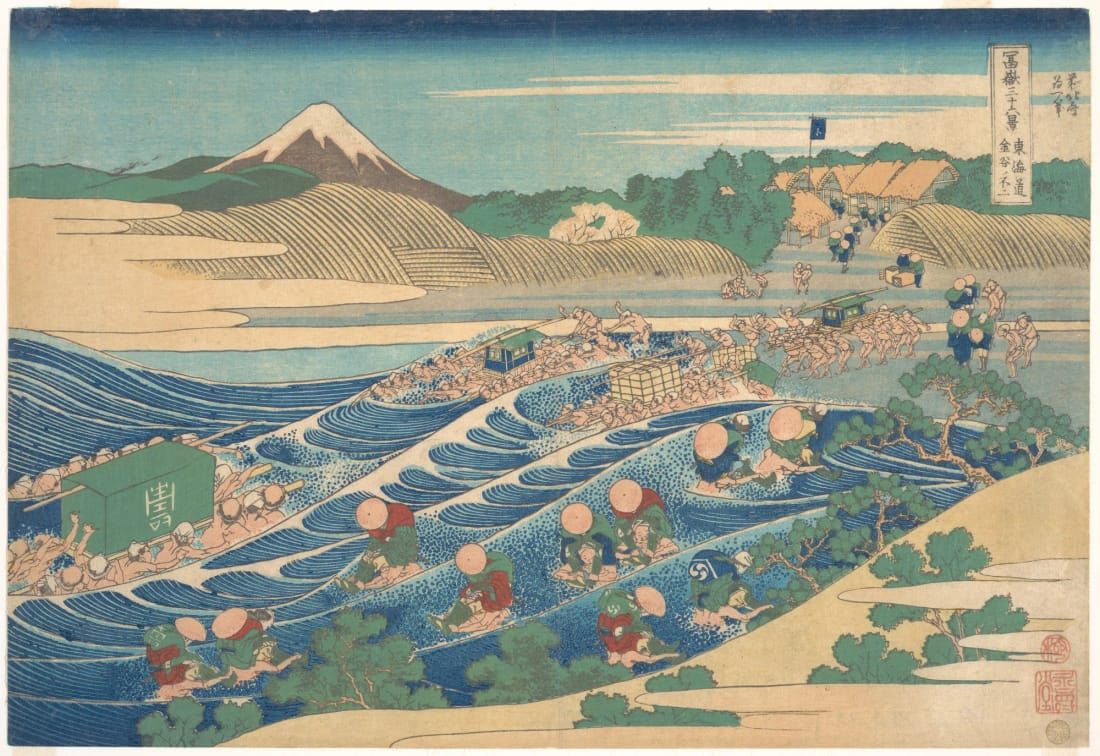
Title: Fuji Seen from Kanaya on the Tōkaidō, from Thirty-six Views of Mount Fuji
Artist: Katsushika Hokusai (1760–1849)
Year: c. 1830–32
Medium: Woodblock print, ink and color on paper
Museum: The Metropolitan Museum of Art, New York
1 Find it! 絵の中から見つけて、○でかこもう。
- ☐ Mount Fuji
- ☐ A palanquin on a platform
- ☐ Travelers on shoulders
- ☐ The post town
2 First look 最初に見たときの感想を書こう。
When I first saw this painting, I felt ______________ because ______________________.
Three colors I can see: ①__________ ②__________ ③__________
3 Words — Match them. 英語と日本語を線で結ぼう。
- cross ●
- porter ●
- fare ●
- deep ●
- ● わたる
- ● 深い
- ● 運賃・料金
- ● 荷物運びの人・人足
Fuji Seen from Kanaya on the Tōkaidō, from Thirty-six Views of Mount Fuji
4 Fill in the blanks. 下の箱から選んで、( )に入れよう。形を変えるものもあります。
- Travelers the river on porters' shoulders.
- Many work in the river.
- The was higher when the water was deep.
- The river was too to cross after heavy rain.
5 Read and answer — True or False? 英文を読んで、正しければ T、ちがえば F。
There is no bridge on this river. How do people cross? Strong men carry them on their shoulders! The water looks rough. Mount Fuji is far away.
Crowds of people are crossing the Ōi River on the Tōkaidō road. Beyond the river are the houses of a post town, and far behind them rises Mount Fuji. Kanaya, in the title, was a post town on the west bank of the Ōi River. This print is from Hokusai's series 'Thirty-six Views of Mount Fuji,' made around 1830–32. Impressions of this design are in many places, and this one is in the Metropolitan Museum of Art in New York.
- The fare for crossing the Ōi River changed with the depth of the water. T / F
- In the Edo period, there was a fine stone bridge over the Ōi River. T / F
6 Quiz — Choose the best answer. 正しいものを選ぼう。
How did travelers cross the Ōi River in the Edo period?
- By walking over a bridge
- On porters' shoulders or platforms
- On a big ship
- Through a tunnel
Fuji Seen from Kanaya on the Tōkaidō, from Thirty-six Views of Mount Fuji
7 Put the words in order. 語を正しく並べかえて、文を書こう。
- cross / on / Travelers / river / porters' / shoulders / the / the .
- river / busy / a / This / is / scene .
8 Complete the description. 箱の語を(1)〜(4)に入れて、絵の説明を完成させよう。
This is a busy river scene. In the foreground, many (1) are carrying (2) across the (3). Some (4) sit on their shoulders. In the background, there is a village and Mount Fuji.
9 Describe the painting in English. この絵を英語で説明しよう(3文以上)。
10 Think & Talk 考えて、ペアやグループで話し合おう。
Would you like to cross a river like this? Why or why not?
Why do you think Hokusai put so many people in this picture?
11 My favorite part いちばん好きなところを英語で。
I like the ____________ because ____________________________.
Answers & Notes
1 Find it!
Mount Fuji=富士山/A palanquin on a platform=台にのったかご/Travelers on shoulders=肩車の旅人/The post town=宿場の家並み
2 First look
自由に書けたら正解。I felt calm / surprised / happy … などの形容詞を使おう。
3 Words
1–a(cross=わたる) 2–d(porter=荷物運びの人・人足) 3–c(fare=運賃・料金) 4–b(deep=深い)
4 Fill in the blanks
- cross Travelers cross the river on porters' shoulders.
旅人は人足の肩にのって川をわたります。 - porters Many porters work in the river.
たくさんの人足が川の中で働いています。 - fare The fare was higher when the water was deep.
水が深いときは料金が高くなりました。 - deep The river was too deep to cross after heavy rain.
大雨のあと、川は深すぎてわたれませんでした。
5 Read — T / F
【本文の訳】この川には橋がありません。人びとはどうやってわたるのでしょう?力持ちの男たちが肩にのせて運ぶのです!水は荒れて見えます。富士山は遠くにあります。
【本文の訳】東海道の大井川を、大勢の人がわたっている場面です。川のむこうには宿場の家並みがあり、そのさらに奥に富士山がそびえます。題名の金谷は、大井川の西の岸にあった宿場です。北斎のシリーズ「冨嶽三十六景」の1枚で、1830〜32年ごろの作。同じ図柄の摺りは各地にありますが、この画像はニューヨークのメトロポリタン美術館の摺りです。
- T 大井川の川越しの料金は、水の深さで変わった。
解説:深いほど高くなり、深すぎると川留めになりました。 - F 江戸時代、大井川には立派な石の橋がかかっていた。
解説:橋はかけられず、人足が旅人をわたしていました。
6 Quiz
B 問:江戸時代、旅人は大井川をどうやってわたった?
選択肢:A 橋を歩いて/B 人の肩や台にのって/C 大きな船で/D トンネルを通って
解説:橋も渡し舟もなく、川越人足にわたしてもらいました。
7 Put the words in order
- Travelers cross the river on the porters' shoulders.
旅人たちは人足の肩にのって川をわたります。 - This is a busy river scene.
これはにぎやかな川の場面です。
💡 on someone's shoulders(〜の肩にのって):on someone's shoulders で「肩車されて」。人がどう運ばれているかを言えます。
8 Complete the description
(1) porters (2) people (3) river (4) people
9 Describe(模範解答)
This is a busy river scene. In the foreground, many porters are carrying people across the river. Some people sit on their shoulders. In the background, there is a village and Mount Fuji.
これはにぎやかな川の場面です。手前では、たくさんの人足が人びとをかついで川をわたっています。肩にのっている人もいます。奥には、村と富士山があります。
10 Think & Talk(問いの訳)
- Would you like to cross a river like this? Why or why not?
こんなふうに川をわたってみたいですか?それはなぜ? - Why do you think Hokusai put so many people in this picture?
北斎はなぜ、この絵にこんなにたくさんの人を描いたのだと思いますか?
正解のない問いです。理由をつけて話せたら◎。
Fun Fact(訳)
料金は水の深さしだい 川越しの料金は、その日の水の深さで決まりました。水がひざまでか、帯の高さか、わきの下までかによって値段が変わり、深いほど高くなったのです。水がわきの下をこえるほどになると、川留めになったとされます。
