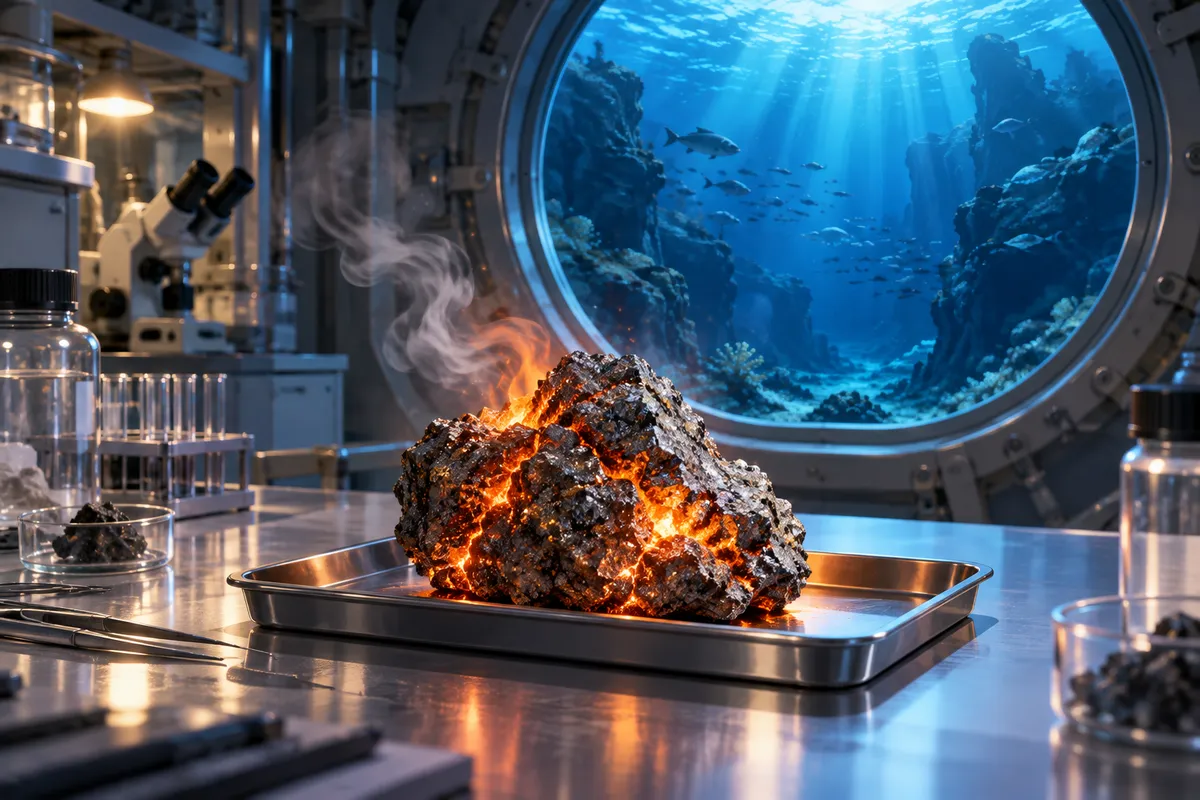
深海の石が自然発火!研究室で勝手に燃えた原因は、カイロと同じしくみ
Rocks From the Deep Sea Caught Fire on Their Own
びっくり度 中学生 161語 / 高校生 272語深海鉱物化学海底資源
3行でわかる!このニュース
- アメリカの研究者が海の底から持ち帰った石が、研究室で勝手に燃えた
- 原因は、鉄と硫黄でできた鉱物が空気中の酸素とふれて出した熱
- 海底から金属をとる計画もあり、研究者は場所ごとに危険を調べるよう求めた
なぜ話題?アメリカ地質調査所(USGS)が10月7日に発表。学術誌 Scientific Reports に論文。海外の科学ニュースで「深海の石が自然発火」と話題に
中学生レベル(英検3級〜準2級・CEFR A1〜A2)・161語・約1分
Deep-Sea Rocks Burned in a Lab
語彙レベル(CEFR-J)
A171%A215.4%B18.6%B21.2%外3.7%
0:00 / --:--
この記事の声:アメリカ英語・男性声は日によって、アメリカ・イギリス・オーストラリア英語、男性・女性が入れかわります
MP3をダウンロード(中学生版・タイトルから本文まで)
Rocks from the bottom of the ocean caught fire by themselves in a lab. Scientists at the U.S. Geological Survey, a government science group, studied what happened.
海の底から持ってきた石が、研究室でひとりでに燃えだしました。アメリカの国の科学機関である地質調査所(USGS)の研究者たちが、何が起きたのかを調べました。
The rocks came from an area of the seafloor in the Pacific Ocean. It is off the coast of Oregon and California in the United States. The team collected the rocks there in 2022.
石は、太平洋の海底のある場所から来たものです。そこはアメリカのオレゴン州とカリフォルニア州の沖にあります。研究チームは、2022年にそこで石を集めました。
In the lab, the scientists dried the rocks and broke them into small pieces. Then two of the rocks got very hot and started to burn. Nobody lit them.
研究室で、研究者たちは石をかわかして、細かくくだきました。すると、そのうち2つの石がとても熱くなり、燃えはじめました。だれも火をつけていませんでした。
Most of these rocks are made of a mineral of iron and sulfur. Its crystals are very tiny, so oxygen in the air can reach them easily. When the mineral reacts with oxygen, it gives off heat. Hand warmers use the same idea with iron powder.
燃えた石のほとんどは、鉄と硫黄でできた鉱物でした。その結晶はとても小さいので、空気中の酸素がかんたんにふれることができます。この鉱物は酸素と反応すると、熱を出します。使い捨てカイロも、鉄の粉で同じしくみを使っています。
Some countries and companies are studying the seafloor as a future source of metals. The scientists said each place should be checked for this danger.
海底を、これから金属をとる場所として調べている国や会社もあります。研究者たちは、場所ごとにこの危険を調べるべきだと話しました。
WORDSこの記事の単語(8語)
- caught fireA1熟火がついた、燃えだしたstarted to burnThe dry leaves caught fire.かれ葉に火がついた。
- seafloor外名海底the ground at the bottom of the seaMany crabs live on the seafloor.海底には多くのカニがすんでいる。
- collectedA1動集めたbrought many things togetherWe collected shells on the beach.私たちは浜辺で貝がらを集めた。
- lit外動火をつけた(light の過去形)started a fire on somethingDad lit the candles on the cake.お父さんがケーキのろうそくに火をつけた。
- mineralB1名鉱物a natural thing found in rocksGold is a mineral.金は鉱物だ。
- oxygenB1名酸素a gas in the air that we breatheFish get oxygen from the water.魚は水から酸素をとり入れる。
- reactsB1動反応するchanges when it meets another thingIron reacts with water and gets rusty.鉄は水と反応してさびる。
- sourceA2名(ものを手に入れる)もと、源a place where you get somethingThe sun is a source of energy.太陽はエネルギーの源だ。
単語の横の A1A2B1B2 は、その単語のむずかしさです(A1 がいちばんやさしく、B2 がいちばん難しい。外 はリストにない語)。ほかの単語のレベルも調べる
レベルの出典:『CEFR-J Wordlist Version 1.6』 東京外国語大学投野由紀夫研究室. (URL: https://www.cefr-j.org/download.html より 2026年8月ダウンロード)
GRAMMAR文法ポイント:接続詞 so(だから~)と when(~すると)
A, so B は「A だから B」。本文の Its crystals are very tiny, so oxygen in the air can reach them easily. は「結晶がとても小さいので、酸素がかんたんにふれられる」。When A, B は「A すると(するとき)B」。When the mineral reacts with oxygen, it gives off heat. は「酸素と反応すると熱を出す」。
- It was raining, so we stayed home.雨がふっていたので、私たちは家にいた。
- When I get home, I wash my hands.家に帰ると、私は手をあらう。
GAMESゲームで復習しよう
THINK考えてみよう・話してみよう
日本語訳はぼかしてあります。タップすると見えます。
- What other things around you get warm or change when they meet air?身のまわりで、空気にふれるとあたたかくなったり変化したりするものには、ほかに何がありますか。
- Would you like to explore the deep sea? Why or why not?深海を探検してみたいですか。それはなぜですか。
PRINT中学生版ワークシート(無料)
本文・単語・クイズ・並べかえ・穴うめ・英作文と解答つき。授業・宿題・自習にどうぞ。
高校生レベル(英検2級〜準1級・CEFR B1〜B2)・272語・約2分
Seafloor Rocks Burst Into Flames After Reaching the Lab
語彙レベル(CEFR-J)
A163.9%A214.5%B113.4%B24.1%外4.1%
0:00 / --:--
この記事の声:アメリカ英語・男性声は日によって、アメリカ・イギリス・オーストラリア英語、男性・女性が入れかわります
MP3をダウンロード(高校生版・タイトルから本文まで)
Two rocks collected from the seafloor off the western United States caught fire on their own while scientists were preparing them in a laboratory. Researchers at the U.S. Geological Survey, or USGS, described the event in the journal Scientific Reports in late September. The agency announced the findings on October 7.
アメリカ西部の沖の海底から集めた2つの石が、研究室で研究者たちが下準備をしている最中に、ひとりでに燃えだしました。アメリカ地質調査所(USGS)の研究者たちが、9月下旬に学術誌『Scientific Reports』でこのできごとを報告しました。USGSは10月7日に、この研究の結果を発表しました。
The samples came from the Escanaba Trough, a section of the Gorda Ridge in the Pacific Ocean off the border between Oregon and California. There, hot water rising from vents in the seafloor has left behind deposits rich in copper, zinc and iron. A USGS team gathered the rocks during an expedition in 2022.
石は、オレゴン州とカリフォルニア州の境の沖、太平洋のゴルダ海嶺にあるエスカナバ・トラフという場所から来ました。そこでは、海底の噴出口からわき出る熱い水が、銅・亜鉛・鉄を多くふくむ鉱床を残してきました。USGSのチームは、2022年の調査航海でこれらの石を集めました。
The two rocks heated up while they were being dried and crushed. By comparing them with rocks from the same area that did not burn, the team found that the burning rocks were mostly marcasite, a mineral made of iron and sulfur. Its crystals were extremely small, which left a huge surface for oxygen to react with. Crushing the rocks can also help start the reaction.
2つの石は、かわかしてくだく作業の最中に熱くなりました。同じ場所から集めた燃えなかった石と比べることで、チームは、燃えた石のほとんどが鉄と硫黄でできた鉱物「白鉄鉱(マーカサイト)」だとつきとめました。その結晶はとても小さかったため、酸素と反応できる表面がとても大きくなっていました。石をくだくことも、反応が始まるきっかけになることがあります。
Disposable hand warmers rely on a similar reaction, in which iron powder slowly combines with oxygen and gets warm. On the seafloor, the rocks are surrounded by water. At the surface, they face very different levels of oxygen, temperature, pressure and moisture.
使い捨てカイロも、よく似た反応を利用しています。カイロの中では、鉄の粉が少しずつ酸素と結びついてあたたかくなります。海底では、石のまわりは水です。ところが地上では、酸素の量・温度・圧力・湿り気がまったくちがう環境に置かれます。
The finding matters because some countries and companies hope to mine these seafloor deposits for metals in the future. The International Seabed Authority has given out contracts to explore them, although no mining has taken place yet. The researchers said their study does not show that every deposit will burn, but they called for safety checks at each site.
この発見が大事なのは、こうした海底の鉱床から、将来金属をとりたいと考えている国や会社があるからです。国際海底機構は、こうした鉱床を調べるための契約をすでに出していますが、実際の採掘はまだ行われていません。研究者たちは、この研究はすべての鉱床が燃えることを示すものではないとしたうえで、場所ごとに安全を確かめるよう求めました。
WORDSこの記事の単語(10語)
- laboratoryB1名研究室、実験室a room where scientists do testsThe students did an experiment in the laboratory.生徒たちは実験室で実験をした。
- agencyA2名(政府の)機関a group that does special work for a governmentThe space agency sent a rocket to the moon.その宇宙機関は月へロケットを送った。
- depositsB1名鉱床(鉱物がたまった場所)places where a lot of a metal or mineral has built upThe mountain has large deposits of gold.その山には大きな金の鉱床がある。
- expeditionB2名調査旅行、探検a long trip to learn about a placeThey went on an expedition to the South Pole.彼らは南極へ探検に出かけた。
- crushedB1動くだかれた、つぶされたpressed into very small piecesThe ice was crushed for the drinks.飲み物のために氷がくだかれた。
- comparingA2動比べることlooking at how things are the same or differentComparing prices can save money.値段を比べるとお金の節約になる。
- surfaceB1名表面;(海の)上、地上the outside or top part of somethingThe surface of the lake was very calm.湖の表面はとても静かだった。
- reactionB2名(化学)反応a change that happens when two things meetBaking soda and vinegar cause a fizzy reaction.重曹と酢をまぜると、あわが出る反応が起きる。
- rely onB1熟~を利用する、~にたよるto need something in order to workPlants rely on sunlight to grow.植物は育つのに日光にたよっている。
- mineA1動採掘する(ほり出す)to dig metal or coal out of the groundPeople mine coal in this area.この地域では石炭がほり出されている。
単語の横の A1A2B1B2 は、その単語のむずかしさです(A1 がいちばんやさしく、B2 がいちばん難しい。外 はリストにない語)。ほかの単語のレベルも調べる
レベルの出典:『CEFR-J Wordlist Version 1.6』 東京外国語大学投野由紀夫研究室. (URL: https://www.cefr-j.org/download.html より 2026年8月ダウンロード)
GRAMMAR文法ポイント:関係代名詞の非制限用法(, which)
コンマのあとの which は、前の文の内容に「そしてそれが~」と説明を足す。本文の Its crystals were extremely small, which left a huge surface for oxygen to react with. は「結晶がとても小さかった。そしてそのことが、酸素と反応する大きな表面を残した」。which が指すのは「結晶が小さかったこと」全体。
- He missed the bus, which made him late for school.彼はバスに乗りおくれ、そのせいで学校に遅刻した。
- She said nothing, which surprised everyone.彼女は何も言わず、それがみんなをおどろかせた。
GAMESゲームで復習しよう
THINK考えてみよう・話してみよう
日本語訳はぼかしてあります。タップすると見えます。
- Should countries mine metals from the deep sea? Give reasons for your opinion.国は深海から金属をほり出すべきだと思いますか。理由をあげて意見を言おう。
- The rocks were safe on the seafloor but dangerous in the lab. What does this tell us about studying nature?石は海底では安全だったのに、研究室では危険でした。このことから、自然を研究することについてどんなことがわかりますか。
PRINT高校生版ワークシート(無料)
本文・単語・クイズ・並べかえ・穴うめ・英作文と解答つき。授業・宿題・自習にどうぞ。
PICK UP WORD
spontaneous combustion
自然発火
spontaneous は「ひとりでに起こる」、combustion は「燃焼(燃えること)」。火をつけていないのに、ものが自分で出した熱で燃えだすこと。油をふいた布や、つみ上げた干し草が自然発火することもある。
原田英語のサイトでもっと
出典・参考にした情報
この記事は、下の報道・発表で事実を確かめたうえで、原田英語が中学生・高校生向けに英語と日本語で書きおろしたオリジナル記事です(文章の転載・翻訳ではありません)。くわしく知りたい人は元の情報も読んでみよう。著作権と出典の考え方
- Deep-sea sulfide minerals can spontaneously heat and combust when exposed to airU.S. Geological Survey(2026-10-07)
- Spontaneous combustion of metal sulfide minerals and implications for seafloor massive sulfide mining(Scientific Reports)U.S. Geological Survey(2026-09-28)
- Scientists Collected Deep-Sea Rocks. They Spontaneously Caught Fire in The Lab.ScienceAlert(Yahoo News)(2026-10-11)