World Emoji Day
世界絵文字デーの英語の授業アイデアとワークシート
印刷してすぐ使えるワークシート(PDF・Word・解答つき)と、授業の手順書。
🖨️Worksheetsワークシート(無料・A4)
① 「中身を見る・印刷」で全ページを確認 → ② そのページ上の 🖨️ 印刷する でそのまま印刷できます。A4・無料。
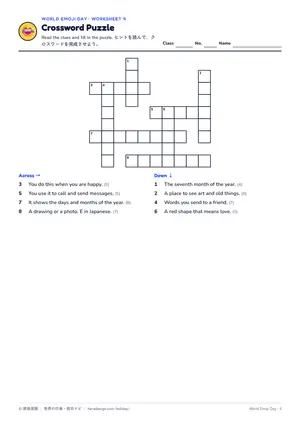
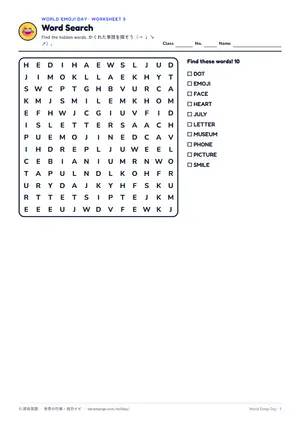
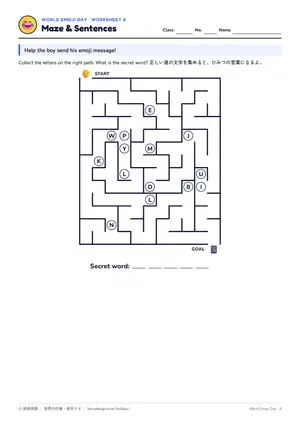
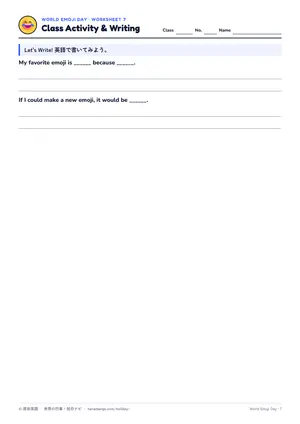
🍎Lesson Ideas世界絵文字デーを使った英語の授業アイデア
絵文字ストーリー当てゲーム
🎯 絵文字の並びを英文に直し、過去形でストーリーを話す。
- 教師が絵文字5つで短い話を見せる(例:⏰😴🏃🚌😭)。
- ペアで英文にする:I woke up late. I ran, but I missed the bus.
- 各ペアが自分の絵文字ストーリーを作り、ほかのペアが英語で当てる。
- いちばん伝わりやすかった作品をクラスで選ぶ。
詳細版を開く(時間配分・Teacher Talk・板書)
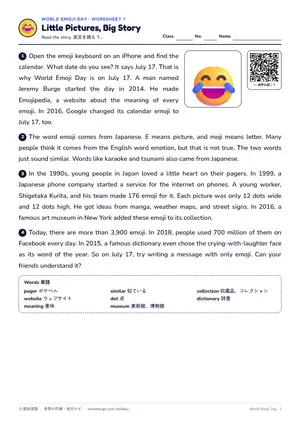
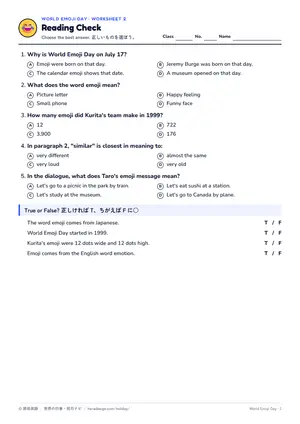
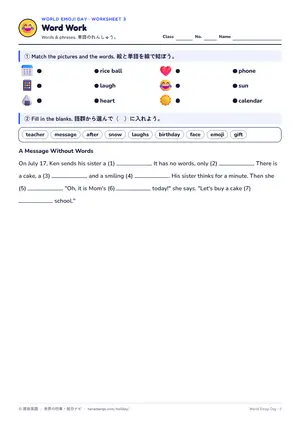
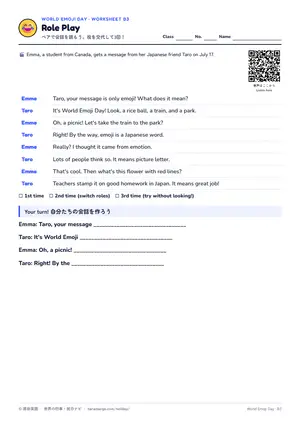
7月17日は世界絵文字デーで、iPhoneのカレンダーの絵文字に7月17日と書かれていることが日付の理由だと紹介する。英語ページの会話を聞かせ、タロウが絵文字だけのメッセージ(おにぎり・電車・公園)を送り、エマがピクニックの誘いだと読み解いたことを確認する。
🗣️ July 17 is World Emoji Day. / The calendar emoji on the iPhone says July 17. / Listen. Taro sends a message with only emoji. / A rice ball, a train, and a park. What does it mean?
見本の絵文字ストーリー⏰😴🏃🚌😭を見せ、ペアで何が起きたかを英語にさせる。答えの一例 I woke up late. I ran, but I missed the bus. を板書し、昨日のことなので過去形を使うことを確認する。過去形の動詞リストを全員で読む。
🗣️ Look at these five emoji. What happened? / Talk with your partner. / I woke up late. I ran, but I missed the bus. / It happened yesterday, so we use the past tense.
ペアで自分たちの絵文字ストーリーを作らせる。ワークシートの5つの枠に絵文字を描き、答えの英文を下の欄に書かせる。答えの英文はほかのペアに見えないよう、紙を折って隠させる。
🗣️ Now make your own emoji story. / Draw five emoji in the boxes. / Write the answer in English. Use the past tense. / Fold the paper. Don't show the answer.
となりのペアとワークシートを交換し、絵文字ストーリーを英語で当てさせる。当てたら紙を開いて答えと比べさせる。2〜3組と交換できるよう、先生が時間で合図を出す。
🗣️ Change papers with the next pair. / Say the story in English. / Open the paper. Were you right? / Change again!
いちばん伝わりやすかった作品を手を挙げて選ばせ、その作品の絵文字と英文を全体で確認する。Happy World Emoji Day! と言って終える。
🗣️ Which story was the easiest to understand? / Let's read it together. / Happy World Emoji Day!
😂 World Emoji Day(July 17)
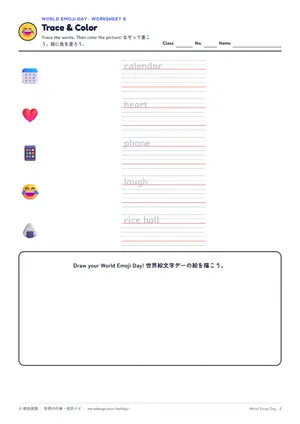
📅 = JUL 17

⏰😴🏃🚌😭
I woke up late. I ran, but I missed the bus.

過去形
wake up → woke up run → ran
miss → missed cry → cried
eat → ate go → went

Taro:🍙🚃🏞 → Let's go on a picnic!
日本生まれの絵文字を英語で説明しよう
🎯 日本独自の絵文字(💮🔰🎎🍡など)を、外国人にわかるように英語で説明する。
- 日本生まれの絵文字を10個配り、海外の人が迷いそうなものを選ぶ。
- This emoji shows ... In Japan, people use it when ... の形で説明文を書く。
- ALTやクラスメートに発表し、伝わったかを確かめる。
詳細版を開く(時間配分・Teacher Talk・板書)
emoji はどこの国の言葉かを聞く。英語ページ本文の第2段落から、emoji は日本語の「絵」+「文字」で、英語の emotion とは関係がないことを確認する。会話の最後でエマが💮の意味を聞き、タロウが「先生がよくできた宿題に押すはんこ」と説明する部分を聞かせる。
🗣️ Where does the word emoji come from? / It comes from Japanese. E means picture, and moji means letter. / Many people think it comes from emotion, but that is not true. / Listen. How does Taro explain this flower?
グループに絵文字カード10枚を配り、海外の人が意味に迷いそうなものを3つ選ばせる。なぜ迷いそうかを日本語でもよいので話し合わせる。
🗣️ Here are ten emoji. / Which ones are hard to understand for people from other countries? / Choose three. / Why are they hard? Talk in your group.
選んだ3つの絵文字について、This emoji shows ... In Japan, people use it when ... の形で説明文を書かせる。見本として💮を板書する(This emoji shows a flower with red lines. In Japan, teachers stamp it on good homework. It means great job!)。絵文字の名前は出さずに説明するよう指示する。
🗣️ Write about your three emoji. / This emoji shows a flower with red lines. / In Japan, teachers stamp it on good homework. It means great job! / Don't say the name of the emoji.
ALTかほかのグループに説明文を読み上げ、聞き手に10枚のカードの中からどの絵文字かを当ててもらう。当たらなかったときは、説明を1文足してもう一度読ませる。
🗣️ Read your sentences to the listener. / Listener, which emoji is it? Point to the card. / Not correct? Add one more sentence and try again.
いちばん伝わった説明と、伝わらなかった説明を1つずつ発表させ、何がちがったかを確認する。絵文字は日本が世界に送り出した身近な文化の一つだと伝えて終える。
🗣️ Which explanation worked best? / What made it easy to understand? / Emoji came from Japan to the world.
emoji = e(picture)+ moji(letter)
※ emotion とは関係ない

🍙 🍣 🍡 🎎 🔰 💮 …

This emoji shows ___.
In Japan, people use it when ___.

例:💮 This emoji shows a flower with red lines.
In Japan, teachers stamp it on good homework.
It means great job!