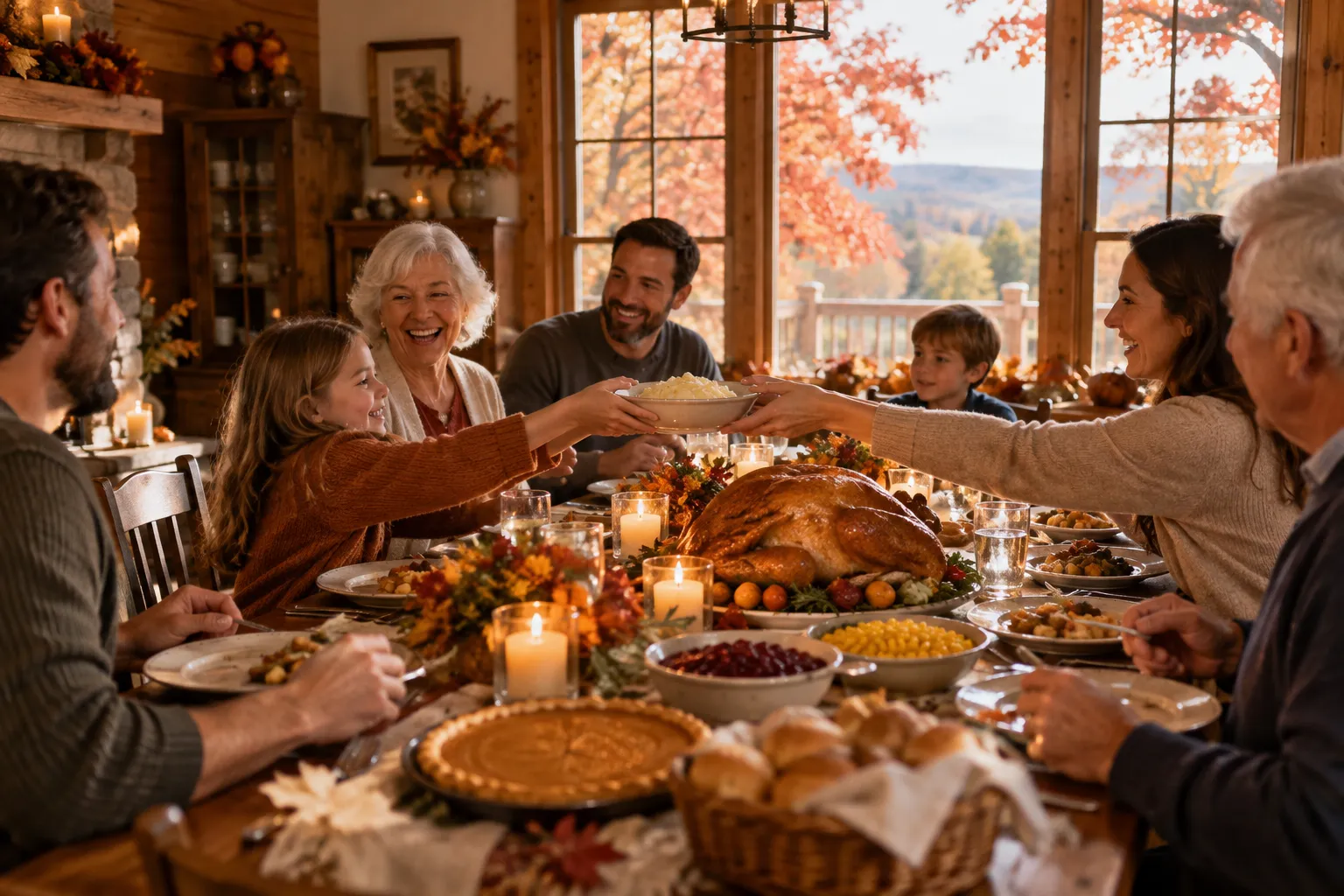
Thanksgiving

感謝祭(サンクスギビング)を英語で:読む・聞く・話す・遊ぶ

やさしい英語(CEFR A2)の読み物に音声つき。会話・単語カード・クイズ8問・ゲームで、感謝祭(サンクスギビング)の英語をまるごと。

🔊Read in English感謝祭(サンクスギビング)を英語で読もう(CEFR A2・音声つき)

感謝祭(サンクスギビング)を、やさしい英語で紹介する読み物です。▶で英文をタイトルから通して聞けます(アメリカ英語)。「和訳」ボタンで日本語訳の表示・非表示を切りかえられます。下線の語は下の単語カードにあります。

Two Sides of One Table

CEFR A2
0:00
253 words

In the fall of 1621, a small English village in North America held a harvest party. About 50 English settlers were there. Then about 90 Wampanoag men arrived with their leader, Ousamequin. They stayed for three days, and they brought five deer for the meal.

1621年の秋、北アメリカにあるイギリス人の小さな村で、収穫のお祝いが開かれました。そこには約50人のイギリス人入植者がいました。そこへ、指導者ウサメクィンとともに、約90人のワンパノアグの男たちがやってきました。彼らは3日間とどまり、食事のために5頭のシカを持ってきました。

Both groups had a hard story behind them. The English came on a ship called the Mayflower in 1620. Their first winter was terrible, and about half of them died. A few years earlier, a terrible sickness had killed many Wampanoag people. So the two groups made an agreement to protect each other.

どちらのグループにも、つらい事情がありました。イギリス人は1620年、メイフラワー号という船でやってきました。最初の冬はひどく、約半分が亡くなりました。その数年前には、おそろしい病気で多くのワンパノアグの人々が亡くなっていました。そこで、2つのグループはお互いを守る約束を結びました。

Today, many people call this meal the first Thanksgiving. But it became a national holiday much later. A writer named Sarah Josepha Hale sent letters to five presidents for 17 years. In 1863, President Abraham Lincoln finally agreed. Hale also wrote the famous children's poem Mary Had a Little Lamb.

今では、多くの人がこの食事を「最初の感謝祭」と呼びます。でも、国の祝日になったのはずっとあとのことです。サラ・ジョセファ・ヘイルという作家が、17年間、5人の大統領に手紙を送りました。1863年、ついにエイブラハム・リンカーン大統領が賛成しました。ヘイルは、有名な子ども向けの詩『メリーさんのひつじ』も書きました。

Now Thanksgiving is on the fourth Thursday in November. Millions of families travel across the country to eat turkey, mashed potatoes, and pumpkin pie together. Many people watch a big parade in New York and football games on TV. In Canada, Thanksgiving comes earlier, on the second Monday in October.

今、感謝祭は11月の第4木曜日です。何百万もの家族が国じゅうを移動して、七面鳥やマッシュポテト、パンプキンパイをいっしょに食べます。多くの人が、ニューヨークの大きなパレードやフットボールの試合をテレビで見ます。カナダでは、感謝祭はもっと早く、10月の第2月曜日にやってきます。

Not everyone remembers the day in the same way. For many Native Americans, it is also a time to think about what their people lost. Since 1970, some of them have met in Plymouth on Thanksgiving Day for a National Day of Mourning. At the Thanksgiving table, there is more than one story to tell.

この日の思い出し方は、人によって同じではありません。多くのアメリカ先住民にとって、この日は自分たちが失ったものを考える時でもあります。1970年から、その一部の人々は、感謝祭の日にプリマスに集まり「全米追悼の日」を開いています。感謝祭のテーブルには、語られるべき物語が1つだけではないのです。

💬Dialogue英語の会話で感謝祭(サンクスギビング)

🎬 リョウはアメリカ・オハイオ州に留学中の日本人学生。友だちのミーガンが、家族の感謝祭のディナーに招いてくれました。

0:00
Megan

Welcome, Ryo! Happy Thanksgiving! Come in, it's cold outside.

いらっしゃい、リョウ!ハッピー・サンクスギビング!入って、外は寒いでしょ。

Ryo

Thanks for inviting me. Wow, that turkey is huge!

招いてくれてありがとう。わあ、あの七面鳥、すごく大きいね!

Megan

My dad started cooking it at seven this morning.

お父さんが朝7時から焼いてたのよ。

Ryo

Seven? That's a long time. Are all these people your family?

7時から?長いね。ここにいる人たち、みんなきみの家族?

Megan

Yes. My aunt drove eight hours to get here. Everyone comes home for Thanksgiving.

そうよ。おばさんは8時間運転してきたの。感謝祭にはみんな帰ってくるのよ。

Ryo

It's like New Year's in Japan. We all go back to our parents' homes.

日本のお正月みたいだね。ぼくたちもみんな実家に帰るんだ。

Megan

Really? Before we eat, we each say one thing we're thankful for.

そうなんだ?食べる前に、1人1つずつ感謝していることを言うのよ。

Ryo

Oh no, I need to think. Let me see.

わ、考えなきゃ。えーと。

Megan

Don't worry. It can be something small.

心配しないで。小さなことでいいのよ。

Ryo

Okay. I'm thankful for new friends in America, like you.

よし。ぼくはアメリカでできた新しい友だちに感謝してる。きみみたいな。

Megan

Aw, that's so sweet. Now try the pumpkin pie later. It's my grandma's recipe.

わあ、うれしい。あとでパンプキンパイも食べてみて。おばあちゃんのレシピなの。

Ryo

I will. By the way, do you have Thanksgiving in Canada too?

食べるよ。ところで、カナダにも感謝祭ってあるの?

Megan

Yes, but it's in October. My cousin in Toronto already had hers!

あるわよ、でも10月なの。トロントのいとこはもう済ませたわ!

Ryo

So she gets two Thanksgivings if she visits you. Lucky!

じゃあ、きみの家に来たら感謝祭が2回だね。いいなあ!

🃏Word Cards感謝祭(サンクスギビング)の英単語カード(12語)

カードをタップすると裏返って、意味と例文が出ます。

harvest名詞
収穫The village held a party after the harvest.村は収穫のあとにお祝いを開きました。💡 harvest festival は「収穫祭」。動詞としても使う。
settler名詞
入植者、移住者The settlers built small houses near the sea.入植者たちは海の近くに小さな家を建てました。💡 settle(住みつく)+ er(人)。
Pilgrim名詞
ピルグリム(メイフラワー号の入植者)、巡礼者The Pilgrims came on the Mayflower.ピルグリムはメイフラワー号でやってきました。💡 小文字の pilgrim は「巡礼者」。大文字ではプリマスの入植者を指す。
Native American名詞
アメリカ先住民The Wampanoag are a Native American people.ワンパノアグはアメリカ先住民の民族です。💡 Indigenous peoples とも言う。具体的な民族名で呼ぶのがいちばんていねい。
agreement名詞
約束、協定The two leaders made an agreement.2人の指導者は協定を結びました。💡 make an agreement で「協定を結ぶ」。動詞は agree。
sickness名詞
病気A sickness spread through the villages.病気が村々に広がりました。💡 sick(病気の)+ ness(~なこと)。disease とほぼ同じ意味。
thankful形容詞
感謝しているI'm thankful for my family.私は家族に感謝しています。💡 be thankful for ~ で「~に感謝している」。食卓での定番表現。
national holiday名詞
国の祝日Thanksgiving is a national holiday in the United States.感謝祭はアメリカの国の祝日です。💡 アメリカでは federal holiday(連邦の祝日)とも言う。
president名詞
大統領The president gave a speech.大統領が演説をしました。💡 会社の「社長」の意味もある。
parade名詞
パレード、行列We watched the parade on TV.私たちはテレビでパレードを見ました。💡 メイシーズのパレードは1924年から。
mourning名詞
喪、追悼、深い悲しみThe day of mourning is held in Plymouth.追悼の日はプリマスで開かれます。💡 morning(朝)と発音が同じなので注意。mourn は「死を悼む」。
recipe名詞
レシピ、作り方This pie is my grandma's recipe.このパイはおばあちゃんのレシピです。💡 発音はレスィピ。最後の e も読む。

✅Quiz感謝祭(サンクスギビング)の英語クイズ(8問)

上の英文を読んでから答えてみよう。答えを選ぶとすぐに解説が出ます。全問正解でスタンプが金色に!

Q1. What is the main idea of the passage?

本文の主旨は何ですか。

本文は1621年の宴から祝日になるまでの歴史と、最後の段落で先住民の見方を紹介し、there is more than one story to tell と結んでいます。ワンパノアグはもともとその土地に住んでいた人々です。

Q2. How many Wampanoag men came to the harvest party?

収穫のお祝いにやってきたワンパノアグの男たちは何人ですか。

第1段落に about 90 Wampanoag men arrived とあります。約50人はイギリス人入植者の数です。

Q3. Why did the two groups make an agreement?

2つのグループはなぜ約束を結んだのですか。

第2段落に made an agreement to protect each other とあります。どちらも病気や厳しい冬で弱っていたことが背景です。

Q4. What did Sarah Josepha Hale do?

サラ・ジョセファ・ヘイルは何をしましたか。

第3段落に sent letters to five presidents for 17 years とあります。その結果、1863年にリンカーンが賛成しました。

Q5. In paragraph 5, the word mourning is closest in meaning to ___.

第5段落の mourning にいちばん近い意味はどれですか。

直前に what their people lost(自分たちが失ったもの)とあり、それを悼む日だとわかります。発音が同じ morning(朝)と混同しないようにしましょう。

Q6. Which is true according to the passage?

本文の内容と合っているものはどれですか。

第4段落に In Canada, Thanksgiving comes earlier, on the second Monday in October. とあります。リンカーンは1863年、最初の冬はひどかった、見方は人によって違う、なのでほかは誤りです。

Q7. What can we guess about the harvest party in 1621?

1621年の収穫のお祝いについて、どんなことが推測できますか。

第2段落から、イギリス人は最初の冬に半分が亡くなり、ワンパノアグも病気で多くを失っていたことがわかります。祝日になったのはずっと後で、ワンパノアグの人々も参加していました。

Q8. In the dialogue, what does Ryo compare Thanksgiving to?

会話で、リョウは感謝祭を何にたとえていますか。

家族がみんな帰ってくると聞いて、リョウは It's like New Year's in Japan. と言っています。実家に帰る点が似ているからです。

🎮Games感謝祭(サンクスギビング)の英語ゲーム

タブを切りかえて遊べます。授業ではプロジェクターに映して、クラス対抗戦にしても盛り上がります。

感謝祭の Kahoot! クイズ(30問)Kahoot! にそのまま取り込める4択クイズ。簡単・普通・むずかしい、英語だけ/日本語だけ。おすすめ BGM つき開く →

📖Read Moreもっと読む:Whose Story Is Thanksgiving?

少し難しめ(B1〜B2)の英文で、感謝祭(サンクスギビング)を違う角度から。

Whose Story Is Thanksgiving?

B1–B2
0:00
191 words

The image of Pilgrims and Native Americans sharing a peaceful meal is one of the most familiar scenes in American culture. Yet the only firsthand account of the 1621 gathering is a short letter by the colonist Edward Winslow, and it never calls the event a thanksgiving. The story of the first Thanksgiving was largely shaped in the nineteenth century, when writers and politicians were looking for symbols that could unite a divided nation.

ピルグリムとアメリカ先住民が平和に食事を分け合う光景は、アメリカ文化で最もなじみ深い場面の1つです。しかし、1621年の集まりについての当事者の記録は、入植者エドワード・ウィンズロウの短い手紙しかなく、そこではこの出来事を一度も感謝祭とは呼んでいません。「最初の感謝祭」の物語は主に19世紀に形づくられました。作家や政治家が、分断された国をまとめるシンボルを探していた時代です。

For the Wampanoag, the context was very different. An epidemic had devastated their communities only a few years earlier, and their alliance with the newcomers was a strategic decision made from a position of weakness. Within two generations, that alliance had collapsed into one of the bloodiest wars in colonial New England.

ワンパノアグにとって、背景はまったく違いました。わずか数年前に疫病が共同体に壊滅的な打撃を与えており、新参者との同盟は、弱い立場から下された戦略的な決断でした。2世代のうちに、その同盟は植民地時代のニューイングランドで最も血なまぐさい戦争の1つへと崩れていきました。

This is why, since 1970, some Native Americans have observed Thanksgiving as a National Day of Mourning. Others see no conflict in celebrating, pointing out that giving thanks for the harvest was part of Native life long before 1621. Today, museums and teachers increasingly try to present both perspectives, treating the holiday not as a simple myth but as a starting point for honest conversation.

だからこそ、1970年から一部のアメリカ先住民は、感謝祭を「全米追悼の日」として過ごしています。一方で、収穫に感謝することは1621年よりずっと前から先住民の暮らしの一部だったと指摘し、祝うことに矛盾はないと考える人もいます。今では博物館や教師が両方の視点を伝えようとすることが増え、この祝日を単純な神話ではなく、率直な対話の出発点として扱っています。

👋Useful Phrases感謝祭(サンクスギビング)に使える英語フレーズ

Happy Thanksgiving!ハッピー・サンクスギビング!当日の基本のあいさつ。前の週から使える。
What are you thankful for this year?今年は何に感謝してる?食卓でよく聞かれる質問。I'm thankful for my family. のように答える。
Are you going home for Thanksgiving?感謝祭は実家に帰るの?11月に同僚や友だちとよく交わす会話。
Could you pass the stuffing, please?スタッフィングを取ってもらえますか?大皿を回して取り分ける食卓での決まり文句。
I'm so full. I ate too much turkey!おなかいっぱい。七面鳥を食べすぎた!感謝祭の夜の定番のぼやき。

🗣️ 話し合ってみよう(Discussion)

  1. What are you thankful for this year? Share three things.

    今年あなたが感謝していることは何ですか。3つ話しましょう。
  2. Which Japanese holiday is most similar to American Thanksgiving? Why?

    アメリカの感謝祭にいちばん似ている日本の行事は何ですか。なぜですか。
  3. Sarah Josepha Hale wrote letters for 17 years. Is there something you would work that hard to change?

    サラ・ジョセファ・ヘイルは17年間手紙を書き続けました。あなたがそれほど努力してでも変えたいことはありますか。
  4. Should schools teach Thanksgiving from both the Pilgrim and the Wampanoag points of view? How?

    学校は感謝祭を、ピルグリムとワンパノアグの両方の視点から教えるべきでしょうか。どのように教えますか。
  5. National holidays often tell a simple story about a country's past. What is gained and what is lost when history is simplified for a holiday?

    国の祝日は、その国の過去についての単純な物語を語ることがよくあります。歴史を祝日のために単純化すると、何が得られ、何が失われるでしょうか。
💌感謝祭(サンクスギビング)カードに使える英語メッセージ 50選相手別の文例(音声・和訳つき)・書き方講座・写真を選ぶだけでカードが作れる見る →
🦃
Thanksgiving
スタンプ帳に感謝祭(サンクスギビング)のスタンプを押しました!
クイズで全問正解すると金のスタンプに。世界一周めざして集めよう。 スタンプ帳を見る →

授業アイデアとワークシートを見る →