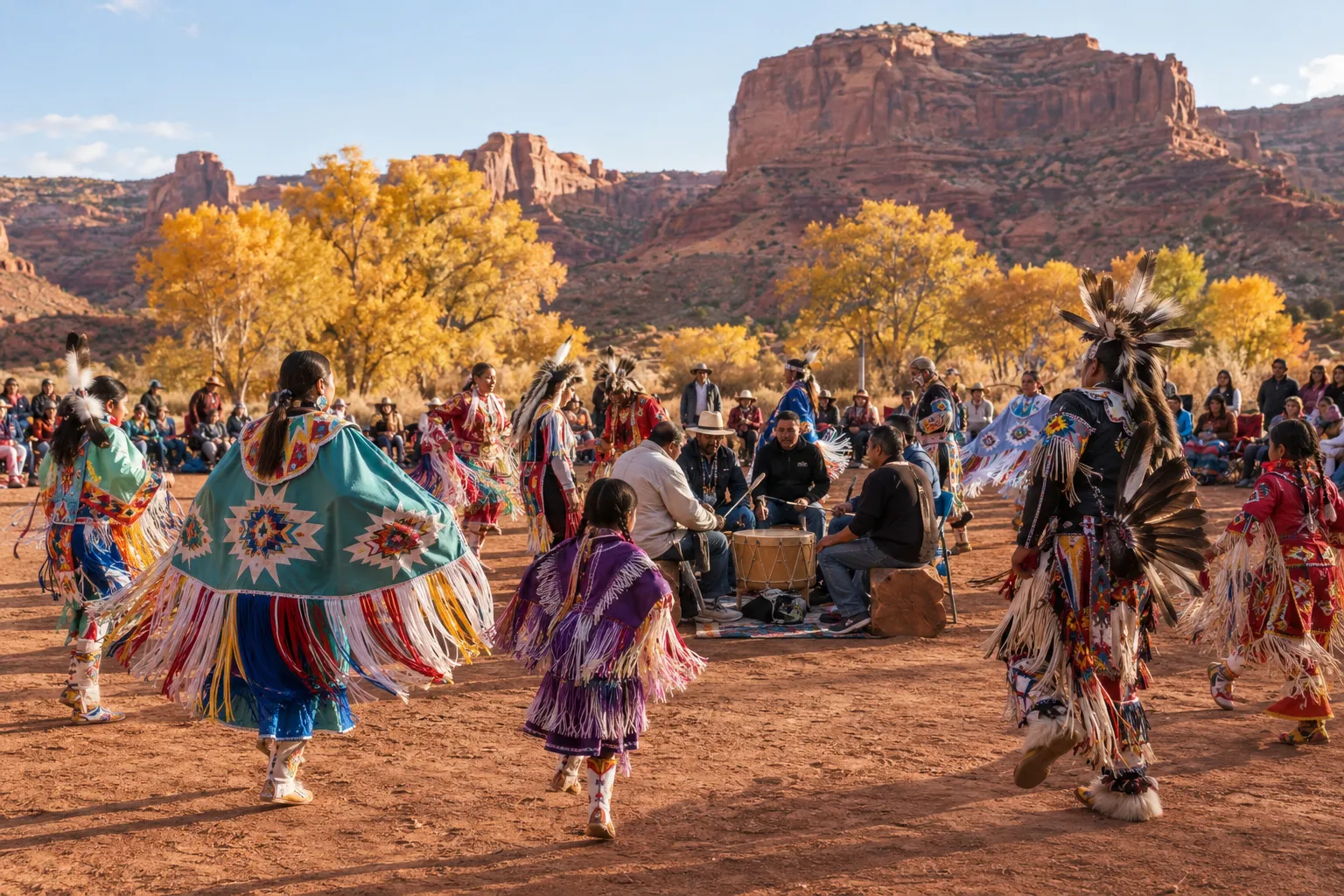
Native American Heritage Month
ネイティブ・アメリカン文化継承月間の英語の授業アイデアとワークシート
印刷してすぐ使えるワークシート(PDF・Word・解答つき)と、授業の手順書。
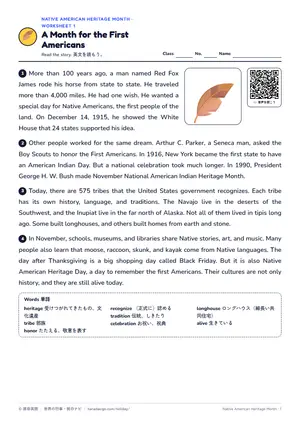
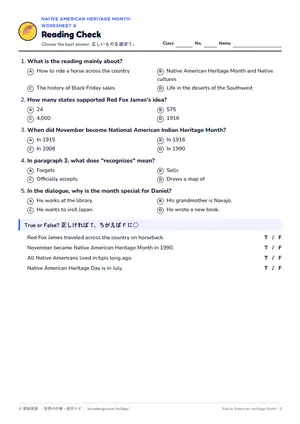
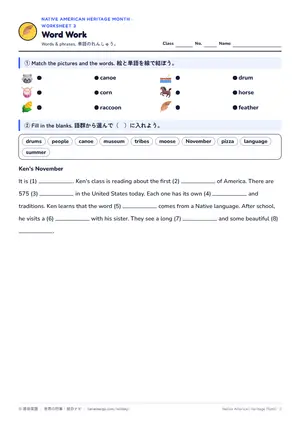
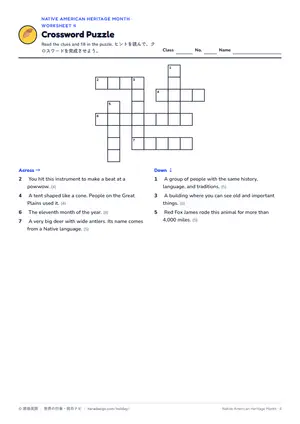
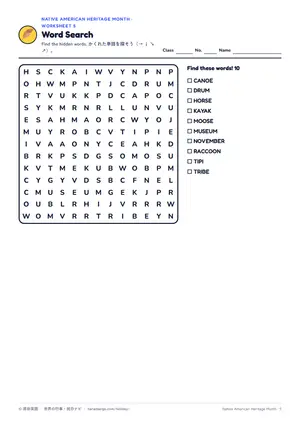
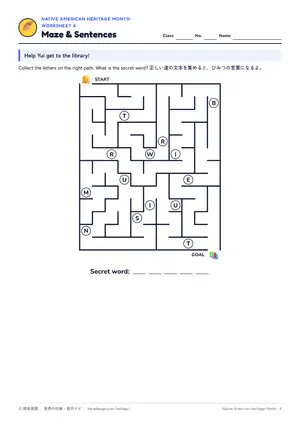
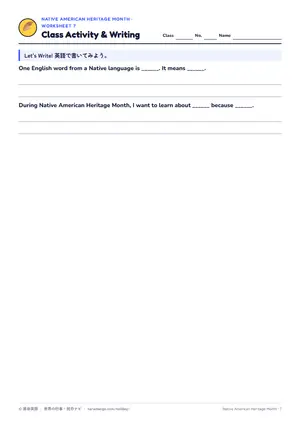
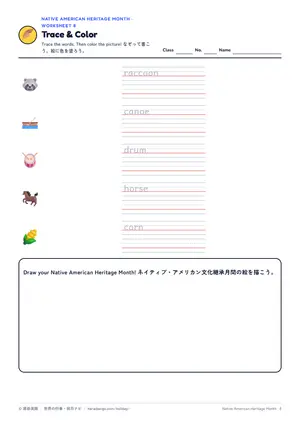
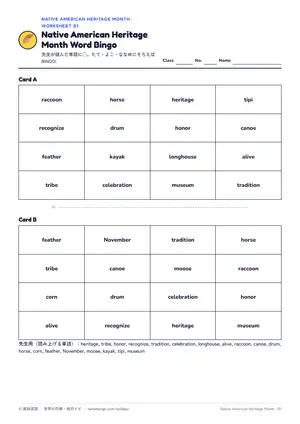
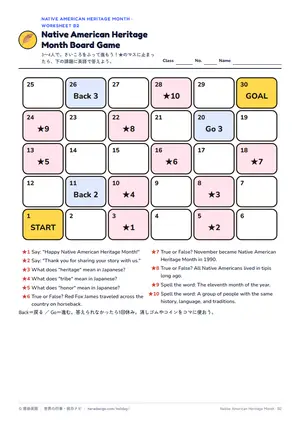
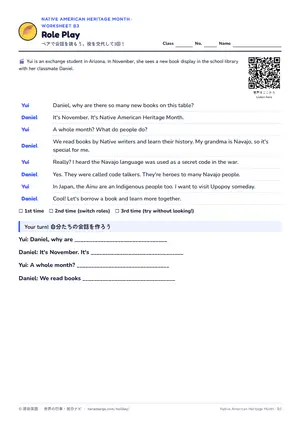
🖨️Worksheetsワークシート(無料・A4)
① 「中身を見る・印刷」で全ページを確認 → ② そのページ上の 🖨️ 印刷する でそのまま印刷できます。A4・無料。
🍎Lesson Ideasネイティブ・アメリカン文化継承月間を使った英語の授業アイデア
英語の中の先住民の言葉:動物カードで語源クイズ
🎯 英語に入った先住民の言葉を知り、The word ~ comes from ~. の形で語源を英語で説明する。
- raccoon・moose・skunk・chipmunk・kayak と、英語にもとからある bear・dog のカードを見せ、先住民の言葉から来たものを当てさせる。
- 答え合わせで、もとの言語(ポウハタン語・東アベナキ語・オダワ語・イヌクティトゥット語など)を伝える。
- 日本語のラッコ・トナカイ・シシャモもアイヌ語から来たとされることを紹介し、The word ~ comes from ~. の文を2つ書かせる。
詳細版を開く(時間配分・Teacher Talk・板書)
英語ページの音声で第4段落の Many people also learn that moose, raccoon, skunk, and kayak come from Native languages. を聞かせる。11月はアメリカで先住民の文化を学ぶ月であることを伝え、「英語なのに英語生まれではない単語がある」と投げかける。
🗣️ Listen. Which animals do you hear? / Yes. Moose, raccoon, and skunk. / These words came from Native languages. / In November, many Americans learn about them.
7枚の絵カードを黒板にはり、単語を発音して確認する。ペアで「先住民の言葉から来た語」と「英語にもとからある語」に分けさせる。bear と dog は英語にもとからある語で、残りの5つが先住民の言葉から来たことを答え合わせする。
🗣️ Repeat after me. Raccoon. Moose. Chipmunk. / Which words came from Native languages? / Talk with your partner and make two groups. / Bear and dog are old English words.
答えカードを見せ、もとの言語を伝える。raccoon はポウハタン語、moose は東アベナキ語、chipmunk はオダワ語、kayak はイヌイットの言葉(イヌクティトゥット語の qajaq)から来たことを確認する。chipmunk は最初 chitmunk とつづられていたことも紹介する。先住民の言葉は一つではなく、部族ごとにちがう言語があることを強調する。
🗣️ Raccoon comes from the Powhatan language. / Kayak comes from Inuktitut. / There are many Native languages, not just one. / Each tribe has its own language.
ラッコ・トナカイ・シシャモの写真を見せ、日本語にもアイヌ語から来たとされる言葉があることを紹介する。The word ~ comes from ~. の型を板書し、英語の例を1つ、日本語の例を1つ選んで2文書かせる。2〜3人に発表させる。
🗣️ In Japanese, the word rakko probably comes from the Ainu language. / Write two sentences. The word ... comes from ... / Read your sentences to your partner. / Who wants to share?
🪶 Native American Heritage Month(every November)

Native languages → English
 raccoon ← Powhatan
 moose ← Eastern Abenaki
 chipmunk ← Odawa(最初は chitmunk)
 kayak ← Inuktitut
 skunk ← Native language
 bear / dog = old English words

アイヌ語 → 日本語(とされる):ラッコ・トナカイ・シシャモ

The word ______ comes from ______.
誤解をほどく:Myth or Fact? ポスターづくり
🎯 先住民についてのよくある誤解を英文で読み取り、事実にもとづいて英語で訂正できる。
- All Native Americans lived in tipis. / Native Americans are only in history books. などの英文4枚を見せ、Myth か Fact かを予想させる。
- グループに記事の「よくある誤解とホント」の要点プリントを配り、誤解1つを担当させる。
- Myth: ~ / Fact: ~ の形で英語のミニポスターを作り、1分で発表する。
- 呼び名について、部族の名前で呼ばれることを望む人が多い理由を話し合う。
詳細版を開く(時間配分・Teacher Talk・板書)
英文カード4枚を黒板にはり、それぞれ Myth(誤解)か Fact(事実)かを手を挙げて予想させる。答えはまだ言わない。11月がネイティブ・アメリカン文化継承月間であることを伝える。
🗣️ November is Native American Heritage Month. / Read these four sentences. / Is it a myth or a fact? Raise your hand. / Let's find out today.
英語ページの音声で第3段落を聞かせ、Not all of them lived in tipis long ago. を確認する。575の部族にそれぞれの歴史・言葉・伝統があることを押さえる。4人グループに要点プリントを配り、誤解1つを担当させる。
🗣️ Listen to paragraph 3. / Did all Native Americans live in tipis? / There are 575 tribes. Each tribe is different. / Each group, take one card and read the handout.
グループで、担当の誤解について Myth: ~ / Fact: ~ の形の英文ミニポスターを作らせる。Fact には記事の数字や名前(大平原・ロングハウス・970万人・575部族・1970年など)を1つ以上入れるよう指示する。絵を添えてもよい。
🗣️ Write "Myth" and then "Fact." / Use one number or name from the handout. / For example, people on the Great Plains used tipis. / You can draw a picture too.
各グループに1分でポスターを発表させる。聞く側は、導入での自分の予想が合っていたかを確かめる。感謝祭の誤解では、祝う人も追悼の日とする人もいることを確認し、どちらか一方を正解としない。
🗣️ You have one minute. Please start. / Was your guess right? / Some people celebrate, and some people mourn. / Thank you. Let's give them a big hand.
国立アメリカ・インディアン博物館が American Indian も Native American も使ってよいとしつつ、多くの人が部族の名前で呼ばれることを望んでいることを紹介する。「なぜ名前が大切か」について、I think names matter because ~. の形で1文書かせる。
🗣️ Many Native people want to be called by their nation's name. / Why do names matter? What do you think? / Write one sentence. I think names matter because ... / Share it with your partner.
Myth or Fact?

① All Native Americans lived in tipis. → Myth
 Fact:tipis=mainly the Great Plains / longhouses / pueblo homes of earth / Navajo hogans
② Native Americans are only in history books. → Myth
 Fact:about 9.7 million people / 575 tribes / tribal governments
③ You should never say "American Indian." → Myth
 Fact:both terms are OK. Many prefer their nation's name.
④ Everyone celebrates Thanksgiving. → Myth
 Fact:National Day of Mourning(since 1970, Plymouth)

I think names matter because ______.