
International Left-Handers Day
国際左利きの日の英語の授業アイデアとワークシート
印刷してすぐ使えるワークシート(PDF・Word・解答つき)と、授業の手順書。
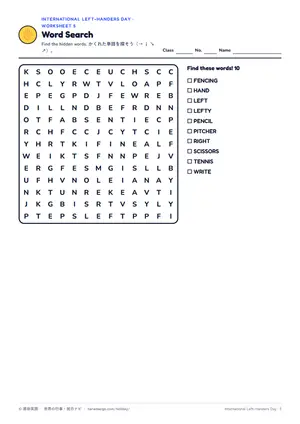
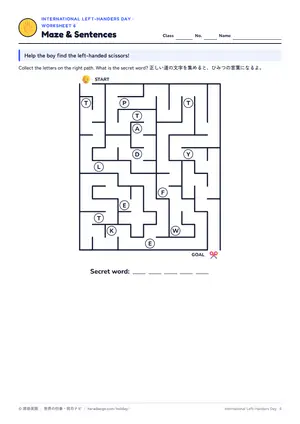
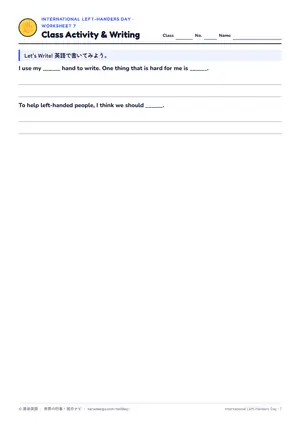
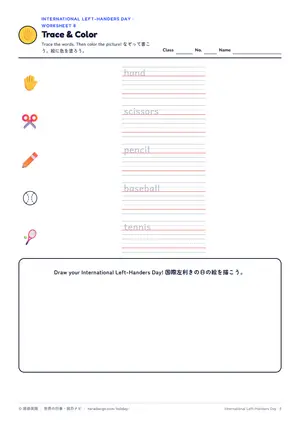
🖨️Worksheetsワークシート(無料・A4)
① 「中身を見る・印刷」で全ページを確認 → ② そのページ上の 🖨️ 印刷する でそのまま印刷できます。A4・無料。
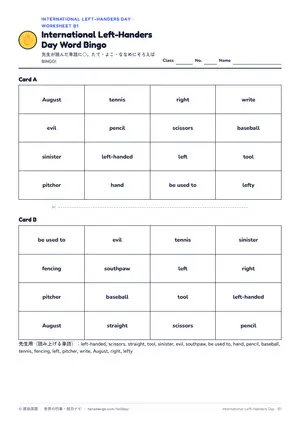
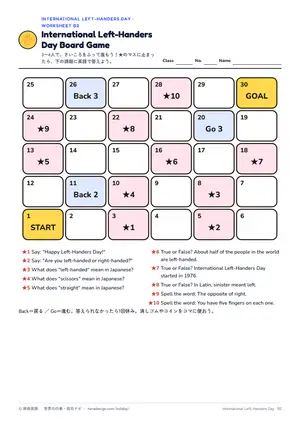
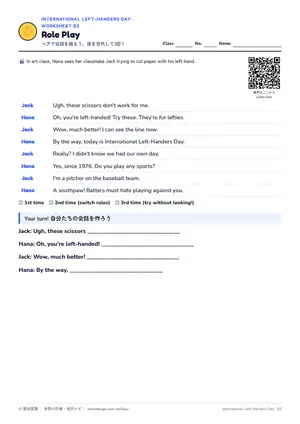
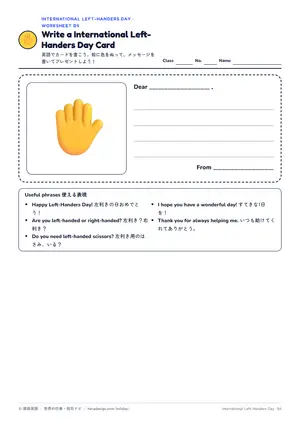
🍎Lesson Ideas国際左利きの日を使った英語の授業アイデア
反対の手で1日体験
🎯 利き手でない手で作業し、感じたことを英語で表現する。
- 利き手でない手で、名前を書く・線を切る・消しゴムで消すを試す。
- It was hard to ... / I felt ... の形で感想を英語で書く。
- ペアで発表し合い、左利きの人の不便さについて話し合う。
詳細版を開く(時間配分・Teacher Talk・板書)
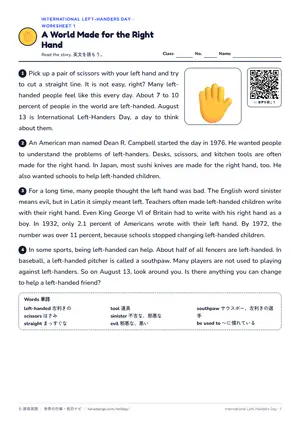
8月13日が International Left-Handers Day であることを伝える。英語ページの会話を聞かせ、Jack がはさみで困っている理由を確かめる。本文の第1段落にならい「左手ではさみを持ってまっすぐ切ってみて」と投げかける。
🗣️ August 13 is International Left-Handers Day. / Listen. Why is Jack having trouble? / Yes. The scissors don't work for him. He is left-handed. / Are you left-handed or right-handed?
利き手でない手で、①名前を書く ②線にそって紙を切る ③消しゴムで線を消す、の3つを順に試させる。1つごとに Was it easy or hard? と聞き、手を上げさせる。左利きの生徒には、右手でやってみるよう伝える。
🗣️ Use your other hand. / First, write your name. / Next, cut along the line. Then erase the pencil line. / Was it easy or hard? Raise your hand.
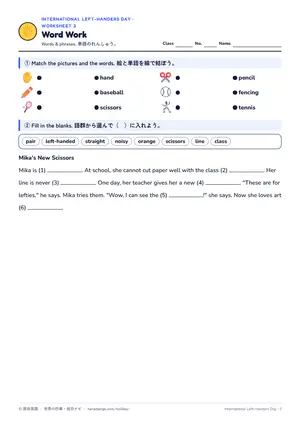
感想カードに It was hard to ... / I felt ... の形で2〜3文書かせる。書けたらペアで読み合い、相手の感想に Me too. / Really? と反応させる。
🗣️ Write your feelings in English. / It was hard to cut a straight line. / I felt slow. I felt nervous. / Share with your partner. Say, Me too! or Really?
本文にある「机・はさみ・台所の道具は右手用に作られていることが多い」を紹介し、左利きの人が毎日こうした不便を感じていることを確かめる。教室の中で左利きの人が困りそうな物を英語で1つずつ挙げさせて終わる。
🗣️ Many tools are made for the right hand. / Left-handed people feel this every day. / Look around the classroom. What is hard for left-handers?
International Left-Handers Day(August 13)

利き手でない手で
① write my name ② cut a line ③ erase a line

It was hard to ___ .
It was easy to ___ .
I felt ___ .(slow / nervous / tired)

Many tools are made for the right hand.
→ desks, scissors, kitchen tools
左右の言葉ハンター
🎯 英語・日本語・他言語の「左・右」を表す言葉から、文化の見方を考える。
- sinister / dexterity / gauche / right(正しい)などの語源を調べる。
- 日本語の「右に出る者はいない」「左遷」「ぎっちょ」「左党」などと比べる。
- 言葉に残る左右のイメージが、左利きへの見方にどう影響したかを英語で議論する。
- 300語の英語レポートにまとめる。
詳細版を開く(時間配分・Teacher Talk・板書)
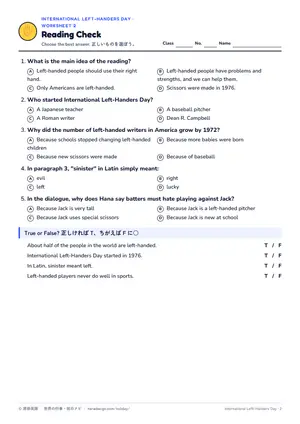
sinister の意味を問い、Latin ではただ left を意味したという本文の事実を示す。基本セット p.1 の本文第3段落を音声で聞かせ、左手で書く子どもが右手に直された歴史と、1932年から1972年への数字の変化を確かめる。
🗣️ What does sinister mean in English? / Evil. But in Latin, it simply meant left. / Listen to paragraph three. What happened to left-handed children? / In 1932, only 2.1 percent of Americans wrote with their left hand. By 1972, it was over 11 percent. Why?
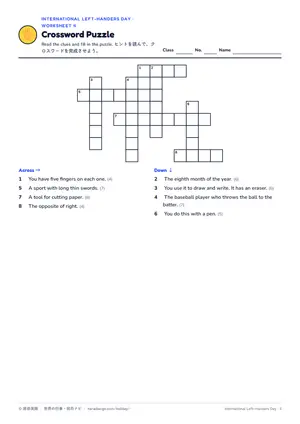
4人班で語のリストを分担し、辞書・語源辞典で「もとの意味」「今の意味」「左右どちらによいイメージがあるか」を調べてワークシートにまとめさせる。英語の語は英語の語源辞典、日本語の語は国語辞典で調べさせ、出典をメモさせる。「ぎっちょ」は地域によっては差別的に聞こえる語で放送では使わないとされている、と先に伝えておく。
🗣️ Each member takes two words. / Find the original meaning and the meaning today. / Does the word make left or right look good? / Write down your source.
班で調べた結果を共有し、Do words shape how we see left-handed people? について英語で議論させる。Yes 側・No 側の理由をそれぞれ2つ以上出させ、本文の歴史(右手に直された子どもたち、学校が直すのをやめて数字が増えたこと)を根拠に使うよう促す。
🗣️ Share your findings in your group. / Discuss: Do words shape how we see left-handed people? / Give reasons for yes and for no. / Use examples from the text and your research.
各班1人が1分で議論の要点を報告する。そのあと、300語の英語レポートの構成(導入・語の例2〜3つ・歴史とのつながり・自分の考え)を板書で示し、各自の主張文(thesis)を1文書かせて提出させる。レポート本体は課題とする。
🗣️ One person from each group, report in one minute. / Your report is 300 words. / Start with one clear thesis sentence. / Today, write your thesis. Finish the report at home.
Left and Right in Words

sinister:Latin = left → English = evil
dexterity ← Latin dexter(right)
gauche:French = left / clumsy
right:右 + 正しい
右に出る者はいない/左遷/ぎっちょ(注意)/左党

History
1932:2.1 percent wrote with the left hand
1972:over 11 percent(schools stopped changing children)

Q: Do words shape how we see left-handed people?

Report(300 words)
Intro → 2-3 word examples → history → my opinion