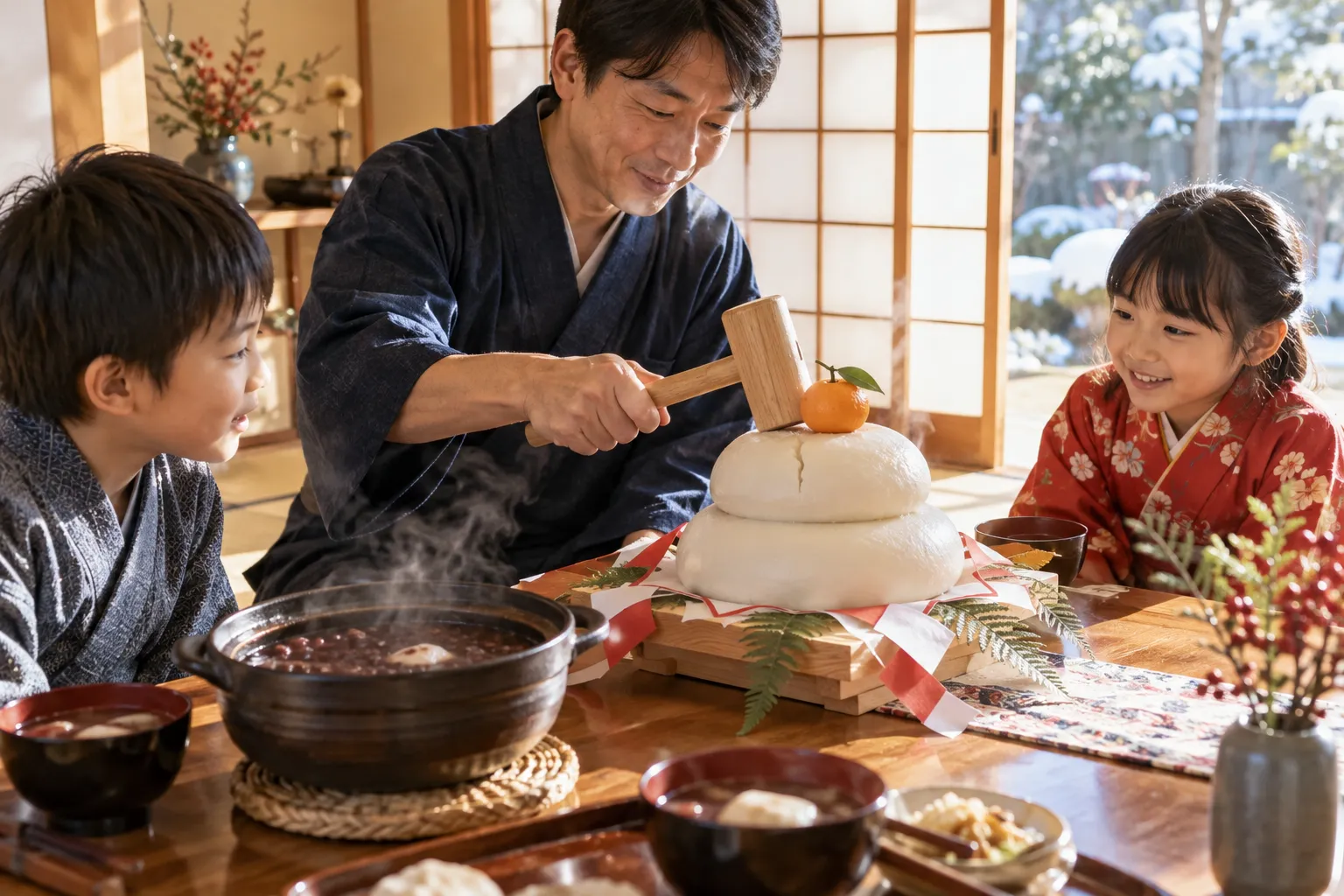
Kagami Biraki

鏡開きを英語で:読む・聞く・話す・遊ぶ

やさしい英語(CEFR A2)の読み物に音声つき。会話・単語カード・クイズ5問・ゲームで、鏡開きの英語をまるごと。

🔊Read in English鏡開きを英語で読もう(CEFR A2・音声つき)

鏡開きを、やさしい英語で紹介する読み物です。▶で英文をタイトルから通して聞けます(アメリカ英語)。「和訳」ボタンで日本語訳の表示・非表示を切りかえられます。下線の語は下の単語カードにあります。

Opening the Mirror

CEFR A2
0:00
229 words

In early January, many homes in Japan have a strange decoration. Two round rice cakes sit on top of each other, with a small orange on top. This is kagami mochi. Kagami means mirror, and the cakes have this name because old mirrors in Japan were round like them. People offer the cakes to the god of the new year.

1月のはじめ、日本の多くの家には不思議な飾りがあります。丸いお餅が2つ重なり、そのいちばん上に小さなみかん色の果物がのっています。これが鏡餅です。鏡は英語で mirror。昔の日本の鏡がこのお餅のように丸かったので、この名前がついています。人々は新年の神さまにこのお餅をささげます。

Around January 11, families take down the rice cakes and eat them. This custom is called kagami biraki, or opening the mirror. By then, the cakes are very hard. But people do not cut them with a knife. Long ago, samurai thought cutting with a blade brought bad luck. So people break the cakes with a wooden hammer or with their hands.

1月11日ごろ、家族はお餅を下げて食べます。この習慣を鏡開き、つまり「鏡を開く」と言います。そのころには、お餅はとても固くなっています。でも人々は包丁で切りません。昔、武士は刃物で切ることは不運を招くと考えました。そこで、木づちや手でお餅を割るのです。

At first, samurai did this on January 20. Then in 1651, the shogun Tokugawa Iemitsu died on the 20th day of a month. Many people say this is why the day moved to the 11th. But the date is still different in some areas, like January 15 or 20.

はじめは、武士たちは1月20日にこれを行っていました。ところが1651年、将軍の徳川家光がある月の20日に亡くなりました。これが、日付が11日に移った理由だと多くの人が言います。でも今でも、1月15日や20日など、地域によって日付は違います。

Today, people often put the pieces in sweet red bean soup. This warm dessert is called oshiruko. Judo and kendo schools also hold kagami biraki to start the year. And at weddings, guests sometimes open a big barrel of sake with wooden hammers. That is called kagami biraki, too, because the round lid was once called a mirror.

今では、割ったお餅を甘い小豆の汁に入れることがよくあります。この温かいデザートはお汁粉と呼ばれます。柔道や剣道の道場も、一年の始まりに鏡開きをします。また結婚式では、招待客が大きな酒樽を木づちで開けることもあります。樽の丸いふたが昔「鏡」と呼ばれていたので、これも鏡開きと言います。

💬Dialogue英語の会話で鏡開き

🎬 アメリカからの交換留学生ダニエルが、1月11日に友だちのマイの家へ。マイの家族が鏡餅を割っています。

0:00
Daniel

Why are you hitting that rice cake with a hammer?

どうしてそのお餅をハンマーでたたいているの?

Mai

It's kagami biraki. We break our New Year rice cake today and eat it.

鏡開きよ。今日はお正月のお餅を割って食べるの。

Daniel

Wouldn't a knife be easier?

包丁のほうが楽じゃない?

Mai

Maybe, but we don't cut it. Cutting sounds unlucky, so we say we open it.

たぶんね。でも切らないの。切るは縁起が悪いから、開くって言うのよ。

Daniel

Open a rice cake? That's a funny way to say it.

お餅を開く?おもしろい言い方だね。

Mai

I know! Now we'll put the pieces in sweet bean soup. Want some?

でしょ!これからお汁粉に入れるんだ。食べる?

Daniel

Yes, please! My judo club does kagami biraki this Saturday, too.

うん、ぜひ!ぼくの柔道部も今度の土曜日に鏡開きをするんだ。

🃏Word Cards鏡開きの英単語カード(8語)

カードをタップすると裏返って、意味と例文が出ます。

decoration名詞
飾りKagami mochi is a New Year decoration.鏡餅はお正月の飾りです。💡 動詞は decorate(飾る)。
mirror名詞
鏡Old mirrors in Japan were round.昔の日本の鏡は丸かった。💡 鏡開きは opening the mirror と直訳できるが、説明を添えると伝わる。
offer動詞
(神仏に)供える、ささげるWe offer rice cakes to the god.私たちは神さまにお餅を供えます。💡 「申し出る」の意味もある。名詞 offering は「お供え物」。
blade名詞
刃Samurai did not cut the cake with a blade.武士は刃物でお餅を切らなかった。💡 包丁や刀の刃の部分。
luck名詞
運Cutting was thought to bring bad luck.切ることは不運を招くと考えられた。💡 good luck / bad luck。形容詞 lucky / unlucky。
hammer名詞
金づち、ハンマーWe use a wooden hammer.木づちを使います。💡 木づちは wooden hammer または mallet。
barrel名詞
樽They opened a barrel of sake.彼らは酒樽を開けた。💡 原油の単位「バレル」も同じ語。
lid名詞
ふたThe round lid was called a mirror.丸いふたは鏡と呼ばれた。💡 まぶたは eyelid(目のふた)。

✅Quiz鏡開きの英語クイズ(5問)

上の英文を読んでから答えてみよう。答えを選ぶとすぐに解説が出ます。全問正解でスタンプが金色に!

Q1. What is the passage mainly about?

本文は主に何についての話ですか。

第1段落で鏡餅を紹介し、第2〜4段落で鏡開きのやり方・日付・食べ方を説明しています。鏡を作る話、包丁を買う話、アメリカの柔道の話はありません。

Q2. Why is the rice cake called kagami mochi?

なぜそのお餅は鏡餅と呼ばれるのですか。

第1段落に old mirrors in Japan were round like them とあります。顔が映る、鏡のそばに置く、鏡職人が作った、という記述はありません。

Q3. What happened in 1651?

1651年に何がありましたか。

第3段落に in 1651, the shogun Tokugawa Iemitsu died とあります。ほかの選択肢の出来事に1651年という年は書かれていません。

Q4. In paragraph 4, what does lid mean?

第4段落の lid の意味はどれですか。

the round lid was once called a mirror とあり、酒樽の丸い「ふた」のことです。底や飲み物、ハンマーではありません。

Q5. Why does Mai say they open the rice cake?

マイはなぜお餅を「開く」と言うのですか。

会話でマイは Cutting sounds unlucky, so we say we open it. と言っています。包丁の重さや、餅のやわらかさ、先生の話は出てきません。本文でもお餅は固いと書かれています。

🎮Games鏡開きの英語ゲーム

タブを切りかえて遊べます。授業ではプロジェクターに映して、クラス対抗戦にしても盛り上がります。

👋Useful Phrases鏡開きに使える英語フレーズ

Today we break the New Year rice cake and eat it.今日はお正月のお餅を割って食べるんです。鏡開きを一言で説明するフレーズ。
We don't use a knife. We use a wooden hammer.包丁は使わないで、木づちを使います。wooden hammer / mallet=木づち。
We say open, not cut, because cut sounds unlucky.「切る」は縁起が悪いので、「開く」と言うんです。unlucky=縁起の悪い。忌み言葉の説明に。

🗣️ 話し合ってみよう(Discussion)

  1. How does your family eat kagami mochi after New Year?

    あなたの家では、お正月のあと鏡餅をどうやって食べますか。
  2. In Japanese, people avoid some words on happy days, like cut or break. Are there lucky or unlucky words in other languages you know?

    日本語では、めでたい日に「切る」「割る」などの言葉を避けます。あなたが知っているほかの言語にも、縁起のよい言葉・悪い言葉はありますか。
  3. Kagami biraki started as a samurai custom and spread to ordinary people. Why do you think customs of powerful people often spread to everyone?

    鏡開きは武家の習慣から一般に広まりました。力のある人々の習慣が広く広まりやすいのはなぜだと思いますか。

🗾Explain Japan in English鏡開きを海外の人に英語で説明するなら

姉妹サイト「日本文化ナビ」に、英語でかんたんに説明する例文(ひと言・30秒・スピーチ)と、外国の人によく聞かれる質問がまとまっています。日本語のページと、英語だけのページ(そのまま海外の人に見せられます)があります。

鏡開きを英語で説明する(kagami biraki)鏡開き(kagami biraki)を英語で説明するには。一言/30秒/スピーチの3段階の英文と和訳、外国人によく聞かれる質問と答え、そのまま使えるフレーズ、音声つき。JP 日本語で読むGB English page
鏡餅と鏡開きを英語で説明する(kagamimochi)鏡餅と鏡開き(kagamimochi)を英語で説明するには。一言/30秒/スピーチの3段階の英文と和訳、外国人によく聞かれる質問と答え、そのまま使えるフレーズ、音声つき。JP 日本語で読むGB English page
🪞
Kagami Biraki
スタンプ帳に鏡開きのスタンプを押しました!
クイズで全問正解すると金のスタンプに。世界一周めざして集めよう。 スタンプ帳を見る →

授業アイデアとワークシートを見る →