kagami biraki
breaking open the New Year rice cakes
鏡開き(かがみびらき)
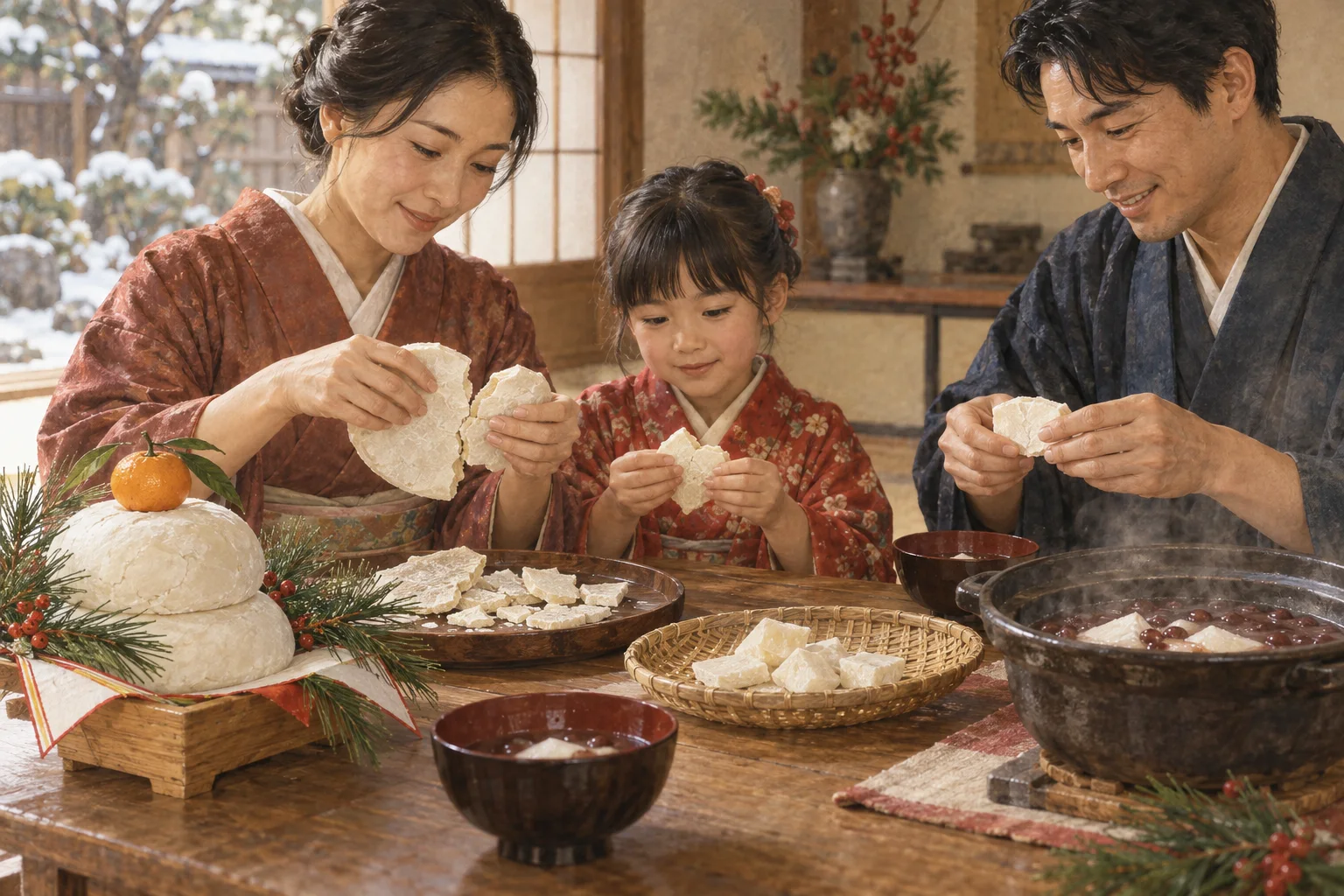
In one line
The shortest answer that works
Kagami biraki is the January custom of breaking up the decorative New Year rice cakes and eating them.
鏡開きとは、正月に飾った鏡餅を割って食べる一月の習慣です。
In 30 seconds
The standard explanation
Over New Year, a stack of two round rice cakes called kagami mochi sits in the home as an offering to the year's deity. On kagami biraki, usually January 11th, the family takes it down, breaks it into pieces with a mallet or by hand, and eats it in sweet red bean soup or grilled. Cutting it with a knife is avoided because cutting suggests severed ties. It marks the real end of the New Year holidays.
正月の間、鏡餅と呼ばれる丸い餅を二段重ねたものが、年神への供え物として家に置かれます。鏡開きの日、多くは一月十一日に、家族はそれを下ろし、木槌か手で割って、ぜんざいや焼き餅にして食べます。包丁で切るのは、切ることが縁を断つのを連想させるので避けます。これで正月の祝いが本当に終わります。
As a short speech
A full paragraph you can read aloud
Walk into a Japanese home in early January and you will see a small tower on a shelf: two round white rice cakes stacked with a bitter orange on top. That is kagami mochi, an offering to the deity of the new year, and it stays on display through the holiday.
Kagami biraki, literally opening the mirror, is the day it comes down and gets eaten. In most of the country that is January 11th, though some regions choose the 15th or 20th. By then the mochi has dried rock hard and often cracked, so the family breaks it into chunks with a wooden mallet or by hand.
Using a knife is avoided, because cutting is the language of breaking relationships and, for old samurai households, of seppuku. The chunks are softened in sweet red bean soup or grilled until they puff up. Sharing the mochi is said to pass the deity's blessing to each person. I like that the ritual ends with a bowl of something warm.
一月の初めに日本の家に入ると、棚の上に小さな塔が見えます。丸く白い餅を二つ重ね、上にだいだいを載せたものです。それが鏡餅で、年神への供え物として正月の間飾られます。鏡開きは文字どおり「鏡を開く」で、それを下ろして食べる日です。
全国の多くでは一月十一日ですが、十五日や二十日を選ぶ地域もあります。そのころには餅は石のように乾いて、たいていひびが入っているので、家族は木槌か手で塊に割ります。包丁は避けます。
切ることは縁を切る言い方であり、昔の武家では切腹を連想させたからです。塊はぜんざいでやわらかくするか、膨らむまで焼きます。餅を分け合うことで年神の力が一人ひとりに移るとされています。この儀式が温かい椀で終わるところが私は好きです。
Questions people actually ask
And how to answer them.
Why is it called opening a mirror?
The round rice cake is thought to resemble the ancient bronze mirrors that were sacred objects, hence kagami, mirror. Breaking it is called opening, not cutting or splitting, because those words sound like bad luck at the start of a year. Choosing a lucky word is a very common Japanese habit.
丸い餅が神聖な品だった古代の銅鏡に似ているとされるので「鏡」です。割ることを「切る」や「割る」ではなく「開く」と言うのは、年の初めにそれらの言葉が不吉に聞こえるからです。縁起のよい言葉を選ぶのは日本でとてもよくある習慣です。
The mochi is rock hard. How do you actually eat it?
Break it into small pieces, then simmer them in sweet red bean soup, add them to savory soup, or grill them until they soften and puff. Many families now buy kagami mochi in a plastic mold with individually wrapped small mochi inside, which solves the problem.
小さく割ってから、ぜんざいで煮る、汁物に入れる、あるいはやわらかく膨らむまで焼きます。今では多くの家庭がプラスチックの型に入った鏡餅を買い、中に個包装の小さな餅が入っているので、この問題は解決します。
Is kagami biraki the same thing as breaking open a sake barrel?
The name is shared. At weddings, openings and celebrations, people strike the lid of a sake barrel with mallets and share the sake, and that is also called kagami biraki, because the barrel lid is called a mirror. The idea of opening something round and lucky is the same.
名前は同じです。結婚式や開業、祝いの席で酒樽のふたを木槌で割って酒を分けるのも鏡開きと呼ばれ、樽のふたを「鏡」と呼ぶからです。丸くて縁起のよいものを開くという考えは同じです。
Phrases you can use
- The rice cakes come down on the eleventh.鏡餅は十一日に下ろします。
- We break it with a mallet, never a knife.木槌で割ります。包丁は使いません。
- It's eaten in sweet red bean soup.ぜんざいにして食べます。
- Sharing it is supposed to bring good health for the year.分けて食べると一年健康でいられると言われます。
- That's the last of the New Year customs.これで正月の行事は終わりです。
Words you need
- rice cake餅
- offering供え物
- mallet木槌
- sweet red bean soupぜんざい・おしるこ
- puff up膨らむ
Watch
From YouTubeBackground (Japanese)
鏡開きの日は関東を中心に一月十一日が多く、関西では十五日や二十日とする地域があるなど、松の内の長さと連動して地域差があります。武家では鎧や兜に供えた具足餅を食べる行事だったとされ、刃物で切ることを嫌って手や槌で割ったのが今の作法の由来と説明されます。「切る」「割る」を避けて「開く」と言い換えるのは、正月に忌み言葉を避ける習わしの一つです。鏡餅の上に載せるだいだいは「代々」に通じて家の繁栄を願う語呂合わせで、裏白や昆布などの飾りにもそれぞれ意味があります。近年はプラスチックの型に小分けの餅を入れた製品が主流で、カビや乾燥の心配なく食べられます。餅による窒息事故が正月に多いため、高齢者や子どもには小さく切って食べさせるよう注意喚起が毎年行われています。