mochi
pounded rice cake
餅(もち)
In one line
The shortest answer that works
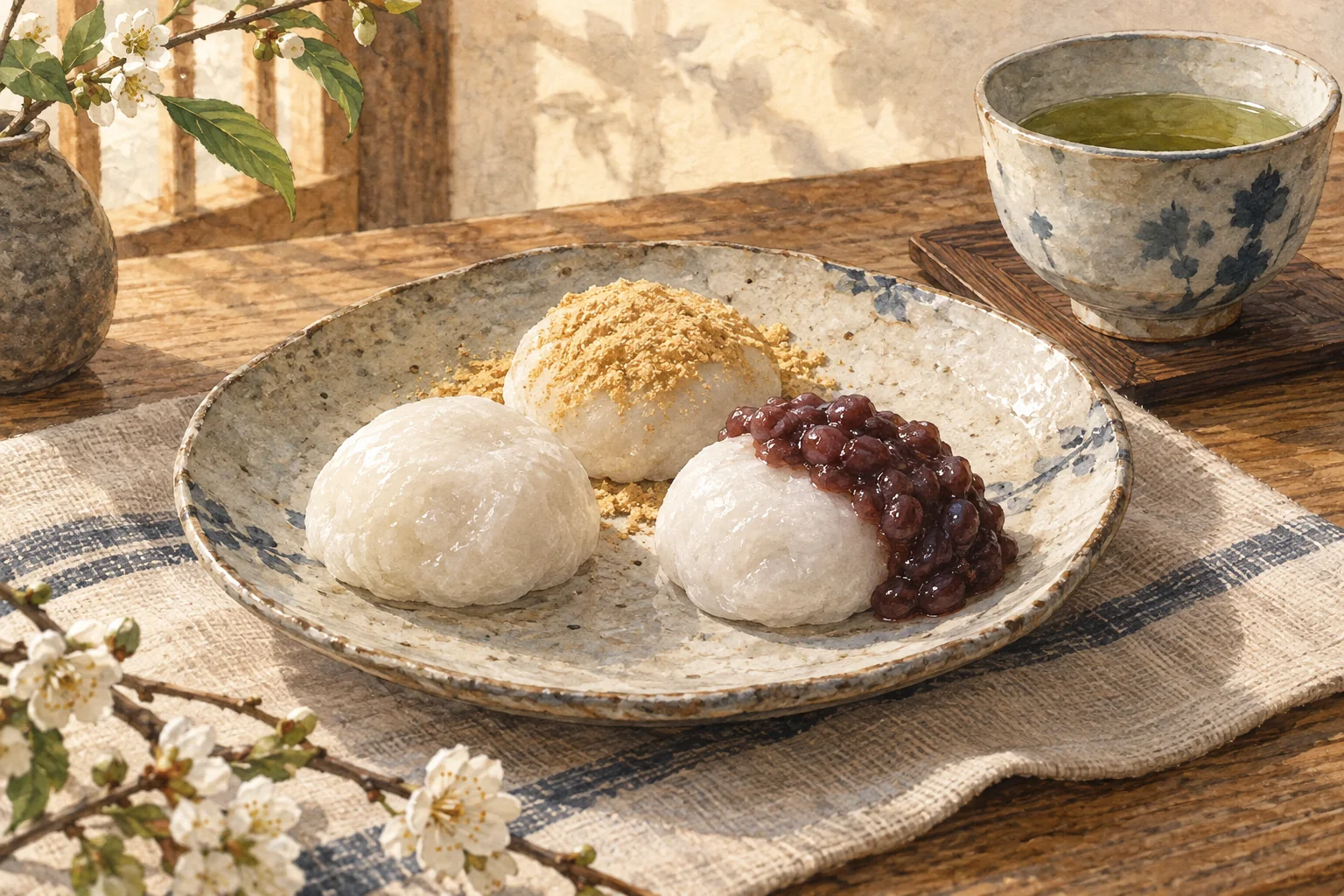
Mochi is glutinous rice pounded into a dense, stretchy cake, eaten especially at New Year.
餅とは、もち米を搗いて作る密でよく伸びる食べ物で、とくに正月に食べます。
In 30 seconds
The standard explanation
Mochi is made by steaming glutinous rice and pounding it until the grains disappear into a smooth, extremely sticky mass. It can be grilled, boiled in soup, or wrapped around sweet bean paste. It is central to New Year food, and because it is dense and sticky it causes choking deaths every January, mostly among elderly people.
餅はもち米を蒸し、粒がなくなってなめらかで非常に粘りのある塊になるまで搗いて作ります。焼いたり、汁で煮たり、あんを包んだりします。正月の食べ物の中心ですが、密で粘りが強いため、毎年1月に窒息による死亡事故が起きていて、その多くは高齢の方です。
As a short speech
A full paragraph you can read aloud
Mochi is glutinous rice, steamed and then pounded until every grain has disappeared and what is left is a smooth, dense, enormously sticky mass. It is not sweet in itself. It is grilled until it puffs and eaten with soy sauce and seaweed, boiled in the New Year soup, or wrapped around sweet bean paste as a confection.
Pounding it traditionally takes two people with a wooden mallet and a mortar, one striking and one turning and wetting the mass between strokes, and that performance is still done at New Year events. There is a serious point that Japanese people take seriously too.
Mochi is dense and adhesive, it does not break down easily, and every January there are choking deaths, mainly among elderly people. Government agencies publish warnings each year: cut it small, chew thoroughly, drink something first, and do not let very young children or frail elderly people eat it unsupervised.
餅はもち米を蒸し、粒が一つもなくなり、なめらかで密な、きわめて粘りの強い塊になるまで搗いたものです。それ自体は甘くありません。ふくれるまで焼いて醤油と海苔で食べたり、正月の雑煮で煮たり、あんを包んで菓子にしたりします。
伝統的な搗き方は、木の杵と臼を使う二人がかりの仕事で、一人が搗き、もう一人が合間に返して水をつけます。この所作は今も正月の行事で行われます。日本人自身も重く受け止めている話があります。
餅は密で粘りつき、簡単にはほぐれないため、毎年1月に窒息による死亡事故が起きていて、その多くは高齢の方です。行政は毎年、注意を呼びかけています。小さく切る、よく噛む、先に何か飲む、幼い子どもや弱った高齢の方が一人で食べないようにする、というものです。
Questions people actually ask
And how to answer them.
Is the choking risk really that serious?
Yes. Japanese authorities issue warnings every December and January, and hospitals see cases each New Year. The advice is to cut it into small pieces, eat slowly and chew well, and to keep an eye on elderly relatives and small children while they eat it.
本当に深刻です。日本の行政は毎年12月と1月に注意を呼びかけ、正月には救急の事例が報じられます。小さく切り、ゆっくりよく噛むこと、高齢の家族や小さな子どもが食べている間は目を離さないことが勧められています。
What's the difference from dango?
Mochi is made by pounding steamed glutinous rice. Dango is made by mixing rice flour with water and steaming or boiling it. Mochi is stretchier and chewier, dango is firmer and comes in small balls, usually on a skewer.
餅は蒸したもち米を搗いて作ります。団子は米の粉を水で練り、蒸すか茹でて作ります。餅はよく伸びて粘りがあり、団子は締まっていて、たいてい串に刺した小さな玉です。
Phrases you can use
- Cut it small and chew it well.小さく切って、よく噛んでください。
- It isn't sweet on its own.それ自体は甘くありません。
- Two people pound it with a mallet.二人がかりで杵で搗きます。
- It's in the New Year soup.正月の雑煮に入っています。
Words you need
- glutinous riceもち米
- to pound搗く
- sticky / chewy粘りのある
- to choke喉に詰まらせる
Watch
From YouTubeBackground (Japanese)
餅を搗く「餅つき」は、杵と臼を使って二人で行う共同作業で、正月前の行事として学校や地域で今も行われます。雑煮に入れる餅は、東日本では角餅を焼き、西日本では丸餅を煮ることが多いなど、形も扱いも東西で分かれます。鏡餅は年神に供える餅で、正月が明けると割って食べる鏡開きの行事があります。窒息事故を防ぐため、消費者庁は毎年注意喚起を出しています。