zoni
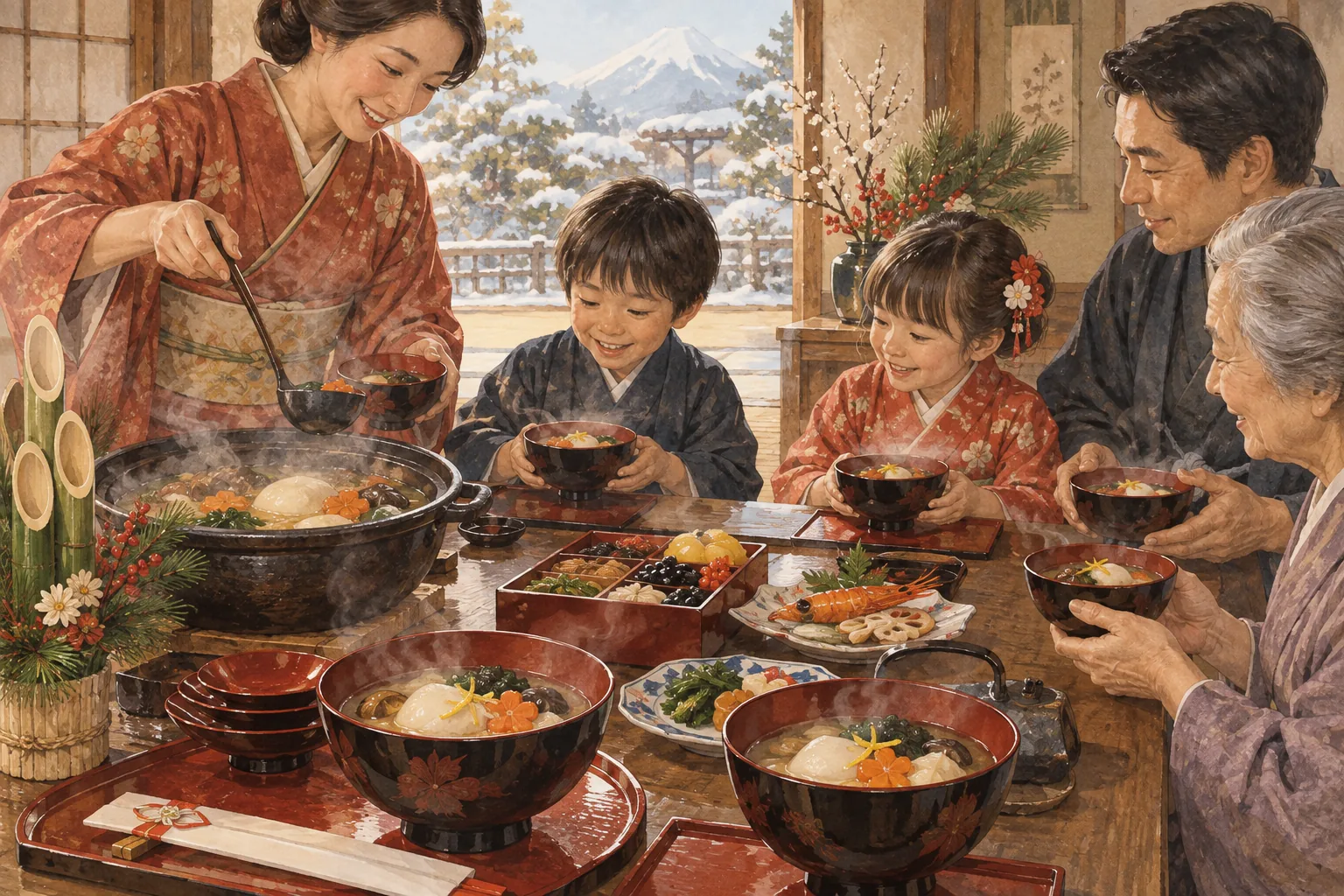
the New Year soup with rice cakes in it
雑煮(ぞうに)
In one line
The shortest answer that works
Zoni is the New Year soup with rice cakes, and almost every region makes it differently.
雑煮とは、餅の入った正月の汁もので、地域ごとにまったく違います。
In 30 seconds
The standard explanation
Zoni is eaten on New Year's morning in most of Japan. It is a soup with mochi rice cakes in it. Beyond that, almost nothing is fixed. In eastern Japan the mochi is usually square and grilled, in a clear broth. In much of western Japan it is round and simmered, often in white miso. What goes in it depends on the region and the family, and people are quietly proud of their own version.
雑煮は元日の朝に、日本の多くの地域で食べられます。餅が入った汁ものです。決まっているのはそこまでです。東日本では角餅を焼いてすまし汁に入れることが多く、西日本の多くでは丸餅を煮て、白味噌仕立てにします。具は地域と家によって違い、みな自分の家の雑煮をひそかに誇りにしています。
As a short speech
A full paragraph you can read aloud
If you want one dish that shows how varied Japan is, it is zoni, the soup eaten on New Year's morning. Everyone agrees it contains mochi, pounded rice cake. After that, agreement ends. In the Tokyo area the mochi is a grilled square in a clear soy-based broth with chicken and greens.
Around Kyoto and Osaka it is a round cake, simmered rather than grilled, in a sweet white miso. Some coastal areas use dried fish, some use red bean soup, and in a few places the mochi is dipped in sugared soybean flour. The dividing lines follow old provincial boundaries more than modern ones.
Because families keep making the version they grew up with, a couple from different regions has to negotiate this every January, and it is a running joke in Japan. If you are invited to a Japanese home at New Year, ask whose version you are eating. You will get a longer answer than you expected.
日本がいかに多様かを示す料理をひとつ挙げるなら、元日の朝に食べる雑煮です。餅が入る、という点だけは全員が一致します。そこから先は一致しません。東京のあたりでは、焼いた角餅を、鶏と青菜の入ったすまし汁に入れます。
京都や大阪では、丸餅を焼かずに煮て、甘い白味噌仕立てにします。干した魚を使う海沿いの地域もあれば、小豆の汁にするところもあり、餅をきな粉につけて食べる地域もあります。境目は、いまの県境よりも昔の国の境に沿っています。
家ごとに育った雑煮を作り続けるので、出身地の違う夫婦は毎年1月にこれを交渉することになり、日本ではよくある笑い話です。正月に日本の家に招かれたら、これは誰の家の雑煮ですかと聞いてみてください。思ったより長い答えが返ってきます。
Questions people actually ask
And how to answer them.
Why is mochi dangerous at New Year?
It is sticky and hard to chew, and every year there are choking deaths, mostly among elderly people. Fire departments issue warnings in late December. Cut it small, chew well, and do not rush.
粘りが強く噛み切りにくいので、毎年、主に高齢の方に窒息の事故が起きています。消防は12月末に注意を呼びかけます。小さく切り、よく噛み、急がないことです。
Is it sweet or savory?
Usually savory, but the white miso versions taste noticeably sweet, and there are regions where zoni is genuinely a sweet red bean soup. Ask before you assume.
ふつうは塩気のある汁ですが、白味噌のものははっきり甘く感じます。小豆の甘い汁を雑煮と呼ぶ地域も本当にあります。決めつけずに聞いてください。
Can I make it without special ingredients?
Yes. A simple dashi broth, soy sauce, some chicken and greens, and a piece of mochi will get you a recognizable Tokyo-style bowl. The mochi is the only part you cannot substitute.
できます。出汁に醤油、鶏と青菜、そして餅があれば、東京風の雑煮になります。代えがきかないのは餅だけです。
Phrases you can use
- Every region makes zoni differently.雑煮は地域ごとに作り方が違います。
- Square grilled mochi in the east, round simmered mochi in the west.東は焼いた角餅、西は煮た丸餅です。
- This is my family's version.これはうちの家の雑煮です。
- Chew the mochi carefully — people do choke on it.餅はよく噛んでください。のどに詰まらせる事故が起きるので。
- What kind of zoni did you grow up with?どんな雑煮で育ちましたか。
Words you need
- rice cake餅
- brothだし、汁
- clear soupすまし汁
- white miso白味噌
- region地域
Watch
From YouTubeBackground (Japanese)
雑煮の地域差は、餅の形と汁の仕立ての二つで大きく分かれる。角餅と丸餅の境目はおおよそ中部地方にあるとされ、かつて角餅は切って作れるため江戸で広まり、丸餅は西日本で受け継がれたと説明される。汁は、関西の白味噌、関東のすまし、出雲などの小豆汁と多様で、香川のように餡の入った餅を白味噌で煮る地域もある。もともと武家の儀礼の食事に由来するという説があるが、確かなことは分かっていない。なお正月の餅による窒息事故は毎年報告され、消防庁が年末に注意を呼びかけている。