manju
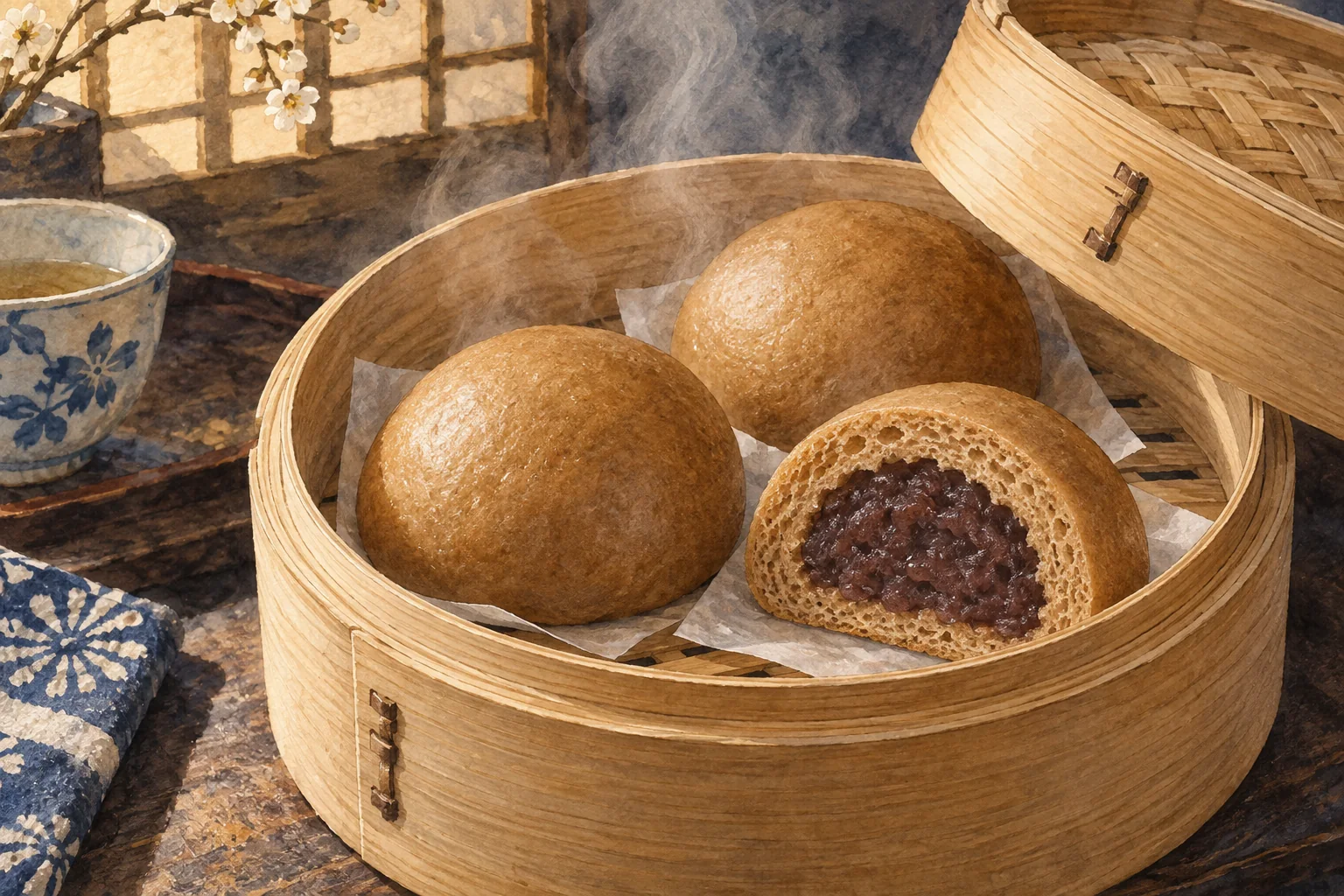
the steamed bun filled with sweet bean paste
まんじゅう(まんじゅう)
In one line
The shortest answer that works
Manju is a steamed bun with sweet red bean paste inside, sold everywhere as a souvenir sweet.
まんじゅうとは、甘い餡を包んで蒸した菓子で、土産物としてどこでも売られているものです。
In 30 seconds
The standard explanation
Manju is a small steamed bun of wheat or rice flour filled with sweet bean paste. It is the standard local souvenir sweet: hot spring towns sell brown ones colored with brown sugar, temples sell their own, and red and white pairs are given at celebrations. Visitors expecting something savory are often surprised, since in China the steamed bun it comes from is usually plain or filled with meat.
まんじゅうは、小麦粉や米粉の生地で餡を包んで蒸した小さな菓子です。土産物の定番で、温泉地では黒糖で色をつけた茶色のものを売り、寺には寺のものがあり、祝い事には紅白を配ります。元になった中国の蒸しパンは具なしか肉入りがふつうなので、しょっぱいものを想像した人は驚きます。
As a short speech
A full paragraph you can read aloud
Manju is one of the sweets you will be handed most often in Japan, so it is worth being able to describe it in one line: a steamed bun with sweet red bean paste inside. The skin can be wheat flour, rice flour or grated yam depending on the type, and the filling is almost always azuki bean paste, either smooth or with the skins left in.
The reason it is everywhere is that it became the standard souvenir. Many hot spring towns sell a brown manju colored with brown sugar, steamed in front of the shop so the smell reaches the street, and eaten warm on the spot. Temples and famous sites have their own versions. Red and white manju are given out at graduations and weddings because the pair of colors is celebratory.
One thing worth warning a visitor about: the word comes from the Chinese mantou, a steamed bun that in China is usually plain or savory, so people sometimes bite into one expecting savory and get sugar. And the paste is sweeter than most Western fillings, which is why it is served with green tea.
まんじゅうは日本で最もよく手渡される菓子の一つですから、一言で言えるようにしておくとよいでしょう。甘い小豆の餡を包んで蒸したものです。皮は種類によって小麦粉、米粉、すりおろした山芋などで、中身はほぼ小豆の餡。こしあんか粒あんかの違いがあります。
どこにでもある理由は、土産物の定番になったからです。多くの温泉町が黒糖で色をつけた茶色のまんじゅうを売り、店先で蒸して匂いを通りに流し、その場で温かいまま食べさせます。寺や名所にはそれぞれのまんじゅうがあります。卒業式や結婚式で紅白のまんじゅうを配るのは、この二色が祝いの色だからです。
外国の人に一つ言っておくとよいことがあります。語源は中国の饅頭(マントウ)で、中国では具のないものや肉入りのものがふつうです。ですからしょっぱいものを想像してかじり、砂糖に驚く人がいます。餡は欧米の菓子の中身よりかなり甘く、だから緑茶と一緒に出されるのです。
Questions people actually ask
And how to answer them.
What's inside?
Sweet azuki bean paste, in nearly all cases. Some regional types use chestnut, white bean or a savory filling of vegetables and miso, but sweet beans are the default.
ほとんどは甘い小豆の餡です。栗や白餡、野菜と味噌のしょっぱいものもありますが、基本は小豆の餡です。
How is it different from daifuku or dorayaki?
The filling is often the same. Manju has a steamed dough skin, daifuku a pounded rice cake skin, and dorayaki two small pancakes with the paste between them.
中身は同じことが多いです。まんじゅうは蒸した生地、大福はついた餅、どら焼きは小さな生地二枚で餡をはさんだものです。
Why does every town have its own?
Because souvenir-giving is expected after a trip. A cheap, boxed, named-after-the-place sweet fits that job exactly, and manju has been filling it since the Edo period.
旅から帰れば土産を配るものだからです。箱入りで安く、その土地の名が付いた菓子はその役にぴったり合い、まんじゅうは江戸時代からその役を務めてきました。
A common misunderstanding
MYTHManju is a kind of bread roll.
FACTIt is steamed, not baked, and the dough is thin. It is classed as a wagashi, a Japanese confection, and eaten with tea.
Phrases you can use
- It's a steamed bun with sweet bean paste inside.餡を包んで蒸した菓子です。
- Sweet, not savory — the beans are sugared.しょっぱくはありません。豆に砂糖を入れます。
- Many hot spring towns sell their own.多くの温泉町に、その町のまんじゅうがあります。
- Eat it warm, straight from the steamer.蒸したてを温かいうちに食べてください。
- Red and white ones are for celebrations.紅白のものは祝い事に配ります。
Words you need
- sweet bean paste餡
- steamed蒸し
- souvenir sweet土産菓子
- hot spring manju温泉まんじゅう
- red and white紅白
Watch
From YouTubeBackground (Japanese)
まんじゅうの伝来には諸説あり、十三世紀に宋から帰国した僧の円爾(聖一国師)が伝えたとする説や、十四世紀に元から来日した林浄因が奈良で作り始めたとする説などが語られるが、確定していない。温泉まんじゅうの茶色は黒糖によるものが多い。落語の「まんじゅうこわい」は、まんじゅうが怖いと言って振る舞わせる話で、古典の演目としてよく知られている。紅白饅頭は卒業式や創立記念などで配られる。