Diwali

ディワリ(光の祭り)を英語で:読む・聞く・話す・遊ぶ

やさしい英語(CEFR A2)の読み物に音声つき。会話・単語カード・クイズ8問・ゲームで、ディワリ(光の祭り)の英語をまるごと。

🔊Read in Englishディワリ(光の祭り)を英語で読もう(CEFR A2・音声つき)

ディワリ(光の祭り)を、やさしい英語で紹介する読み物です。▶で英文をタイトルから通して聞けます(インド英語)。「和訳」ボタンで日本語訳の表示・非表示を切りかえられます。下線の語は下の単語カードにあります。

A Row of Lamps on the Darkest Night

CEFR A2
0:00
258 words

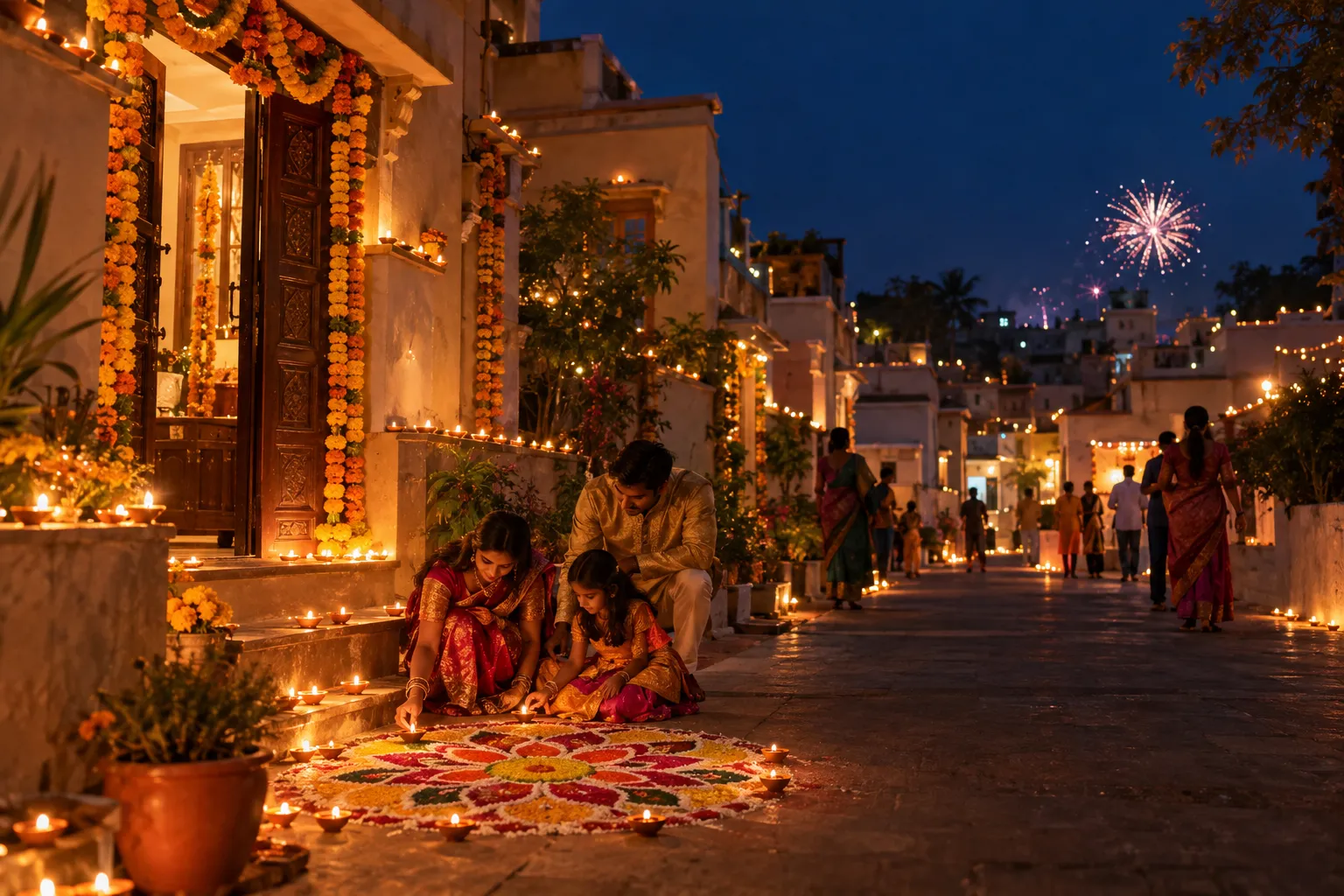
On one very dark night in autumn, millions of tiny lamps light up India. This is Diwali, the festival of lights. The name comes from an old word, Deepavali. It means a row of lamps. People in many other countries celebrate it too.

秋のある真っ暗な夜、何百万もの小さなランプがインドを照らします。これがディワリ、光の祭りです。名前は、ディーパーヴァリという古い言葉から来ています。「ランプの列」という意味です。ほかの多くの国の人たちもこの祭りを祝います。

Diwali usually comes in October or November, on a night with no moon. The festival lasts five days, and Hindus, Jains, and Sikhs all celebrate it. Before it starts, families clean their homes from top to bottom. They buy new clothes and make sweets for friends and neighbors.

ディワリはふつう10月か11月の、月のない夜にやってきます。お祭りは5日間続き、ヒンドゥー教徒もジャイナ教徒もシク教徒も祝います。始まる前に、家族は家をすみずみまで掃除します。新しい服を買い、友だちや近所の人のためにお菓子を作ります。

There are many stories behind Diwali. In the north of India, people remember Prince Rama. He came home after 14 years away and a long fight with an evil king. The night was dark, so people lit lamps to show him the way. In the south, many people remember how the god Krishna beat a demon.

ディワリの背景には、たくさんの物語があります。北インドの人々は、ラーマ王子のことを思い出します。彼は14年の不在と、悪い王との長い戦いのあとで故郷に帰ってきました。夜は暗かったので、人々は彼に道を示すためにランプを灯しました。南では、多くの人がクリシュナ神が悪魔を倒した話を思い出します。

On the main night, families pray to Lakshmi, the goddess of wealth and good luck. They put small clay lamps called diyas by their doors and windows. People believe the goddess visits bright and clean homes. In front of the door, they make rangoli, big colorful pictures of colored powder, rice, or flowers.

本番の夜、家族は富と幸運の女神ラクシュミーに祈ります。ディヤと呼ばれる小さな素焼きのランプを、ドアや窓のそばに置きます。人々は、女神が明るくきれいな家を訪れると信じています。ドアの前には、色の粉や米、花で大きなカラフルな絵、ランゴーリを描きます。

Diwali is also a time for sharing. People visit each other and give boxes of sweets. Many families enjoy fireworks, but some cities now limit them because of air pollution. In 2025, people in Ayodhya, Rama's home city, lit more than 2.6 million lamps in one night. It was a new world record for the festival of lights.

ディワリは分かち合いの時でもあります。人々はお互いの家を訪ね、お菓子の箱を贈ります。多くの家族が花火を楽しみますが、大気汚染のために花火を制限する町も出てきています。2025年、ラーマの故郷の町アヨーディヤーでは、ひと晩で260万個以上のランプが灯されました。それは光の祭りの新しい世界記録になりました。

💬Dialogue英語の会話でディワリ(光の祭り)

🎬 プリヤはインド出身で、東京の西葛西に住んでいます。クラスメートの健太が、彼女の家の窓辺のランプに気づきます。

0:00
Kenta

Priya, I saw many little lights at your window last night.

プリヤ、昨日の夜、君の家の窓にたくさんの小さな灯りが見えたよ。

Priya

Those were diyas. It's Diwali, the festival of lights!

あれはディヤよ。ディワリ、光のお祭りなの!

Kenta

Diwali? Is it like Christmas?

ディワリ?クリスマスみたいなもの?

Priya

A little. We clean the house, wear new clothes, and give gifts.

少しね。家を掃除して、新しい服を着て、贈り物をするの。

Kenta

Why do you light so many lamps?

どうしてそんなにたくさんランプを灯すの?

Priya

We welcome Lakshmi, the goddess of good luck. She likes bright homes.

幸運の女神ラクシュミーを迎えるの。明るい家が好きなのよ。

Kenta

Lakshmi? I've never heard that name.

ラクシュミー?その名前、聞いたことないな。

Priya

Actually, you have. In Japan, she is called Kisshoten.

実は知ってるはずよ。日本では吉祥天って呼ばれてるの。

Kenta

Really? I saw Kisshoten at a temple in Nara!

本当?奈良のお寺で吉祥天を見たことがあるよ!

Priya

See? Here, have some laddoo. My mom made them.

ほらね。はい、ラドゥをどうぞ。お母さんが作ったの。

Kenta

Thank you! It's very sweet. Happy Diwali, Priya!

ありがとう!すごく甘いね。ハッピー・ディワリ、プリヤ!

Priya

Happy Diwali! Come and see our rangoli tonight.

ハッピー・ディワリ!今夜、うちのランゴーリを見に来てね。

🃏Word Cardsディワリ(光の祭り)の英単語カード(12語)

カードをタップすると裏返って、意味と例文が出ます。

festival名詞
祭りDiwali is a festival of lights.ディワリは光の祭りです。💡 festival of 〜 で「〜の祭り」。
lamp名詞
ランプ、灯りShe put a lamp by the window.彼女は窓のそばにランプを置きました。💡 light(光)より「灯す道具」を指す。
row名詞
列There is a row of lamps on the wall.塀の上にランプが1列に並んでいます。💡 a row of 〜 で「1列の〜」。Diwali の意味そのもの。
clay名詞
粘土Diyas are made of clay.ディヤは粘土でできています。💡 made of clay で「粘土でできた」。
goddess名詞
女神Lakshmi is the goddess of good luck.ラクシュミーは幸運の女神です。💡 god(神)+ -ess(女性を表す)。princess と同じ形。
wealth名詞
富、財産People pray for health and wealth.人々は健康と富を祈ります。💡 health and wealth は韻をふむ決まった組み合わせ。
demon名詞
悪魔、鬼Krishna beat a demon.クリシュナは悪魔を倒しました。💡 日本の「鬼」を英語で説明するときにも使える。
evil形容詞
悪い、邪悪なThe prince fought an evil king.王子は悪い王と戦いました。💡 good and evil で「善と悪」。
pray動詞
祈るFamilies pray together at night.家族は夜にいっしょに祈ります。💡 pray to 〜 で「〜に祈る」。play(遊ぶ)と発音を区別。
neighbor名詞
近所の人We give sweets to our neighbors.私たちは近所の人にお菓子を配ります。💡 gh は発音しない。イギリスつづりは neighbour。
pollution名詞
汚染Fireworks can cause air pollution.花火は大気汚染の原因になることがあります。💡 air pollution(大気汚染)、water pollution(水質汚染)。
record名詞
記録The city set a world record.その町は世界記録を作りました。💡 set a record で「記録を作る」。

✅Quizディワリ(光の祭り)の英語クイズ(8問)

上の英文を読んでから答えてみよう。答えを選ぶとすぐに解説が出ます。全問正解でスタンプが金色に!

Q1. What is the main idea of the story?

この文章の主旨は何ですか?

ディワリという光の祭りの意味、物語、祝い方を紹介しています。花火の作り方や旅行の話ではありません。

Q2. What does the word Deepavali mean?

Deepavali という言葉の意味は何ですか?

第1段落に It means a row of lamps. とあります。

Q3. How long does the festival last?

お祭りはどれくらい続きますか?

第2段落に The festival lasts five days. とあります。14年はラーマ王子が故郷を離れていた期間です。

Q4. Why did people light lamps for Prince Rama?

人々はなぜラーマ王子のためにランプを灯したのですか?

第3段落に The night was dark, so people lit lamps to show him the way. とあります。世界記録は2025年のアヨーディヤーの話です。

Q5. In paragraph 4, what is "rangoli"?

第4段落の rangoli とは何ですか?

big colorful pictures of colored powder, rice, or flowers と説明されています。小さな素焼きのランプは diya です。

Q6. Which sentence is true about the story?

本文の内容と合うものはどれですか?

第2段落に families clean their homes from top to bottom とあります。日付は毎年変わり、ラクシュミーは富と幸運の女神で、花火を楽しむ家族も多いです。

Q7. Why do some cities limit fireworks during Diwali?

なぜディワリに花火を制限する町があるのですか?

第5段落に because of air pollution とあります。pollution は「汚染」なので、空気が汚れることが理由です。

Q8. In the dialogue, what does Priya give Kenta?

会話で、プリヤは健太に何をあげますか?

プリヤは Here, have some laddoo. My mom made them. と言っています。ランプは窓辺にあった物、吉祥天は奈良のお寺の話です。

🎮Gamesディワリ(光の祭り)の英語ゲーム

タブを切りかえて遊べます。授業ではプロジェクターに映して、クラス対抗戦にしても盛り上がります。

📖Read Moreもっと読む:Lights, Markets, and Smoke

少し難しめ(B1〜B2)の英文で、ディワリ(光の祭り)を違う角度から。

Lights, Markets, and Smoke

B1–B2
0:00
191 words

Diwali is not only a religious festival; it is also one of the busiest shopping seasons in India. Buying gold, silver, or new kitchen tools on the first day is considered lucky, and merchants traditionally open new account books during the festival. In 2017, one estimate said about two-thirds of Indian households expected to spend 5,000 to 10,000 rupees on the festival. Even the stock market joins in: it closes for the holiday but opens for a symbolic one-hour Muhurat trading session in the evening.

ディワリは宗教的な祭りであるだけでなく、インドで最も買い物がさかんな時期の1つでもあります。初日に金や銀、新しい台所用品を買うのは縁起がよいとされ、商人は伝統的にこの祭りの間に新しい帳簿を開きます。2017年のある推計では、インドの家庭の約3分の2が、この祭りに5,000〜1万ルピーを使う見込みだとされました。株式市場さえ参加します。祝日で休みになりますが、夕方に1時間だけ象徴的な「ムフラト取引」を行うのです。

The festival's popularity also creates a serious problem. Fireworks, combined with cold air and smoke from farm fires, can make the air in northern Indian cities dangerous to breathe. In 2023, New Delhi briefly recorded the worst air quality in the world after Diwali night, and courts and city governments have tried various limits on fireworks.

祭りの人気は、深刻な問題も生んでいます。花火は、冷たい空気や農地の野焼きの煙と重なって、北インドの都市の空気を吸うのも危険なほどにすることがあります。2023年、ニューデリーはディワリの夜のあと一時的に世界最悪の大気汚染を記録し、裁判所や市政府はさまざまな花火の制限を試みてきました。

Many families now look for a balance, returning to the festival's original symbol, the small clay lamp. When UNESCO added Diwali to its list of intangible cultural heritage in 2025, it recognized not the noise of the night but the shared idea behind it: that light can win over darkness.

今では多くの家族が、祭りの本来のシンボルである小さな素焼きのランプに立ち返り、バランスを探しています。2025年にユネスコがディワリを無形文化遺産に加えたとき、認められたのは夜の騒がしさではなく、その背後にある共通の考え、つまり光は闇に勝てるという考えでした。

👋Useful Phrasesディワリ(光の祭り)に使える英語フレーズ

Happy Diwali!ハッピー・ディワリ!いちばん簡単で、世界中で通じるあいさつ。
Wishing you a bright and happy Diwali!明るく楽しいディワリになりますように!カードやメッセージに書く定番の一文。
Happy Deepavali!ハッピー・ディーパバリ!南インドやシンガポール、マレーシアではこちらの呼び方が多い。
May the lights bring you joy and good luck.灯りがあなたに喜びと幸運をもたらしますように。May ~ は「〜しますように」と願う言い方。
Thank you for the sweets!お菓子をありがとう!ディワリにはお菓子の箱をもらうことが多い。お礼の一言に。

🗣️ 話し合ってみよう(Discussion)

  1. What would you like to see most at Diwali: the lamps, the rangoli, or the fireworks? Why?

    ディワリでいちばん見たいのはランプ、ランゴーリ、花火のどれですか?なぜ?
  2. Japan has Obon fires to welcome ancestors. What other Japanese events use light?

    日本にはご先祖さまを迎えるお盆の火があります。灯りを使う日本の行事にはほかに何がありますか?
  3. Diwali is a time to give sweets to neighbors. Do you know your neighbors well? Should we share more?

    ディワリは近所の人にお菓子を配る時期です。あなたは近所の人をよく知っていますか?もっと分かち合うべきでしょうか?
  4. Should cities ban fireworks to protect the air, even during a religious festival?

    宗教的な祭りの間でも、空気を守るために町は花火を禁止するべきでしょうか?
  5. Lakshmi became Kisshoten in Japan. How do gods and stories change when they travel between cultures?

    ラクシュミーは日本で吉祥天になりました。神さまや物語は、文化から文化へ伝わるときにどう変わるのでしょうか?
🪔
Diwali
スタンプ帳にディワリ(光の祭り)のスタンプを押しました!
クイズで全問正解すると金のスタンプに。世界一周めざして集めよう。 スタンプ帳を見る →

授業アイデアとワークシートを見る →