Bastille Day

パリ祭(フランス革命記念日)を英語で:読む・聞く・話す・遊ぶ

やさしい英語(CEFR A2)の読み物に音声つき。会話・単語カード・クイズ8問・ゲームで、パリ祭(フランス革命記念日)の英語をまるごと。

🔊Read in Englishパリ祭(フランス革命記念日)を英語で読もう(CEFR A2・音声つき)

パリ祭(フランス革命記念日)を、やさしい英語で紹介する読み物です。▶で英文をタイトルから通して聞けます(アメリカ英語)。「和訳」ボタンで日本語訳の表示・非表示を切りかえられます。下線の語は下の単語カードにあります。

One Day, Two Stories

CEFR A2
0:00
257 words

On the morning of July 14, 1789, angry crowds filled the streets of Paris. They had about 30,000 guns, but they had no gunpowder. So they marched to the Bastille, an old stone fortress and prison. Inside, there were 250 barrels of gunpowder.

1789年7月14日の朝、怒った群衆がパリの通りを埋めつくしました。彼らは約3万丁の銃を持っていましたが、火薬がありませんでした。そこで彼らは、古い石の要塞で牢獄でもあるバスティーユへ向かいました。その中には250樽の火薬があったのです。

The people attacked the Bastille, and the fighting went on for several hours. Late that afternoon, the people took the Bastille. To many French people, the Bastille was a symbol of the king's power. But when they opened the doors, they found only 7 prisoners! Still, the news spread quickly, and the French Revolution moved forward.

人々はバスティーユを攻撃し、戦いは数時間続きました。その日の夕方近く、人々はついにバスティーユを手に入れました。多くのフランス人にとって、バスティーユは王の力の象徴でした。ところが扉を開けると、囚人はたった7人しかいませんでした!それでもその知らせはすぐに広まり、フランス革命は前へと進みました。

One year later, on July 14, 1790, people from all over France came to Paris. This time, there was no fighting. They held a huge festival to celebrate a united country. Even the king made a promise to follow the new rules.

1年後の1790年7月14日、フランス中から人々がパリにやって来ました。今度は、戦いはありませんでした。彼らは、1つにまとまった国を祝う大きな祭りを開きました。国王でさえ、新しいきまりに従うことを誓いました。

In 1880, France made July 14 its national holiday. That was 90 years after the festival of 1790. But the law did not say which July 14 it meant. So the day remembers both the fight of 1789 and the peaceful festival of 1790. French people call it the Fourteenth of July or the National Holiday.

1880年、フランスは7月14日を国の祝日にしました。それは1790年の祭りから90年後のことでした。でもその法律は、どの7月14日のことなのかを書きませんでした。そのため、この日は1789年の戦いと1790年の平和な祭りの両方を記念しています。フランスの人々は、この日を7月14日、または国民の祝日と呼びます。

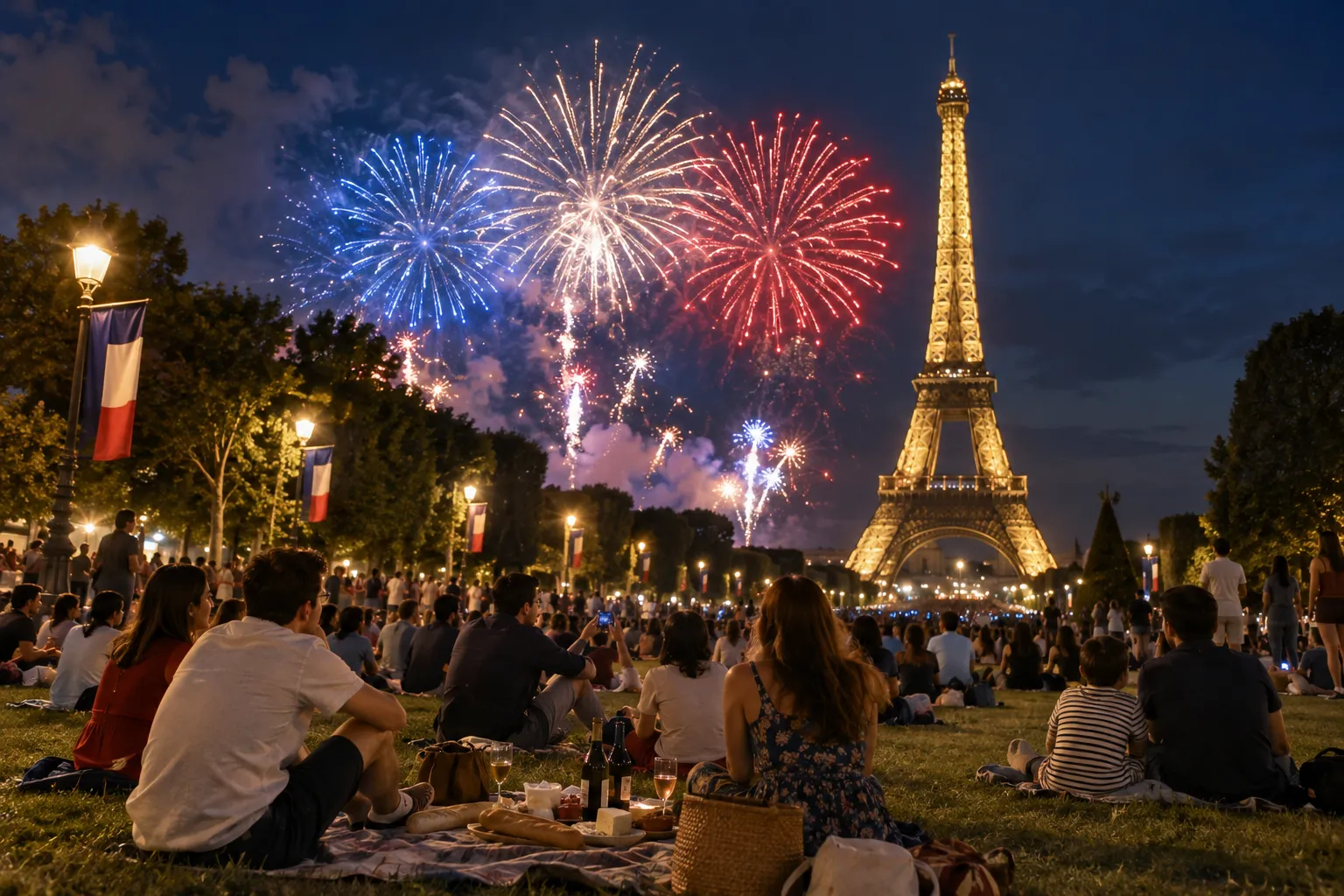
Today, the day starts with a big parade in Paris. Jets fly over the city with blue, white, and red smoke. At night, people dance at fire stations and watch fireworks at the Eiffel Tower. In Japan, people call the day Pari-sai, from the title of a French movie. But if you say that in France, nobody will understand you!

今、この日はパリの大きなパレードで始まります。ジェット機が、青・白・赤の煙を出して町の上を飛びます。夜には、人々は消防署で踊り、エッフェル塔の花火を見ます。日本では、この日をフランス映画の題名から「パリ祭」と呼びます。でもフランスでそう言っても、だれにも通じません!

💬Dialogue英語の会話でパリ祭(フランス革命記念日)

🎬 ユイはパリでフランス語を勉強しています。7月13日、クラスメートのユーゴが消防士のダンスパーティーに誘ってくれます。

0:00
Hugo

Yui, do you want to go to the firemen's ball tonight?

ユイ、今夜、消防士のダンスパーティーに行かない?

Yui

A ball at a fire station? Are you joking?

消防署でダンスパーティー?冗談でしょ?

Hugo

No, really! Firefighters open their stations for the Fourteenth of July.

ほんとだよ!7月14日のために、消防士さんたちが消防署を開放するんだ。

Yui

Oh, you mean Pari-sai! That's what we call it in Japan.

ああ、パリ祭のことね!日本ではそう呼ぶの。

Hugo

Pari-sai? I've never heard that name.

パリサイ?そんな名前、聞いたことないよ。

Yui

It comes from an old French movie. Its Japanese title was Pari-sai.

昔のフランス映画から来てるの。その日本語のタイトルが『巴里祭(パリさい)』だったんだ。

Hugo

That's funny. But it's not only for Paris. All of France celebrates.

おもしろいね。でもパリだけじゃないよ。フランス全体で祝うんだ。

Yui

I see. Is it the day people attacked the Bastille?

なるほど。人々がバスティーユを攻撃した日なの?

Hugo

Yes, in 1789. But it also remembers a peaceful festival in 1790.

うん、1789年にね。でも1790年の平和な祭りも記念しているんだ。

Yui

Two stories on one day. I like that.

1日に2つの物語。いいね。

Hugo

Tomorrow, let's watch the parade and the fireworks, too.

明日はパレードと花火も見に行こうよ。

Yui

Great! Should I say Happy Bastille Day?

いいね!「ハッピー・バスティーユ・デー」って言えばいい?

Hugo

Say Bon 14 Juillet! Everyone will smile.

「ボン・キャトルズ・ジュイエ!」って言って。みんな笑顔になるよ。

🃏Word Cardsパリ祭(フランス革命記念日)の英単語カード(12語)

カードをタップすると裏返って、意味と例文が出ます。

crowd名詞
群衆、人だかりA big crowd filled the street.大勢の人が通りを埋めつくしました。💡 crowded は「混んでいる」。
fortress名詞
要塞The Bastille was an old fortress.バスティーユは古い要塞でした。💡 fort(とりで)と同じ仲間。本文では old stone fortress and prison と説明している。
prison名詞
牢獄、刑務所There were 7 people in the prison.その牢獄には7人がいました。💡 prisoner は「囚人」。
prisoner名詞
囚人They found only 7 prisoners.囚人は7人しか見つかりませんでした。💡 prison+-er(人)。
gunpowder名詞
火薬They needed gunpowder for their guns.彼らは銃のために火薬が必要でした。💡 gun(銃)+powder(粉)。
symbol名詞
象徴、しるしThe flag is a symbol of France.その旗はフランスの象徴です。💡 a symbol of ~ で「~の象徴」。
revolution名詞
革命The French Revolution began in 1789.フランス革命は1789年に始まりました。💡 revolve(回る)と同じ語源。世の中がひっくり返るイメージ。
festival名詞
祭りThey held a huge festival in 1790.彼らは1790年に大きな祭りを開きました。💡 hold a festival で「祭りを開く」。
united形容詞
1つにまとまったThey celebrated a united country.彼らは1つにまとまった国を祝いました。💡 the United States(合衆国)、the United Nations(国連)の united。
promise名詞
約束、誓いThe king made a promise.国王は誓いを立てました。💡 make a promise(約束する)、keep a promise(約束を守る)。
national holiday名詞
国の祝日July 14 is a national holiday in France.7月14日はフランスの国の祝日です。💡 フランス語の Fête nationale をそのまま英語にした言い方。
firefighter名詞
消防士The firefighters opened their station.消防士たちは消防署を開放しました。💡 fireman とも言うが、今は男女を問わない firefighter がふつう。

✅Quizパリ祭(フランス革命記念日)の英語クイズ(8問)

上の英文を読んでから答えてみよう。答えを選ぶとすぐに解説が出ます。全問正解でスタンプが金色に!

Q1. What is the main idea of the story?

この文章の主旨は何ですか。

題名 One Day, Two Stories のとおり、1789年の戦いと1790年の祭りの2つを記念する日だというのが中心です。バスティーユはホテルではなく要塞と牢獄です。

Q2. Why did the crowds go to the Bastille?

群衆はなぜバスティーユへ行ったのですか。

第1段落に they had no gunpowder、Inside, there were 250 barrels of gunpowder とあります。花火は現代の話です。

Q3. How many prisoners were in the Bastille?

バスティーユには何人の囚人がいましたか。

第2段落に they found only 7 prisoners とあります。250は火薬の樽の数、3万は銃の数です。

Q4. What happened on July 14, 1790?

1790年7月14日には何がありましたか。

第3段落に there was no fighting、a huge festival to celebrate a united country とあります。エッフェル塔は1889年完成で、1790年にはまだありません。

Q5. In paragraph 1, a "fortress" is ...

第1段落の fortress の意味として最も近いものはどれですか。

fortress は「要塞」。old stone fortress and prison と、石でできた建物であることからも推測できます。

Q6. Which is true according to the story?

本文の内容と合っているものはどれですか。

第5段落に Jets fly over the city with blue, white, and red smoke. とあります。法律に年は書かれておらず、パリ祭は日本の呼び名、パレードは朝です。

Q7. Why does the writer say "nobody will understand you" in France?

筆者が「フランスではだれにも通じない」と言うのはなぜですか。

第4段落でフランス人は the Fourteenth of July や the National Holiday と呼ぶとあり、パリ祭は日本の映画の題名から来た呼び名だとわかります。

Q8. In the dialogue, where is the ball?

会話で、ダンスパーティーはどこで開かれますか。

ユーゴが Firefighters open their stations と言い、ユイも A ball at a fire station? と聞き返しています。

🎮Gamesパリ祭(フランス革命記念日)の英語ゲーム

タブを切りかえて遊べます。授業ではプロジェクターに映して、クラス対抗戦にしても盛り上がります。

📖Read Moreもっと読む:Why France Never Chose a Year

少し難しめ(B1〜B2)の英文で、パリ祭(フランス革命記念日)を違う角度から。

Why France Never Chose a Year

B1–B2
0:00
196 words

When the Third Republic made July 14 a national holiday in 1880, the country was still deeply divided. France had lost a war to Prussia in 1871, and many conservatives still dreamed of bringing back a king. For them, the storming of the Bastille stood for violence and disorder, not liberty. The new government needed a celebration that most citizens could accept.

1880年に第三共和政が7月14日を国の祝日にしたとき、国はまだ深く分断されていました。フランスは1871年にプロイセンとの戦争に敗れ、多くの保守派はまだ王政の復活を夢見ていました。彼らにとってバスティーユ襲撃は、自由ではなく暴力と混乱を表していました。新しい政府には、ほとんどの国民が受け入れられる祝いが必要でした。

The lawmakers solved this problem with a clever silence. The law simply named the date and left out the year. Republicans could remember the people's victory of 1789, while moderates could point to the Festival of the Federation of 1790, a day when the king himself swore to uphold the new constitution. The historian Henri Martin told the Senate that the second date had not shed a drop of blood. In other words, each group could find its own July 14 in the same short law.

議員たちは、この問題を巧みな「沈黙」で解決しました。法律は日付だけを示し、年を書きませんでした。共和派は1789年の民衆の勝利を思い出すことができ、穏健派は国王自身が新しい憲法を守ると誓った1790年の連盟祭を挙げることができたのです。歴史家アンリ・マルタンは上院で、2つめの日付は一滴の血も流していないと述べました。つまり、それぞれのグループが、同じ短い法律の中に自分たちの7月14日を見つけることができたのです。

This kind of strategic ambiguity is common in national symbols. A holiday that means slightly different things to different groups can still bring them to the same streets on the same night. The fireworks over the Eiffel Tower do not ask anyone which July 14 they are celebrating.

このような戦略的なあいまいさは、国のシンボルによく見られます。人によって少しずつ違う意味を持つ祝日でも、人々を同じ夜に同じ通りへ集めることはできるのです。エッフェル塔の上の花火は、だれにも「どの7月14日を祝っているのか」とはたずねません。

👋Useful Phrasesパリ祭(フランス革命記念日)に使える英語フレーズ

Happy Bastille Day!パリ祭おめでとう!英語圏でのあいさつ。フランス人には次のフランス語のほうが自然。
Bonne fête nationale !(フランス語)国民の祝日おめでとう!ボヌ・フェット・ナシオナル。フランスで使う言い方。
Bon 14 Juillet !(フランス語)よい7月14日を!ボン・キャトルズ・ジュイエ。くだけたあいさつ。
Vive la France !(フランス語)フランスばんざい!ヴィーヴ・ラ・フランス。スピーチの締めくくりなどで。
Are you going to watch the fireworks tonight?今夜、花火を見に行く?当日の会話の定番。

🗣️ 話し合ってみよう(Discussion)

  1. Would you like to go to a dance party at a fire station? Why or why not?

    消防署のダンスパーティーに行ってみたいですか。なぜですか。
  2. Japan calls July 14 Pari-sai because of a movie. Do you know other words that came to Japan through movies or songs?

    日本では映画の影響で7月14日をパリ祭と呼びます。映画や歌から日本に入ってきた言葉をほかに知っていますか。
  3. The Bastille had only 7 prisoners, but it became a great symbol. Why can a symbol be more powerful than the facts?

    バスティーユの囚人は7人だけでしたが、大きな象徴になりました。なぜ象徴は事実より強い力を持つことがあるのでしょう。
  4. Should a national holiday remember a violent event, a peaceful event, or both? Explain your opinion.

    国の祝日は、暴力をともなう出来事、平和な出来事、その両方のどれを記念すべきでしょうか。意見を説明しましょう。
  5. Compare July 14 in France and July 4 in the United States. How are they similar and different?

    フランスの7月14日とアメリカの7月4日をくらべましょう。似ている点と違う点は何ですか。
FR
Bastille Day
スタンプ帳にパリ祭(フランス革命記念日)のスタンプを押しました!
クイズで全問正解すると金のスタンプに。世界一周めざして集めよう。 スタンプ帳を見る →

授業アイデアとワークシートを見る →