 ワークシート
 ぬりえ
 迷路
荒れる空、飛びかうカラス。「最後の絵」はじつは伝説?A stormy sky and flying crows. Is it really his 'last painting'?
 美術館アンテナ:フィンセント・ファン・ゴッホの作品に会える展覧会
この作品のお話
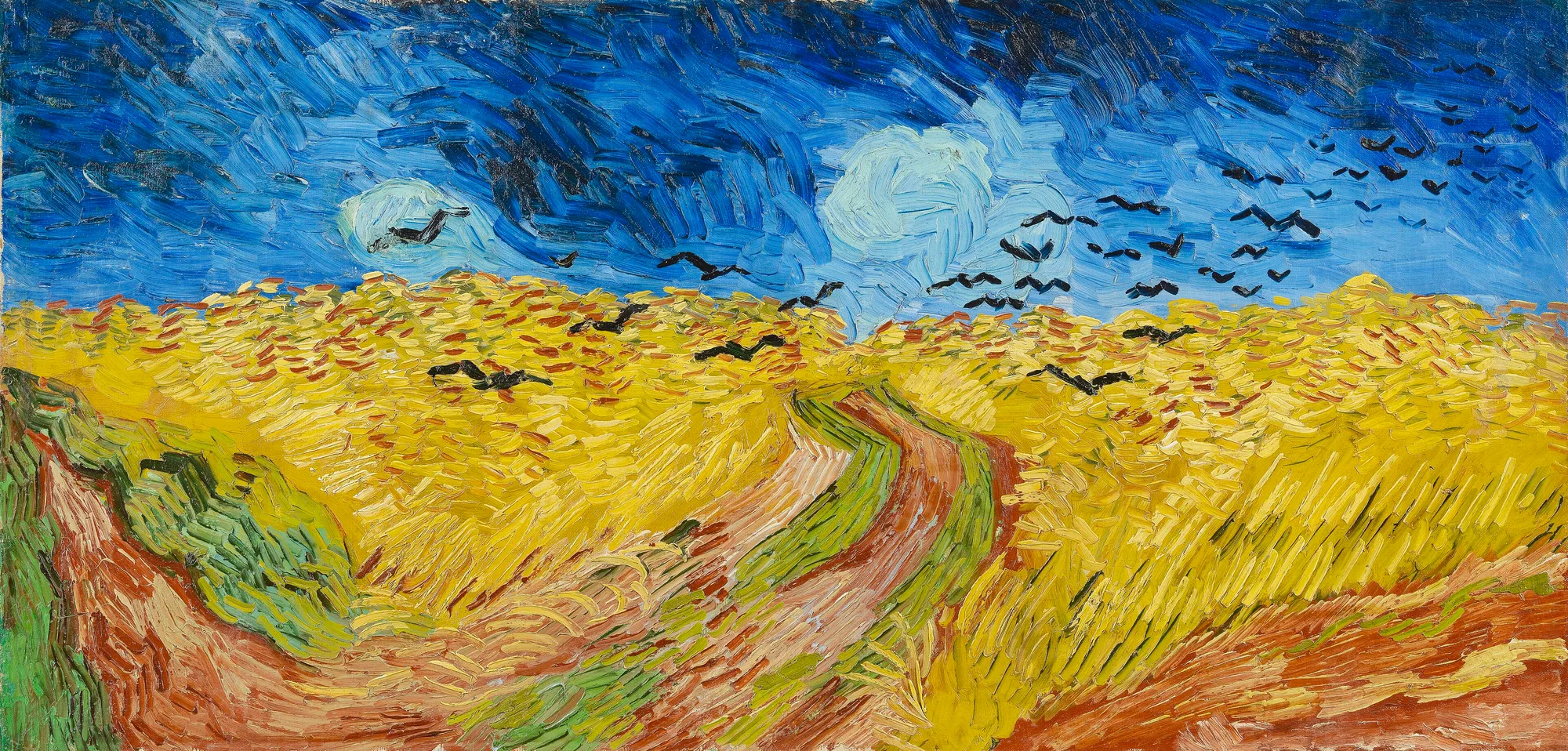
Story1890年7月、パリ近くの村オーヴェール=シュル=オワーズで、ゴッホが描いた横長の絵です。黄金色の麦畑の上に、嵐の前のような濃い青の空。黒いカラスの群れが飛びかっています。中央の道は麦畑の中で消え、左右の道は画面の外へ続いています。横の長さが縦の約2倍もある、細長い画面です。オーヴェールに住んだ約70日の間に、ゴッホは70点をこえる油絵を描いたといわれます。
Van Gogh painted this wide picture in July 1890, in the village of Auvers-sur-Oise near Paris. Above a golden wheatfield, the sky is dark blue, as if a storm is coming. A flock of black crows flies over the field. The middle path disappears into the wheat, while the two side paths run out of the picture. The canvas is about twice as wide as it is tall. In about 70 days in Auvers, Van Gogh is said to have painted more than 70 pictures.
ゴッホは手紙で、荒れた空の下に広がる麦畑を描き、悲しみと深い孤独を表そうとした、と書いています。けれど同じ手紙で、田舎の健やかで力をくれるものも伝えたい、とも書きました。荒々しく速い筆づかいは、不安と生命力の両方を感じさせます。空の青と麦の黄色という反対の色のぶつかり合いも、画面に強い力をあたえています。
In a letter, Van Gogh wrote that he painted huge wheatfields under troubled skies to express sadness and extreme loneliness. But in the same letter, he said he also wanted to show what is healthy and strengthening about the countryside. The fast, wild brushstrokes feel both worried and full of energy. The clash of opposite colours, blue sky and yellow wheat, also gives the picture great power.
この絵はゴッホが亡くなる少し前の作品で、長い間「最後の絵」と言われてきました。しかし研究では、最後の作品はおそらく『木の根』だと考えられています。それでも死を予感させるような迫力から、映画や本にくり返し登場してきました。今はアムステルダムのファン・ゴッホ美術館にあります。
Van Gogh painted this shortly before he died, so for a long time people called it his 'last painting'. But researchers now think his last work was probably 'Tree Roots'. Still, its dramatic feeling has made it appear again and again in films and books. It is now in the Van Gogh Museum in Amsterdam.
これは暗い空の下の麦畑です。黒いカラスが上を飛んでいます。多くの人が、これはゴッホ最後の絵だと言います。でも、それは本当ではありません!最後の絵は、たぶん木の根を描いた絵です。
This is a wheatfield under a dark sky. Black crows are flying over it. Many people say it is Van Gogh's last painting. But that is not true! His last painting was probably a picture of tree roots.
英語のレベルは上の「やさしい/ふつう」で切りかえられます。
えっ!?な裏ネタ
Secrets不吉なカラスと行き止まりの道から、「死の直前に描いた最後の絵」という物語が広まりました。けれどファン・ゴッホ美術館は、最後の作品はおそらく『木の根』だとしています。伝説は、絵の迫力が生んだものなのです。
Because of the crows and the dead-end paths, a story spread that this was his very last painting. But the Van Gogh Museum says his last work was probably 'Tree Roots'. The legend grew from the painting's power.
1990年の黒澤明監督の映画『夢』の一話「鴉」では、ゴッホの絵の中に入りこんだ主人公が、この麦畑にたどり着きます。ゴッホ役を演じたのは、アメリカの映画監督マーティン・スコセッシでした。
In 'Crows', a part of Akira Kurosawa's 1990 film 'Dreams', the hero walks into Van Gogh's paintings and reaches this wheatfield. Van Gogh is played by the American film director Martin Scorsese.
手前には、左・まん中・右の3本の道があります。中央の道は麦畑の中でとぎれ、左右の道は画面の外へ続いています。「迷い」を表すと読む人もいますが、ゴッホ自身は道の意味について何も書いていません。見る人によって答えが変わる道なのです。
There are three paths in the foreground: left, centre and right. The middle one stops in the wheat, and the other two run out of the picture. Some people think they show confusion, but Van Gogh himself never explained them. The answer depends on who is looking.
オーヴェールでゴッホは、縦約50cm・横約100cmという、正方形を2つ横に並べたような形のキャンバスを何枚も使いました。広い麦畑を描くのにぴったりの形で、この絵もその一枚です。
In Auvers, Van Gogh used several canvases about 50 cm tall and 100 cm wide, like two squares side by side. This shape was perfect for wide wheatfields, and this painting is one of them.
ここを見て!
Look Closer1カラスの群れThe flock of crows
黒い「V」の形で描かれたカラス。こちらへ飛んでくるのか、遠ざかるのか、はっきりしません。
The crows are painted as black V shapes. Are they flying toward us or away? We can't tell.
2まん中の道The middle path
赤茶色の道は、麦畑の中でふっと消えます。この先には何があるのでしょう。
The red-brown path suddenly disappears into the wheat. What is beyond it?
3荒れた空The stormy sky
上へいくほど暗くなる青い空。短く激しい筆のあとが、風のうなりのようです。
The blue sky gets darker toward the top. The short, strong brushstrokes look like a howling wind.
英語で名画を語ろう
Talk about Art in EnglishThree paths lead into the wheatfield.
3本の道が麦畑の中へ続いています。
💡 lead to / lead into で「(道・川などが)〜に通じる」。風景画の道の説明に便利。
英語で説明すると… Describe it
これは広い麦畑です。麦は黄色で、空は濃い青色です。たくさんの黒いカラスが畑の上を飛んでいます。手前には、3本の道があります。
This is a wide wheatfield. The wheat is yellow, and the sky is dark blue. Many black crows are flying over the field. In the foreground, there are three paths.
考えてみよう Think & Talk
- この絵は悲しい絵だと思いますか、それとも力強い絵だと思いますか?それはなぜ?Do you think this painting is sad or full of energy? Why?
- 道の先には何があると思いますか?Where do you think the paths go?
この作品の英単語
WordsBlack crows fly over the wheat.
黒いカラスが麦の上を飛んでいます。
Three paths go into the field.
3本の小道が畑の中へ続いています。
He wanted to express a lonely feeling.
彼は孤独な気持ちを表したかったのです。
The wheatfield spreads under the sky.
麦畑が空の下に広がっています。
ミニクイズ
QuizQ. 絵の手前にある道は何本?How many paths are in the foreground?
左・まん中・右の3本です。中央の道は麦畑の中で消え、左右の道は画面の外へ続いています。
There are three: left, centre and right. The middle one disappears into the wheat, and the side paths run out of the picture.
ウソ?ホント? この絵は、横の長さが縦の約2倍ある。This painting is about twice as wide as it is tall.
縦約50cm、横約103cmの細長い画面です。
It is about 50 cm tall and 103 cm wide.
ウソ?ホント? 研究で、これがゴッホの最後の絵だと確かめられている。Research has proved that this is Van Gogh's last painting.
最後の作品はおそらく『木の根』だと考えられています。
His last work was probably 'Tree Roots'.
 画像の出典とライセンス / Image credit
- PDKorenveld met kraaien - s0149V1962 - Van Gogh Museum.jpg(Wikimedia Commons)
ライセンス:Public domain(パブリックドメイン)/作者・撮影者の表記:Vincent van Gogh
この作品は、作者の死後長い年月がたち著作権の保護期間が終わった「パブリックドメイン」の作品です。画像は平面の作品を忠実に写したもので、新しい著作権は生じません(Wikimedia Commons の PD-Art の考え方)。 所蔵:ファン・ゴッホ美術館(Van Gogh Museum)。画像は表示のために縮小・WebP 形式に変換しています。
フィンセント・ファン・ゴッホのほかの作品