 ワークシート
 ぬりえ
 迷路
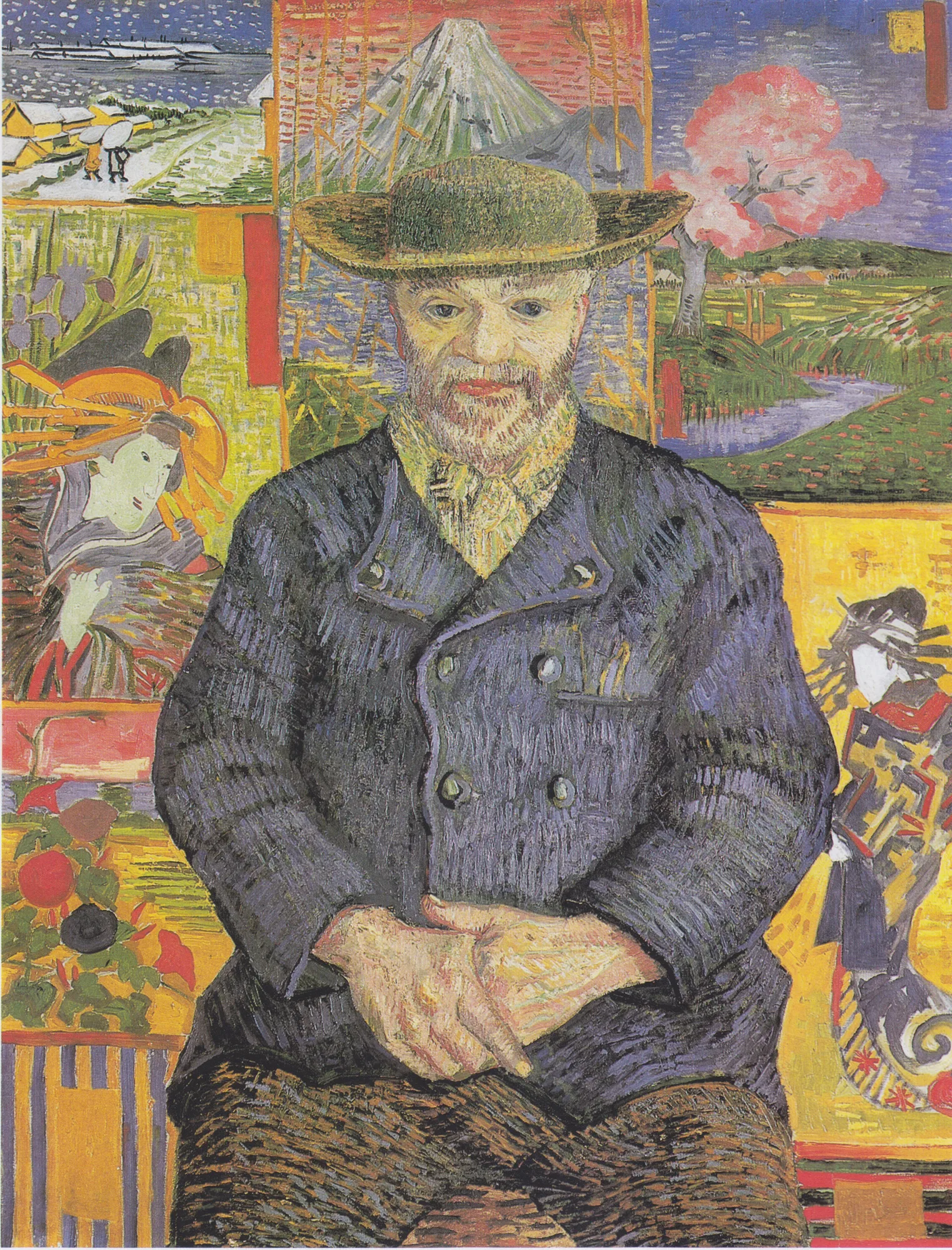
浮世絵にかこまれたおじいさん。パリの画材屋は、貧しい画家の味方。An old man surrounded by ukiyo-e: the paint seller who helped poor artists.
 美術館アンテナ:フィンセント・ファン・ゴッホの作品に会える展覧会
この作品のお話
Story1887年、パリにいたゴッホが描いた、画材屋ジュリアン・タンギーの肖像です。人びとは親しみをこめて「ペール(とっつぁん)・タンギー」と呼びました。麦わらぼうしをかぶり、ごつごつした手を組んで、物思いにふけるような表情をしています。その背景の壁は、色あざやかな日本の浮世絵でうめつくされています。
Van Gogh painted this portrait of Julien Tanguy, a paint seller, in Paris in 1887. People called him 'Père Tanguy' (Father Tanguy) with affection. He wears a straw hat, holds his rough hands together and looks lost in thought. The wall behind him is covered with colourful Japanese prints.
タンギーは絵の具の店を開き、売れない若い画家たちから、絵の具代のかわりに絵を受け取ることもありました。店にはゴッホやセザンヌの絵も飾られていました。そのころゴッホは浮世絵に夢中で、パリの美術商ビングの店から何百枚も手に入れていました。この絵は、尊敬する人と大好きな日本を一枚に合わせた作品です。
Tanguy ran a shop for artists' paints. Sometimes he took paintings from poor young artists instead of money. Works by Van Gogh and Cézanne could be seen in his shop. At that time, Van Gogh was crazy about Japanese prints and got hundreds of them from the dealer Siegfried Bing. This painting puts a man he respected and the Japan he loved together.
タンギーはこの絵を最後まで手放しませんでした。1894年に彼が亡くなったあと、彫刻家オーギュスト・ロダンが手に入れましたが、くわしい経緯は分かっていません。今もパリのロダン美術館にあります。ゴッホは同じ年にもう1枚、浮世絵を背にしたタンギー像を描いており、そちらは個人が持っています。タンギーは、ゴッホの葬儀に来た数少ない人の一人でした。
Tanguy kept this painting until he died in 1894. After that, the sculptor Auguste Rodin got it, but we do not know exactly how. It is still in the Musée Rodin in Paris. In the same year, Van Gogh painted another portrait of Tanguy in front of Japanese prints, which is in a private collection. Tanguy was one of the few people who came to Van Gogh's funeral.
この人はタンギー爺さんです。パリで絵の具の店をやっていました。貧しい若い画家たちにやさしくしました。うしろには日本の絵がたくさんあります。帽子の上の富士山を見つけられますか?
This man is Père Tanguy. He had a paint shop in Paris. He was kind to poor young artists. Behind him, there are many Japanese pictures. Can you find Mount Fuji above his hat?
英語のレベルは上の「やさしい/ふつう」で切りかえられます。
えっ!?な裏ネタ
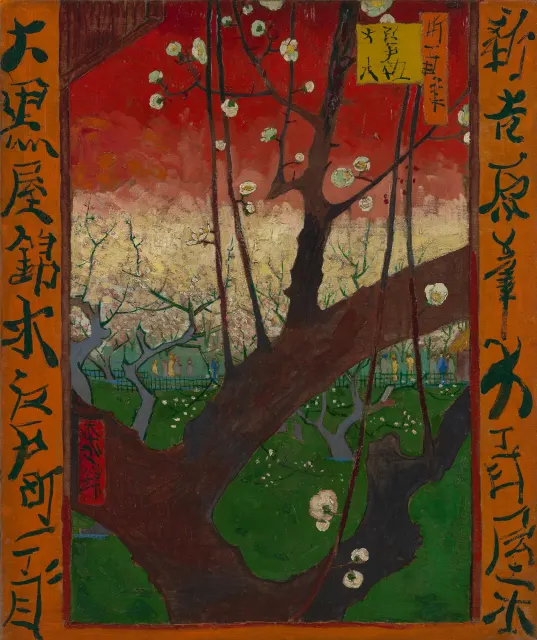
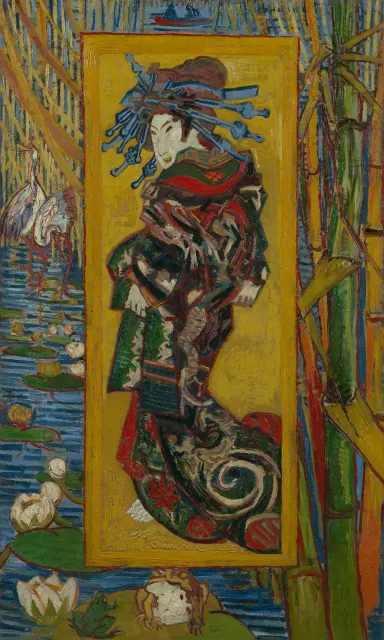
Secrets頭の上の富士山は歌川広重の版画(『富士三十六景 さがみ川』など2枚)を組み合わせたもの、右上の桜は広重の「石薬師」、右の花魁は渓斎英泉の作品がもとです。研究者たちが、一枚ずつ元の版画を突きとめてきました。
Mount Fuji above his head combines two prints by Utagawa Hiroshige, including 'The Sagami River'. The cherry tree at the top right comes from Hiroshige's 'Ishiyakushi', and the courtesan on the right comes from Keisai Eisen. Researchers have traced the prints one by one.
左側の女性は、歌川国貞(三代豊国)が描いた「三世岩井粂三郎の三浦屋高尾」という役者絵がもとです。歌舞伎では女性の役も男性が演じるので、この人は女形の役者なのです。
The woman on the left comes from a print by Utagawa Kunisada showing the actor Iwai Kumesaburō III as Takao. In kabuki, men play women's roles, so this 'woman' is really a male actor.
右の花魁は英泉の作品がもとですが、向きが逆です。パリの雑誌『パリ・イリュストレ』の日本特集号(1886年)の表紙に裏返しで印刷されたものを、ゴッホが写したと考えられています。ゴッホはこの花魁を大きな油絵にも描きました。
The courtesan on the right comes from Eisen, but she faces the other way. Van Gogh probably copied her from the cover of a Japan issue of the magazine Paris Illustré (1886), where she was printed in reverse. He also made a large oil painting of her.
若いころのタンギーは、1871年のパリ・コミューン(パリの市民が政府に立ち向かった出来事)に加わり、つかまって捕らわれの身になりました。のちに店を開き、貧しい画家たちを支える「とっつぁん」になったのです。
When he was younger, Tanguy joined the Paris Commune of 1871, when people in Paris rose up against the government. He was arrested and held prisoner. Later, he opened his shop and became a 'father' to poor artists.
ここを見て!
Look Closer1富士山Mount Fuji
帽子のすぐ上にそびえる富士山。広重の版画2枚を組み合わせています。
Mount Fuji rises just above his hat. It combines two prints by Hiroshige.
2満開の桜Cherry blossoms
広重の「石薬師」がもと。ピンクの桜が、パリの絵に春を運んでいます。
Based on Hiroshige's 'Ishiyakushi'. The pink cherry tree brings spring into a Paris painting.
3国貞の役者絵Kunisada's actor print
女性に見えますが、女形の歌舞伎役者を描いた版画がもとです。
She looks like a woman, but the print shows a male kabuki actor.
4英泉の花魁Eisen's courtesan
はなやかな着物の花魁。雑誌の表紙から写したので、左右が反対です。
A courtesan in a showy kimono. He copied her from a magazine cover, so she is reversed.
英語で名画を語ろう
Talk about Art in EnglishPère Tanguy is surrounded by Japanese prints.
タンギー爺さんは浮世絵に囲まれています。
💡 人物と背景の関係を言うのにぴったり。by の後ろに囲んでいる物を置きます。
英語で説明すると… Describe it
まん中におじいさんが座っています。麦わらぼうしをかぶり、青い上着を着ています。うしろには日本の浮世絵がたくさんあります。帽子のすぐ上に富士山があります。
An old man is sitting in the middle. He is wearing a straw hat and a blue jacket. Behind him, there are many Japanese prints. Mount Fuji is right above his hat.
考えてみよう Think & Talk
- ゴッホはなぜ、タンギーのうしろに浮世絵を描いたのだと思いますか?Why do you think Van Gogh put Japanese prints behind Tanguy?
- 好きな人の絵を描くなら、そのうしろに何を描きますか?If you painted someone you like, what would you put behind them?
この作品の英単語
WordsJapanese prints surround the old man.
浮世絵がおじいさんを囲んでいます。
Van Gogh collected hundreds of Japanese prints.
ゴッホは何百枚もの浮世絵版画を集めました。
Tanguy was generous to poor artists.
タンギーは貧しい画家たちに気前がよかったのです。
In kabuki, male actors play women's roles.
歌舞伎では男性の役者が女性の役を演じます。
ミニクイズ
QuizQ. タンギーさんの仕事は?What was Tanguy's job?
パリで絵の具などを売る店を開き、若い画家たちを助けました。
He sold paints in Paris and helped young artists.
ウソ?ホント? この絵は今、彫刻家ロダンの名前の美術館にある。This painting is now in a museum named after the sculptor Rodin.
ロダン本人が買ったので、パリのロダン美術館にあります。
Rodin himself bought it, so it is in the Musée Rodin in Paris.
ウソ?ホント? 背景の浮世絵は、すべてゴッホの想像で描かれた。Van Gogh made up all the Japanese prints in the background.
広重・国貞・英泉などの本物の版画をもとにしています。
They are based on real prints by Hiroshige, Kunisada, Eisen and others.
 画像の出典とライセンス / Image credit
- PDVan Gogh - Bildnis Pére Tanguy.jpeg(Wikimedia Commons)
ライセンス:Public domain(パブリックドメイン)/作者・撮影者の表記:Vincent van Gogh/提供元:Copied from an art book
この作品は、作者の死後長い年月がたち著作権の保護期間が終わった「パブリックドメイン」の作品です。画像は平面の作品を忠実に写したもので、新しい著作権は生じません(Wikimedia Commons の PD-Art の考え方)。 所蔵:ロダン美術館(Musée Rodin)。画像は表示のために縮小・WebP 形式に変換しています。
フィンセント・ファン・ゴッホのほかの作品