 ワークシート
 ぬりえ
 迷路
広重の梅を油絵で写した!まわりの漢字はどこから来た?Hiroshige's plum tree in oil paint! But where did the Japanese letters come from?
 美術館アンテナ:フィンセント・ファン・ゴッホの作品に会える展覧会
この作品のお話
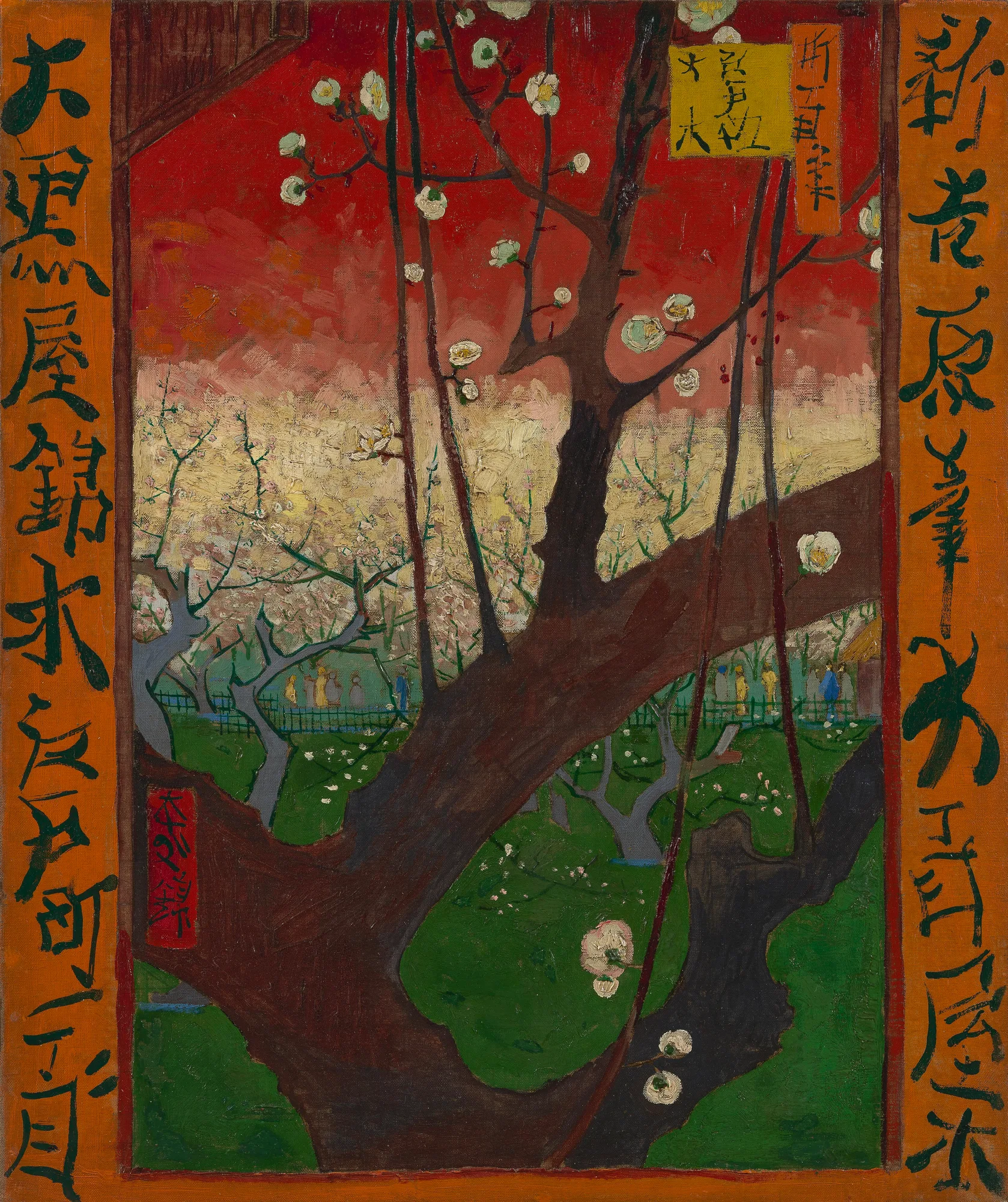
Story1887年、パリにいたゴッホが、歌川広重の浮世絵『名所江戸百景』の「亀戸梅屋舗」(1857年)を油絵で写した作品です。画面を横切る太い梅の幹、そのむこうの白い花の梅林、柵の外で花見をする人びと。手前の木をどーんと大きく描き、奥を小さく見せる広重の大胆な構図を、ゴッホはそのまま受けつぎました。
In 1887, in Paris, Van Gogh copied Utagawa Hiroshige's print 'Plum Park in Kameido' (1857), from the series 'One Hundred Famous Views of Edo', in oil paint. A thick plum trunk crosses the picture. Behind it are white plum trees and people enjoying the flowers beyond a fence. Van Gogh kept Hiroshige's bold design: a huge tree in front and small things far away.
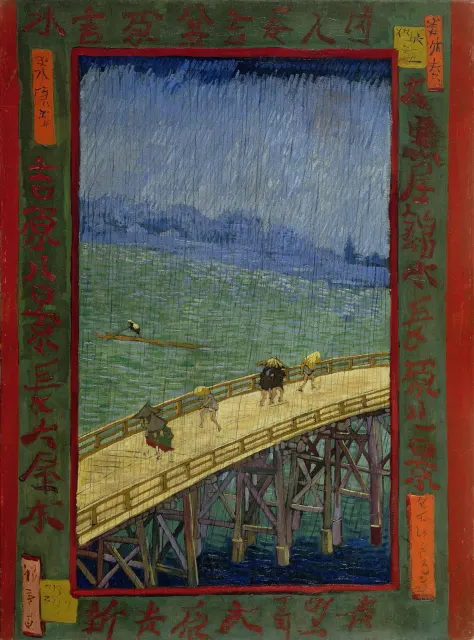
ゴッホは持っていた広重の版画を薄い紙でなぞり、方眼をかけて少し拡大してから写しました。ただし色は自分流です。空の赤をもっと強くし、幹は赤茶色に。左右には、別の浮世絵から写した漢字の帯をつけ足しました。同じころ、広重の「大はしあたけの夕立」も油絵で写しています。
Van Gogh traced his own copy of the print on thin paper, drew a grid on it and enlarged it a little. But he chose his own colours. He made the red sky stronger and the trunk reddish brown. He also added strips of Japanese characters on both sides, copied from other prints. At the same time, he also copied Hiroshige's 'Sudden Shower over Ōhashi Bridge'.
この「浮世絵の写し」は、ゴッホの絵を大きく変えました。くっきりした輪郭線、平らで明るい色、思いきった構図は、のちのアルルの作品に生かされます。絵はアムステルダムのファン・ゴッホ美術館にあり、長い間ほかの美術館へはほとんど貸し出されませんでした。なお、広重が描いた梅屋敷の梅は、1910年の大水で枯れてしまったといわれます。
Copying Japanese prints changed Van Gogh's art. Strong outlines, flat bright colours and daring designs appear later in his paintings in Arles. This picture is in the Van Gogh Museum in Amsterdam and has rarely been lent to other museums. The real plum garden that Hiroshige drew is said to have died in a great flood in 1910.
これは白い花の咲いた梅の木です。最初の絵は日本の浮世絵師、広重が作りました。ゴッホは1887年に、それを油絵で写しました。両側には日本の文字も加えました。でも、その文字は梅の木とまったく関係がないのです!
This is a plum tree with white flowers. The Japanese artist Hiroshige made the first picture. Van Gogh copied it with oil paint in 1887. He also put Japanese letters on both sides. But the letters have nothing to do with the tree!
英語のレベルは上の「やさしい/ふつう」で切りかえられます。
えっ!?な裏ネタ
Secrets左右の漢字は、梅の庭とは関係のない別の版画から写したものです。左の列には「大黒屋錦木 江戸町一丁目」と読める文字があり、江戸の店の名前と人の名前、町の名前を組み合わせたもののようです。ゴッホはおそらく意味を知らずに、すてきな模様として描きこんだのでしょう。
The characters on both sides were copied from other prints and have nothing to do with the plum garden. On the left, you can read words like 'Daikokuya Nishikigi, Edo-machi 1-chōme', which seem to combine a shop name, a person's name and a place name in Edo. Van Gogh probably did not know the meaning and used them as decoration.
ゴッホは弟テオと、パリの美術商ビングから600枚以上の浮世絵を手に入れました。当時はとても安く、1枚がコーヒー1杯ほどだったといわれます。その多くが今もアムステルダムに残り、広重の作品だけでも78枚あります。
With his brother Theo, Van Gogh got more than 600 Japanese prints from the Paris dealer Siegfried Bing. They were very cheap then, reportedly about the price of a cup of coffee each. Many are still in Amsterdam, including 78 by Hiroshige.
手前に木をどーんと置き、画面をななめに区切る広重の構図は、ゴーギャンの『説教のあとの幻影』(1888年)にも影響したと考えられています。1枚の浮世絵の構図が、二人の画家に影響をあたえたのかもしれません。
Hiroshige's idea of placing a big tree in front and cutting the picture diagonally probably influenced Gauguin's 'Vision after the Sermon' (1888). This print's design may have influenced two painters.
広重が描いたのは、亀戸の梅屋敷にあった名木「臥龍梅」です。竜が地面をはうような枝ぶりからこの名がつき、水戸の徳川光圀が名づけたという言い伝えもあります。江戸の人びとの人気の花見スポットでした。
Hiroshige drew a famous tree in Kameido called Garyūbai, the 'Sleeping Dragon Plum'. Its branches crawled along the ground like a dragon. A legend says the lord Tokugawa Mitsukuni gave it this name. It was a popular place to see flowers in Edo.
ここを見て!
Look Closer1太い梅の幹The thick plum trunk
画面を大きく横切る幹。広重の版画では黒っぽい色ですが、ゴッホは赤茶色にしました。
The trunk cuts across the picture. In Hiroshige's print it is dark, but Van Gogh made it reddish brown.
2花見の人びとPeople enjoying the blossoms
柵のむこうで梅を楽しむ小さな人たち。手前の木との大きさのちがいで、奥行きが生まれます。
Tiny people enjoy the blossoms beyond the fence. The size difference with the big tree creates depth.
3漢字の帯The strip of characters
別の浮世絵から写した文字。「大黒屋錦木 江戸町一丁目」と読めます。
Characters copied from another print. They read 'Daikokuya Nishikigi, Edo-machi 1-chōme'.
英語で名画を語ろう
Talk about Art in EnglishThis painting was made after a print by Hiroshige.
この絵は広重の版画をもとに描かれました。
💡 作品名の (after 〇〇) は「〇〇の作品をもとに」の意味。美術館の表示によく出ます。
英語で説明すると… Describe it
太い梅の幹が、左下から右上へ斜めにのびています。そのむこうには、白い花の咲いた小さな木がたくさんあります。空は赤色です。左右には日本の文字があります。
A thick plum trunk runs diagonally from the lower left toward the upper right. Behind it, there are many small trees with white flowers. The sky is red. On the left and right, there are Japanese characters.
考えてみよう Think & Talk
- ゴッホはなぜ、日本の浮世絵を写したのだと思いますか?Why do you think Van Gogh copied a Japanese print?
- 有名な絵を写すとしたら、あなたはどこを変えますか?If you copied a famous picture, what would you change?
この作品の英単語
WordsVan Gogh copied a print by Hiroshige.
ゴッホは広重の版画を写しました。
A thick trunk crosses the picture.
太い幹が画面を横切っています。
He added Japanese letters to the border.
彼はふちに日本の文字を加えました。
Hiroshige used a bold design.
広重は大胆な構図を使いました。
ミニクイズ
QuizQ. ゴッホがこの絵でお手本にした浮世絵師は?Which Japanese artist did Van Gogh copy here?
広重の『名所江戸百景』の「亀戸梅屋舗」がお手本です。
He copied Hiroshige's 'Plum Park in Kameido' from 'One Hundred Famous Views of Edo'.
ウソ?ホント? 左右の漢字は、梅の庭の名前を説明している。The characters on the sides explain the name of the plum garden.
別の浮世絵から写した文字で、梅の庭とは関係がありません。
They were copied from other prints and are not about the garden.
ウソ?ホント? ゴッホは広重の版画をなぞり、方眼を使って写した。Van Gogh traced Hiroshige's print and used a grid to copy it.
薄い紙でなぞり、方眼をかけて少し拡大しました。
He traced it on thin paper and enlarged it a little with a grid.
 画像の出典とライセンス / Image credit
- PDBloeiende pruimenboomgaard (naar Hiroshige) - s0115V1962 - Van Gogh Museum.jpg(Wikimedia Commons)
ライセンス:Public domain(パブリックドメイン)/作者・撮影者の表記:Vincent van Gogh/提供元:Van Gogh Museum
この作品は、作者の死後長い年月がたち著作権の保護期間が終わった「パブリックドメイン」の作品です。画像は平面の作品を忠実に写したもので、新しい著作権は生じません(Wikimedia Commons の PD-Art の考え方)。 所蔵:ファン・ゴッホ美術館(Van Gogh Museum)。画像は表示のために縮小・WebP 形式に変換しています。
フィンセント・ファン・ゴッホのほかの作品