 ワークシート
 ぬりえ
 迷路
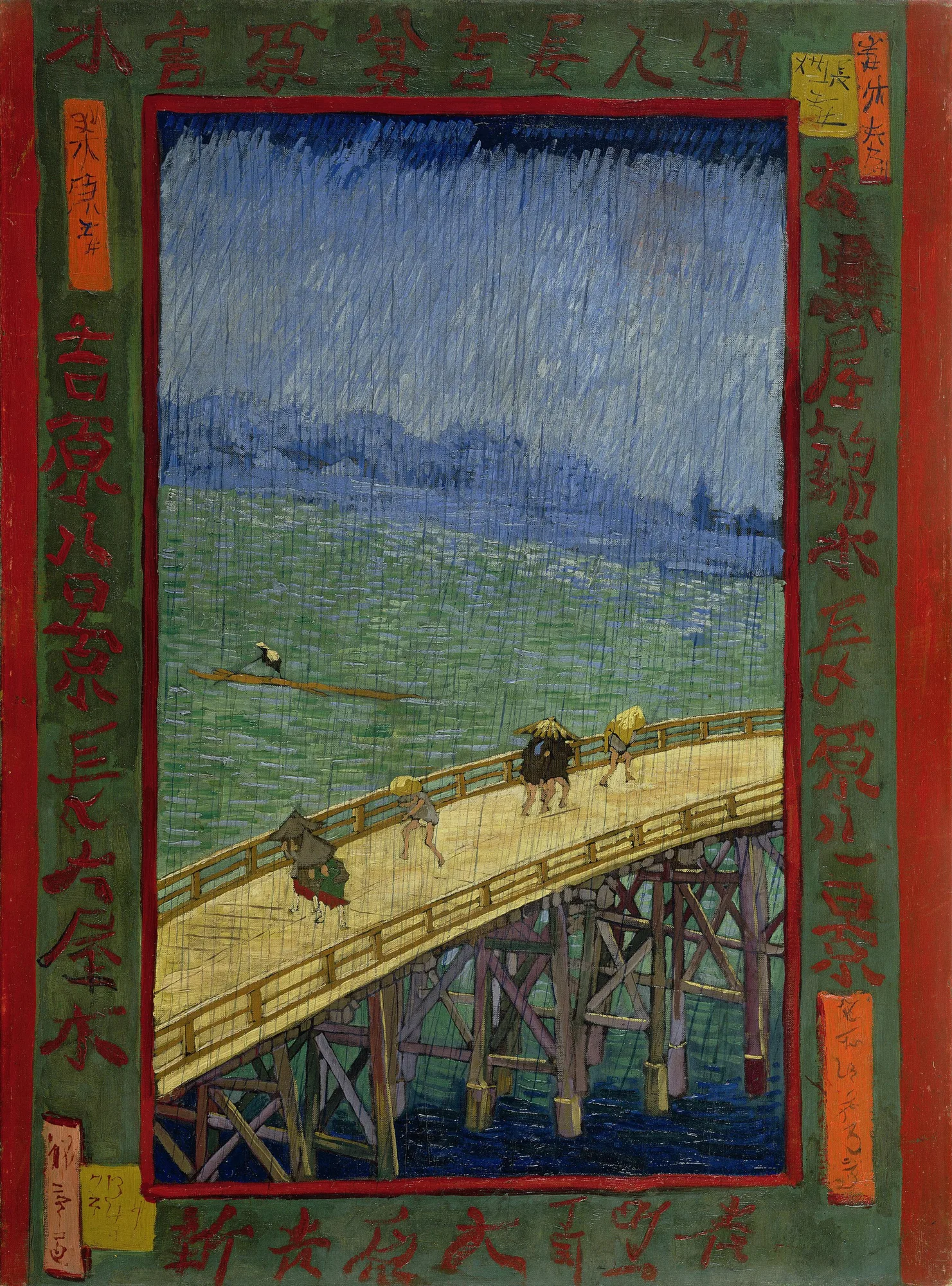
江戸の夕立がパリへ!ゴッホが油絵で写した、広重の「大はし」。An Edo rain shower in Paris! Van Gogh's oil copy of Hiroshige's bridge.
 美術館アンテナ:フィンセント・ファン・ゴッホの作品に会える展覧会
この作品のお話
Story1887年の秋、パリに住んでいたゴッホが、歌川広重の浮世絵「名所江戸百景 大はしあたけの夕立」(1857年)を油絵で写した作品です。隅田川にかかる新大橋に夕立がふりそそぎ、人びとは傘をさしたり、笠やござで頭をおおったりして急いでいます。川には、いかだをあやつる人が一人。今はアムステルダムのファン・ゴッホ美術館にあります。
In the autumn of 1887, Van Gogh, then living in Paris, copied Utagawa Hiroshige's print 'Sudden Shower over Shin-Ōhashi Bridge and Atake' (1857) in oil paint. A sudden shower falls on Shin-Ōhashi Bridge over the Sumida River, and people hurry across under umbrellas, straw hats or mats. A lone man steers a raft on the river. The painting is now in the Van Gogh Museum in Amsterdam.
広重の版画はとても縦長です。ゴッホは絵のまわりに緑と赤の枠をつけ、漢字風の文字をならべました。この文字は、ほかの画家の2枚の版画から借りてきたものです。雨は、細い筆で濃い青の長い縦線を一本一本引いて表しました。川を緑に、橋を明るい黄色にするなど、色はゴッホ流に変えています。
Hiroshige's print is very tall and narrow. Van Gogh added a green and red frame around the picture and filled it with Japanese-style characters. He borrowed these characters from two prints by other artists. For the rain, he drew long, dark blue lines one by one with a fine brush. He also changed the colors in his own way, making the river green and the bridge bright yellow.
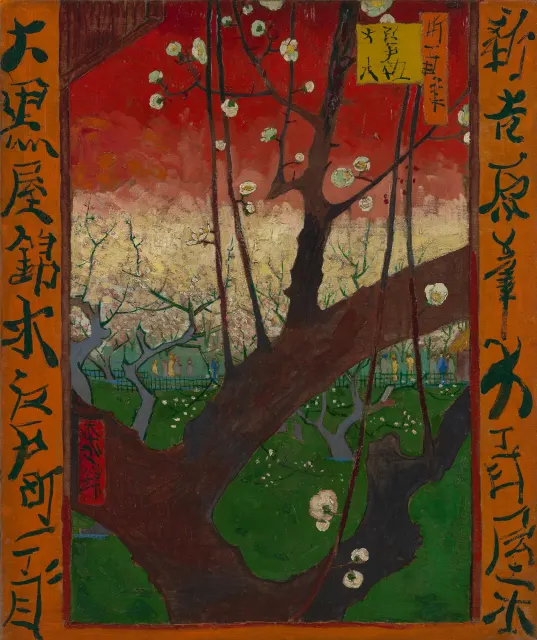
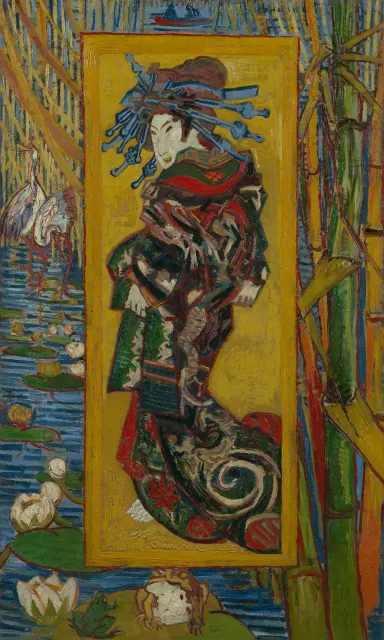
この絵は、同じころに描いた「花咲く梅の木」「花魁」とあわせて、浮世絵を油絵で写した3点の一つです。ゴッホは浮世絵から、はっきりした輪郭線や明るい色、大胆な構図を学びました。翌1888年、「日本のような光」を求めて南フランスのアルルへ移り、そこで描いた作品にその学びを生かしていきます。
This painting is one of three oil copies of Japanese prints that Van Gogh made around the same time, along with 'Flowering Plum Orchard' and 'The Courtesan'. From Japanese prints he learned clear outlines, bright colors and bold compositions. In 1888 he moved to Arles in the south of France, looking for 'Japanese' light, and used these lessons in his new work.
雨がはげしくふっています。人びとが傘や笠で雨をよけながら、大きな橋を急いでわたります。川には、いかだに乗った人がいます。ゴッホは日本の浮世絵を見て、この絵を写しました。まわりに日本の文字の枠をつけましたが、その文字は読めなかったのです!
It is raining hard. People hurry across a big bridge under umbrellas and straw hats. A man is on a raft on the river. Van Gogh copied this from a Japanese print. He added a frame with Japanese letters, but he could not read them!
英語のレベルは上の「やさしい/ふつう」で切りかえられます。
えっ!?な裏ネタ
Secrets広重の版画は、ふつうのキャンバスよりずっと細長い形です。ゴッホはまわりに文字入りの枠をつけることで、もとの縦長の形を保ったまま、ふつうの大きさのキャンバスにおさめたと考えられています。飾りに見える枠は、じつは計算された工夫だったのかもしれません。
Hiroshige's print is much narrower than a standard canvas. It is thought that by adding a frame with characters, Van Gogh kept the tall shape of the original while using a standard-size canvas. The decorative border may have been a clever, planned solution.
外側の赤と内側の緑は、色の輪で向かい合う「補色」の組み合わせです。となりに置くと、おたがいをいっそう強く見せます。パリ時代のゴッホは、この補色の使い方を熱心に研究していました。浮世絵の写しは、色の実験場でもあったのです。
The red outer border and the green inner border are complementary colors, opposite each other on the color wheel. Side by side, they make each other look stronger. In Paris, Van Gogh studied complementary colors very closely. His copies of Japanese prints were also color experiments.
広重の版画では、彫師が細い雨の線を版木の上に凸状に彫り残し、その線に色をのせて摺っています。ゴッホはそれを、細い筆で引いた濃い青の長いタッチでまねしました。木版画の線を油絵の具に置きかえようとした工夫が見られます。
In Hiroshige's print, the rain was printed from fine raised lines that the carver left standing on the woodblock. Van Gogh copied them with long, dark blue strokes made with a fine brush. We can see him translating the lines of a woodblock print into oil paint.
ゴッホはアルルに着くと、弟への手紙で南フランスを「日本のようだ」と書きました。そしてアルル郊外の木の跳ね橋を、くり返し描きます。その黄色と青の明るい橋の絵に、この広重の橋の影響を見る研究者もいます。
After arriving in Arles, Van Gogh wrote to his brother that the south of France was like Japan. He then painted a wooden drawbridge near Arles again and again. Some scholars see the influence of this Hiroshige bridge in those bright yellow and blue pictures.
ここを見て!
Look Closer1雨の中を急ぐ人びとPeople hurrying in the rain
傘をさしたり、笠やござで頭をおおったりして急ぐ人たち。広重の版画とほぼ同じ姿で写されています。
People hurry under umbrellas, straw hats or mats. Van Gogh copied them almost exactly from Hiroshige's print.
2いかだ乗りThe raftsman
雨にけむる川を、一人でいかだを進める人。小さな姿が、川の広さを感じさせます。
A man pushes his raft alone across the misty river. His small figure shows how wide the river is.
3漢字の枠Frame of characters
赤い文字は、ほかの浮世絵から写したもの。ゴッホは意味を知らず、形の美しさで選んだと考えられています。
The red characters were copied from other prints. Van Gogh probably chose them for their shapes, not their meaning.
4青い雨の線Blue lines of rain
細い筆で引いた濃い青の縦線。空いっぱいに夕立がふりそそぎます。
Dark blue vertical lines made with a fine brush. The shower fills the whole sky.
英語で名画を語ろう
Talk about Art in EnglishPeople are running across the bridge in the pouring rain.
人びとがどしゃぶりの中、橋を走ってわたっています。
💡 pour は「注ぐ」。バケツをひっくり返したような大雨を pouring rain と言います。
英語で説明すると… Describe it
これは雨の中の橋です。橋の上では、人びとが傘をさしたり、笠やござで頭をおおったりして急いでいます。緑色の川には、いかだに乗った人がいます。絵のまわりには、漢字風の文字が入った緑と赤の枠があります。
This is a bridge in the rain. On the bridge, people are hurrying under umbrellas, straw hats or mats. On the green river, there is a man on a raft. Around the picture, there is a green and red frame with Japanese-style characters.
考えてみよう Think & Talk
- ゴッホはなぜ日本の浮世絵を写したのだと思いますか?Why do you think Van Gogh copied Japanese prints?
- 広重の版画とくらべてみましょう。あなたはどちらが好きですか?それはなぜ?Compare this with Hiroshige's print. Which do you like better? Why?
この作品の英単語
WordsA sudden shower falls on the bridge.
橋に突然の夕立がふりそそぎます。
Van Gogh copied a Japanese print.
ゴッホは日本の版画を写しました。
He painted a red and green border.
彼は赤と緑の枠を描きました。
Red and green are complementary colors.
赤と緑は補色です。
ミニクイズ
QuizQ. ゴッホはこの絵を、何をもとに描いた?What did Van Gogh use as a model for this painting?
広重の「名所江戸百景 大はしあたけの夕立」を油絵で写しました。ゴッホは日本に行ったことはありません。
He copied Hiroshige's 'Sudden Shower over Shin-Ōhashi Bridge and Atake' in oil. Van Gogh never went to Japan.
ウソ?ホント? ゴッホは日本へ行って、この橋を自分の目で見た。Van Gogh went to Japan and saw this bridge himself.
ゴッホは一度も日本に行っていません。手もとの浮世絵を見て描きました。
Van Gogh never visited Japan. He painted from a print he owned.
ウソ?ホント? まわりの漢字は、ほかの浮世絵から写したものだ。The characters around the picture were copied from other Japanese prints.
ほかの画家の2枚の版画から借りた文字です。
They were borrowed from two prints by other artists.
 画像の出典とライセンス / Image credit
- PDVincent van Gogh - Brug in de regen- naar Hiroshige - Google Art Project.jpg(Wikimedia Commons)
ライセンス:Public domain(パブリックドメイン)/作者・撮影者の表記:Vincent van Gogh
この作品は、作者の死後長い年月がたち著作権の保護期間が終わった「パブリックドメイン」の作品です。画像は平面の作品を忠実に写したもので、新しい著作権は生じません(Wikimedia Commons の PD-Art の考え方)。 所蔵:ファン・ゴッホ美術館(Van Gogh Museum)。画像は表示のために縮小・WebP 形式に変換しています。
フィンセント・ファン・ゴッホのほかの作品