

 PDF をダウンロード
Let's Look at Art!
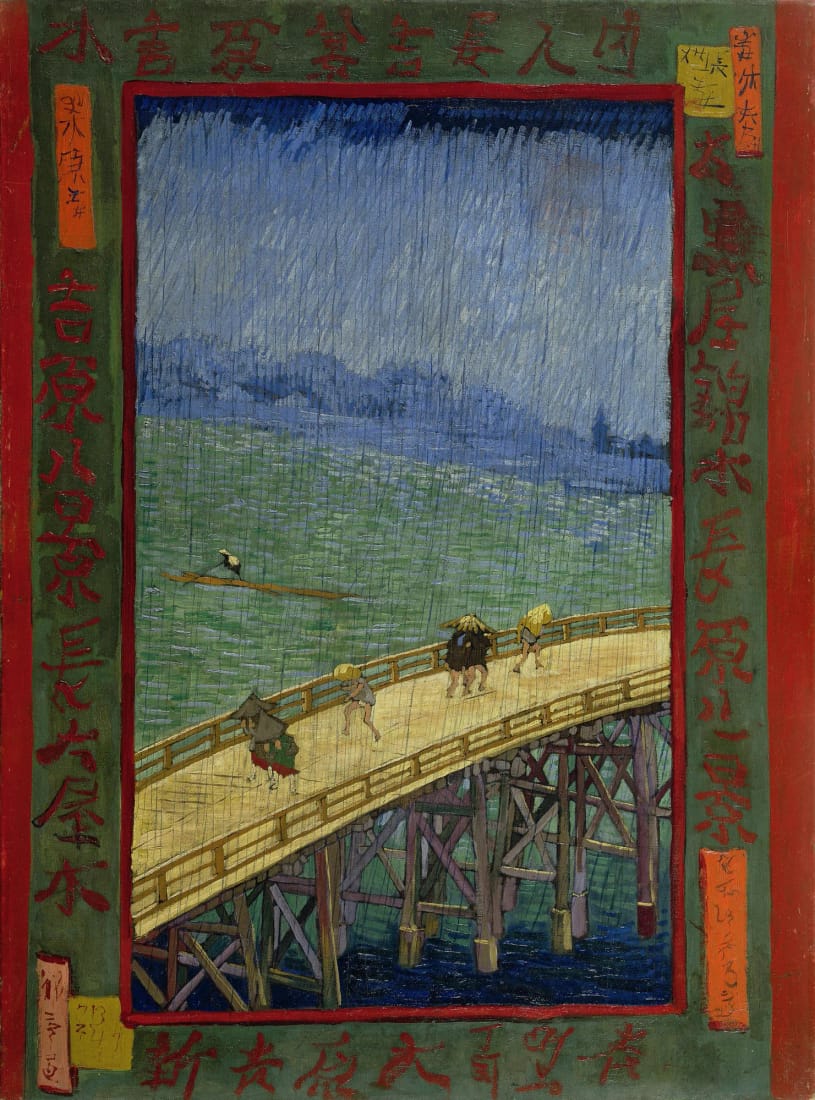
Title: Bridge in the Rain (after Hiroshige)
Artist: Vincent van Gogh (1853–1890)
Year: 1887
Medium: Oil on canvas
Museum: Van Gogh Museum, Amsterdam
1 Find it! 絵の中から見つけて、○でかこもう。
- ☐ People hurrying in the rain
- ☐ The raftsman
- ☐ Frame of characters
- ☐ Blue lines of rain
2 First look 最初に見たときの感想を書こう。
When I first saw this painting, I felt ______________ because ______________________.
Three colors I can see: ①__________ ②__________ ③__________
3 Words — Match them. 英語と日本語を線で結ぼう。
- shower ●
- copy ●
- border ●
- complementary ●
- ● にわか雨・夕立
- ● ふち・枠
- ● 写す・まねて描く
- ● 補色の・おたがいを引き立てる
Bridge in the Rain (after Hiroshige)
4 Fill in the blanks. 下の箱から選んで、( )に入れよう。形を変えるものもあります。
- A sudden falls on the bridge.
- Van Gogh a Japanese print.
- He painted a red and green .
- Red and green are colors.
5 Read and answer — True or False? 英文を読んで、正しければ T、ちがえば F。
It is raining hard. People hurry across a big bridge under umbrellas and straw hats. A man is on a raft on the river. Van Gogh copied this from a Japanese print. He added a frame with Japanese letters, but he could not read them!
In the autumn of 1887, Van Gogh, then living in Paris, copied Utagawa Hiroshige's print 'Sudden Shower over Shin-Ōhashi Bridge and Atake' (1857) in oil paint. A sudden shower falls on Shin-Ōhashi Bridge over the Sumida River, and people hurry across under umbrellas, straw hats or mats. A lone man steers a raft on the river. The painting is now in the Van Gogh Museum in Amsterdam.
- Van Gogh went to Japan and saw this bridge himself. T / F
- The characters around the picture were copied from other Japanese prints. T / F
6 Quiz — Choose the best answer. 正しいものを選ぼう。
What did Van Gogh use as a model for this painting?
- A photo of Paris
- A print by Hiroshige
- Sketches from a trip to Japan
- Hokusai's sketchbooks
Bridge in the Rain (after Hiroshige)
7 Put the words in order. 語を正しく並べかえて、文を書こう。
- running / in / the / People / across / pouring / are / rain / the / bridge .
- This / is / bridge / the / rain / a / in .
8 Complete the description. 箱の語を(1)〜(4)に入れて、絵の説明を完成させよう。
This is a bridge in the rain. On the (1), people are (2) (3) umbrellas, straw hats or mats. On the green river, there is a man on a raft. Around the picture, there is a green and red (4) with Japanese-style characters.
9 Describe the painting in English. この絵を英語で説明しよう(3文以上)。
10 Think & Talk 考えて、ペアやグループで話し合おう。
Why do you think Van Gogh copied Japanese prints?
Compare this with Hiroshige's print. Which do you like better? Why?
11 My favorite part いちばん好きなところを英語で。
I like the ____________ because ____________________________.
Answers & Notes
1 Find it!
People hurrying in the rain=雨の中を急ぐ人びと/The raftsman=いかだ乗り/Frame of characters=漢字の枠/Blue lines of rain=青い雨の線
2 First look
自由に書けたら正解。I felt calm / surprised / happy … などの形容詞を使おう。
3 Words
1–a(shower=にわか雨・夕立) 2–c(copy=写す・まねて描く) 3–b(border=ふち・枠) 4–d(complementary=補色の・おたがいを引き立てる)
4 Fill in the blanks
- shower A sudden shower falls on the bridge.
橋に突然の夕立がふりそそぎます。 - copied Van Gogh copied a Japanese print.
ゴッホは日本の版画を写しました。 - border He painted a red and green border.
彼は赤と緑の枠を描きました。 - complementary Red and green are complementary colors.
赤と緑は補色です。
5 Read — T / F
【本文の訳】雨がはげしくふっています。人びとが傘や笠で雨をよけながら、大きな橋を急いでわたります。川には、いかだに乗った人がいます。ゴッホは日本の浮世絵を見て、この絵を写しました。まわりに日本の文字の枠をつけましたが、その文字は読めなかったのです!
【本文の訳】1887年の秋、パリに住んでいたゴッホが、歌川広重の浮世絵「名所江戸百景 大はしあたけの夕立」(1857年)を油絵で写した作品です。隅田川にかかる新大橋に夕立がふりそそぎ、人びとは傘をさしたり、笠やござで頭をおおったりして急いでいます。川には、いかだをあやつる人が一人。今はアムステルダムのファン・ゴッホ美術館にあります。
- F ゴッホは日本へ行って、この橋を自分の目で見た。
解説:ゴッホは一度も日本に行っていません。手もとの浮世絵を見て描きました。 - T まわりの漢字は、ほかの浮世絵から写したものだ。
解説:ほかの画家の2枚の版画から借りた文字です。
6 Quiz
B 問:ゴッホはこの絵を、何をもとに描いた?
選択肢:A パリの写真/B 広重の浮世絵/C 日本旅行のスケッチ/D 北斎の漫画
解説:広重の「名所江戸百景 大はしあたけの夕立」を油絵で写しました。ゴッホは日本に行ったことはありません。
7 Put the words in order
- People are running across the bridge in the pouring rain.
人びとがどしゃぶりの中、橋を走ってわたっています。 - This is a bridge in the rain.
これは雨の中の橋です。
💡 in the pouring rain(どしゃぶりの中で):pour は「注ぐ」。バケツをひっくり返したような大雨を pouring rain と言います。
8 Complete the description
(1) bridge (2) hurrying (3) under (4) frame
9 Describe(模範解答)
This is a bridge in the rain. On the bridge, people are hurrying under umbrellas, straw hats or mats. On the green river, there is a man on a raft. Around the picture, there is a green and red frame with Japanese-style characters.
これは雨の中の橋です。橋の上では、人びとが傘をさしたり、笠やござで頭をおおったりして急いでいます。緑色の川には、いかだに乗った人がいます。絵のまわりには、漢字風の文字が入った緑と赤の枠があります。
10 Think & Talk(問いの訳)
- Why do you think Van Gogh copied Japanese prints?
ゴッホはなぜ日本の浮世絵を写したのだと思いますか? - Compare this with Hiroshige's print. Which do you like better? Why?
広重の版画とくらべてみましょう。あなたはどちらが好きですか?それはなぜ?
正解のない問いです。理由をつけて話せたら◎。
Fun Fact(訳)
漢字の枠は「サイズ合わせ」の工夫? 広重の版画は、ふつうのキャンバスよりずっと細長い形です。ゴッホはまわりに文字入りの枠をつけることで、もとの縦長の形を保ったまま、ふつうの大きさのキャンバスにおさめたと考えられています。飾りに見える枠は、じつは計算された工夫だったのかもしれません。
