 ワークシート
 ぬりえ
 迷路
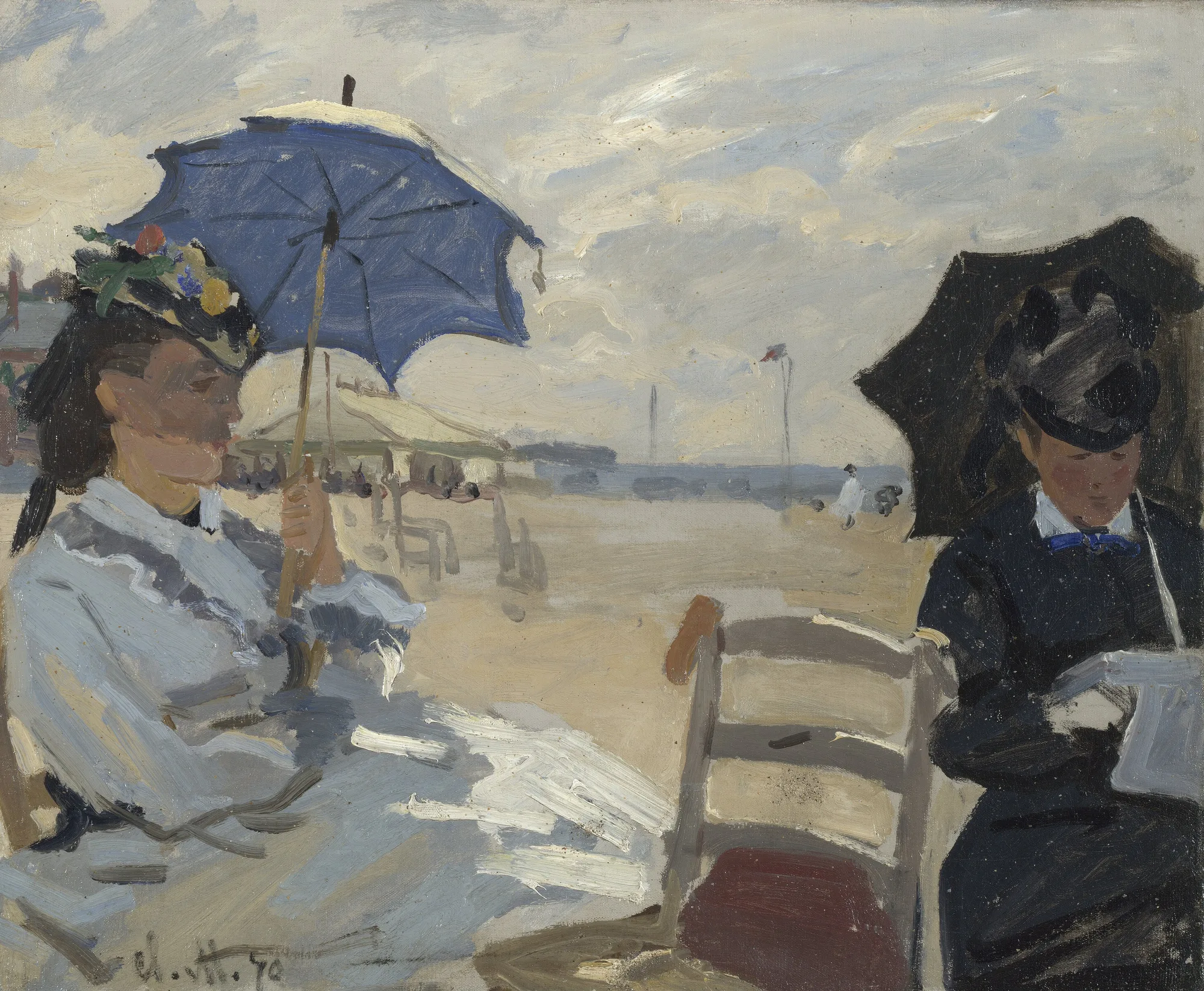
絵の具に本物の砂つぶ!結婚したてのモネが浜辺で描いた夏。Real sand in the paint! A summer beach painted by the newly married Monet.
 美術館アンテナ:クロード・モネの作品に会える展覧会
この作品のお話
Story海辺の椅子に、日傘をさした二人の女性が座っています。左の白い服の女性は、モネの妻カミーユ。右の黒い服の女性は、画家ブーダンの妻か、カミーユの姉妹などモネの家族の一人と考えられています。1870年の夏、フランス北部の海辺の町トルーヴィルで描かれ、今はロンドンのナショナル・ギャラリーにあります。
Two women sit on beach chairs under sunshades. The woman in white on the left is Monet's wife, Camille. The woman in black on the right may be the wife of the painter Eugène Boudin, or someone from Monet's family. Monet painted it in summer 1870 in Trouville, a seaside town in northern France. It now hangs in the National Gallery in London.
この年の6月、モネはカミーユと結婚し、3歳の息子ジャンも連れてトルーヴィルで夏をすごしました。海辺の絵で知られた先輩画家ブーダンも一緒でした。モネは浜辺にカンヴァスを持ち出し、大きな筆あとで一気に描いています。白いドレスや日傘は、数回の太い筆づかいだけで、日差しと風を感じさせます。
In June that year, Monet married Camille. They spent the summer in Trouville with their three-year-old son, Jean. The older painter Boudin, famous for beach scenes, was there too. Monet took his canvas out onto the beach and painted fast, with big brushstrokes. Just a few thick strokes make the white dress and sunshades feel full of sun and wind.
ところが7月、フランスとプロイセン(今のドイツの一部)の戦争が始まりました。夏の終わり、モネは戦争をさけてイギリスへわたります。この小さな絵は1924年にロンドンのナショナル・ギャラリーが買い入れました。印象派らしい「その場で一気に描く」やり方がよくわかる作品として、今も人気です。
But in July, war broke out between France and Prussia, part of today's Germany. At the end of the summer, Monet left for England to escape the fighting. The National Gallery in London bought this small painting in 1924. It is still loved as a clear example of the Impressionist way: painting fast, right on the spot.
二人の女性が浜辺に座っています。一人はモネの妻カミーユです。二人は日傘を持っています。モネはこの絵を浜辺で描きました。よく見て!絵の具の中に本物の砂が入っています。
Two women sit on a beach. One is Monet's wife, Camille. They hold sunshades. Monet painted this picture on the beach. Look closely! Real sand is in the paint.
英語のレベルは上の「やさしい/ふつう」で切りかえられます。
えっ!?な裏ネタ
Secrets絵の表面には、海風で飛んできた砂つぶが、ぬれた絵の具にくっついたまま残っています。モネが本当に浜辺にカンヴァスを立て、少なくとも一部をその場で描いた、動かぬ証拠なのです。
On the surface, grains of sand blown by the sea breeze are stuck in the paint. They landed while the paint was wet. This proves that Monet painted at least part of it right there on the beach.
夏の終わり、モネは戦争をさけてイギリスへ向かいますが、出発はおくれました。トルーヴィルのホテル代を払っていなかったからだと、ナショナル・ギャラリーは紹介しています。まだ売れない画家の、お金の苦労がしのばれます。
At the end of the summer, Monet left for England, but he was late leaving. According to the National Gallery, it was because he had not paid his hotel bill in Trouville. Life was hard for a young painter who did not sell much yet.
真ん中の空いた椅子には、子どもの靴がひっかけてあるようです。ナショナル・ギャラリーは、3歳の息子ジャンのものかもしれないと説明しています。家族の夏休みのひとこまなのです。
On the empty chair in the middle, a child's shoe seems to be hanging. The National Gallery says it may belong to Monet's three-year-old son, Jean. It is a moment from a family summer holiday.
1870年6月のモネとカミーユの結婚式では、写実主義の大画家ギュスターヴ・クールベが証人の一人をつとめました。若いモネは、先輩画家たちにかわいがられていたのです。
At Monet and Camille's wedding in June 1870, the famous Realist painter Gustave Courbet was one of the witnesses. Young Monet was supported by older artists.
ここを見て!
Look Closer1妻カミーユCamille, Monet's wife
花かざりの帽子をかぶった白い服のカミーユ。どこか遠くを見て、考えごとをしているようです。
Camille wears a white dress and a hat with flowers. She seems lost in thought, looking into the distance.
2青い日傘The blue sunshade
数本の太い線だけで描いた日傘。骨組みまでさっと描かれています。
The sunshade is made with just a few thick lines. Even the ribs are painted quickly.
3黒い服の女性The woman in black
新聞を読んでいるらしい女性。白いカミーユと黒い服で、はっきり対比されています。
This woman seems to be reading a newspaper. Her black clothes make a strong contrast with Camille's white dress.
4椅子にかかった靴?A shoe on the chair?
空いた椅子にかかった茶色いもの。息子ジャンの靴かもしれないと言われています。
The brown shape on the empty chair may be a shoe belonging to Monet's son, Jean.
英語で名画を語ろう
Talk about Art in EnglishThe two women sit under their sunshades on the beach.
二人の女性は、浜辺で日傘の下に座っています。
💡 sunshade は「日傘・日よけ」。under ~ で「~の下で」。umbrella は雨傘にも使います。
英語で説明すると… Describe it
二人の女性が浜辺の椅子に座っています。左の女性は白い服を着て、青い日傘を持っています。右の女性は黒い服で、何かを読んでいます。うしろには砂浜があり、何人かの人がいます。
Two women are sitting on chairs at the beach. The woman on the left wears a white dress and holds a blue sunshade. The woman on the right wears black and is reading. In the background, there is a sandy beach with a few people.
考えてみよう Think & Talk
- モネはなぜこんなにすばやく描いたと思いますか?Why do you think Monet painted so quickly?
- この浜辺の絵から、どんな音や感じが伝わってきますか?What can you hear and feel in this beach picture?
この作品の英単語
WordsCamille holds a blue sunshade.
カミーユは青い日傘を持っています。
There is real sand in the paint.
絵の具の中に本物の砂が入っています。
Trouville is a seaside town in France.
トルーヴィルはフランスの海辺の町です。
Monet went to England to escape the war.
モネは戦争をのがれてイギリスへ行きました。
ミニクイズ
QuizQ. この絵の具の中から見つかったものは?What was found in the paint of this picture?
海風で飛んできた砂が、ぬれた絵の具にくっついたまま残っています。
Sand blown by the sea breeze stuck to the wet paint and is still there.
ウソ?ホント? 左の白い服の女性は、モネの妻カミーユだ。The woman in white on the left is Monet's wife, Camille.
この年の6月に結婚したばかりのカミーユです。
It is Camille, who had just married Monet in June that year.
ウソ?ホント? モネはこの絵を、何か月もかけてアトリエでていねいに仕上げた。Monet spent months finishing this painting carefully in his studio.
絵の具についた砂から、少なくとも一部を浜辺で描いたことがわかります。すばやく動かしたような太い筆あとも残っています。
Sand in the paint shows that at least part of the picture was painted on the beach. Its broad brushstrokes also suggest rapid work.
 画像の出典とライセンス / Image credit
- PDClaude Monet - The Beach at Trouville.jpg(Wikimedia Commons)
ライセンス:Public domain(パブリックドメイン)/作者・撮影者の表記:Claude Monet
この作品は、作者の死後長い年月がたち著作権の保護期間が終わった「パブリックドメイン」の作品です。画像は平面の作品を忠実に写したもので、新しい著作権は生じません(Wikimedia Commons の PD-Art の考え方)。 所蔵:ナショナル・ギャラリー(ロンドン)(The National Gallery, London)。画像は表示のために縮小・WebP 形式に変換しています。
クロード・モネのほかの作品