 ワークシート
 ぬりえ
 迷路
主役はファゴット!頭の切れた踊り子の下に、ドガの友だちが大集合。The star is a bassoon! Degas's friends crowd in below the dancers.
 美術館アンテナ:エドガー・ドガの作品に会える展覧会
この作品のお話
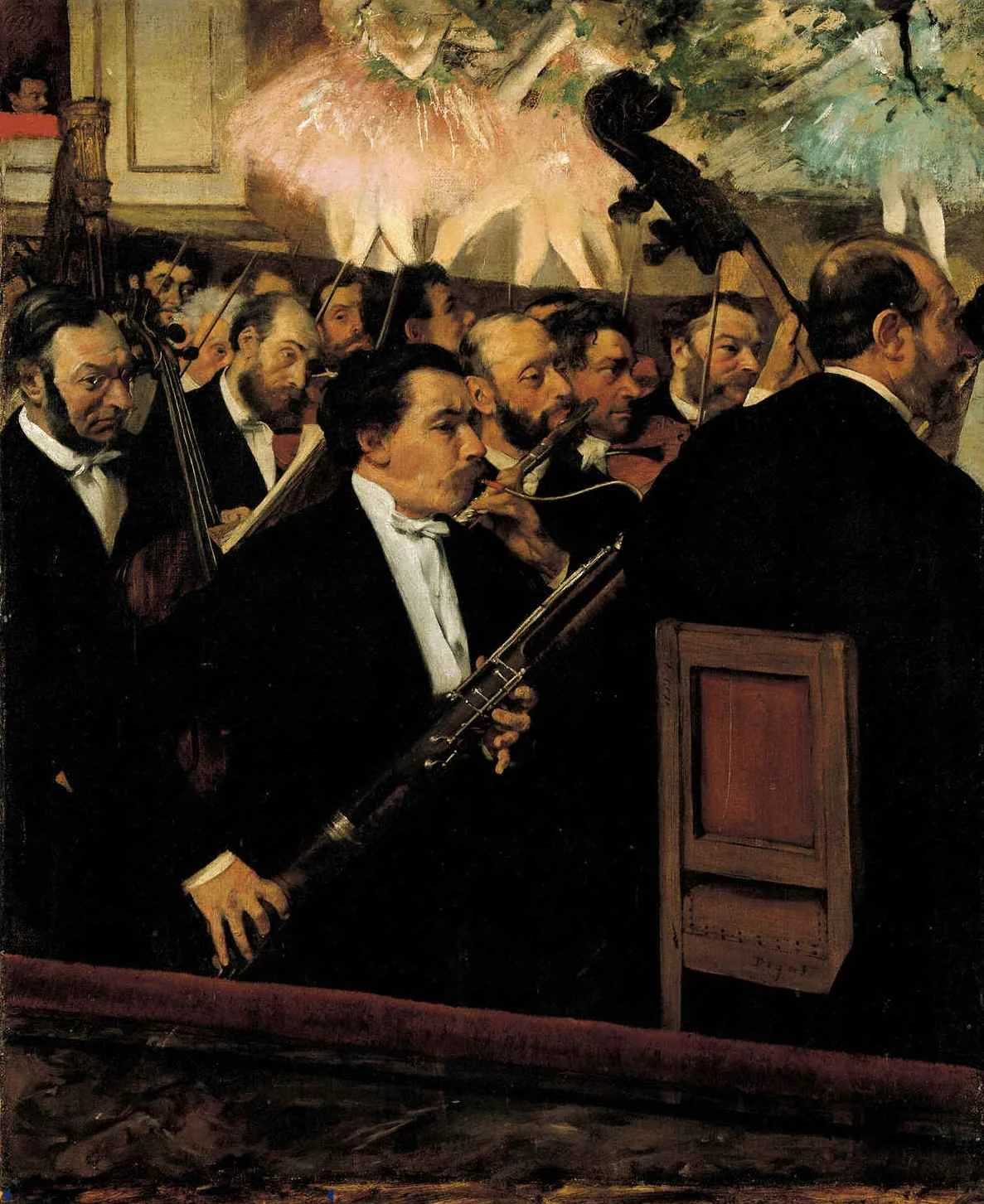
Story1870年ごろ、エドガー・ドガがパリのオペラ座(当時はル・ペルティエ通りにあった劇場)のオーケストラ席を描いた作品です。真ん中で長いファゴットを吹いているのは、ドガの友人でオペラ座の楽団員だったデジレ・ディオー。上のほうには舞台が見えますが、踊り子は脚とスカートしか描かれていません。今はパリのオルセー美術館にあります。
Around 1870, Edgar Degas painted the orchestra seats of the Paris Opera, which was then in the rue Le Peletier. In the center, Désiré Dihau plays a long bassoon. He was Degas's friend and a member of the Opera orchestra. We can see the stage at the top, but the dancers are shown only as legs and skirts. The painting is now in the Musée d'Orsay in Paris.
この絵は、もともとディオーの肖像画として描かれ、注文したのもディオー本人だったと考えられています。ドガはまわりに、チェロのピレやフルートのアルテスなど本物の楽団員と、楽団員ではない友人たちをいっしょに並べました。指揮者の姿はどこにもありません。客席から下のオーケストラをのぞきこむような、思いきった切り取り方も大きな特徴です。
The painting probably began as a portrait of Dihau, and he likely ordered it himself. Around him, Degas placed real orchestra players, such as the cellist Pilet and the flutist Altès, together with friends who were not in the orchestra. The conductor does not appear at all. The bold cropping, as if we are looking down into the pit from our seat, is another key feature.
絵はディオーの家に飾られ、リールの展覧会にも出されました。ディオーが1909年に亡くなると妹のマリーが受け継ぎ、1923年に国の美術館へゆずります。ただし「生きているあいだは手元に置く」という約束つきでした。マリーが1935年に亡くなるとルーヴル美術館に入り、1986年にオルセー美術館へ。これはドガが踊り子を描いた最初の作品といわれ、ここから「踊り子の画家」ドガが始まりました。
The painting hung in Dihau's home and was shown at an exhibition in Lille. After Dihau died in 1909, his sister Marie kept it. In 1923 she sold it to the French national museums, on the condition that she could keep it for the rest of her life. When she died in 1935, it went to the Louvre, and in 1986 it moved to the Musée d'Orsay. It is said to be Degas's first picture of ballet dancers, the start of his long love of the subject.
オペラ座で音楽家たちが演奏しています。真ん中の男の人は長いファゴットを吹いています。上の舞台では踊り子が踊っています。見えるのは脚とスカートだけ!演奏している人の中には、本物の音楽家ではない人もいます。画家の友だちなのです。
Musicians play at the opera. The man in the center plays a long bassoon. Dancers dance on the stage above. We can only see their legs and skirts! Some of the players are not real musicians. They are the painter's friends.
英語のレベルは上の「やさしい/ふつう」で切りかえられます。
えっ!?な裏ネタ
Secrets研究によると、画面には楽団員でない友人も入っています。画家のピオ=ノルマンはバイオリンを弾く姿で、スペイン人歌手のパガンスや、舞台を見上げる医師のピヨまで描かれているとされます。オーケストラの絵は、じつはドガの「友だちの集合写真」でもあったのです。
Research shows that friends who were not in the orchestra also appear. The painter Piot-Normand is shown playing the violin, and the Spanish singer Pagans and a doctor named Pillot are said to be there too. This orchestra scene is also a kind of 'group photo' of Degas's friends.
当時のオペラ座では、ファゴットはふつうチェロやコントラバスのうしろに座っていた、と考える研究者がいます。ドガは友人ディオーを目立たせるため、わざと最前列の真ん中に移したのかもしれません。ただし「わりと実際に近い」という見方もあり、意見は分かれています。
Some scholars think that at the Opera the bassoon usually sat behind the cellos and double basses. Degas may have moved his friend Dihau to the front and center on purpose, to make him stand out. Other experts think the seating is fairly realistic, so opinions differ.
左上のボックス席からのぞいている顔は、エマニュエル・シャブリエだとされます。このころの彼はまだ役所づとめで、作曲は趣味のようなものでした。のちに管弦楽曲『スペイン』でパリ中の人気者になります。ドガは、のちの有名人を小さく描きこんでいたのです。
The face peeking from the box in the upper left is thought to be Emmanuel Chabrier. At that time he still worked in a government office, and composing was almost a hobby. Later his orchestral piece 'España' made him famous all over Paris. Degas had painted a future star in a tiny corner.
X線で調べると、ハープやボックス席、コントラバスの部分があとから描き直されていることがわかりました。さらにキャンバスの左右と上も切りつめられ、ファゴットがいっそう目立つようにされたと考えられています。最初から計算どおりに描けたわけではなかったのです。
X-ray studies show that the harp, the box and the double bass were changed later. The sides and the top of the canvas were also cut down, probably to make the bassoon stand out even more. Even Degas did not get the composition right on the first try.
ここを見て!
Look Closer1ファゴットを吹くディオーDihau playing the bassoon
絵の主役、ファゴット奏者のデジレ・ディオー。白いシャツと長い楽器が、黒い服の中でいちばん目立ちます。
The main figure, bassoonist Désiré Dihau. His white shirt and long instrument stand out among the black suits.
2頭のない踊り子たちDancers without heads
舞台の踊り子は、画面の上の端で切れて脚とチュチュだけ。席から見上げたときの見え方をそのまま切り取っています。
The dancers are cut off by the top edge, so we see only legs and tutus. This is just how they would look from a seat in the audience.
3ボックス席の顔A face in the box
左上のボックス席から顔を出しているのは、のちの作曲家シャブリエとされます。
The face in the box at the top left is said to be the future composer Chabrier.
4うしろ姿のコントラバス奏者Double bass player from behind
右手前の、こちらに背を向けた男性はコントラバス奏者のグフェとされます。上には楽器の先(渦巻き)が舞台に突き出しています。
The man with his back to us on the right is thought to be the double bass player Gouffé. Above, the scroll of his instrument sticks up into the stage.
英語で名画を語ろう
Talk about Art in EnglishThe man in the center is playing the bassoon.
真ん中の男性はファゴットを演奏しています。
💡 楽器を演奏するときは play the + 楽器名。the を忘れないのがコツです。
英語で説明すると… Describe it
これはオペラ座のオーケストラです。真ん中で、男性が長いファゴットを演奏しています。そのまわりには黒い服の音楽家がたくさん座っています。上には舞台の踊り子がいますが、見えるのは脚とスカートだけです。
This is an orchestra at the opera. In the center, a man is playing a long bassoon. Many musicians in black suits sit around him. At the top, there are dancers on the stage, but we can only see their legs and skirts.
考えてみよう Think & Talk
- ドガはなぜ踊り子の頭を切ってしまったのだと思いますか?Why do you think Degas cut off the dancers' heads?
- もしあなたが友だちの絵を描くなら、だれを真ん中にしますか?それはなぜ?If you painted your friends, who would you put in the center? Why?
この作品の英単語
WordsDihau is playing a long bassoon.
ディオーは長いファゴットを吹いています。
The orchestra sits below the stage.
オーケストラは舞台の下に座っています。
Degas cropped the dancers at the top.
ドガは踊り子を画面の上で切り取りました。
The orchestra pit is crowded with musicians.
オーケストラ席は音楽家でぎっしりです。
ミニクイズ
QuizQ. 真ん中の男性が演奏している楽器は?What instrument is the man in the center playing?
ドガの友人デジレ・ディオーが、低い音の木管楽器ファゴットを吹いています。
Degas's friend Désiré Dihau is playing the bassoon, a low woodwind instrument.
ウソ?ホント? この絵には指揮者が大きく描かれている。The conductor is painted large in this picture.
指揮者はどこにも描かれていません。主役はファゴット奏者です。
The conductor does not appear at all. The star is the bassoon player.
ウソ?ホント? これはドガが踊り子を描いた最初の作品といわれる。This is said to be Degas's first picture of ballet dancers.
ここから、ドガは何百点もの踊り子の作品を生み出していきます。
After this, Degas went on to make hundreds of works about dancers.
 画像の出典とライセンス / Image credit
- PDDegas l'orchestre.jpg(Wikimedia Commons)
ライセンス:Public domain(パブリックドメイン)/作者・撮影者の表記:Edgar Degas
この作品は、作者の死後長い年月がたち著作権の保護期間が終わった「パブリックドメイン」の作品です。画像は平面の作品を忠実に写したもので、新しい著作権は生じません(Wikimedia Commons の PD-Art の考え方)。 所蔵:オルセー美術館(Musée d'Orsay)。画像は表示のために縮小・WebP 形式に変換しています。