 ワークシート
 ぬりえ
 迷路
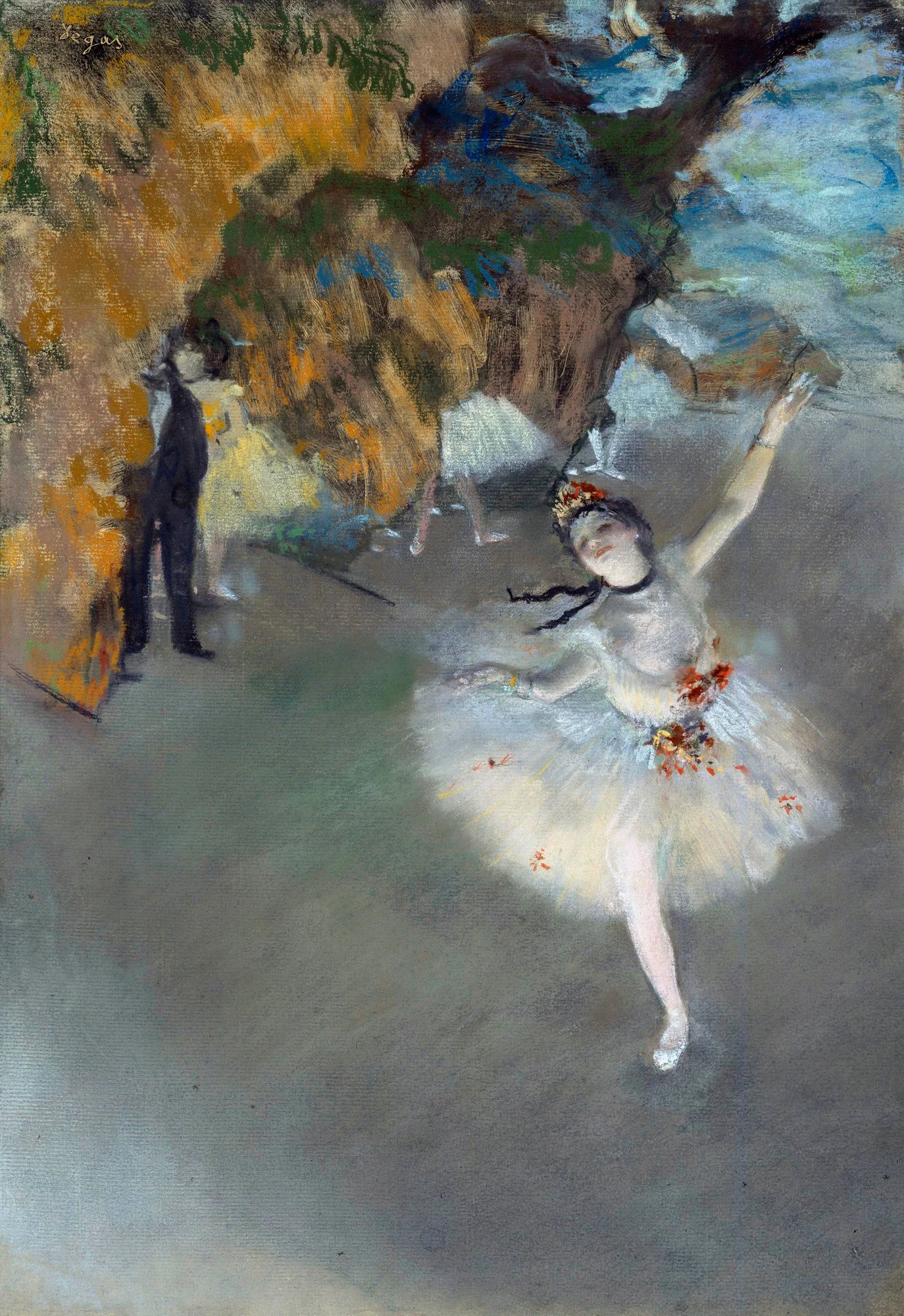
スポットライトの主役と、舞台のそでの黒い影。上から見下ろすバレエの一瞬。A star in the spotlight and a dark figure in the wings. A ballet moment seen from above.
 美術館アンテナ:エドガー・ドガの作品に会える展覧会
この作品のお話
Story舞台の上で、白いチュチュの踊り子が片足を上げ、両腕を広げてポーズを決めています。「エトワール」とはフランス語で「星」、バレエ団の主役ダンサーのこと。左の舞台そでには出番を待つ踊り子たちと、黒い服の男性の姿。ドガが1876〜77年ごろに描いた、バレエの絵の代表作です。
On the stage, a dancer in a white tutu lifts one leg and spreads her arms in a pose. 'Étoile' is French for 'star', the name for the lead dancer in a ballet company. In the wings on the left, other dancers wait for their turn, along with a man in black. Degas made this famous ballet picture around 1876–77.
見る人は、まるで舞台の上のほうのボックス席から見下ろしているようです。床が大きく広がり、主役は画面の右に寄せられています。こうした大胆な構図は、浮世絵や写真の影響ともいわれます。技法も独特で、まず版画(モノタイプ)で1枚だけ刷り、その上からパステルで色をのせています。
We seem to look down from a box seat high above the stage. The floor spreads wide, and the star is placed to the right. Such bold compositions are said to be influenced by Japanese prints and photography. The technique is special too. Degas first made a one-time print called a monotype, then added color with pastels.
この作品は、仲間の画家カイユボットが持っていたもので、彼の遺言による遺贈をフランス政府が1896年に受け入れました。ドガは1870年代初めから晩年まで、踊り子をくり返し描き、その作品は数えきれないほど。けれど本人は「印象派」と呼ばれるのをきらい、自分は現実を描く画家だと考えていました。
This work belonged to the painter Gustave Caillebotte. In 1896, the French state accepted it as part of his bequest. From the early 1870s until late in his career, Degas painted dancers again and again, in countless works. But he disliked being called an Impressionist and saw himself as a painter of real life.
バレエの踊り子が舞台にいます。チュチュという白いスカートをはいています。彼女は公演の主役です。わたしたちは高い席から彼女を見下ろしています。左にいる黒い服の男の人はだれでしょう?
A ballet dancer is on the stage. She wears a white skirt called a tutu. She is the star of the show. We look down at her from a high seat. Who is the man in black on the left?
英語のレベルは上の「やさしい/ふつう」で切りかえられます。
えっ!?な裏ネタ
Secrets左の舞台そでに立つ、顔の見えない黒い服の男性。当時のオペラ座では、高い会員料を払ったお金持ちの紳士たちが舞台裏にまで出入りできました。この男性はそうした会員の一人と考えられています。
A man in black stands in the wings, with his face hidden. At the Paris Opera then, rich gentlemen who paid for expensive memberships could go backstage. This man is thought to be one of them.
モノタイプは、金属などの板にインクで絵を描き、紙に写しとる版画です。1枚しかきれいに刷れないので「モノ(ひとつ)」タイプ。ドガはその上にパステルを重ね、ふわっとしたチュチュや光を表しました。
A monotype is made by painting with ink on a metal plate and pressing paper onto it. Only one good print can be made, so it is called 'mono', meaning one. Degas added pastel on top to show the soft tutu and the light.
ドガは印象派展にほぼ毎回出品した中心メンバーなのに、「印象派」という呼び名をきらい、自分たちを「独立派」と呼びたがりました。屋外での写生より、アトリエでじっくり組み立てる絵を好んだのです。
Degas showed his work at almost every Impressionist exhibition, but he disliked the name 'Impressionist'. He preferred to call the group 'Independents'. He liked to build his pictures carefully in the studio rather than paint outdoors.
画家カイユボットは、仲間の絵をたくさん買って支えました。彼の遺言で国に入った作品の中に、この『エトワール』や、ルノワール『ムーラン・ド・ラ・ギャレットの舞踏会』があります。
The painter Gustave Caillebotte supported his friends by buying many of their works. Thanks to his will, works like this one and Renoir's Dance at Le Moulin de la Galette went to the French state.
ここを見て!
Look Closer1主役の踊り子(エトワール)The star dancer
白いチュチュがパステルでふんわり表され、光を受けてかがやいています。
Her white tutu is drawn softly in pastel and glows in the stage light.
2のばした腕Outstretched arm
高くのばした右腕が、画面の右上へと視線を導きます。
Her raised arm leads our eyes to the upper right.
3そでの黒い男Man in the wings
顔が隠れた黒い服の男性。舞台裏に出入りできた会員の紳士と考えられています。
A man in black with his face hidden. He is thought to be a wealthy member who could go backstage.
4出番を待つ踊り子たちDancers waiting
背景の書き割りのかげで、足だけが見える踊り子たち。出番を待っています。
Behind the painted scenery, we can see only the legs of other dancers waiting to go on.
英語で名画を語ろう
Talk about Art in EnglishThe stage is seen from above, like from a box seat.
舞台は、ボックス席からのように上から見た角度で描かれています。
💡 視点を説明する表現。seen from below(下から見た)、seen from the side(横から見た)も。
英語で説明すると… Describe it
これはバレエの公演です。右側で、白いチュチュの踊り子が舞台の上でポーズをとっています。右腕を上げています。左の舞台そでには、黒い服の男性とほかの踊り子たちがいます。
This is a ballet performance. On the right, a dancer in a white tutu is posing on the stage. She is raising her right arm. On the left, in the wings, there is a man in a black suit and some other dancers.
考えてみよう Think & Talk
- 舞台の上の踊り子は、どんな気持ちだと思いますか?How do you think the dancer feels on the stage?
- ドガはなぜ、そでにいる男性を描いたと思いますか?Why do you think Degas showed the man in the wings?
この作品の英単語
WordsThe star dances alone on the stage.
主役が舞台でひとり踊っている。
The dancer is in the spotlight.
踊り子がスポットライトを浴びている。
She performs in front of a big audience.
彼女は大勢の観客の前で踊る。
Her pose is light and graceful.
彼女のポーズは軽やかで優美だ。
ミニクイズ
QuizQ. 「エトワール」はどういう意味?What does 'étoile' mean?
フランス語で「星」。バレエ団の主役ダンサーを指します。
It is French for 'star', the lead dancer in a ballet company.
ウソ?ホント? 見る人は、舞台を上のほうから見下ろす位置にいる。The viewer looks down at the stage from above.
ボックス席から見下ろしたような、高い視点の構図です。
It is like looking down from a box seat.
ウソ?ホント? この作品は油絵の具だけで描かれている。This work is painted only in oil paint.
版画(モノタイプ)の上にパステルで描かれています。
It is pastel on top of a monotype print.
 画像の出典とライセンス / Image credit
- PDEdgar Degas - Ballet (L'Étoile).jpg(Wikimedia Commons)
ライセンス:Public domain(パブリックドメイン)/作者・撮影者の表記:Edgar Degas
この作品は、作者の死後長い年月がたち著作権の保護期間が終わった「パブリックドメイン」の作品です。画像は平面の作品を忠実に写したもので、新しい著作権は生じません(Wikimedia Commons の PD-Art の考え方)。 所蔵:オルセー美術館(Musée d'Orsay)。画像は表示のために縮小・WebP 形式に変換しています。