

 PDF をダウンロード
Let's Look at Art!
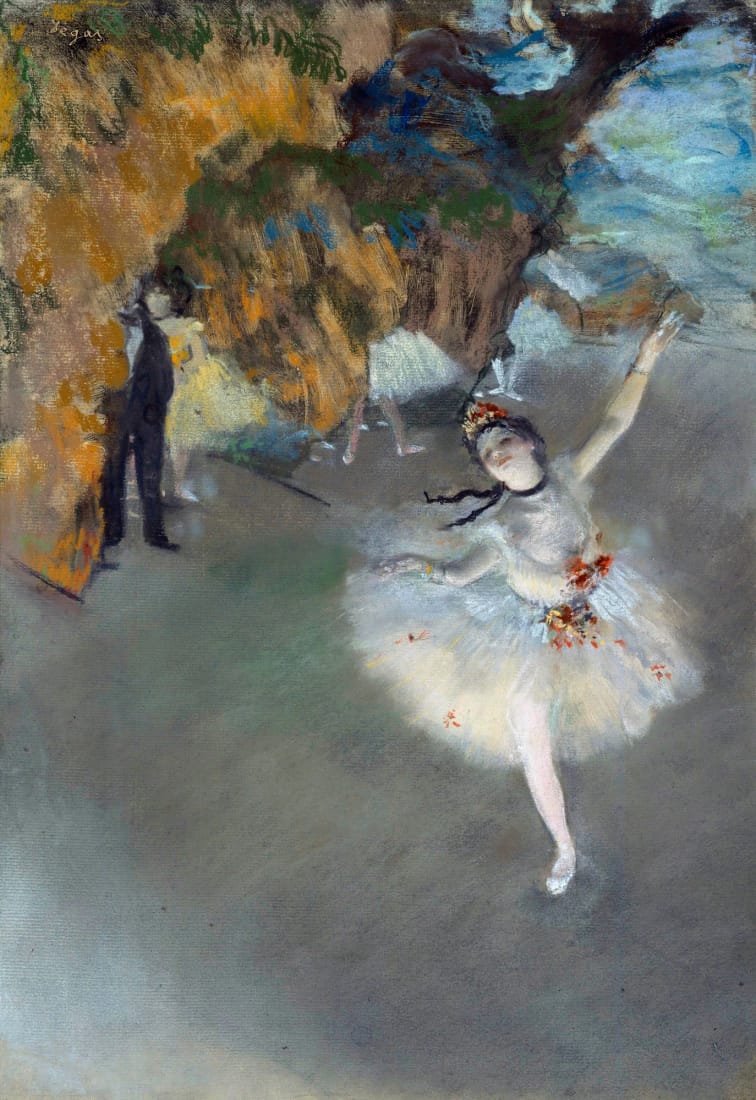
Title: The Star (Dancer on Stage)
Artist: Edgar Degas (1834–1917)
Year: c. 1876–1877
Medium: Pastel over monotype on paper
Museum: Musée d'Orsay, Paris
1 Find it! 絵の中から見つけて、○でかこもう。
- ☐ The star dancer
- ☐ Outstretched arm
- ☐ Man in the wings
- ☐ Dancers waiting
2 First look 最初に見たときの感想を書こう。
When I first saw this painting, I felt ______________ because ______________________.
Three colors I can see: ①__________ ②__________ ③__________
3 Words — Match them. 英語と日本語を線で結ぼう。
- stage ●
- spotlight ●
- perform ●
- graceful ●
- ● スポットライト
- ● 舞台
- ● 演じる、踊る
- ● 優美な
The Star (Dancer on Stage)
4 Fill in the blanks. 下の箱から選んで、( )に入れよう。形を変えるものもあります。
- The star dances alone on the .
- The dancer is in the .
- She in front of a big audience.
- Her pose is light and .
5 Read and answer — True or False? 英文を読んで、正しければ T、ちがえば F。
A ballet dancer is on the stage. She wears a white skirt called a tutu. She is the star of the show. We look down at her from a high seat. Who is the man in black on the left?
On the stage, a dancer in a white tutu lifts one leg and spreads her arms in a pose. 'Étoile' is French for 'star', the name for the lead dancer in a ballet company. In the wings on the left, other dancers wait for their turn, along with a man in black. Degas made this famous ballet picture around 1876–77.
- The viewer looks down at the stage from above. T / F
- This work is painted only in oil paint. T / F
6 Quiz — Choose the best answer. 正しいものを選ぼう。
What does 'étoile' mean?
- Flower
- Bird
- Star
- Snow
The Star (Dancer on Stage)
7 Put the words in order. 語を正しく並べかえて、文を書こう。
- above, / like / seen / seat / from / is / from / a / box / The / stage .
- is / This / a / ballet / performance .
8 Complete the description. 箱の語を(1)〜(4)に入れて、絵の説明を完成させよう。
This is a ballet performance. On the right, a (1) in a (2) tutu is (3) on the stage. She is raising her right arm. On the left, in the (4), there is a man in a black suit and some other dancers.
9 Describe the painting in English. この絵を英語で説明しよう(3文以上)。
10 Think & Talk 考えて、ペアやグループで話し合おう。
How do you think the dancer feels on the stage?
Why do you think Degas showed the man in the wings?
11 My favorite part いちばん好きなところを英語で。
I like the ____________ because ____________________________.
Answers & Notes
1 Find it!
The star dancer=主役の踊り子(エトワール)/Outstretched arm=のばした腕/Man in the wings=そでの黒い男/Dancers waiting=出番を待つ踊り子たち
2 First look
自由に書けたら正解。I felt calm / surprised / happy … などの形容詞を使おう。
3 Words
1–b(stage=舞台) 2–a(spotlight=スポットライト) 3–c(perform=演じる、踊る) 4–d(graceful=優美な)
4 Fill in the blanks
- stage The star dances alone on the stage.
主役が舞台でひとり踊っている。 - spotlight The dancer is in the spotlight.
踊り子がスポットライトを浴びている。 - performs She performs in front of a big audience.
彼女は大勢の観客の前で踊る。 - graceful Her pose is light and graceful.
彼女のポーズは軽やかで優美だ。
5 Read — T / F
【本文の訳】バレエの踊り子が舞台にいます。チュチュという白いスカートをはいています。彼女は公演の主役です。わたしたちは高い席から彼女を見下ろしています。左にいる黒い服の男の人はだれでしょう?
【本文の訳】舞台の上で、白いチュチュの踊り子が片足を上げ、両腕を広げてポーズを決めています。「エトワール」とはフランス語で「星」、バレエ団の主役ダンサーのこと。左の舞台そでには出番を待つ踊り子たちと、黒い服の男性の姿。ドガが1876〜77年ごろに描いた、バレエの絵の代表作です。
- T 見る人は、舞台を上のほうから見下ろす位置にいる。
解説:ボックス席から見下ろしたような、高い視点の構図です。 - F この作品は油絵の具だけで描かれている。
解説:版画(モノタイプ)の上にパステルで描かれています。
6 Quiz
C 問:「エトワール」はどういう意味?
選択肢:A 花/B 鳥/C 星/D 雪
解説:フランス語で「星」。バレエ団の主役ダンサーを指します。
7 Put the words in order
- The stage is seen from above, like from a box seat.
舞台は、ボックス席からのように上から見た角度で描かれています。 - This is a ballet performance.
これはバレエの公演です。
💡 seen from above(上から見た):視点を説明する表現。seen from below(下から見た)、seen from the side(横から見た)も。
8 Complete the description
(1) dancer (2) white (3) posing (4) wings
9 Describe(模範解答)
This is a ballet performance. On the right, a dancer in a white tutu is posing on the stage. She is raising her right arm. On the left, in the wings, there is a man in a black suit and some other dancers.
これはバレエの公演です。右側で、白いチュチュの踊り子が舞台の上でポーズをとっています。右腕を上げています。左の舞台そでには、黒い服の男性とほかの踊り子たちがいます。
10 Think & Talk(問いの訳)
- How do you think the dancer feels on the stage?
舞台の上の踊り子は、どんな気持ちだと思いますか? - Why do you think Degas showed the man in the wings?
ドガはなぜ、そでにいる男性を描いたと思いますか?
正解のない問いです。理由をつけて話せたら◎。
Fun Fact(訳)
そでの黒い男はだれ? 左の舞台そでに立つ、顔の見えない黒い服の男性。当時のオペラ座では、高い会員料を払ったお金持ちの紳士たちが舞台裏にまで出入りできました。この男性はそうした会員の一人と考えられています。
