 ワークシート
 ぬりえ
 迷路
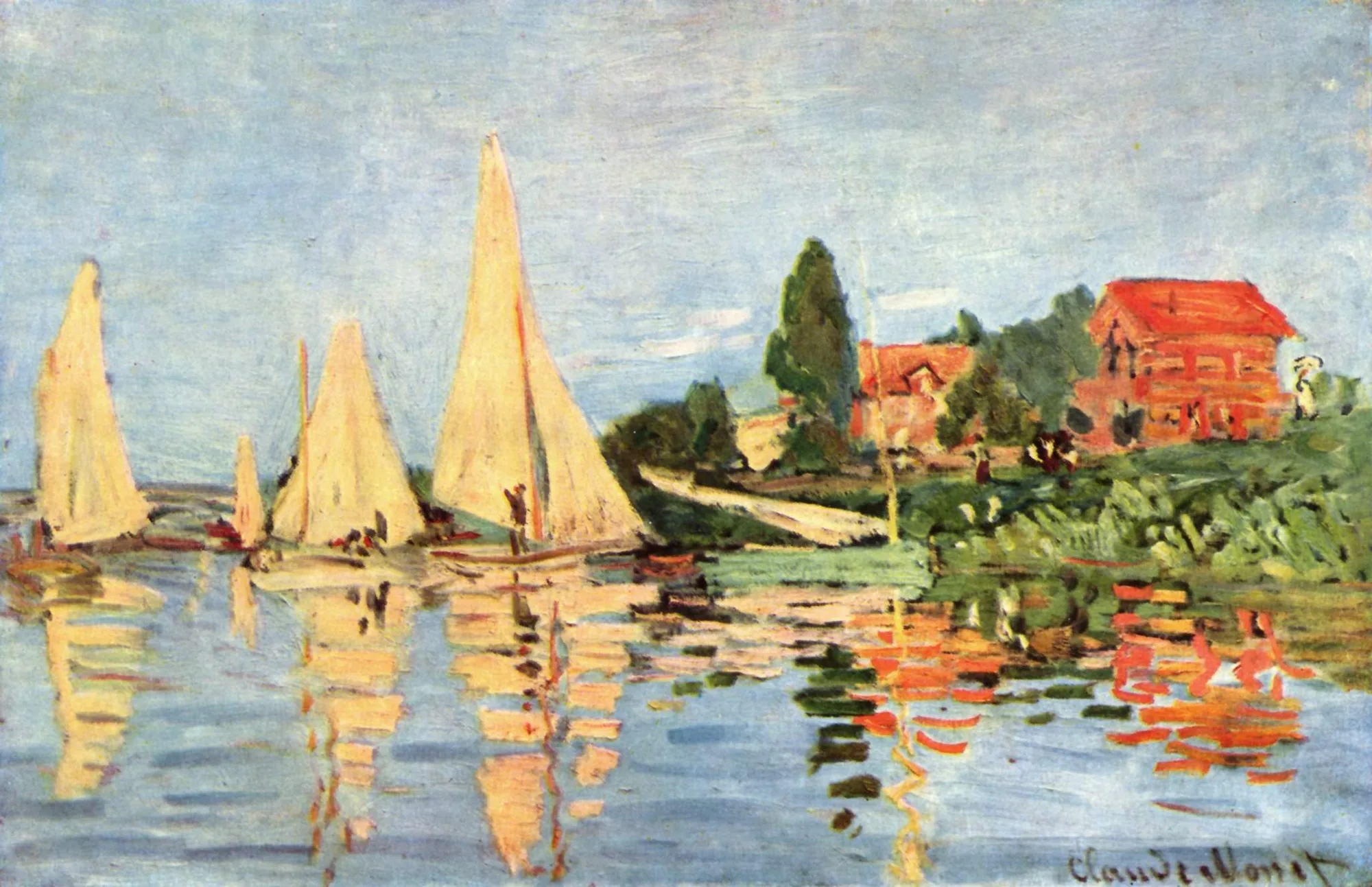
水にうつる帆が、ぐにゃぐにゃ!モネが絵の具の「かたまり」で描いた川。The sails wobble in the water! A river painted with chunks of paint.
 美術館アンテナ:クロード・モネの作品に会える展覧会
この作品のお話
Storyパリ郊外、セーヌ川ぞいの町アルジャントゥイユ。白い帆をはったヨットが何そうも川に浮かんでいます。右の岸には赤い屋根の家と緑の木々。水面には、帆や家の色がゆらゆらとうつっています。モネが1872年ごろに描いた小さめの作品で、今はパリのオルセー美術館にあります。
This is Argenteuil, a town on the Seine River near Paris. Several sailboats with white sails float on the river. On the right bank are a house with a red roof and green trees. The colors of the sails and the house waver in the water. Monet painted this fairly small picture around 1872. It is now in the Musée d'Orsay in Paris.
モネは1871年の終わりからアルジャントゥイユに住み、セーヌ川の景色を何度も描きました。この町はパリから汽車ですぐ行けるので、休日にはヨット遊びの人でにぎわいました。モネは水面のうつりこみを細かく描くかわりに、太い筆で絵の具を大胆に置いています。近くで見ると色のかたまり、離れて見るとゆれる水に見えるのです。
Monet lived in Argenteuil from the end of 1871 and painted the Seine there many times. The town was a short train ride from Paris, so on holidays it was busy with people sailing. Instead of painting the reflections in detail, Monet laid on paint boldly with a wide brush. Up close you see chunks of color, but from a distance you see moving water.
この絵を持っていたのは、画家であり、ヨットの名人でもあったカイユボットです。1894年に彼が亡くなると、遺言でコレクションが国にのこされ、国が受け入れた作品のひとつとして、この絵も1896年に美術館に入りました。アルジャントゥイユ時代のモネは、仲間とともに屋外で光を描く「印象派」のスタイルを形づくっていきました。
This painting once belonged to Caillebotte, a painter who was also a skilled sailor. After his death in 1894, he left his collection to the French state. This picture was among the works the state accepted, and it entered the museum in 1896. During his years in Argenteuil, Monet and his friends shaped the Impressionist style of painting light outdoors.
白いボートが川に浮かんでいます。右には赤い家。その色が水にうつっています。近くで見て!水は太い絵の具の線だけで描かれています。
White boats float on a river. A red house is on the right. The colors shine in the water. Look closely! The water is just thick lines of paint.
英語のレベルは上の「やさしい/ふつう」で切りかえられます。
えっ!?な裏ネタ
Secrets水にうつる帆の白やオレンジは、ほとんどが太い筆で横向きにさっと置いた線を重ねただけです。細かく描きこまないことで、かえって水がゆれて光る感じが出ています。この大胆な描き方が、のちに「印象派」と呼ばれるスタイルの特徴になりました。
The white and orange reflections of the sails are mostly quick sideways strokes laid on with a wide brush. Because they are not detailed, the water seems to move and sparkle even more. This bold way of painting became a feature of the style later called Impressionism.
アルジャントゥイユでモネは、小さな舟を改造して、水の上で絵を描くための「アトリエ舟」を作りました。友人マネは1874年、その舟の上で絵を描くモネの姿を絵にしています(ミュンヘンのノイエ・ピナコテーク所蔵)。水を描くために、自分が水の上に出てしまったのです。
In Argenteuil, Monet turned a small boat into a floating studio for painting on the water. In 1874, his friend Manet painted Monet working in this boat (now in the Neue Pinakothek in Munich). To paint the water, Monet went out onto the water himself.
この絵の持ち主だったカイユボットは、すぐれた画家であると同時に、レースに出るヨット乗りで、ヨットの設計まで手がけました。アルジャントゥイユの対岸の町に住んだこともあります。ヨットの絵を、本物のヨット乗りが大切に持っていたのです。
Caillebotte, who owned this painting, was a fine painter, a racing sailor and even a designer of yachts. He also lived for a time in the town across the river from Argenteuil. So this sailing picture was treasured by a real sailor.
アルジャントゥイユは、パリのサン=ラザール駅から汽車で手軽に行ける町でした。鉄道のおかげで、都会の人々が休日に川遊びやヨットを楽しむようになったのです。モネのヨットの絵は、そんな新しい「レジャー」の時代を記録した絵でもあります。
Argenteuil was easy to reach by train from Saint-Lazare station in Paris. Thanks to the railway, city people began to enjoy boating and sailing on their days off. Monet's sailing pictures also record this new age of leisure.
ここを見て!
Look Closer1大きな帆Big sail
いちばん大きな白い帆。日の光を受けて、クリーム色にかがやいています。
The biggest white sail. It glows cream-colored in the sunlight.
2帆のうつりこみReflections of the sails
水にうつった帆。太い横線の絵の具を重ねただけなのに、ゆれる水に見えます。
The sails reflected in the water. They are only thick sideways strokes, but they look like moving water.
3赤い屋根の家House with a red roof
岸に立つ赤い屋根の家。青い空と緑の木の中で、あざやかに目立ちます。
A house with a red roof on the bank. It stands out brightly between the blue sky and green trees.
4赤いゆらめきRed ripples
家の赤が水にうつって、ジグザグの形にくだけています。
The red of the house is reflected in the water and breaks into zigzag shapes.
英語で名画を語ろう
Talk about Art in EnglishIn the water, the reflections break up into patches of color.
水の中では、うつりこみが色のかたまりにくだけています。
💡 break up into ~で「くだけて〜になる」。ゆれる水面を語るのにぴったりの表現です。
英語で説明すると… Describe it
これは晴れた日の川の風景です。左側には、白い帆のヨットが何そうかあります。右側には、赤い屋根の家と緑の木々があります。帆と家の色が水にうつってかがやいています。
This is a river scene on a sunny day. On the left, there are several sailboats with white sails. On the right, there is a house with a red roof and some green trees. The colors of the sails and the house shine in the water.
考えてみよう Think & Talk
- モネはなぜ、うつりこみを細かく描かなかったのだと思いますか?Why do you think Monet did not paint the reflections in detail?
- この場面から、どんな音が聞こえてきそうですか?What sounds can you imagine in this scene?
この作品の英単語
WordsPeople came to watch the regatta.
人々はヨットレースを見に来ました。
White sailboats float on the river.
白いヨットが川に浮かんでいます。
Ripples break up the reflections.
さざ波がうつりこみをくずしています。
Monet used bold strokes of paint.
モネは大胆な筆づかいをしました。
ミニクイズ
QuizQ. 水面のうつりこみは、どう描かれている?How are the reflections in the water painted?
太い筆で、横向きの線をさっと重ねて描いています。
Monet quickly laid on sideways strokes with a wide brush.
ウソ?ホント? この絵のかつての持ち主は、画家のカイユボットだった。This painting once belonged to the painter Caillebotte.
カイユボットの遺言で国のものになりました。
It went to the French state through Caillebotte's will.
ウソ?ホント? アルジャントゥイユは、パリから遠くはなれた山の中の町だ。Argenteuil is a mountain town far away from Paris.
パリから汽車ですぐ行ける、セーヌ川ぞいの町です。
It is a town on the Seine, a short train ride from Paris.
 画像の出典とライセンス / Image credit
- PDClaude Monet 042.jpg(Wikimedia Commons)
ライセンス:Public domain(パブリックドメイン)/作者・撮影者の表記:Claude Monet
この作品は、作者の死後長い年月がたち著作権の保護期間が終わった「パブリックドメイン」の作品です。画像は平面の作品を忠実に写したもので、新しい著作権は生じません(Wikimedia Commons の PD-Art の考え方)。 所蔵:オルセー美術館(Musée d'Orsay)。画像は表示のために縮小・WebP 形式に変換しています。
クロード・モネのほかの作品