 ワークシート
 ぬりえ
 迷路
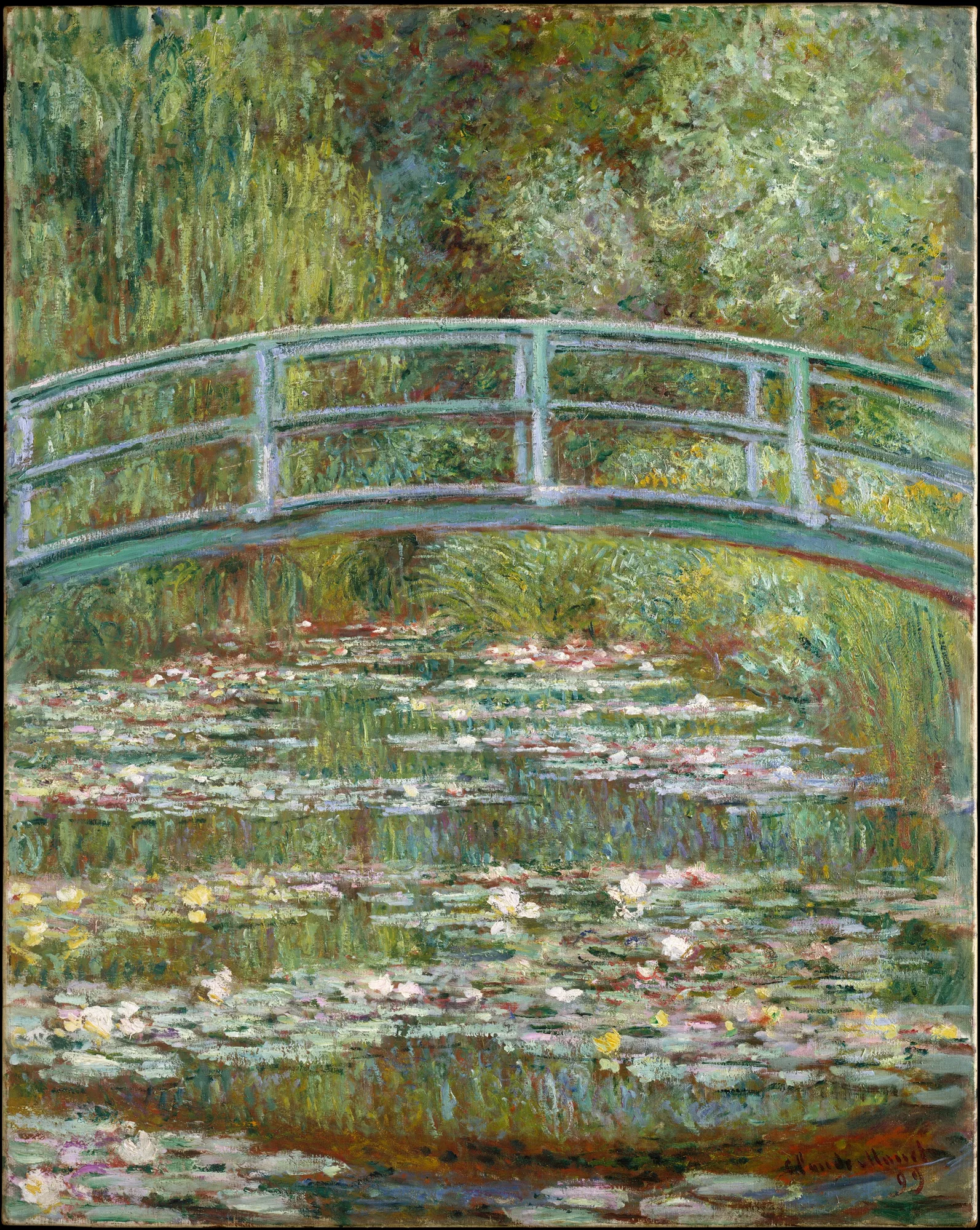
モネが自分の庭にかけた「日本の橋」。浮世絵好きの画家がつくった夢の風景。The 'Japanese bridge' Monet built in his own garden. A dream view made by a lover of ukiyo-e.
 美術館アンテナ:クロード・モネの作品に会える展覧会
この作品のお話
Story緑の太鼓橋が、睡蓮の浮かぶ池の上に弧をえがいています。まわりは柳や草木でびっしり。空は描かれず、画面は緑と水の光だけでうめつくされています。描かれているのは、パリ郊外ジヴェルニーにあるモネ自身の庭。1899年の夏に描かれた作品で、この年モネはこの橋を何枚も描いています。
A green arched bridge curves over a pond full of water lilies. Willows and plants fill the space around it. There is no sky, only green leaves and light on the water. This is Monet's own garden in Giverny, outside Paris. He painted it in the summer of 1899, a year when he painted this bridge many times.
モネは1883年からジヴェルニーに住み、1893年に家の近くの土地を買って、川の水を引きこんだ池をつくりました。池には睡蓮を植え、日本風の木の橋をかけました。浮世絵を熱心に集めていたモネの橋は、歌川広重の浮世絵に出てくる太鼓橋がヒントになったとも言われます。1899年、モネはこの橋を同じ場所から何枚も描きました。
Monet lived in Giverny from 1883. In 1893, he bought land near his house and made a pond with water from a small river. He planted water lilies and built a Japanese-style wooden bridge. Monet loved Japanese prints, and the bridge is said to be inspired by arched bridges in prints by Hiroshige. In 1899, he painted this bridge many times from the same spot.
この作品は、アメリカの大コレクター、ハヴマイヤー夫妻のコレクションから、1929年にメトロポリタン美術館に入りました。ジヴェルニーのモネの家と庭は今も公開され、世界中から人が訪れます。家の中には、モネが集めた北斎や広重、歌麿の浮世絵が飾られています。
This painting came to the Metropolitan Museum in 1929 from the collection of Henry and Louisine Havemeyer, great American collectors. Monet's house and garden in Giverny are open to visitors today. Inside the house, you can see his collection of Japanese prints by Hokusai, Hiroshige and Utamaro.
これはモネの庭です。モネは池をつくって、睡蓮を植えました。それから緑の橋をかけました。日本の絵が大好きだったので、日本の橋がほしかったのです。この庭は、今もフランスで訪れることができます!
This is Monet's garden. He made a pond and put water lilies in it. Then he made a green bridge. He loved Japanese pictures, so he wanted a Japanese bridge. You can still visit this garden in France!
英語のレベルは上の「やさしい/ふつう」で切りかえられます。
えっ!?な裏ネタ
Secretsモネは北斎、広重、歌麿などの浮世絵を200枚以上集め、ジヴェルニーの家の壁いっぱいに飾っていました。そのコレクションは今もモネの家に残っています。この橋の絵は、日本の美への大きなあこがれから生まれたのです。
Monet collected more than 200 Japanese prints by artists like Hokusai, Hiroshige and Utamaro. He hung them all over the walls of his house in Giverny, and they are still there today. This bridge grew out of his deep love for Japanese art.
モネが川の水を引いて池をつくろうとしたとき、村の人たちは「見たことのない外国の植物が水を汚すのでは」と心配して反対したと伝えられています。モネは役所に何度も申請して、ようやく許可を得ました。
When Monet planned to take water from the river for his pond, the villagers are said to have worried that his strange foreign plants would poison the water. Monet sent requests to the authorities and finally got permission.
日本の神社の太鼓橋は朱色のものが多いですが、モネは自分の橋を緑にぬりました。まわりの草木の緑にとけこむ色です。この緑の橋は今もジヴェルニーにあり(何度か作り直されています)、記念写真の人気スポットです。
Many arched bridges at Japanese shrines are red, but Monet painted his bridge green. It blends with the green plants around it. A green bridge still stands in Giverny today, rebuilt several times, and it is a popular photo spot.
この絵には、空も地平線もありません。橋が画面の上のほうを横切り、残りは池と草木だけ。見る人は庭の中にとじこめられたような感覚になります。このあとモネは、橋さえ消して水面だけを描くようになっていきます。
There is no sky and no horizon in this painting. The bridge crosses the upper part, and the rest is just the pond and plants. You feel as if you are inside the garden. Later, Monet removed even the bridge and painted only the water's surface.
ここを見て!
Look Closer1日本風の太鼓橋Japanese-style bridge
画面を横切る緑の橋。両はしは画面の外に切れ、浮世絵のような大胆な構図です。
The green bridge crosses the whole picture. Both ends are cut off by the edges, a bold composition like a Japanese print.
2睡蓮Water lilies
白や黄色、ピンクの花が、葉の上に点々と描かれています。
White, yellow and pink flowers are dotted among the floating leaves.
3しだれ柳Weeping willow
上から垂れ下がる柳の葉。たて長の筆あとで、ゆれる枝を表しています。
The willow leaves hang down from above. Long vertical strokes show the moving branches.
4サインSignature
右下に「Claude Monet 99」。1899年に描いたことがわかります。
At the lower right it says 'Claude Monet 99', telling us it was painted in 1899.
英語で名画を語ろう
Talk about Art in EnglishMonet's bridge is inspired by Japanese prints.
モネの橋は浮世絵がヒントになっています。
💡 作品のアイデアのもとを説明する表現。be inspired by+もとになったもの、で使います。
英語で説明すると… Describe it
これは池のある庭です。上のほうには、緑のアーチ形の橋があります。橋の下では、水面にたくさんの睡蓮が浮かんでいます。池のまわりには、背の高い緑の草や木があります。
This is a garden with a pond. In the upper part, there is a green arched bridge. Under the bridge, there are many water lilies on the water. Around the pond, there are tall green plants and trees.
考えてみよう Think & Talk
- 自分の庭をつくれるとしたら、何を置きますか?If you could build a garden, what would you put in it?
- モネはなぜ同じ橋を何度も描いたと思いますか?Why do you think Monet painted the same bridge many times?
この作品の英単語
WordsA green bridge goes over the pond.
緑の橋が池の上にかかっている。
Monet made a pond in his garden.
モネは庭に池をつくった。
The arched bridge looks Japanese.
アーチ形の橋は日本風に見える。
Monet collected Japanese prints.
モネは浮世絵を集めた。
ミニクイズ
QuizQ. モネの橋のヒントになったと言われるのは?What is said to have inspired Monet's bridge?
浮世絵好きのモネは、広重などの絵にある太鼓橋にあこがれていたと言われます。
Monet loved Japanese prints, such as those by Hiroshige, which show arched bridges.
ウソ?ホント? この池は、モネが自分の庭につくったものだ。Monet made this pond in his own garden.
ジヴェルニーの家の近くの土地を買い、川の水を引いてつくりました。
He bought land near his house in Giverny and brought in water from a river.
ウソ?ホント? 絵の上半分には、青い空が大きく描かれている。A big blue sky fills the top half of the painting.
空は描かれていません。画面は緑と水でうめつくされています。
There is no sky. The picture is filled with green and water.
 画像の出典とライセンス / Image credit
- CC0Bridge over a Pond of Water Lilies MET DT1854.jpg(Wikimedia Commons)
ライセンス:CC0(パブリックドメイン提供)/作者・撮影者の表記:Claude Monet/提供元:This file was donated to Wikimedia Commons as part of a project by the Metropolitan Museum of Art. See the Image and Data Resources Open Access Policy
この作品は、作者の死後長い年月がたち著作権の保護期間が終わった「パブリックドメイン」の作品です。画像は平面の作品を忠実に写したもので、新しい著作権は生じません(Wikimedia Commons の PD-Art の考え方)。 所蔵:メトロポリタン美術館(The Metropolitan Museum of Art)。画像は表示のために縮小・WebP 形式に変換しています。
クロード・モネのほかの作品