 ワークシート
 ぬりえ
 迷路
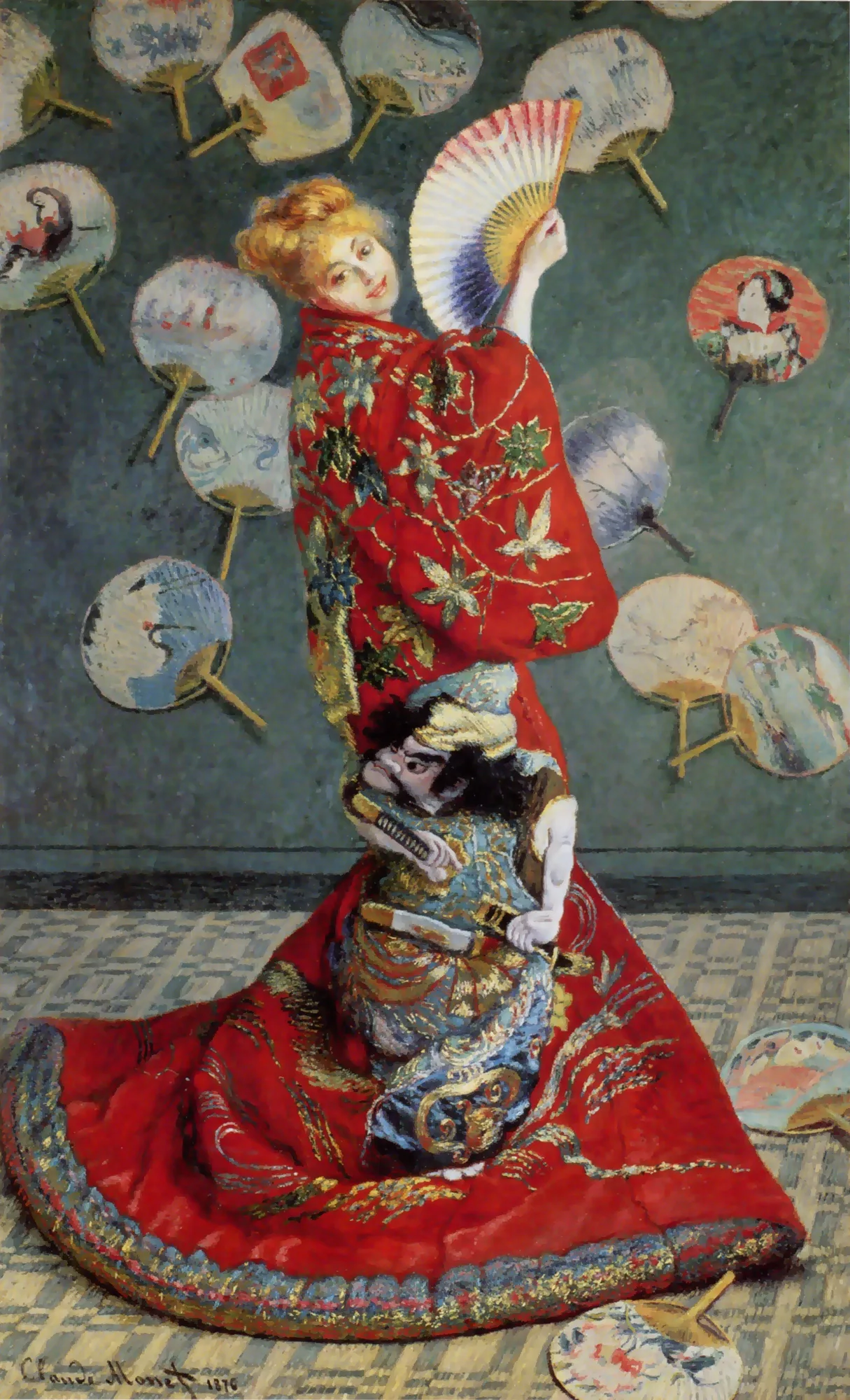
着物の中から侍がにらむ!モネが日本ブームに挑んだ、高さ2m超の大作。A samurai glares out of the kimono! Monet's 2-meter painting from the Japan craze.
 美術館アンテナ:クロード・モネの作品に会える展覧会
この作品のお話
Story真っ赤な打掛(豪華な着物)を着た女性が、フランス国旗の色の扇をかかげてふり返っています。壁や床には日本のうちわがいっぱい。モデルはモネの妻カミーユです。高さ2メートルを超える等身大の大作で、1876年の第2回印象派展に出品されました。モネの人物画の中でも、とくに大きな一枚です。
A woman in a bright red kimono turns around, holding up a fan in the colors of the French flag. Japanese round fans cover the wall and the floor. The model is Monet's wife, Camille. This life-size painting is more than two meters tall. It was shown at the second Impressionist exhibition in 1876. It is one of Monet's largest figure paintings.
当時のパリでは、浮世絵や着物、扇など日本の品物が大流行していました。この流行は「ジャポニスム」と呼ばれます。お金に困っていたモネは、話題をよびそうなこの大作で、ひと儲けしようと考えたともいわれます。着物の刺しゅうの侍は、まるで本物のように浮き上がって見えるほど細かく描きこまれています。
At that time, Japanese prints, kimonos and fans were very popular in Paris. This fashion is called Japonisme. Monet was short of money, and some say he hoped this eye-catching painting would sell well. The samurai embroidered on the kimono is painted in such detail that it almost seems to stand out.
展覧会では「2,020フランで売れた」とモネは言いましたが、歴史家の多くは話題作りだったのではとうたがっています。のちにモネ自身はこの絵を「がらくた(une saleté)」と呼び、売るために描いたと語りました。1956年にボストン美術館が購入し、今では館の人気作品です。
Monet said the painting sold for 2,020 francs at the exhibition, but many historians think this was a publicity trick. Later, Monet himself called it 'a piece of junk' and said he painted it mainly to sell. The Museum of Fine Arts, Boston, bought it in 1956, and it is now one of the museum's favorites.
この女の人はモネの妻です。日本の赤い着物を着ています。壁には日本のうちわがたくさんあります。本当は黒っぽい髪なのに、ここでは金髪のかつらをかぶっています!着物の中の侍を見つけられるかな?
This woman is Monet's wife. She wears a red kimono from Japan. Many Japanese fans are on the wall. Her hair is really dark, but here she wears a blonde wig! Can you find the samurai on her kimono?
英語のレベルは上の「やさしい/ふつう」で切りかえられます。
えっ!?な裏ネタ
Secretsカミーユは本当は黒っぽい髪でしたが、この絵ではわざと金髪のかつらをかぶっています。「日本人ではなく、着物を着たパリの女性」であることを強調するためだと考えられています。
Camille actually had dark hair, but here she wears a blonde wig on purpose. It is thought that Monet wanted to show clearly that she was a Parisian woman wearing a kimono, not a Japanese woman.
1918年、モネは画商たちに、この絵を「une saleté(がらくた、ひどい作品)」と言い、売るための作品だったと語りました。ただし完成当時は手紙で「すばらしい」と自信を見せていたともいわれ、本音はなぞのままです。
In 1918, Monet told some art dealers that this painting was 'une saleté', a piece of junk, made to sell. But around 1876 he seems to have spoken proudly of it, so his true feelings remain a mystery.
右上の赤いうちわには、着物姿で日本髪の女性が描かれています。その女性は、びっくりしたような顔でカミーユのほうをのぞきこんでいるように見えます。モネのちょっとしたユーモアと読む人もいます。
The red fan at the upper right shows a Japanese woman in a kimono with a traditional hairstyle. She seems to peek at Camille with a surprised face. Some people see this as Monet's little joke.
モネは、ひみつの買い手が2,020フランを払ったと言いました。当時のモネの作品としてはかなりの高値です。けれど本当の買い手ははっきりせず、話題を作るための作戦だったのではないかと考える歴史家も多いのです。
Monet claimed a secret buyer paid 2,020 francs, a high price for his work at the time. But the real buyer is unclear, and many historians think it may have been a trick to attract attention.
ここを見て!
Look Closer1金髪のカミーユCamille in a blonde wig
ふり返ってほほえむカミーユ。金髪はかつらです。
Camille turns and smiles. Her blonde hair is a wig.
2トリコロールの扇Tricolor fan
青・白・赤のフランス国旗の色の扇。日本風の品に、フランスらしさをまぜています。
The fan is blue, white and red, like the French flag. It mixes a Japanese object with a French touch.
3着物の侍Samurai on the kimono
刺しゅうの侍がこわい顔で刀に手をかけています。顔の位置は、ほぼ画面の真ん中です。
The embroidered samurai has a fierce face and holds his sword. His face is almost at the center of the canvas.
4日本女性のうちわFan with a Japanese woman
着物姿の女性が、びっくりしたようにカミーユを見ています。
A woman in a kimono looks at Camille as if surprised.
英語で名画を語ろう
Talk about Art in EnglishCamille is dressed in a bright red kimono.
カミーユは真っ赤な着物を着ています。
💡 wear より「装い」の感じが出る表現。衣装が主役の絵を説明するときにぴったりです。
英語で説明すると… Describe it
これは縦長の女性の絵です。長い赤い着物を着て、扇をかかげています。後ろの壁には、日本のうちわがたくさんあります。床にもうちわがいくつかあります。
This is a tall picture of a woman. She is dressed in a long red kimono and is holding up a fan. On the wall behind her, there are many Japanese fans. There are some fans on the floor too.
考えてみよう Think & Talk
- 当時のパリで、日本の品物がなぜそんなに人気だったと思いますか?Why do you think Japanese things were so popular in Paris at that time?
- 外国の画家があなたを和服姿で描いたら、どんな気持ちになりますか?If a painter from another country painted you in Japanese clothes, how would you feel?
この作品の英単語
WordsCamille is wearing a red kimono.
カミーユは赤い着物を着ている。
Many Japanese fans hang on the wall.
壁にはたくさんの日本のうちわがかかっている。
She is wearing a blonde wig.
彼女は金髪のかつらをかぶっている。
A samurai is embroidered on the kimono.
着物には侍が刺しゅうされている。
ミニクイズ
QuizQ. カミーユの金髪の正体は?What is the truth about Camille's blonde hair?
本当は黒っぽい髪のカミーユが、金髪のかつらをかぶっています。
Camille had dark hair, but she wears a blonde wig here.
ウソ?ホント? この絵は実物大に近い、2メートルを超える大作だ。This painting is more than two meters tall, almost life-size.
高さは231.8センチもあります。
It is 231.8 cm tall.
ウソ?ホント? モネは晩年まで、この絵を自分の最高傑作だと言い続けた。Monet always said this was his greatest work.
1918年には「がらくた」と呼んでいます。
In 1918, he called it 'a piece of junk'.
 画像の出典とライセンス / Image credit
- PDClaude Monet-Madame Monet en costume japonais.jpg(Wikimedia Commons)
ライセンス:Public domain(パブリックドメイン)/作者・撮影者の表記:Claude Monet/提供元:Unknown sourceUnknown source
この作品は、作者の死後長い年月がたち著作権の保護期間が終わった「パブリックドメイン」の作品です。画像は平面の作品を忠実に写したもので、新しい著作権は生じません(Wikimedia Commons の PD-Art の考え方)。 所蔵:ボストン美術館(Museum of Fine Arts, Boston)。画像は表示のために縮小・WebP 形式に変換しています。
クロード・モネのほかの作品