 ワークシート
 ぬりえ
 迷路
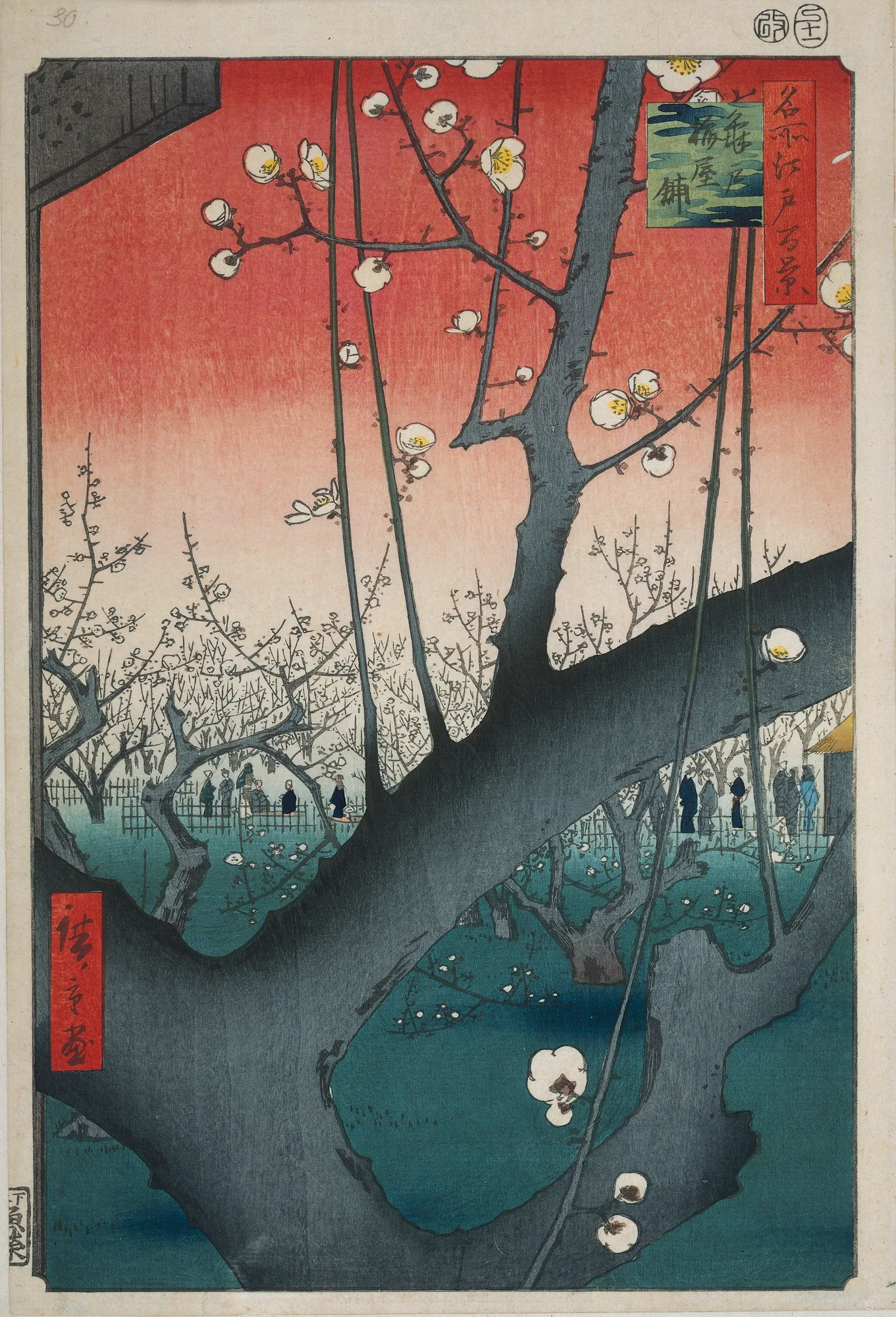
目の前に、ドーンと梅の幹!ゴッホが油絵でまねした大胆すぎる構図。A huge plum branch right in your face! Van Gogh loved it so much he copied it in oil.
 美術館アンテナ:この作品に会える展覧会
この作品のお話
Story江戸の東、亀戸(今の東京都江東区)にあった梅の名所「梅屋舗(うめやしき)」を描いた浮世絵です。歌川広重が晩年に手がけた大シリーズ「名所江戸百景」の一枚で、1857年に出版されました。赤く染まった空の下、手前に黒い梅の幹がどんと置かれ、その枝のあいだから、奥で花見を楽しむ人々が小さく見えています。
This ukiyo-e print shows a famous plum garden in Kameido, on the east side of Edo (now Koto Ward, Tokyo). It belongs to One Hundred Famous Views of Edo, a large series Hiroshige made late in his life, and it was published in 1857. Under a red sky, a dark plum trunk fills the front of the picture. Through its branches, we see tiny people enjoying the blossoms far behind.
この梅園でいちばん有名だったのが「臥竜梅(がりょうばい)」。竜が地面にふせているように枝がはい、枝が地面について新しい根を出すほどだったと言われます。広重はその姿を、まるでカメラを木に近づけたような大胆な「どアップ」で描きました。手前の物を思いきり大きく、画面の端で切ってしまうのは、晩年の広重がよく使ったやり方です。
The most famous tree in this garden was the Garyūbai, or 'Sleeping Dragon Plum'. Its branches were said to crawl along the ground like a resting dragon, even putting down new roots. Hiroshige showed it in a bold close-up, as if he had placed a camera right next to the tree. Making a nearby object huge and cutting it off at the edge was a device he often used in his last years.
それから30年後の1887年、パリにいたゴッホがこの版画を油絵で模写しました。今はアムステルダムのファン・ゴッホ美術館にあります。浮世絵は同じ版木から何枚も摺られるので、この図柄の摺りは世界中の美術館にあります。ここで見ている一枚は、アムステルダム国立美術館が持っているものです。
Thirty years later, in 1887, Van Gogh copied this print in oil paint in Paris. His copy is now in the Van Gogh Museum in Amsterdam. Ukiyo-e prints were made many times from the same woodblocks, so museums all over the world own this design. The one you see here belongs to the Rijksmuseum in Amsterdam.
これは梅の庭を描いた日本の版画です。大きな梅の木が手前にあります。枝には白い花が咲いています。空は赤色です。ゴッホはこの絵がとても気に入って、そっくりにまねして描きました。
This is a Japanese print of a plum garden. A big plum tree is in front. White flowers are on its branches. The sky is red. Van Gogh liked this picture very much, so he painted a copy of it.
英語のレベルは上の「やさしい/ふつう」で切りかえられます。
えっ!?な裏ネタ
Secretsゴッホは模写のまわりに、赤やオレンジの縁どりをつけ、漢字のような文字を書き足しました。漢字の読めないゴッホが、ほかの浮世絵から形だけ写した文字だと考えられていて、意味はつながっていません。
Van Gogh added red and orange borders to his copy and painted kanji-like characters on them. He could not read Japanese, so he probably copied their shapes from other prints. The words do not make sense together.
「臥竜梅」という名前は、水戸藩の殿さま・徳川光圀(ドラマの「水戸黄門」のモデル)がつけたという言い伝えがあります。竜がねそべっているような姿から、そう呼ばれるようになったといいます。
There is a story that the name 'Garyūbai' was given by Tokugawa Mitsukuni, the lord of Mito. He is the hero of the famous TV drama Mito Kōmon. The tree looked like a dragon lying on the ground, so it got this name.
江戸の人気スポットだった梅屋舗ですが、1910年(明治43年)の大洪水のあとに廃園となりました。広重が描いた梅の木は、今はもう見ることができません。絵だけが、江戸の人々が楽しんだ花見の様子を伝えているのです。
The garden was a hit in Edo, but it closed after a great flood in 1910. You cannot see Hiroshige's plum tree today. Only pictures like this one show us how people in Edo enjoyed the blossoms.
空の赤から白へ、地面の緑から青へと色がなめらかに変わっているのは「ぼかし」という技です。摺師(すりし)が版木に絵の具をむらに乗せて、一枚ずつ手で摺っていました。だから摺りごとに色が少しずつちがうのです。
The sky fades from red to white, and the ground from green to blue. This is a technique called bokashi. The printer brushed the colors unevenly onto the woodblock and printed each sheet by hand. That is why every print has slightly different colors.
ここを見て!
Look Closer1手前の梅の花Plum blossom up close
幹のすぐそばに咲く白い梅。遠くの花より何倍も大きく描かれ、見る人が木のすぐ前に立っているように感じます。
A white plum blossom next to the trunk. It is many times bigger than the far-away flowers, so you feel as if you are standing right by the tree.
2花見の人々People viewing the blossoms
柵の向こうで、梅を見に来た人たちがのんびり歩いています。手前の巨大な幹とくらべると、とても小さく見えます。
Behind the fence, visitors stroll and look at the flowers. Next to the giant trunk, they look very small.
3赤い空The red sky
空は上が赤く、下に行くほど白くなります。実際の空の色というより、絵を華やかにするための大胆な色づかいです。
The sky is red at the top and turns white lower down. It is not a realistic color. Hiroshige used it to make the picture bright and exciting.
英語で名画を語ろう
Talk about Art in EnglishThe print is a close-up of a plum tree, with tiny people behind it.
この版画は梅の木を間近でとらえ、その奥に小さな人々を描いています。
💡 写真や映画でも使う言葉。close は「クロース」と濁らずに発音します。
英語で説明すると… Describe it
これは梅園を描いた日本の版画です。手前には、太くて黒っぽい梅の枝があります。そこに白い花が咲いています。枝の奥では、小さな人々が歩きながら木をながめています。空の上のほうは赤色です。
This is a Japanese print of a plum garden. In the foreground, there is a thick, dark plum branch. White flowers bloom on it. Behind the branch, small people are walking and looking at the trees. The sky is red at the top.
考えてみよう Think & Talk
- 広重はなぜ木をこんなに大きく描き、画面の端で切ってしまったのだと思いますか?Why do you think Hiroshige made the tree so big and cut it off at the edges?
- あなたがほかの国の絵を模写するなら、どこを変えてみたいですか?If you copied a picture from another country, what would you change?
この作品の英単語
WordsWhite plum blossoms open on the dark branches.
黒い枝に白い梅の花が咲いています。
Van Gogh copied this print in oil paint.
ゴッホはこの版画を油絵で模写しました。
Hiroshige used a bold composition.
広重は大胆な構図を使いました。
The thick trunk crosses the whole picture.
太い幹が絵全体を横切っています。
ミニクイズ
QuizQ. この版画を油絵で模写した西洋の画家は?Which Western artist copied this print in oil paint?
ゴッホが1887年にパリで模写しました。今はファン・ゴッホ美術館にあります。
Van Gogh copied it in Paris in 1887. His copy is in the Van Gogh Museum.
ウソ?ホント? この図柄の浮世絵は、世界に1枚しかない。There is only one print of this design in the world.
浮世絵は同じ版木から何枚も摺られたので、世界中の美術館が持っています。
Many sheets were printed from the same blocks, so museums around the world own it.
ウソ?ホント? 描かれた梅園は、亀戸(今の東京都江東区)にあった。The plum garden was in Kameido, now part of Koto Ward, Tokyo.
江戸の東にあった「梅屋舗」という梅の名所です。
It was a famous plum garden on the east side of Edo.
 画像の出典とライセンス / Image credit
- PDDe pruimenboomgaard te Kameido-Rijksmuseum RP-P-1956-743.jpeg(Wikimedia Commons)
ライセンス:Public domain(パブリックドメイン)/作者・撮影者の表記:Utagawa; Hiroshige (I) , Utagawa died 1858; Uoya Eikichi Hiroshige (I)/提供元:(handle)
この作品は、作者の死後長い年月がたち著作権の保護期間が終わった「パブリックドメイン」の作品です。画像は平面の作品を忠実に写したもので、新しい著作権は生じません(Wikimedia Commons の PD-Art の考え方)。 所蔵:アムステルダム国立美術館(画像の摺り)(Rijksmuseum, Amsterdam (this impression))。画像は表示のために縮小・WebP 形式に変換しています。
歌川広重のほかの作品