 ワークシート
 ぬりえ
 迷路
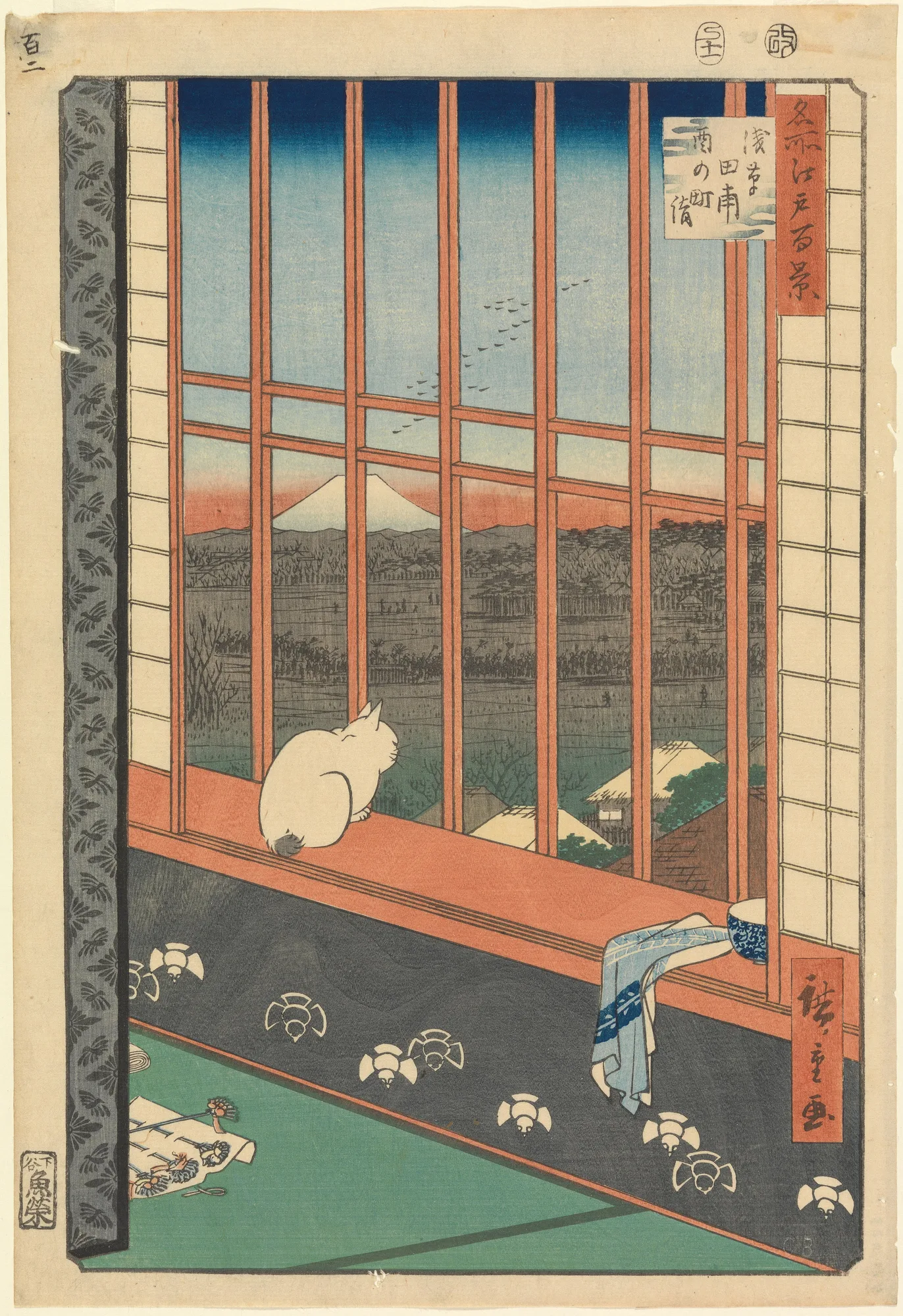
窓辺のネコが見つめる先に、富士山と酉の市へ向かう人々。A cat at the window looks out at Mount Fuji and people going to a festival.
 美術館アンテナ:この作品に会える展覧会
この作品のお話
Story格子窓の窓辺に、白いネコがちょこんと座り、外をながめています。窓の向こうには浅草の田んぼが広がり、遠くに白い富士山。田んぼのあぜ道には、酉の市(とりのいち)へお参りに行く人々の列が小さく見えます。歌川広重の「名所江戸百景」の一枚で、1857年に出版されました。
A white cat sits neatly on a windowsill and looks outside. Beyond the window lie the rice fields of Asakusa, and far away stands the white Mount Fuji. On the paths between the fields, a line of tiny people walks to the Torinomachi festival. This print is from Hiroshige's One Hundred Famous Views of Edo, published in 1857.
酉の市は、11月の酉の日に浅草の鷲(おおとり)神社で開かれるお祭りで、商売繁盛を願って縁起物の熊手を買います。この部屋は吉原という町の建物の2階で、部屋の主の姿は描かれていません。床に置かれた熊手の形のかんざしや、窓辺の手ぬぐいから、ここで暮らす人の様子を想像させる仕かけです。
Torinomachi is a festival held on the Days of the Rooster in November at Ōtori Shrine in Asakusa. People buy lucky bamboo rakes called kumade to wish for good business. This room is on the second floor of a building in the Yoshiwara district. The person who lives here is not shown. Instead, small things like rake-shaped hairpins on the floor and a towel by the window let us imagine her life.
人を描かずに、ネコと小物だけで物語を感じさせるこの絵は、名所江戸百景の中でも特に人気のある一枚です。浮世絵は同じ版木から何枚も摺られたので、この図柄も世界中にあります。ここで見ているのは、アイルランドのダブリンにあるチェスター・ビーティーの一枚です。
It tells a story with just a cat and a few objects, without showing a person. This makes it one of the most loved prints in the series. Many copies were made from the same blocks, so this design is found around the world. The one you see belongs to the Chester Beatty in Dublin, Ireland.
白いネコが大きな窓のそばに座っています。外をながめています。田んぼと富士山が見えます。小さな人々がお祭りへ歩いていきます。ネコの飼い主は絵の中にいません。どこにいるのでしょう?
A white cat sits by a big window. It looks outside. We can see rice fields and Mount Fuji. Small people walk to a festival. The cat's owner is not in the picture. Where is she?
英語のレベルは上の「やさしい/ふつう」で切りかえられます。
えっ!?な裏ネタ
Secretsこの部屋の主は絵に一度も登場しません。かわりに、ネコ、熊手のかんざし、手ぬぐいと小さな磁器の茶碗が置かれています。見る人は、小物を手がかりに、この部屋の物語を自分で想像するのです。
The person who lives in this room never appears. Instead we see a cat, rake-shaped hairpins, a towel and a small porcelain bowl. Using these clues, we imagine the story of the room ourselves.
左下の紙の上に置かれたかんざしは、酉の市の縁起物・熊手の形をしています。お祭りのおみやげだったのでしょう。窓の外の人々が持っている熊手と、ちゃんとつながっているのです。
The hairpins on the paper at the bottom left are shaped like kumade, the lucky rakes from the festival. They were probably festival souvenirs. They connect with the rakes carried by the people outside.
浅草の鷲神社の酉の市は、今も毎年11月の酉の日に開かれ、色とりどりの熊手を売る店がずらりとならびます。広重の絵の人々と同じように、今も多くの人がお参りに来ます。
The Torinomachi festival at Ōtori Shrine in Asakusa is still held every November on the Days of the Rooster. Many stalls sell colorful rakes. Just like the people in Hiroshige's print, crowds still come to pray.
この一枚を持つチェスター・ビーティーは、アメリカ生まれの鉱山実業家アルフレッド・チェスター・ビーティーが集めたコレクションをもとにした、ダブリンの図書館・美術館です。日本の浮世絵や絵巻もたくさん持っています。
The Chester Beatty is a library and museum in Dublin. It is based on the collection of Alfred Chester Beatty, an American-born mining businessman. It owns many Japanese prints and picture scrolls.
ここを見て!
Look Closer1窓辺のネコThe cat at the window
背中を向けて外をながめる白いネコ。何を見ているのでしょう。
A white cat sits with its back to us, looking outside. What is it watching?
2富士山Mount Fuji
夕焼けの空の下、遠くに小さく見える白い富士。江戸からは富士がよく見えました。
A small white Fuji under the sunset sky. People in Edo could often see Fuji.
3鳥の群れA flock of birds
空を一列になって飛んでいく鳥たち。秋の終わりの空らしい景色です。
Birds fly across the sky in a line. It feels like a late-autumn sky.
4熊手のかんざしRake-shaped hairpins
紙の上に置かれた、熊手の形のかんざし。酉の市のおみやげだと考えられます。
Hairpins shaped like kumade rakes lie on paper. They are probably souvenirs from the festival.
英語で名画を語ろう
Talk about Art in EnglishA white cat is looking out of the window at the rice fields.
白いネコが、窓の外の田んぼをながめています。
💡 look out of 〜 で「〜から外を見る」。look at(〜を見る)とセットで覚えましょう。
英語で説明すると… Describe it
これは大きな窓のある部屋です。白いネコが窓辺に座っています。外には田んぼと白い山があります。空には鳥が何羽か飛んでいます。床の上には、紙にのせたかんざしがあります。
This is a room with a big window. A white cat is sitting on the windowsill. Outside, there are rice fields and a white mountain. Some birds are flying in the sky. On the floor, there are some hairpins on paper.
考えてみよう Think & Talk
- ネコは何を考えていると思いますか?What do you think the cat is thinking about?
- 広重はなぜ、部屋の主を描かなかったのだと思いますか?Why do you think Hiroshige did not show the person in this room?
この作品の英単語
WordsA white cat sits on the windowsill.
白いネコが窓辺に座っています。
People are walking to the festival.
人々がお祭りに向かって歩いています。
The hairpins may be festival souvenirs.
そのかんざしは、お祭りのおみやげかもしれません。
We can imagine the person who lives here.
ここに住む人のことを想像できます。
ミニクイズ
QuizQ. 窓の外の人々がお参りに向かうお祭りで買うものは?What do people buy at the festival they are walking to?
酉の市では、商売繁盛を願って縁起物の熊手を買います。
At Torinomachi, people buy kumade rakes for good luck in business.
ウソ?ホント? この部屋の主は、絵の中にはっきり描かれている。The person who lives in the room is clearly shown in the print.
部屋の主は描かれず、ネコと小物だけが置かれています。
The person is not shown. Only the cat and objects are there.
ウソ?ホント? 酉の市は、今も11月に開かれている。The Torinomachi festival is still held in November.
浅草の鷲神社などで、毎年11月の酉の日に開かれます。
It is held every November on the Days of the Rooster.
 画像の出典とライセンス / Image credit
- PDAsakusa ricefields and Torinomachi festival (Asakusa tanbo Torinomachi mōde) (CBL J 2695).jpg(Wikimedia Commons)
ライセンス:Public domain(パブリックドメイン)/作者・撮影者の表記:Utagawa Hiroshige
この作品は、作者の死後長い年月がたち著作権の保護期間が終わった「パブリックドメイン」の作品です。画像は平面の作品を忠実に写したもので、新しい著作権は生じません(Wikimedia Commons の PD-Art の考え方)。 所蔵:チェスター・ビーティー(画像の摺り)(Chester Beatty, Dublin (this impression))。画像は表示のために縮小・WebP 形式に変換しています。
歌川広重のほかの作品