
 語学・英語学習ビミョー
英作文で「日本語で書いてから訳す」はダメ? 英語が苦手な人ほど訳すほうが良かった実験
 2026.10.02
 English Corner(A2〜B2・4択クイズ)
 読む前に予想してみよう!
英作文は、英語のレベルに関係なく、最初から英語で書いたほうが必ず質が高くなる
日本の大学生の実験では、英語が苦手な学生は日本語で書いてから訳したほうが内容・構成・文体の質が高い傾向があった。
 研究カード(どんな研究?)
- 対象
- 日本人大学生48人
- 規模
- 48人
- 研究の種類
- 被験者内比較(2つの書き方を両方実施)
- 確かさ
- ★★☆☆☆
日本語で書いて英訳する方法と英語で直接書く方法を比べると、英語が苦手な学生は訳したほうが内容や構成が良くなる傾向があった。得意な学生は訳してもあまり良くならなかった。
ひとことで言うと英語が苦手なうちは、日本語で考えてから訳してもOK。上達したら英語で直接書こう!
英作文の授業でよく言われるアドバイスがあります。
「日本語で考えてから訳すな。最初から英語で考えて書け」
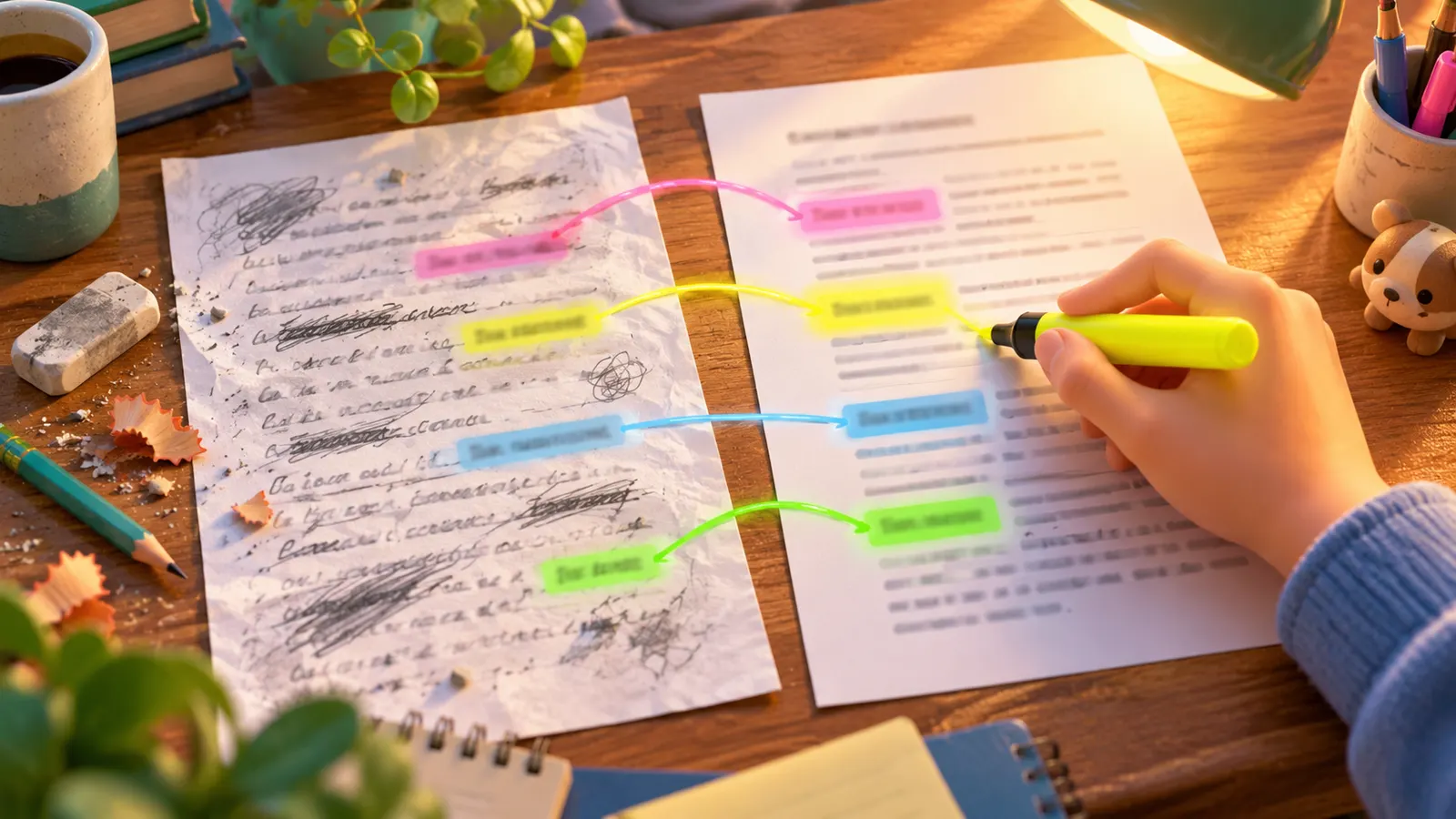
もっともらしく聞こえます。でも、日本の大学生を対象にした実験では、英語が苦手な学生は、日本語で書いてから訳すほうが作文の質が高い傾向がありました。
012つの書き方を、同じ学生で比べた
なぜ苦手な人には翻訳が効いたのでしょうか。
考えられる理由はこうです。英語が苦手なうちは、英語で書こうとすると「言える英語」の範囲でしか考えられず、内容が浅くなりがちです。日本語でまず書けば、伝えたい内容や論理の流れをしっかり組み立てられます。
実際、この研究では翻訳した作文のほうが文の構造が全体的に複雑になっていました。日本語で考えた豊かな内容を、何とか英語にしようとした結果かもしれません。
02得意な人は「訳す」と、かえってミス
ところが、英語が得意な学生にとっては、翻訳には落とし穴がありました。
レベルの高い学生は、翻訳した作文で意味が伝わらなくなるような誤りが、直接書いた作文より多い傾向があったのです(レベルの低い学生では差がありませんでした)。日本語の表現に引っ張られて、英語として不自然、あるいは意味のずれた文になりやすかったのかもしれません。
また、作文の質は、文法の知識よりも口頭の英語力(聞く・話す力)とより強く結びついていました。特に、直接英語で書いた作文でその傾向がはっきりしていました。英語で直接書く力は、英語で考える経験の量に支えられているのかもしれません。

03訳す途中で「言えない!」に気づくのも学習
翻訳には、もう一つの効用があるかもしれません。それは、「日本語では言えるのに、英語では言えない」ことに気づけることです。ここからは、翻訳そのものではなく「書きながら気づく」ことを調べた研究です。
カナダのスウェインとラプキンは1995年、学習者が書く途中で「言いたいことが言えない」という問題に気づくと、その表現について考え直す頭の働きが始まることを、データとともに報告しました。
日本の大学生を対象にした花岡の2007年の研究もあります。学生は絵を見て英語で話を書き、そのあと自分の作文をお手本の英文と比べました。すると、書いている最中に「言えない」と気づいた部分の表現ほど、書き直しで多く取り入れ、長く覚えていたのです。
日本語から訳そうとして「この言い方、英語で何て言うんだ?」と詰まる。その瞬間こそ、新しい表現を学ぶチャンスなのです。
04まとめ
「日本語で考えてから訳すな」は、少なくとも英語が苦手な段階では言いすぎでした。日本語で内容を組み立ててから訳すことで、中身のある作文が書けることもあります。
大切なのは、レベルに合わせて書き方を変えること。苦手なうちは日本語という橋を使い、慣れてきたら少しずつ英語で直接書く。その途中で出会う「言えない!」が、あなたの英語を育ててくれます。
この研究を英語で読もう原田英語の English CornerTeachers often tell students not to write in Japanese and then translate, but to think in English from the… 音声
音声 4択クイズ9問A2・B1・B2タップして開く
原田英語の English Corner
この研究を英語で読もう
Many teachers say, "Don't write in Japanese first. Think in English." But a 1992 study found something different. Forty-eight Japanese university students wrote essays in two ways. First, they wrote in Japanese and then translated into English.
Second, they wrote directly in English. Students with lower English levels wrote better essays when they translated. But students with higher levels did not get much better by translating.
66 words ・ CEFR A2
和訳を見る
多くの先生は「まず日本語で書くな。英語で考えなさい」と言います。しかし1992年のある研究では、違う結果が出ました。日本の大学生48人が2つの方法で作文を書きました。1つ目は、日本語で書いてから英語に訳す方法です。
2つ目は、直接英語で書く方法です。英語のレベルが低い学生は、訳したほうがよい作文を書きました。しかしレベルの高い学生は、訳してもあまりよくなりませんでした。
4択リーディングクイズ
Q1. What is the passage mainly about?
日本語から訳す方法が英作文に役立つかどうかがテーマなので B。
Q2. Which students wrote better essays when they translated?
Students with lower English levels wrote better essays when they translated. とあるので A。
Q3. In this passage, "directly" in "wrote directly in English" means ...
日本語を経由せずに、最初から英語で書くという意味なので C。
Teachers often tell students not to write in Japanese and then translate, but to think in English from the start. In 1992, Kobayashi and Rinnert tested this advice with 48 Japanese university students, who wrote essays both by translating from Japanese and by writing directly in English. For lower-level writers, translation tended to produce better content, organization and style, probably because they could plan their ideas fully in Japanese.
Higher-level writers, however, gained little from translating and tended to make more errors that confused the meaning. Translation may also create learning chances. When writers notice that they cannot express something in English, they start thinking about the form they need. So lower-level writers can use Japanese as a bridge, while higher-level writers can try writing directly.
126 words ・ CEFR B1
和訳を見る
先生はよく、日本語で書いてから訳すのではなく、最初から英語で考えるよう生徒に言います。1992年、小林とリナートは、日本の大学生48人でこのアドバイスを検証しました。学生たちは、日本語から訳す方法と英語で直接書く方法の両方で作文を書きました。レベルの低い書き手では、訳したほうが内容・構成・文体がよくなる傾向がありました。
おそらく日本語で考えを十分に組み立てられたからでしょう。しかしレベルの高い書き手は、訳してもほとんど得るものがなく、意味をわかりにくくする誤りが多くなる傾向がありました。翻訳は学びの機会を生み出すこともあります。書き手が、何かを英語で表現できないことに気づくと、必要な形について考え始めるのです。だからレベルの低い書き手は日本語を橋として使い、レベルの高い書き手は直接書くことに挑戦してもよいでしょう。
4択リーディングクイズ
Q1. Why did translation probably help lower-level writers?
probably because they could plan their ideas fully in Japanese とあるので D。
Q2. What happened when higher-level writers translated?
tended to make more errors that confused the meaning とあるので B。
Q3. What learning chance does translation create, according to the passage?
When writers notice that they cannot express something in English, they start thinking about the form they need とあるので A。
"Don't translate; think in English" is standard advice in writing classes, but evidence from Japanese learners suggests it may not suit everyone. Kobayashi and Rinnert asked 48 Japanese university students to write under two conditions, composing first in Japanese and translating, and composing directly in English. Lower-proficiency writers tended to produce essays with better content, organization and style when translating, and translated essays overall showed greater syntactic complexity, presumably because ideas developed in Japanese pushed writers to stretch their English. Higher-proficiency writers, by contrast, benefited little and tended to make more errors that obscured meaning when translating, perhaps because Japanese expressions pulled them toward unnatural English.
The quality of directly composed essays was more closely related to speaking and listening skills than to grammar knowledge. Research on noticing adds another angle: Swain and Lapkin showed that encountering a gap between what one wants to say and what one can say triggers thinking about form, and Hanaoka found that Japanese students who compared their writing with model texts were more likely to take in expressions they had already noticed they lacked. Given the small sample, the findings are tentative. Even so, they suggest adjusting writing methods to proficiency.
197 words ・ CEFR B2
和訳を見る
「訳すな、英語で考えよ」はライティングの授業の定番のアドバイスですが、日本人学習者の証拠は、それが誰にでも合うわけではないかもしれないことを示唆しています。小林とリナートは、日本の大学生48人に、まず日本語で書いてから訳す条件と、英語で直接書く条件の2つで作文を書かせました。熟達度の低い書き手は、訳したときのほうが内容・構成・文体のよい作文を書く傾向があり、訳した作文は全体として文構造もより複雑でした。おそらく、日本語で練り上げた考えが、英語を背伸びして使うよう書き手を後押ししたのでしょう。対照的に、熟達度の高い書き手は訳してもほとんど得るものがなく、訳すと意味をわかりにくくする誤りが多くなる傾向がありました。日本語の表現に引っ張られて不自然な英語になったのかもしれません。
直接書いた作文の質は、文法知識よりも話す力や聞く力とより強く関係していました。「気づき」の研究は別の視点を加えます。スウェインとラプキンは、言いたいことと言えることのギャップに出会うと形についての思考が始まることを示し、花岡は、自分の作文を2種類のお手本の英文と比べた日本の学生が、足りないと気づいていた表現ほど取り込みやすかったことを見いだしました。標本が小さいため、これらの知見は暫定的なものです。それでも、熟達度に合わせて書き方を調整することを示唆しています。
4択リーディングクイズ
Q1. What is the main point of the passage?
最終文 suggest adjusting writing methods to proficiency が主張のまとめなので B。
Q2. What was the quality of directly composed essays most closely related to?
more closely related to speaking and listening skills than to grammar knowledge とあるので C。
Q3. Why does the author describe the findings as "tentative"?
Given the small sample, the findings are tentative とあるので A。
重要単語
- composeB2動詞(文章を)書く・構成するTry to compose directly in English.
 「作曲する」の意味もある。名詞 composition「作文」。be composed of ~「~から成る」も入試頻出。
 - translationB1名詞翻訳Translation helped lower-level writers. 動詞 translate A into B。translation は「訳すこと」と「訳文」の両方を表す。
- organizationB1名詞(文章の)構成The essay has clear organization. 「組織」の意味が有名だが、作文評価では「論理の組み立て・構成」を指す。英検ライティングの採点観点にもある。
- syntactic complexityC1名詞(句)統語的複雑さ(文構造の複雑さ)Translations showed greater syntactic complexity. syntax「統語(文の組み立て)」の形容詞。関係詞節や従属節が多いほど複雑とみなす。SLA の作文研究の評価指標。
- proficiencyC1名詞熟達度・実力The effect depended on proficiency. lower-proficiency / higher-proficiency learners「熟達度の低い/高い学習者」の形でよく使う。
- noticeB1動詞気づくWriters notice gaps when they cannot express an idea. SLA では noticing(気づき)が習得の第一歩とされる。notice the gap「(言いたいことと言えることの)ギャップに気づく」。
- tentativeC1形容詞暫定的な・仮のThe findings are tentative because the sample was small. tentative plan「仮の計画」。研究紹介で「まだ確定ではない」と言うときの定番語。
 入試に出る順の単語帳を印刷する →
 全5903語の「科学英単語カード」で復習する →
 この話題を TED で聞く
同じテーマの TED・TED-Ed を、 TED HACK で。英語の見どころ・使える表現・学習ミッションつきの日本語ガイドです。(運営:原田英語)

このネタ、誰かに教えたくなった?
「英作文は英語で考えて書け、日本語から訳すな」とよく言うけど、日本の大学生48人の実験では、英語が苦手な人ほど“日本語で書いてから訳す”ほうが内容も構成も良くなったらしい。得意な人は訳してもあまり良くならず、意味が伝わりにくくなるミスが増える傾向だった。
押すと「マジかリスト」に保存されます
 出典・参考文献(3件)タップで表示
- Kobayashi & Rinnert (1992) Effects of first language on second language writing: Translation versus direct composition. Language Learningdoi.org
- Hanaoka (2007) Output, noticing, and learning: An investigation into the role of spontaneous attention to form in a four-stage writing task. Language Teaching Researchdoi.org
- Swain & Lapkin (1995) Problems in output and the cognitive processes they generate: A step towards second language learning. Applied Linguisticsdoi.org

※本記事は上記の研究・公開資料をもとに、原田英語が独自の言葉で解説したものです。引用は著作権法第32条の範囲で行い、出典を明記しています。画像はすべてオリジナルのイメージです。研究結果には限界や個人差があります。誤りのご指摘は原田英語のお問い合わせフォームから。

別館
マジか!?ことばで読む、ことばの雑学
英語と日本語の「えっ、マジか!?」を辞書と論文でウラ取りする別館
 これも「マジか!?」
 語学
語学
英作文は「書いてから、お手本と見比べる」がよさそう。書く途中で詰まった所ほど、お手本の表現を覚えていた

 語学
語学
英作文は友だちと添削し合うと伸びる? 実は「直してもらう側」より「直す側」が伸びていた
 語学
語学
英作文の赤ペンは「全部直す」か「1つに絞る」か。日本の大学生で比べたら、効果は引き分けだった
 語学
語学
AI添削で英作文はうまくなる? 研究のまとめは「効く」、でも頼りきると自力が育たない恐れも
 語学
語学
カタカナ語になっている英単語は覚えやすい。でも覚えた直後は、文の中で使うのが意外と難しかった
 語学
語学