
 語学・英語学習ビミョー
「英語脳」は存在する? 英語も母語と同じ脳の回路を使い、母語もこっそり働いていた
 2026.10.02
 English Corner(A2〜B2・4択クイズ)

 読む前に予想してみよう!
英語がよくできる人は、英語を読むとき母語の知識をまったく使っていない
イギリスの大学に通う中国語と英語のバイリンガルの脳波研究では、英単語を読むだけで、本人も気づかないうちに中国語の訳が活性化していた。
 研究カード(どんな研究?)
- 対象
- バイリンガル・第二言語学習者
- 規模
- 数十人規模の研究多数
- 研究の種類
- 脳画像・脳波研究+レビュー
- 確かさ
- ★★★☆☆
英語専用の「別の脳」ができるわけではない。英語も日本語とほぼ同じ言語ネットワークを使い、上達すると働き方が"省エネ"になる。英語で大学生活を送れる人でも、母語は無意識に動いていた。
ひとことで言うと英語専用の脳ができるんじゃない。同じ脳が英語に慣れていくんだ!
「日本語で考えてから訳すから遅いんだ。英語脳を作れ!」
英語学習の広告や本で、よく見かける言葉です。英語専用の回路が頭の中にできれば、訳さずにスラスラ話せる——なんだかワクワクしますよね。
では、脳科学の研究は「英語脳」について何と言っているのでしょうか。答えは半分正しくて、半分違う。「英語専用の脳ができる」は違いますが、「脳が英語に慣れて働き方が変わる」は正しい、というものでした。
011997年の研究:母語と外国語は脳の別の場所?
これだけ見ると、「大人の英語学習者には別の英語エリアがある=英語脳!」と言いたくなります。
02その後の研究:「別の脳」ではなく「同じ回路の使い方の違い」
ところが、その後たくさんの研究が積み重なると、見え方が変わってきました。
脳科学者ペラーニとアブタレビは2005年のレビューで、第二言語も基本的には母語と同じ言語ネットワークを使っているとまとめています。違いが出るのは、習得年齢・熟達度・接触量によって、処理の負担が変わるときです。とくに熟達度が低いときや言語を切り替えたり制御したりする負担があるときに、周辺の領域が追加で働くことがあるというのです。
つまり、英語のための新しい脳ができるのではなく、同じ回路を、慣れないうちは「がんばって」使っている状態に近いわけです。
03上達すると、脳は「省エネ」になる
日本の研究もあります。東京大学の酒井邦嘉らのグループは、13歳と19歳の日本人を対象に、英語の動詞の過去形を判断する課題中の脳活動を調べました。
すると、英語の熟達度が高い19歳のグループのほうが、左前頭葉(左下前頭回)の活動が低かったのです。慣れた課題ほど少ない活動ですむ——脳が効率よく働くようになったと解釈されています。ただしこれは13歳と19歳という別々の集団を比べた研究で、同じ人を追いかけたものではないため、年齢の違いも混ざっています。
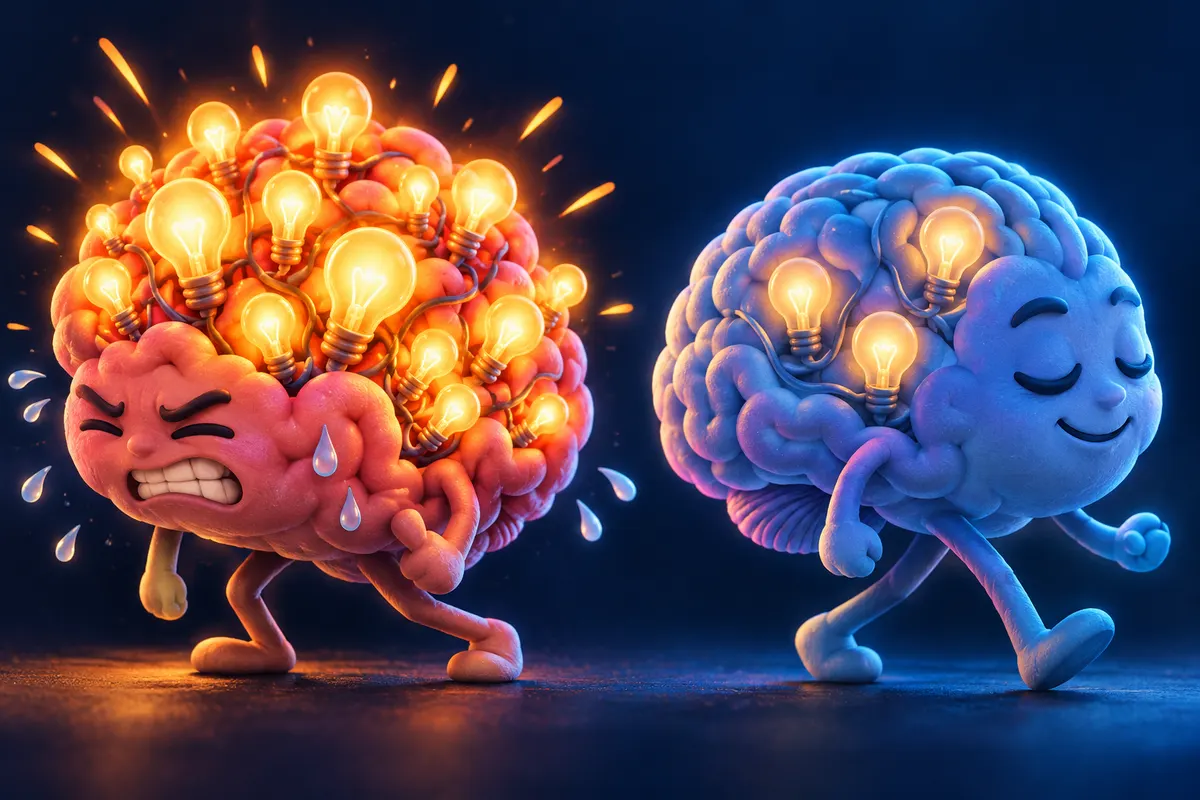
04それでも母語は「こっそり」働いている
では、英語が使えるようになれば、母語は一切使わなくなるのでしょうか。
イギリスの研究者ティエリーとウーは2007年、イギリスの大学に通う中国語と英語のバイリンガルを調べました。12歳ごろから英語を学び、英語で大学生活を送っている人たちです。英単語のペアを見せて、2つの意味が関連しているかを判断してもらいました。実は、半分のペアには中国語に訳すと同じ漢字が含まれるという隠れた仕掛けがありました。
本人たちは仕掛けに気づかず、成績にも差は出ませんでした。ところが脳波には、中国語の訳が無意識に動いた痕跡がはっきり出ていたのです。英語だけで考えているつもりでも、母語は裏で静かに働いていました。
これは母語が英語の「邪魔」をしているというより、脳が持っている言語の知識を自然に総動員している姿だ、とも考えられます。ただ、この無意識の翻訳が英語の理解に役立っているのかどうかは、まだ分かっていません。
05まとめ
「英語脳」は、英語専用の新しい脳ではありません。母語と同じ言語の回路が、英語にも慣れて効率よく働けるようになった状態、と言うのが正確です。
そして英語を使える人の頭の中でも、母語はこっそり働いている。日本語を敵視せず、同じ脳を英語にも慣らしていく——それが脳科学から見た近道です。
この研究を英語で読もう原田英語の English CornerIs there a special 'English brain'? 音声
音声 4択クイズ9問A2・B1・B2タップして開く
原田英語の English Corner
この研究を英語で読もう
Many people say you need an 'English brain' to speak English well. But brain science says there is no special brain for English. English and your first language use mostly the same brain network.
When you get better at English, your brain works more easily, with less effort. Even people who use English every day still use their first language a little, without knowing it. So you do not need to forget your first language.
75 words ・ CEFR A2
和訳を見る
英語を上手に話すには「英語脳」が必要だと言う人がたくさんいます。しかし脳科学によると、英語のための特別な脳はありません。英語と母語は、ほとんど同じ脳のネットワークを使っています。
英語が上達すると、脳はより少ない労力で、より楽に働くようになります。毎日英語を使っている人でさえ、気づかないうちに母語を少し使っています。だから、母語を忘れる必要はないのです。
4択リーディングクイズ
Q1. What is the passage mainly about?
「英語脳」という特別な脳があるかどうかを脳科学から考える話なので A。
Q2. What happens when you get better at English?
When you get better at English, your brain works more easily, with less effort. とあるので D。B は本文の主張と逆。
Q3. In this passage, "without knowing it" means ...
本人が知らないうちに=気づかないうちに、という意味なので B。unconsciously とも言う。
Is there a special 'English brain'? A 1997 study in Nature found that in people who learned a second language as adults, the activity for their first and second languages was centered in slightly different places.
However, later research showed a different picture. A 2005 review concluded that a second language mostly uses the same network as the first language, and that extra areas work mainly when proficiency is low or switching languages is difficult. In Japan, a study found that 19-year-olds with higher English skills showed less activity in the left frontal lobe than 13-year-olds. This suggests that the brain becomes more efficient as learners improve.
107 words ・ CEFR B1
和訳を見る
特別な「英語脳」はあるのでしょうか。Nature誌に掲載された1997年の研究では、大人になってから第二言語を学んだ人では、母語と第二言語の活動の中心が少しずれていることがわかりました。
しかし、その後の研究は違った姿を示しました。2005年のレビューは、第二言語はおもに母語と同じネットワークを使っており、追加の領域が働くのは、おもに熟達度が低いときや言語の切り替えが難しいときだと結論づけました。日本では、英語力の高い19歳のほうが、13歳よりも左前頭葉の活動が低いことを示した研究がありました。これは、学習者が上達するにつれて脳がより効率的になることを示唆しています。
4択リーディングクイズ
Q1. What did the 1997 study find in people who learned a second language as adults?
the activity ... was centered in slightly different places とあるので C。B の「完全に別の脳」は言い過ぎ。
Q2. According to the 2005 review, when do extra brain areas work?
extra areas work mainly when proficiency is low or switching languages is difficult とあるので A。
Q3. What does the study of 13- and 19-year-olds suggest?
英語力の高い19歳のほうが活動が低く、the brain becomes more efficient とまとめているので B。
Advertisements often promise learners an 'English brain', a separate circuit that would let them think directly in English. Brain imaging tells a messier story. In 1997, Kim and colleagues reported that in people who learned a second language as adults, the centers of activity for the two languages in a frontal language area sat slightly apart, whereas in early bilinguals they largely overlapped. That study was small, and later work suggested that proficiency and exposure explain activation patterns better than age of acquisition.
In a 2005 review, Perani and Abutalebi concluded that a second language runs essentially on the same network as the first. Extra regions join in mainly when proficiency is low or when switching between languages demands control. The first language does not seem to switch off completely, either.
In 2007, Thierry and Wu showed that Chinese-English bilinguals reading English word pairs unconsciously activated the Chinese translations, though nobody knows yet whether this helps comprehension or is just a by-product. Proficiency also changes how hard the network works. On an English verb task, Sakai's group found that more proficient Japanese 19-year-olds showed lower left frontal activation than 13-year-olds. Their brains appeared to do the same job more efficiently.
200 words ・ CEFR B2
和訳を見る
広告はしばしば、英語で直接考えられるようになる別の回路、つまり「英語脳」を学習者に約束します。脳画像研究が示す姿は、もっと入り組んでいます。1997年、キムらは、大人になってから第二言語を学んだ人では、前頭部の言語領域における2つの言語の活動の中心がわずかに離れている一方、幼いころからのバイリンガルではほぼ重なっていると報告しました。その研究は小規模で、その後の研究では、習得した年齢よりも熟達度や接触量のほうが活動パターンをよく説明することが示唆されました。
ペラーニとアブタレビは2005年のレビューで、第二言語は基本的に母語と同じネットワークで処理されると結論づけました。追加の領域が加わるのは、主に熟達度が低いときや、言語の切り替えに制御が必要なときです。また、母語が完全に止まるわけでもないようです。2007年、ティエリーとウーは、英単語のペアを読む中国語・英語のバイリンガルが、無意識のうちに中国語の訳を活性化させていることを示しました。
ただし、これが理解を助けているのか、単なる副産物なのかはまだわかっていません。熟達度は、ネットワークがどれだけ頑張って働くかも変えます。英語の動詞の課題で、酒井のグループは、より熟達した日本人の19歳の方が13歳よりも左前頭部の活動が低いことを見いだしました。彼らの脳は、同じ仕事をより効率よくこなしているようでした。
4択リーディングクイズ
Q1. Why does the author say that brain imaging "tells a messier story"?
本文全体で、別の英語脳ではなく、同じネットワークが熟達度などによって使われ方を変えると説明しているので D。messier は「より入り組んだ・単純でない」。
Q2. What weakness of the 1997 study does the author mention?
That study was small, and later work suggested that proficiency and exposure explain activation patterns better than age of acquisition とあるので C。
Q3. What did Thierry and Wu's study show?
unconsciously activated the Chinese translations とあるので A。B は on purpose(わざと)が誤り、D は The first language does not seem to switch off completely と矛盾。
重要単語
- second languageB1名詞(句)第二言語English is a second language for many people in Japan.
 略して L2。厳密には、英語を日常で使わない環境で学ぶ場合は foreign language(外国語)と区別されることもある。
 - neural networkC1名詞(句)神経ネットワークThe same neural network handles both languages. neural は neuron(神経細胞)の形容詞。AI の「ニューラルネットワーク」の語源でもある。
- unconsciousB2形容詞無意識のUnconscious translation happened in their brains. 「意識を失った」の意味もある。subconscious(潜在意識の)とほぼ同義で使われることも。
- activationC1名詞活性化・脳の活動Activation went down as proficiency went up. activate(活性化させる)の名詞形。脳科学系の長文の頻出語。
- efficientB2形容詞効率的なPractice makes your brain more efficient. energy-efficient(省エネの)など複合語でもよく出る。effective(効果的な)との区別に注意。
- overlapB2動詞・名詞重なる/重なりThe brain areas for English and Japanese overlap. over(上に)+lap(重ねる)。overlap with ~「~と重なる」。
- by-productC1名詞副産物The translation may be just a by-product. 本来の目的ではないのに生じるもの。side effect(副作用)と並んで長文で出る。
 入試に出る順の単語帳を印刷する →
 全5903語の「科学英単語カード」で復習する →
 動画でもっと知る
動画は各チャンネルの公式埋め込みで表示しています(YouTube)。
この話題を TED で聞く
同じテーマの TED・TED-Ed を、 TED HACK で。英語の見どころ・使える表現・学習ミッションつきの日本語ガイドです。(運営:原田英語)
 4コマでわかる

このネタ、誰かに教えたくなった?
「英語脳を作れ」とよく言われる。でも脳科学の答えは「英語専用の脳ができるわけではない」。英語も母語とほぼ同じ回路を使い、上達すると効率的に働く。しかも英語で大学に通う人でも、英単語を読むと母語の訳が無意識に動いていた。
押すと「マジかリスト」に保存されます
 出典・参考文献(4件)タップで表示
- Kim et al. (1997) Distinct cortical areas associated with native and second languages, Naturedoi.org
- Perani & Abutalebi (2005) The neural basis of first and second language processing, Current Opinion in Neurobiologydoi.org
- Tatsuno & Sakai (2005) Language-Related Activations in the Left Prefrontal Regions Are Differentially Modulated by Age, Proficiency, and Task Demands, The Journal of Neurosciencedoi.org
- Thierry & Wu (2007) Brain potentials reveal unconscious translation during foreign-language comprehension, PNASdoi.org

※本記事は上記の研究・公開資料をもとに、原田英語が独自の言葉で解説したものです。引用は著作権法第32条の範囲で行い、出典を明記しています。画像はすべてオリジナルのイメージです。研究結果には限界や個人差があります。誤りのご指摘は原田英語のお問い合わせフォームから。

別館
マジか!?ことばで読む、ことばの雑学
英語と日本語の「えっ、マジか!?」を辞書と論文でウラ取りする別館
 これも「マジか!?」
 語学
語学
2つの言語を話す脳は何が違う? 脳画像研究の「すごい発見」と、知っておきたい注意点


 語学
語学
「英語ネイティブは早口すぎる」は本当? 実は日本語のほうが1秒あたりの音節数は多かった


 語学
語学
英単語は「頭の中の発音」で覚えている? それを邪魔したら外国語の単語が覚えにくくなった

 語学
語学
「1万時間やれば一流」は語学にも当てはまる? 元の研究をやり直したら再現されなかった

 語学
語学
「バイリンガルは認知症が4年遅れる」は本当? 話題の研究とその後の反論

 語学
語学