

 脳と心理ビミョー
熱があると、頭の中の「1分」が短くなる? きっかけは科学者の妻の看病だった
 2026.10.02
 English Corner(A2〜B2・4択クイズ)
 読む前に予想してみよう!
体温が上がると、時間の感覚が速く進み、実際より短い時間を「もう1分たった」と感じやすい
発熱時の観察や、温水で体温を上げる実験で、「1分」を数えたり覚えた時間を再現したりすると実際より短くなる傾向が報告されている。
 研究カード(どんな研究?)
- 対象
- 発熱した1人の観察〜健康な成人の実験
- 規模
- 1人〜数十人
- 研究の種類
- 症例観察・実験研究
- 確かさ
- ★★☆☆☆
体温が上がると、頭の中の時計が速く進むらしく、実際より短い時間を「1分」と感じやすい。90年前の看病中の観察から、温水に浸かる実験まで続く研究。
ひとことで言うと体が熱いと、頭の中の時計がちょっと早送りになるらしい!
楽しい時間はあっという間、退屈な授業は長い——時間の感じ方が変わることは、誰でも経験しています。
でも、体温でも時間の感覚が変わるとしたら? その研究のきっかけは、なんとある科学者の「妻の看病」でした。
01インフルエンザの妻に「60まで数えて」
すると、熱が高いときほど、妻は速く数えていました。つまり彼女の頭の中の「1分」は、実際の1分より短かったのです。
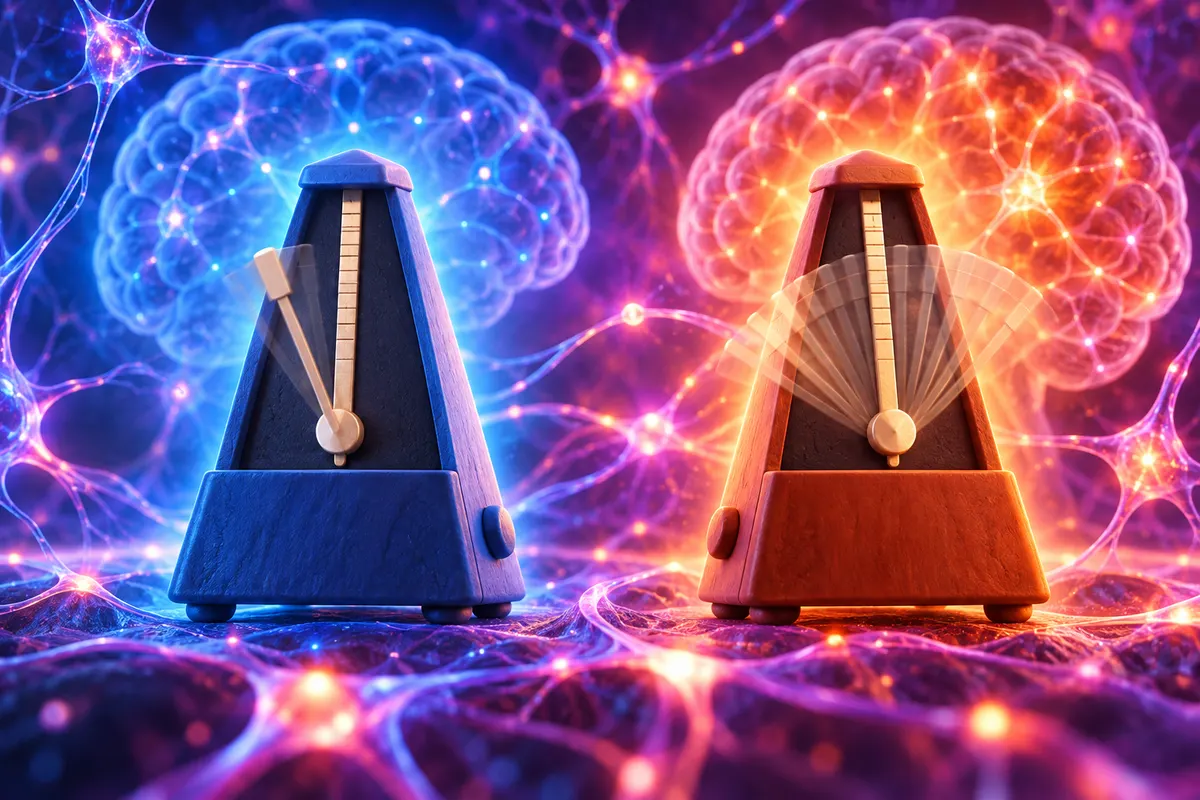
化学反応は、温度が上がると速く進みます。ホーグランドさんは、脳の中にも同じように温度で速さが変わる「化学時計」があるのではないか、と考えました。1933年に発表されたこの報告は、時間の心理学の古典になっています。
02実はもっと前にも
ホーグランドさんより少し前の1927年、フランスの研究者フランソワ(François)さんも、似た結果を報告していました。体温を上げる実験をしたのです。2019年には、イギリスの時間心理学者ウェアデン(Wearden)さんがこの論文を英訳し、「体温と時間」の研究の歴史を整理しています。
032019年、温水に浸かる実験で確かめた
「病気の妻1人の観察」では、さすがに科学的な証拠としては弱い。そこで現代の研究者も、この仮説を確かめています。
2019年、オランダの研究チーム(ファン・マーネン van Maanen さんら)の実験です。参加者に38℃のお湯に首まで浸かってもらい、体温を上げました。そして、前もって覚えた長さの時間を、ボタンを押して再現してもらいました。
すると、体温が上がるにつれて、再現する時間が短くなりました。頭の中の時計が速く進むと、「もう覚えた長さだけ時間がたった」と早めに感じます。だから早めにボタンを押してしまう。「時計が速くなる」という考えと合う結果です。
この実験では、制限時間のある選択問題も解いてもらいました。体温が上がると、答えるのがより速くなりました。また、覚えた時間を短く再現した人ほど、選択の間違いも多くなりました。まるで時間に追われているかのような答え方です。体温が上がりやすい職場で働く人の判断にも影響するかもしれない、と研究チームは指摘しています。
04まとめ
熱があるとき、頭の中の時計は早送りになっているのかもしれません。始まりは、病気の妻を思いやる1人の科学者の観察でした。
次にかぜをひいて「時間がたつのが遅い……」と感じたら、脳の時計が少し速く進んでいるせいかもしれません。
この研究を英語で読もう原田英語の English CornerWe all know that time seems to fly when we are having fun. 音声
音声 4択クイズ9問A2・B1・B2タップして開く
原田英語の English Corner
この研究を英語で読もう
In the 1930s, a scientist's wife had the flu and a high fever. He left her room for a short time. When he came back, she said she had waited a very long time.
But it was not long. So he asked her to count to 60, one number each second. When her fever was higher, she counted faster. Her "one minute" was shorter than a real minute.
68 words ・ CEFR A2
和訳を見る
1930年代、ある科学者の妻がインフルエンザにかかり、高い熱を出しました。彼は少しのあいだ部屋を離れました。戻ってくると、妻はとても長いあいだ待ったと言いました。
しかし、実際には長くありませんでした。そこで彼は妻に、1秒に1つずつ60まで数えるよう頼みました。熱が高いときほど、妻は速く数えました。彼女の「1分」は、本当の1分より短かったのです。
4択リーディングクイズ
Q1. What is the passage mainly about?
熱が高いと「1分」が短くなる=体温で時間の感覚が変わる、という話なので C。
Q2. What did the scientist ask his wife to do?
he asked her to count to 60, one number each second とあるので D。
Q3. In this passage, "fever" means ...
fever は「発熱・熱」。体温が普段より高い状態なので A。
We all know that time seems to fly when we are having fun. But can body temperature also change our sense of time? In the 1930s, an American physiologist named Hoagland noticed something while caring for his wife, who had the flu. He asked her to count to 60 at a rate of one per second and recorded her temperature each time.
The higher her fever, the faster she counted. He suggested that the brain has a "chemical clock" that runs faster when it is warmer. In 2019, researchers tested this idea by raising people's body temperature in warm water. The participants then reproduced remembered time intervals as shorter, which matches the idea of a faster internal clock.
118 words ・ CEFR B1
和訳を見る
楽しいときは時間がたつのが速く感じることは、誰もが知っています。では、体温も時間の感覚を変えるのでしょうか。1930年代、アメリカの生理学者ホーグランドは、インフルエンザにかかった妻を看病しているときにあることに気づきました。彼は妻に1秒に1つのペースで60まで数えるよう頼み、そのたびに体温を記録しました。
熱が高いほど、妻は速く数えていました。彼は、脳には温かいほど速く進む「化学時計」があるのではないかと考えました。2019年、研究者たちは、温かいお湯で人の体温を上げてこの考えを検証しました。すると参加者は、覚えた時間の長さを再現するとき、短く再現するようになり、これは頭の中の時計が速くなるという考えと一致しました。
4択リーディングクイズ
Q1. What did Hoagland find?
The higher her fever, the faster she counted. とあるので A。
Q2. How did the 2019 researchers raise body temperature?
raising people's body temperature in warm water とあるので C。
Q3. Why does reproducing intervals as shorter match the idea of a faster internal clock?
頭の中の時計が速く進めば、実際より早く「もうその時間がたった」と感じるので、覚えた時間を短く再現することになる。正解は B。
In the early 1930s, the American physiologist Hoagland was caring for his wife, who had influenza. After a short time away, he returned, and she insisted he had been gone a long time. He repeatedly asked her to count to sixty at what she felt was one number per second, and he recorded her temperature each time.
The higher her fever, the faster she counted. In a 1933 paper he proposed that the brain contains a temperature-sensitive "chemical clock." A French researcher had reported similar results in 1927. One feverish patient is weak evidence, though, and fever also brings fatigue and shifts in attention.
So modern researchers have tested the idea experimentally. In a 2019 study, participants had their core temperature raised by immersion in warm water. They then reproduced durations they had learned earlier as shorter, which fits an internal clock that has sped up. Even here, it is difficult to separate a faster clock from general arousal, and nobody yet knows how large or how repeatable the effect is. Under deadlines, the warmed participants also made choices as if they were pressed for time, a finding that might matter for people who work in hot environments.
198 words ・ CEFR B2
和訳を見る
1930年代の初め、アメリカの生理学者ホーグランドは、インフルエンザにかかった妻を看病していました。少し部屋を離れて戻ると、妻は彼が長いあいだいなかったと言い張りました。彼は妻に、自分の感覚で1秒に1つのペースで60まで数えるよう何度も頼み、そのたびに体温を記録しました。熱が高いほど、妻は速く数えました。
1933年の論文で、彼は脳には温度に敏感な「化学時計」があると提案しました。フランスの研究者も1927年に似た結果を報告していました。とはいえ、熱を出した患者1人の観察は証拠として弱く、発熱には疲労や注意の変化も伴います。そこで現代の研究者たちは、この考えを実験で検証してきました。
2019年の研究では、参加者が温かいお湯に浸かって深部体温を上げました。すると彼らは、事前に覚えた時間の長さを短く再現しました。これは頭の中の時計が速くなったことと一致します。ただしこの場合も、時計の加速と全般的な覚醒の高まりを区別するのは難しく、効果がどれくらい大きく、どれくらい再現できるのかはまだ誰にもわかっていません。また、体温を上げた参加者は、制限時間のある課題でまるで時間に追われているかのような選択をしました。これは暑い環境で働く人にとって重要かもしれません。
4択リーディングクイズ
Q1. What is the passage mainly about?
体温が上がると頭の中の時計が速くなるかもしれない、という考えの歴史と検証が主旨なので C。
Q2. Why did modern researchers need to test Hoagland's idea?
One feverish patient is weak evidence, though ... So modern researchers have tested the idea experimentally とあるので A。
Q3. Which is mentioned as a limitation?
it is difficult to separate a faster clock from general arousal とあるので D。
重要単語
- feverA2名詞発熱、熱She had a high fever last night.
 have a fever / run a fever「熱がある」。比喩で「熱狂」の意味も(World Cup fever)。
 - estimateB1動詞見積もるTry to estimate one minute without a clock. 名詞も同形。rough estimate「大まかな見積もり」。
- internal clockB2名詞(句)体内時計、頭の中の時計Heat may speed up our internal clock. internal(内部の)⇔ external(外部の)。biological clock とも言う。
- underestimateB2動詞過小評価する、少なく見積もるPeople often underestimate how long a task will take. under-(不足して)+estimate。反対は overestimate。Don't underestimate ~「~を甘く見るな」。
- intervalB2名詞(時間の)間隔The interval between the two sounds was short. at regular intervals「一定の間隔で」。劇場の「休憩時間」の意味も(英)。
- physiologistC1名詞生理学者The physiologist measured his wife's temperature. physiology(生理学)+-ist。physics(物理)、physician(内科医)と混同しないこと。
 入試に出る順の単語帳を印刷する →
 全5903語の「科学英単語カード」で復習する →
 この話題を TED で聞く
同じテーマの TED・TED-Ed を、 TED HACK で。英語の見どころ・使える表現・学習ミッションつきの日本語ガイドです。(運営:原田英語)

このネタ、誰かに教えたくなった?
1930年代、ある科学者がインフルエンザで熱を出した妻に「1秒ずつ60まで数えて」と頼んだ。熱が高いときほど数えるのが速かった。体温が上がると、頭の中の時計が早送りになるらしい。2019年の温水実験でも似た結果が出た。
押すと「マジかリスト」に保存されます
 出典・参考文献(3件)タップで表示
- Hoagland (1933) The physiological control of judgments of duration: evidence for a chemical clock, The Journal of General Psychologydoi.org
- van Maanen et al. (2019) Core body temperature speeds up temporal processing and choice behavior under deadlines, Scientific Reportsdoi.org
- Wearden (2019) Body temperature and the sense of time: a translation of François (1927) with a commentary, Timing & Time Perceptiondoi.org

※本記事は上記の研究・公開資料をもとに、原田英語が独自の言葉で解説したものです。引用は著作権法第32条の範囲で行い、出典を明記しています。画像はすべてオリジナルのイメージです。研究結果には限界や個人差があります。誤りのご指摘は原田英語のお問い合わせフォームから。
 これも「マジか!?」
 脳・心理
脳・心理
なぜ大人になると1年があっという間なのか?「ジャネーの法則」だけでは説明できなかった
 脳・心理
脳・心理
記憶の「分けると残る」は腎臓の細胞にも? 薬を一気より4回に分けると遺伝子が長く働いた


 脳・心理
脳・心理
麻酔がかかると、ヒトもマウスも魚も線虫も、脳の各部分がバラバラに動くようになった。6種の脳を比べた研究

 脳・心理
脳・心理
絶対音感は大人になってからでも身につく? 中国や日本の音大生に多い理由と、大人の訓練実験
 脳・心理
脳・心理
脳そのものは痛みを感じない。手術中に患者が"起きたまま"おしゃべりできる理由

 脳・心理
脳・心理