


 体と健康・食ホント
わさびの「ツーン」が鼻に来て、すぐ消えるのはなぜ? 唐辛子とは別の“痛みセンサー”が反応していた
 2026.10.02
 English Corner(A2〜B2・4択クイズ)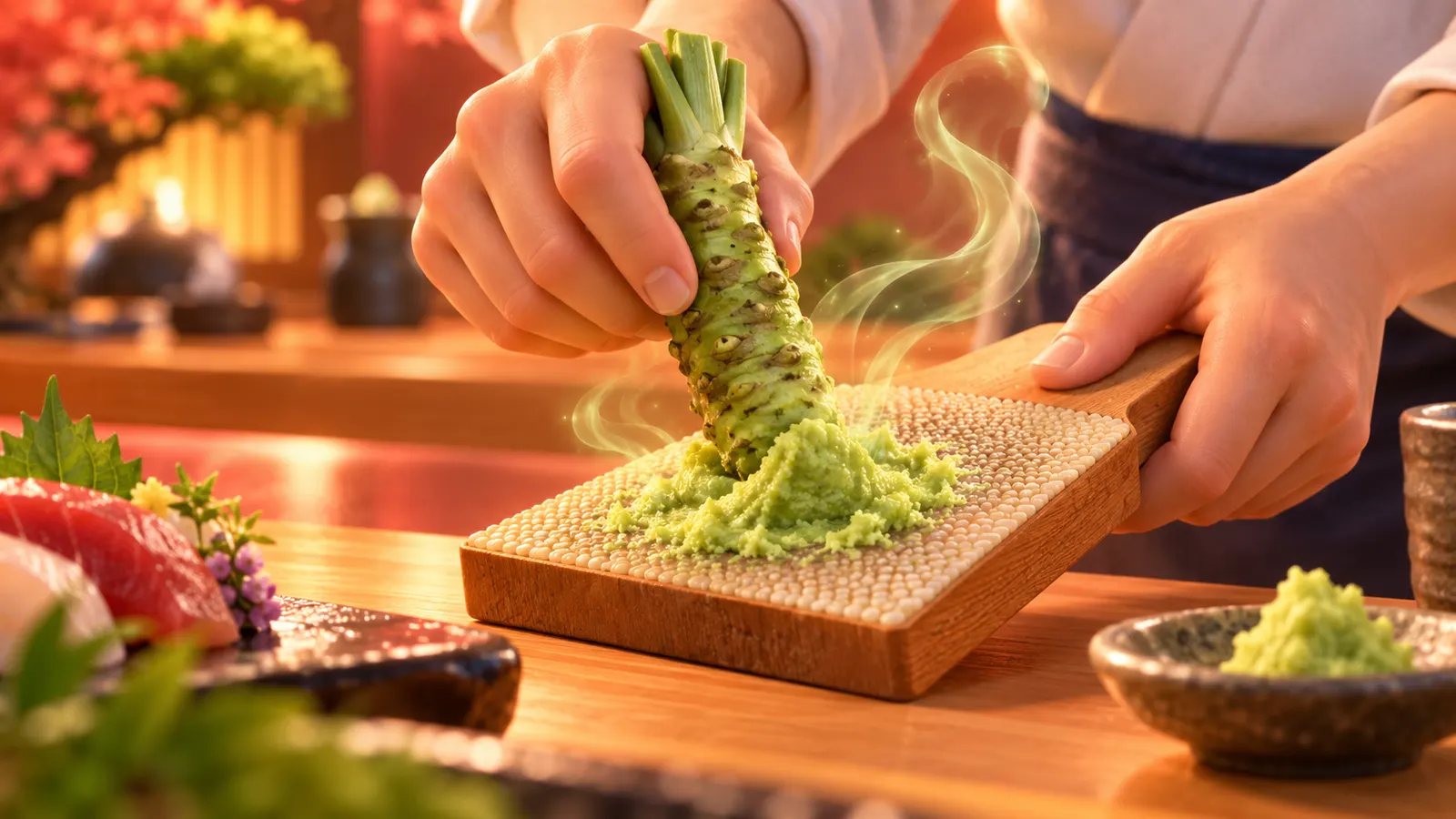
 読む前に予想してみよう!
わさびと唐辛子の辛さは、同じセンサーで感じている
唐辛子は主にTRPV1、わさびは主にTRPA1という別の痛みセンサーを刺激する。
 研究カード(どんな研究?)
- 対象
- 培養細胞・動物の神経細胞
- 規模
- 基礎研究
- 研究の種類
- 分子生物学・電気生理学の実験
- 確かさ
- ★★★★☆
わさびの辛味成分は空気中に飛びやすく、鼻の奥の痛みセンサー「TRPA1」を刺激する。唐辛子とは別のセンサーで、刺激がすっと引くのも特徴。
ひとことで言うとわさびのツーンは、成分が気体になって鼻まで飛んでいく辛さだった!
お寿司のわさびをつけすぎて、鼻の奥に「ツーン!」。思わず涙目になって、鼻を押さえる——。でも数十秒もすると、あの刺激はすーっと消えていきます。
一方、激辛ラーメンの唐辛子の辛さは、口の中にヒリヒリといつまでも残りますよね。
同じ「辛い」なのに、なぜここまで違うのでしょうか。実は、わさびと唐辛子は、辛さの成分も、それを感じるセンサーも別物だったのです。
01わさびの辛さは「空気中に飛ぶ」
わさびの辛さのもとは、アリルイソチオシアネートなどの成分です。からし(マスタード)や大根おろしのピリッとした辛さも、同じ仲間の成分によるものです。
わさびをすりおろすと、細胞が壊れて、もとになる物質と酵素が出会い、この辛味成分ができます。そしてこの成分の大きな特徴は、揮発性が高い(空気中に飛びやすい)こと。
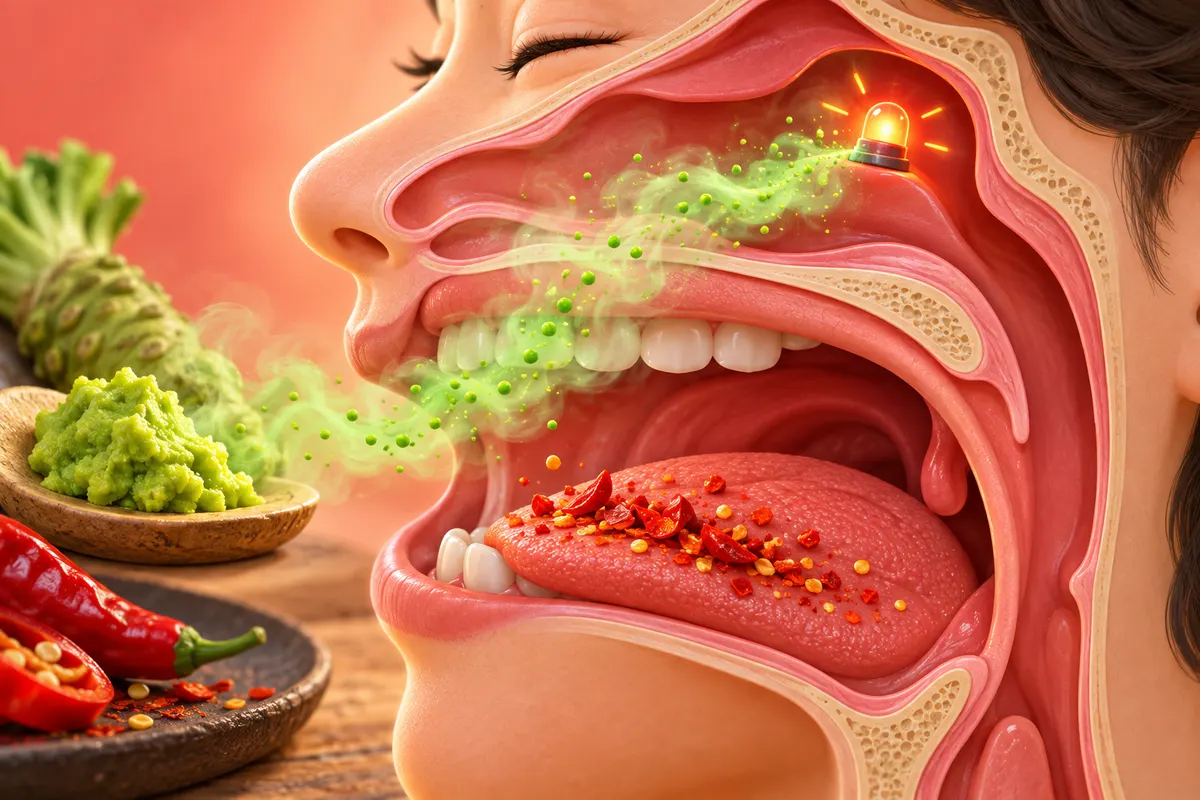
だから、口に入れたわさびの辛味成分は、すぐに気体になって喉の奥から鼻へと上がっていきます。「ツーン」が口ではなく鼻に来るのはこのためです。
02唐辛子とは別の「痛みセンサー」
TRPA1は、口の中だけでなく鼻や目、気道の神経にもあります。わさびの成分が鼻に飛んでいくと、鼻の奥の神経のTRPA1が刺激されて、あの強烈な「ツーン」になるのです。
03「すぐ消える」のはなぜ?
わさびの「ツーン」がすぐ引くのは、辛味成分が飛びやすく、口や鼻の中に長くとどまりにくいことが大きいと考えられています。
一方、唐辛子のカプサイシンは油に溶けやすく、水には溶けにくいため、舌の表面に長くとどまります。だから、水を飲んでもなかなか辛さが引かないのです。
04ツーンで人を起こす「わさび火災報知器」
この「わさびのツーン」を、まさかの方法で役立てた日本の研究者たちがいます。耳の不自由な人に、火事を「わさびのツーン」で知らせる火災報知器です。
火災を検知すると、わさびの辛味成分を空気中に噴き出し、その強い刺激で眠っている人を起こすしくみ。この研究は2011年にイグノーベル賞(化学賞)を受賞しました。わさびの「鼻への直撃力」が、命を守る技術に変わったのです。
05まとめ
わさびの「ツーン」は、空気中に飛びやすい辛味成分が鼻の奥のTRPA1を刺激することで起きていました。唐辛子の「ヒリヒリ」とは、成分もセンサーも別物だったのです。
次にお寿司を食べるときは、ツーンと来たら「今、鼻の奥のTRPA1が反応してるな」と思い出してみてください。涙目になりながらも、ほんの少しだけ落ち着いていられるかもしれません。
この研究を英語で読もう原田英語の English CornerToo much wasabi causes a sharp sting in the nose that fades within a minute or so, while chili heat lingers… 音声
音声 4択クイズ9問A2・B1・B2タップして開く
原田英語の English Corner
この研究を英語で読もう
If you eat too much wasabi with sushi, you feel a strong sting in your nose. But it goes away quickly. Chili is different. Its heat stays in your mouth for a long time.
Why? The hot part of wasabi easily turns into a gas and goes up into your nose. There, it turns on a pain sensor called TRPA1. Chili uses a different sensor.
65 words ・ CEFR A2
和訳を見る
お寿司でわさびを食べすぎると、鼻に強いツーンとした刺激を感じます。でも、それはすぐに消えます。唐辛子はちがいます。その辛さは口の中に長く残ります。
なぜでしょうか。わさびの辛い成分は気体になりやすく、鼻の中へと上がっていきます。そこで、TRPA1という痛みのセンサーをオンにするのです。唐辛子は別のセンサーを使います。
4択リーディングクイズ
Q1. What is the passage mainly about?
わさびが鼻にツーンと来る理由と、唐辛子とのちがいを説明しているので D。
Q2. What happens to the hot part of wasabi?
The hot part of wasabi easily turns into a gas and goes up into your nose. とあるので B。
Q3. In this passage, "goes away" means ...
go away は「消える・なくなる」。刺激がすぐ消えるという意味なので C。
Too much wasabi causes a sharp sting in the nose that fades within a minute or so, while chili heat lingers in the mouth. The two differ in both their chemicals and their sensors. Wasabi's pungent compound, allyl isothiocyanate, forms when the root is grated, and it easily turns into vapor. It therefore rises from the back of the mouth into the nose.
In 2004, two US research teams showed that this compound activates TRPA1, a pain sensor on nerves, which is different from TRPV1, the sensor triggered by chili. Chili's capsaicin dissolves in oil rather than water, so it stays on the tongue, while wasabi's compound escapes quickly.
109 words ・ CEFR B1
和訳を見る
わさびを食べすぎると鼻に鋭いツーンとした刺激が起こり、それは1分ほどで消えますが、唐辛子の辛さは口の中に残ります。この2つは、化学物質もセンサーもちがうのです。わさびのツンとくる成分アリルイソチオシアネートは、根がすりおろされるときにでき、気体になりやすい性質をもっています。そのため、口の奥から鼻へと上がっていきます。2004年、アメリカの2つの研究チームは、この成分が神経にある痛みのセンサーTRPA1を活性化することを示しました。
これは、唐辛子が刺激するセンサーTRPV1とは別のものです。唐辛子のカプサイシンは水ではなく油に溶けるので舌にとどまりますが、わさびの成分はすばやく逃げていくのです。
4択リーディングクイズ
Q1. When is wasabi's pungent compound formed?
forms when the root is grated とあるので D。
Q2. Which sensor is triggered by chili?
TRPV1, the sensor triggered by chili とあるので C。わさびは TRPA1。
Q3. Why does chili heat last longer than wasabi's sting?
Chili's capsaicin dissolves in oil ..., so it stays on the tongue, while wasabi's compound escapes quickly とあるので B。
Wasabi and chili are both called hot, but they hit in very different ways. Wasabi delivers a sharp jolt to the nose that fades within a minute. Chili burns the mouth and lingers. The difference begins with chemistry. When wasabi is grated, damaged cells allow a precursor to meet an enzyme, producing allyl isothiocyanate, the same family of compounds responsible for the bite of mustard and grated daikon.
Because this compound is highly volatile, it vaporizes and travels from the back of the mouth into the nasal cavity. In 2004, teams led by David Julius and Ardem Patapoutian, who later shared a Nobel Prize, independently showed that such compounds activate TRPA1, an ion channel on pain-sensing nerves in the mouth, nose, eyes and airways. Chili's capsaicin, by contrast, acts mainly on a different channel, TRPV1, and because it is fat-soluble it clings to the tongue.
Why wasabi's sting fades so fast has been explained mostly from the compound's physical properties, and detailed human measurements of its time course are scarce. Japanese researchers even turned wasabi's nasal punch into a fire alarm for deaf people, work that won an Ig Nobel Prize in 2011.
193 words ・ CEFR B2
和訳を見る
わさびも唐辛子も「辛い」と言われますが、その効き方はまるでちがいます。わさびは鼻に鋭い衝撃を与え、1分以内に消えます。唐辛子は口を焼くように刺激し、長く残ります。そのちがいは化学から始まります。わさびをすりおろすと、壊れた細胞の中でもとになる物質が酵素と出会い、アリルイソチオシアネートができます。これは、からしや大根おろしのピリッとした辛さのもとと同じ仲間の成分です。
この成分は揮発性がとても高いため、気化して口の奥から鼻腔へと移動します。2004年、のちにノーベル賞を共同受賞するデビッド・ジュリアスさんとアーデム・パタプティアンさんが率いるチームは、それぞれ独立に、こうした成分が口・鼻・目・気道の痛みを感じる神経にあるイオンチャネルTRPA1を活性化することを示しました。対照的に、唐辛子のカプサイシンは主に別のチャネルTRPV1に作用し、脂に溶けやすいため舌にまとわりつきます。
わさびの刺激がなぜこれほど速く消えるのかは、主に成分の物理的な性質から説明されてきたもので、その時間経過をヒトで詳しく測ったデータはわずかです。日本の研究者たちは、わさびの鼻への一撃を耳の不自由な人のための火災報知器にまで応用し、この研究は2011年にイグノーベル賞を受賞しました。
4択リーディングクイズ
Q1. What is the main point of the passage?
わさびと唐辛子は成分・センサー・刺激の持続がちがう、という内容なので A。
Q2. According to the passage, why does wasabi's compound reach the nose?
Because this compound is highly volatile, it vaporizes and travels ... into the nasal cavity とあるので D。
Q3. Which limitation does the writer mention?
Why wasabi's sting fades so fast has been explained mostly from the compound's physical properties, and detailed human measurements of its time course are scarce とあるので C。
重要単語
- pungentC1形容詞ツンとくる、刺激の強いWasabi has a pungent smell.
 においや味が鋭く刺激的なこと。比喩で「辛辣な」(pungent criticism)。
 - vaporB2名詞蒸気、気体The vapor goes up into your nose. イギリス式は vapour。動詞 vaporize(気化する)、water vapor(水蒸気)。
- grateB2動詞すりおろすGrate fresh wasabi just before eating. grater は「おろし金」。great(すばらしい)と同音なので注意。
- irritantC1名詞刺激物Wasabi contains a natural irritant. irritate(刺激する・イライラさせる)の名詞形の1つ。
- alarmB1名詞警報(装置)The wasabi alarm wakes people with its smell. fire alarm「火災報知器」、alarm clock「目覚まし時計」。動詞は「不安にさせる」。
- lingerC1動詞(なかなか)消えずに残るThe heat of chili lingers in the mouth. においや感情が「後を引く」ときに使う。lingering doubt「消えない疑い」。
 入試に出る順の単語帳を印刷する →
 全5903語の「科学英単語カード」で復習する →
このネタ、誰かに教えたくなった?
唐辛子の辛さは口に残るのに、わさびのツーンは鼻に抜けてすぐ消える。わさびの成分は空気中に飛びやすく、鼻の奥の痛みセンサー「TRPA1」を直撃するから。わさび火災報知器はイグノーベル賞に。
押すと「マジかリスト」に保存されます
 出典・参考文献(3件)タップで表示
- Jordt et al. (2004) Mustard oils and cannabinoids excite sensory nerve fibres through the TRP channel ANKTM1, Naturedoi.org
- Bandell et al. (2004) Noxious cold ion channel TRPA1 is activated by pungent compounds and bradykinin, Neurondoi.org
- Depree et al. (1998) Flavour and pharmaceutical properties of the volatile sulphur compounds of Wasabi (Wasabia japonica), Food Research Internationaldoi.org

※本記事は上記の研究・公開資料をもとに、原田英語が独自の言葉で解説したものです。引用は著作権法第32条の範囲で行い、出典を明記しています。画像はすべてオリジナルのイメージです。研究結果には限界や個人差があります。誤りのご指摘は原田英語のお問い合わせフォームから。
 これも「マジか!?」

 体・健康
体・健康
辛さは「味」じゃなく「痛み」だった。脳がだまされる“熱センサー”の正体とノーベル賞

 体・健康
体・健康
ポテチは「耳」でも食べていた。音を大きくしただけで“パリパリで新鮮”に感じた実験
 体・健康
体・健康
玉ねぎで涙が出る犯人は、日本の食品会社が見つけた「涙専用の酵素」だった。イグノーベル賞も受賞

 体・健康
体・健康
指ポキポキの「ポキッ」、MRIで撮影したら関節の中で泡ができる瞬間に鳴っていた

 体・健康
体・健康
カロリーも栄養もそろえた2つの朝食。ゆで卵やバナナより、超加工食品のほうがインスリンが多く出た

 体・健康
体・健康