Nanakusa (Seven Herbs Day)

七草(人日の節句)を英語で:読む・聞く・話す・遊ぶ

やさしい英語(CEFR A2)の読み物に音声つき。会話・単語カード・クイズ5問・ゲームで、七草(人日の節句)の英語をまるごと。

🔊Read in English七草(人日の節句)を英語で読もう(CEFR A2・音声つき)

七草(人日の節句)を、やさしい英語で紹介する読み物です。▶で英文をタイトルから通して聞けます(アメリカ英語)。「和訳」ボタンで日本語訳の表示・非表示を切りかえられます。下線の語は下の単語カードにあります。

Seven Green Herbs in a Bowl

CEFR A2
0:00
226 words

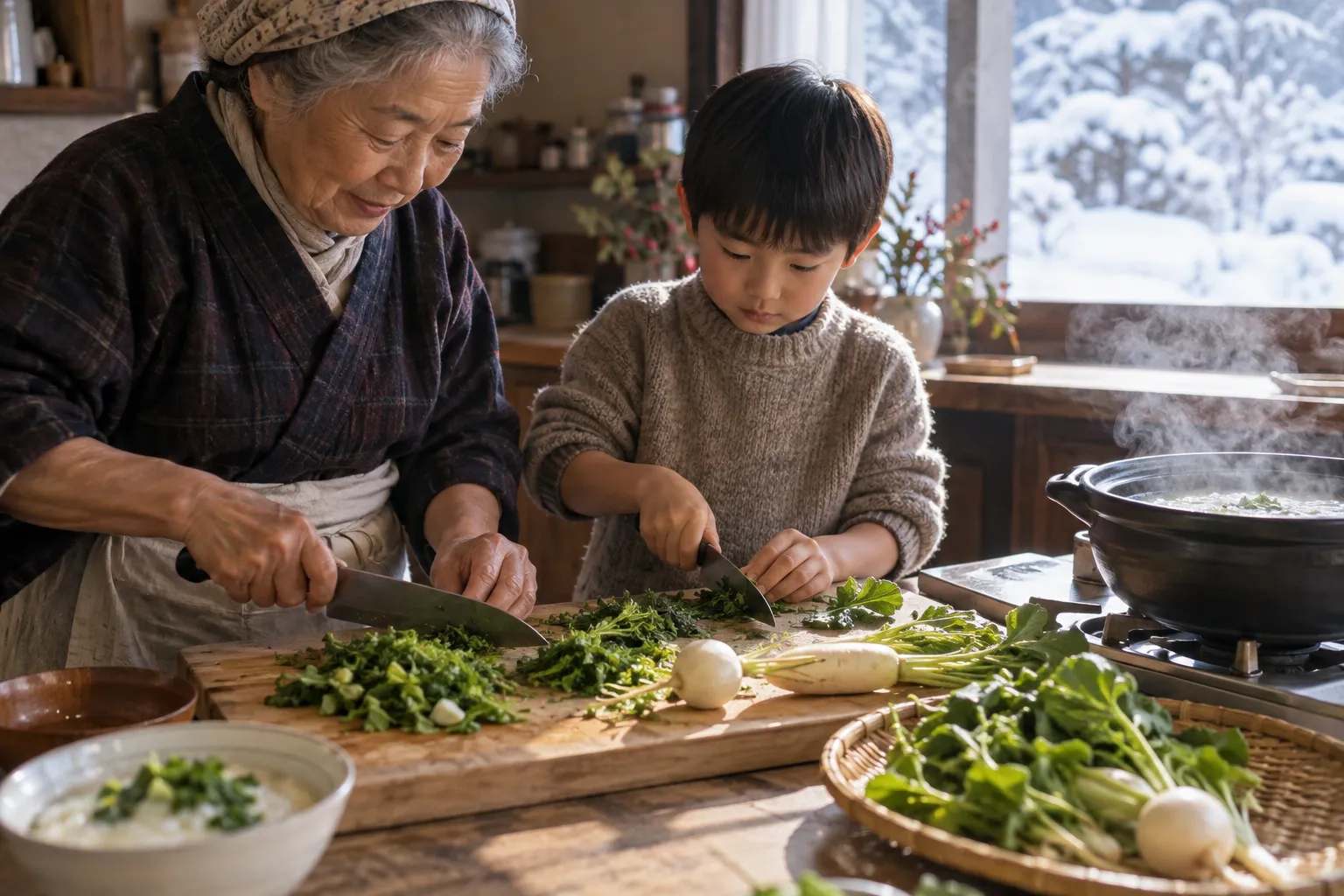
On the morning of January 7, many families in Japan eat a simple bowl of rice porridge. It is soft, warm, and a little green. Inside, there are seven young spring plants. The dish is called nanakusa-gayu, and nanakusa means seven herbs. People eat it and wish for good health in the new year.

1月7日の朝、日本の多くの家族はシンプルなおかゆを食べます。やわらかくて温かく、少し緑色をしています。中には、7つの春の若い草が入っています。この料理は七草がゆと呼ばれ、七草は「7つの草」という意味です。人々はこれを食べて、新しい年の健康を願います。

The custom started in old China. There, each of the first days of the year had an animal. Day one was for chickens, and day two was for dogs. Day seven was for people, so it was called Human Day. On that day, people made a hot soup with seven kinds of vegetables.

この習慣は昔の中国で始まりました。そこでは、年のはじめの毎日に動物が割り当てられていました。1日目はニワトリ、2日目はイヌの日でした。7日目は人のための日だったので、「人の日」と呼ばれました。その日、人々は7種類の野菜で温かい汁物を作りました。

The idea came to Japan more than 1,000 years ago. Japanese people already liked to pick young plants in early spring. Fresh vegetables were hard to find in winter, so these plants were special. Later, the soup changed into rice porridge. In the Edo period, even the shogun ate it on January 7.

この考え方は千年以上前に日本へ伝わりました。日本の人々は、もともと早春に若い草を摘むのが好きでした。冬は新鮮な野菜が手に入りにくかったので、こうした草は特別でした。のちに、汁物はおかゆに変わりました。江戸時代には、将軍までもが1月7日にこれを食べました。

Today, supermarkets sell small packs of the seven herbs. Two of them are root vegetables, turnip and daikon radish. Some families chop the herbs while they sing an old song. Others soak their nails in herb water before the first nail cutting of the year. People say this keeps colds away. After all the rich New Year food, a light bowl of porridge feels just right.

今では、スーパーで七草の小さなパックが売られています。そのうち2つは根の野菜、カブとダイコンです。古い歌を歌いながら七草を刻む家族もいます。その年はじめて爪を切る前に、七草をひたした水に爪をつける人もいます。こうするとかぜをひかないと言われています。お正月のごちそうのあとには、あっさりしたおかゆがちょうどいいのです。

💬Dialogue英語の会話で七草(人日の節句)

🎬 オーストラリアからの留学生オリビアが、1月にソウタの家にホームステイしています。1月7日の朝、ソウタがおわんを持ってきます。

0:00
Sota

Good morning! Today we have nanakusa-gayu for breakfast.

おはよう!今日の朝ごはんは七草がゆだよ。

Olivia

Rice porridge with green leaves? What is it for?

緑の葉っぱが入ったおかゆ?何のためなの?

Sota

It has seven spring herbs. We eat it on January 7 to stay healthy all year.

春の七草が入っているんだ。一年元気でいられるように、1月7日に食べるんだよ。

Olivia

Seven herbs! Can you name them all?

7つも!全部言える?

Sota

There's a rhythm for that. Seri, nazuna, gogyo, hakobera, hotokenoza, suzuna, suzushiro!

覚え方があるんだ。せり、なずな、ごぎょう、はこべら、ほとけのざ、すずな、すずしろ!

Olivia

Wow, that sounds like a song. It tastes gentle, too.

わあ、歌みたい。味もやさしいね。

Sota

Yes. After a week of New Year food, my stomach loves it.

うん。お正月のごちそうが1週間続いたあとだから、おなかがよろこぶんだ。

🃏Word Cards七草(人日の節句)の英単語カード(8語)

カードをタップすると裏返って、意味と例文が出ます。

porridge名詞
おかゆWe eat rice porridge on January 7.1月7日にはおかゆを食べます。💡 rice porridge で「米のおかゆ」。英米では oatmeal(オートミール)を porridge と呼ぶことも多い。
herb名詞
ハーブ、香草、薬草Seri is an herb that grows near water.セリは水辺に生える草です。💡 アメリカ英語では h を発音しない「アーブ」が多い。料理や薬に使う草全般を指す。
custom名詞
習慣、風習Eating this porridge is an old custom.このおかゆを食べるのは古い習慣です。💡 社会の習慣は custom、個人のくせは habit。
healthy形容詞
健康なWe want to stay healthy all year.一年中健康でいたいです。💡 stay healthy=健康でいる。名詞は health。
chop動詞
細かく刻む、たたき切るMy mother chops the herbs on a board.母はまな板の上で七草を刻みます。💡 包丁でトントン刻む動き。chopsticks(はし)とは別の語源。
turnip名詞
カブSuzuna is an old name for turnip.スズナはカブの昔の呼び名です。💡 ハロウィンのランタンも、もとはカブで作られていた。
radish名詞
ダイコン、ラディッシュSuzushiro is daikon radish.スズシロはダイコンのことです。💡 英語の radish は小さな赤いハツカダイコンを指すことが多いので、daikon radish と言うと伝わりやすい。
soak動詞
ひたす、つけるShe soaks her nails in herb water.彼女は七草をひたした水に爪をつけます。💡 soak A in B=AをBにひたす。

✅Quiz七草(人日の節句)の英語クイズ(5問)

上の英文を読んでから答えてみよう。答えを選ぶとすぐに解説が出ます。全問正解でスタンプが金色に!

Q1. What is the main idea of the passage?

本文の主旨は何ですか。

第1段落で七草がゆと健康の願いを紹介し、第2〜4段落でその由来と今の様子を説明しています。肉料理やスーパーの休み、動物を食べる話は出てきません。

Q2. In old China, what was day seven of the year for?

昔の中国では、年の7日目は何のための日でしたか。

第2段落に Day seven was for people とあります。ニワトリは1日目、イヌは2日目です。ウマは本文に出てきません。

Q3. Why were young spring plants special in Japan long ago?

昔の日本で、春の若い草が特別だったのはなぜですか。

第3段落に Fresh vegetables were hard to find in winter, so these plants were special. とあります。将軍が配った、中国にしかない、年賀状に使った、という記述はありません。

Q4. In paragraph 4, what does soak mean in soak their nails in herb water?

第4段落の soak their nails in herb water の soak の意味はどれですか。

soak は「ひたす・つける」。爪を七草の水につけてから切る、という流れなので「液体につける」が正解です。切るのはそのあとの動作です。

Q5. In the dialogue, why does Sota say his stomach loves the porridge?

会話で、ソウタがおなかがおかゆをよろこぶと言うのはなぜですか。

ソウタは After a week of New Year food と言っています。ごちそうが続いたあとなので、やさしいおかゆがうれしいのです。何も食べていない、毎朝食べる、病気、という話はありません。

🎮Games七草(人日の節句)の英語ゲーム

タブを切りかえて遊べます。授業ではプロジェクターに映して、クラス対抗戦にしても盛り上がります。

👋Useful Phrases七草(人日の節句)に使える英語フレーズ

On January 7, we eat rice porridge with seven spring herbs.1月7日には、春の七草が入ったおかゆを食べます。七草がゆを一言で説明する基本フレーズ。
We eat it to wish for good health this year.今年一年の健康を願って食べるんです。wish for ~=~を願う。
It's a gentle meal after all the rich New Year food.お正月のごちそうのあとの、やさしいごはんなんです。rich food=こってりした料理。

🗣️ 話し合ってみよう(Discussion)

  1. Do you eat nanakusa-gayu on January 7? How do you like it?

    あなたは1月7日に七草がゆを食べますか。好きですか。
  2. Many old customs, like nanakusa-zume, are disappearing. Should we keep them? Why or why not?

    七草爪のような古い習慣は消えつつあります。残すべきだと思いますか。その理由は。
  3. Seasonal foods help people feel the change of seasons. Is this still important in a world where we can buy any food at any time?

    季節の食べ物は季節の変化を感じさせてくれます。いつでも何でも買える時代に、それは今も大切でしょうか。

🗾Explain Japan in English七草(人日の節句)を海外の人に英語で説明するなら

姉妹サイト「日本文化ナビ」に、英語でかんたんに説明する例文(ひと言・30秒・スピーチ)と、外国の人によく聞かれる質問がまとまっています。日本語のページと、英語だけのページ(そのまま海外の人に見せられます)があります。

七草がゆを英語で説明する(nanakusa)七草がゆ(nanakusa)を英語で説明するには。一言/30秒/スピーチの3段階の英文と和訳、外国人によく聞かれる質問と答え、そのまま使えるフレーズ、音声つき。JP 日本語で読むGB English page

🌿
Nanakusa (Seven He
スタンプ帳に七草(人日の節句)のスタンプを押しました!
クイズで全問正解すると金のスタンプに。世界一周めざして集めよう。 スタンプ帳を見る →

授業アイデアとワークシートを見る →