Chuseok

チュソク(韓国の秋夕)を英語で:読む・聞く・話す・遊ぶ

やさしい英語(CEFR A2)の読み物に音声つき。会話・単語カード・クイズ5問・ゲームで、チュソク(韓国の秋夕)の英語をまるごと。

🔊Read in Englishチュソク(韓国の秋夕)を英語で読もう(CEFR A2・音声つき)

チュソク(韓国の秋夕)を、やさしい英語で紹介する読み物です。▶で英文をタイトルから通して聞けます(アメリカ英語)。「和訳」ボタンで日本語訳の表示・非表示を切りかえられます。下線の語は下の単語カードにあります。

The Great Middle of Autumn

CEFR A2
0:00
226 words

Every fall, the highways in South Korea fill with cars. Trains and planes are full, too. People call it the great migration. It is Chuseok, one of the biggest holidays of the year. It comes on the 15th day of the eighth month of the old moon calendar, under a full moon.

毎年秋になると、韓国の高速道路は車でいっぱいになります。列車も飛行機も満員です。人々はそれを「民族大移動」と呼びます。チュソク、1年でいちばん大きな祝日のひとつです。それは旧暦8月15日、満月の下にやってきます。

Chuseok may be about 2,000 years old. An old history book tells a story about a king in the kingdom of Silla. He put the women of the city into two teams. For one month, they made cloth every day. On the night of the full moon, the losing team made a big dinner for the winners. Then everyone sang and danced.

チュソクは約2000年の歴史があるのかもしれません。ある古い歴史書が、新羅という国の王の話を伝えています。王は都の女性たちを2つのチームに分けました。1か月の間、彼女たちは毎日布を織りました。満月の夜、負けたチームが勝ったチームのために大きなごちそうを作りました。そしてみんなで歌い、踊りました。

Today, families get up early on Chuseok morning. They put rice, fruit, fish, and rice cakes on a table for their ancestors. There are old rules: red fruit goes on the east side, and white fruit goes on the west. Later, they visit family graves and cut the grass around them.

今、家族はチュソクの朝に早起きします。先祖のために、ごはん、果物、魚、餅を台の上に並べます。昔からのルールがあります。赤い果物は東側、白い果物は西側です。そのあと、家族のお墓を訪ね、周りの草を刈ります。

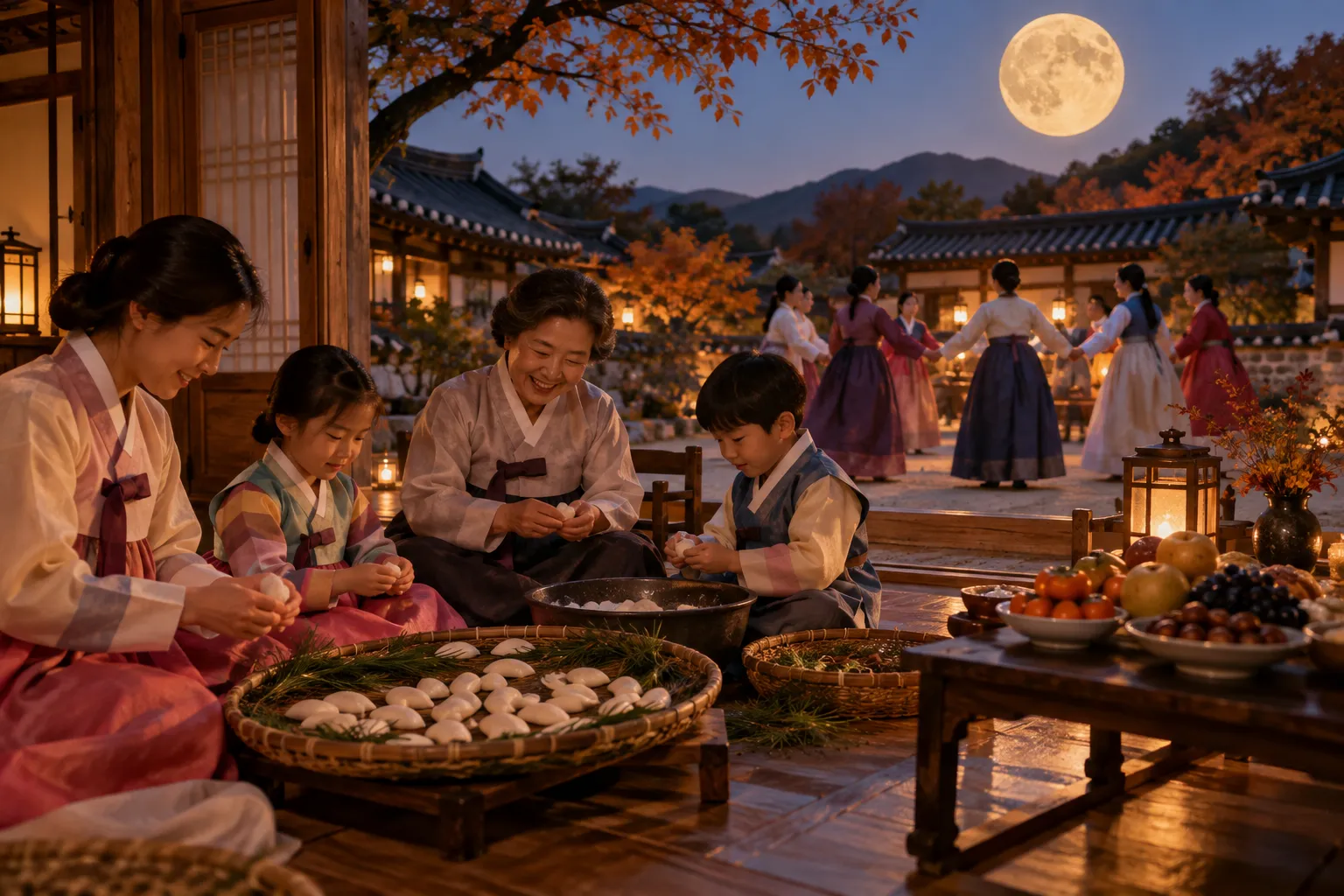
The most famous Chuseok food is songpyeon. These small rice cakes are shaped like a half moon. People steam them on a bed of pine needles. Song means pine in Korean. An old saying tells young women that pretty songpyeon will bring a good husband. At night, women in hanbok hold hands and dance in a big circle under the moon.

チュソクのいちばん有名な食べ物はソンピョンです。この小さな餅は、半月の形をしています。人々は松の葉を敷いて、その上で蒸します。ソンは韓国語で松という意味です。昔の言い伝えでは、きれいなソンピョンを作る若い女性はよい夫に出会えるそうです。夜には、韓服を着た女性たちが手をつなぎ、月の下で大きな輪になって踊ります。

💬Dialogue英語の会話でチュソク(韓国の秋夕)

🎬 チュソクの前の日。日本に住むケンタが、ソウルに住む友だちのソヨンとビデオ通話をしています。

0:00
Kenta

Hi, Seo-yeon! Why are you in a car?

やあ、ソヨン!どうして車の中にいるの?

Seo-yeon

We're going to my grandma's house for Chuseok. But the traffic is terrible!

チュソクでおばあちゃんの家に行くところなの。でも渋滞がひどくて!

Kenta

How long will it take?

どのくらいかかるの?

Seo-yeon

Usually three hours. Today, maybe seven.

いつもは3時間。今日はたぶん7時間かな。

Kenta

Seven hours? That sounds like Obon in Japan.

7時間?日本のお盆みたいだね。

Seo-yeon

Yes, it's similar. Tonight, we'll make songpyeon together.

うん、似てるよ。今夜はみんなでソンピョンを作るんだ。

Kenta

I've heard about that. Are you good at making them?

聞いたことある。作るの上手なの?

Seo-yeon

Not really. My grandma always says mine look funny!

そうでもないの。おばあちゃんにはいつも「形がへん」って言われる!

🃏Word Cardsチュソク(韓国の秋夕)の英単語カード(8語)

カードをタップすると裏返って、意味と例文が出ます。

highway名詞
幹線道路、高速道路The highway is full of cars.高速道路は車でいっぱいです。💡 イギリス英語では motorway とも言う。
migration名詞
(大勢の)移動Chuseok is a time of great migration.チュソクは大移動の時期です。💡 鳥の「渡り」にも使う。動詞は migrate。
calendar名詞
暦、カレンダーChuseok follows the moon calendar.チュソクは月の暦にしたがいます。💡 the lunar calendar とも言う。lunar は「月の」。
cloth名詞
布They made cloth for a month.彼女たちは1か月間布を織りました。💡 複数形の clothes は「服」。発音もちがうので注意。
ancestor名詞
先祖We remember our ancestors on Chuseok.私たちはチュソクに先祖をしのびます。💡 反対は descendant(子孫)。
grave名詞
墓They visit family graves.彼らは家族のお墓を訪ねます。💡 形容詞の grave は「重大な」。
steam動詞
蒸すWe steam songpyeon on pine needles.松の葉の上でソンピョンを蒸します。💡 名詞では「湯気」。steamed rice は「ごはん」。
needle名詞
(松などの)葉、針Pine needles are thin and sharp.松の葉は細くてとがっています。💡 もとは「針」。松の細い葉も needle と言う。

✅Quizチュソク(韓国の秋夕)の英語クイズ(5問)

上の英文を読んでから答えてみよう。答えを選ぶとすぐに解説が出ます。全問正解でスタンプが金色に!

Q1. What is the reading mainly about?

この文章は主に何について書かれていますか。

第2段落で起源、第3・4段落で茶礼やソンピョンなど今の習慣を説明しています。

Q2. In the old story, what did the losing team do?

昔の話で、負けたチームは何をしましたか。

第2段落に the losing team made a big dinner for the winners とあります。

Q3. Where does red fruit go on the table?

赤い果物は台のどこに置きますか。

第3段落に red fruit goes on the east side とあります。白い果物が西側です。

Q4. Why are the rice cakes called songpyeon?

なぜその餅はソンピョンと呼ばれるのですか。

第4段落に People steam them on a bed of pine needles. Song means pine in Korean. とあります。英語の song(歌)とは関係ありません。

Q5. In the dialogue, why does the trip take longer than usual?

会話で、移動がいつもより長くかかるのはなぜですか。

ソヨンは the traffic is terrible と言い、いつもは3時間が今日は7時間かかりそうだと話しています。

🎮Gamesチュソク(韓国の秋夕)の英語ゲーム

タブを切りかえて遊べます。授業ではプロジェクターに映して、クラス対抗戦にしても盛り上がります。

👋Useful Phrasesチュソク(韓国の秋夕)に使える英語フレーズ

Happy Chuseok!楽しいチュソクを!英語でのあいさつ。韓国語では「추석 잘 보내세요(チュソク チャル ボネセヨ)=よいチュソクを」。
Are you going back to your hometown?ふるさとに帰るの?チュソク前の会話の定番。
Have a safe trip home!気をつけて帰ってね!大渋滞の帰省に向かう人へ。

🗣️ 話し合ってみよう(Discussion)

  1. Chuseok and Obon are similar. What is the same, and what is different?

    チュソクとお盆は似ています。同じところと、違うところは何ですか。
  2. Some people feel very tired after Chuseok because of cooking and driving. How can families make the holiday easier for everyone?

    料理や運転で、チュソクのあとにぐったりする人もいます。どうすればみんなにとって楽な祝日になるでしょうか。
  3. Many charye rules became common only in the 20th century. Why do people often believe that traditions are older than they really are?

    茶礼の決まりの多くは20世紀になって広まりました。人はなぜ、伝統を実際より古いと思いがちなのでしょうか。
🌕
Chuseok
スタンプ帳にチュソク(韓国の秋夕)のスタンプを押しました!
クイズで全問正解すると金のスタンプに。世界一周めざして集めよう。 スタンプ帳を見る →

授業アイデアとワークシートを見る →