📋 この記事の内容
試験の全体像と採点基準を完全把握
⚠️ 準1級との決定的な違い
面接官の数
2名
日本人1名+ネイティブ1名
アティチュード点
なし
態度だけでは点が稼げない
スピーチ形式
自由型
5トピックから1つ選択
Q&A
複数回
やり取りが続く形式
📊 4つの採点基準(各10点・合計40点満点)
10点
論点・根拠の一貫性。首尾一貫したスピーチの構成力が問われる
10点
臨機応変な応答力。会話を継続する力が評価される
10点
幅広い語彙・文法の正確かつ適切な運用
10点
発音・アクセント・イントネーションの正確さ
合格に必要なCSEスコア
602 / 850点
素点ベースで約29/40点(72%)が目安。
全項目で平均7〜8点を目指す戦略が現実的!
入室〜退室まで完全シミュレーション
入室前
控え室で面接カードを記入
氏名・個人番号を記入。この待ち時間が最後の準備タイム!得意トピックの理由を2つ頭の中で復習しておこう。
入室・着席
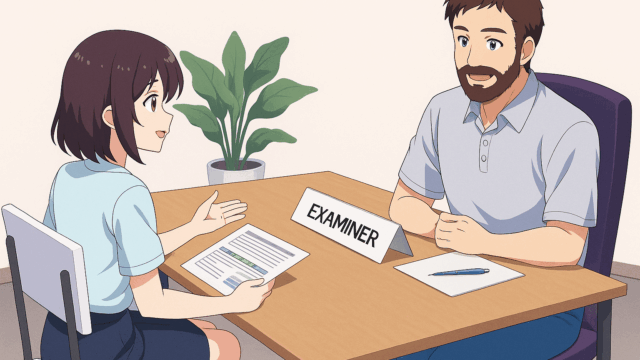
挨拶 → 面接カードを渡す → 着席
ドアをノックし “Hello.” や “Good morning.” と明るく入室。面接カードを “Here you are.” と手渡す。
💡 超絶テク:第一印象で差をつける
入室時のアイコンタクトと笑顔が命。面接官2人それぞれに目を向けて挨拶すること。1人だけ見ていると印象ダウン。
約1分
氏名確認 → 簡単な日常会話(Small Talk)
名前と受験級を確認され、その後1分ほどの日常会話。採点外だがウォーミングアップとして超重要。
📌 頻出質問と模範回答
“Could you tell us about yourself?”
→ “I’m an English teacher at a high school in Saitama. I’ve been teaching for several years, and I’m passionate about helping students develop their communication skills.”
“How did you get here today?”
→ “I took the train from my home. It took about an hour, but I used the time to review some vocabulary.”
“What do you like to do in your free time?”
→ 趣味を1つだけ具体的に。長くなりすぎないのがコツ。
1分間
トピックカード受け取り → 1分間の準備
5つのトピックから1つ選び、スピーチの内容を考える。メモは取れない!脳内でのみ構成。
2分間
2分間スピーチ本番 🎤
序論→本論(理由2つ)→結論の構成で。2分を超えると途中でも強制終了される。1分40秒〜2分がベスト。
約4分間
Q&A(質疑応答)💬
スピーチの内容やトピックに関連した質問が2〜3問。面接官との「対話」が求められる。一問一答ではなく、やり取りが続く。
退室
トピックカードを返却 → 退室
カードを返し忘れないこと!”Thank you very much. Have a nice day.” と笑顔で退室。退室後は控え室に戻らず速やかに会場を出る。
1分間の準備時間を最大活用する思考術
⏱️ 60秒間を3つに分割せよ!
🔴 最初の15秒:トピック選び
5つのトピックをざっと見て「理由が2つ言えそうか」で判断。完璧なトピックを探すな!「なんとか話せそう」で即決定。3つ目で「いける!」と思ったら残りは見なくてOK。
🟡 次の30秒:理由を2つ固める
理由①と理由②をキーワードで決める(文章で考えない!)。例:トピックが “Should Japan accept more immigrants?” なら、「労働力不足」「文化的多様性」の2語だけ決定。
🟢 最後の15秒:冒頭文を脳内リハ
序論の1文目だけ脳内で完成させる。“I believe that…”の後に続く1文を固めれば、あとは流れで話せる。結論は序論の言い換えなので別途準備不要。
🎯 トピック選びの5大鉄則
鉄則① 「理由2つ」が3秒で浮かぶものを選べ
トピックの深さより、話しやすさを最優先。深い意見を言おうとして撃沈するのが最悪のパターン。
鉄則② 自分の得意ジャンルを3つ決めておく
例:教育・テクノロジー・環境。事前に各ジャンル5つずつトピックを練習しておけば、本番で必ず1つは引っかかる。
鉄則③ Agree or Disagree 型は初心者向き
賛成か反対かを言えばいいだけなので構成がシンプル。”Should…?” や “Can…?” 型は少し高度。
鉄則④ 具体例が出せるトピックを選べ
抽象論だけのスピーチは薄い。”For example, in Japan…” と言える話題が最強。
鉄則⑤ 自分の意見より「話しやすい立場」を取れ
本心と違っても構わない。英語で論理的に話せる方の立場を選ぶのが合格への近道。
2分間スピーチの黄金テンプレート
🏅 これを覚えれば安定して7点以上が取れる!
【序論】約15〜20秒
“I believe that [自分の主張].”
“There are two main reasons for this.”
※ “These days, … ” で時事的な背景を入れてから主張すると高得点。
【本論①】約35〜40秒
“Firstly, [理由1].”
“[具体的な説明を2〜3文]”
“For example, [具体例].”
【本論②】約35〜40秒
“Secondly, [理由2].”
“[具体的な説明を2〜3文]”
“For instance, [具体例].”
【結論】約10〜15秒
“For these reasons, I firmly believe that [主張を再度述べる].”
※ 序論と全く同じ文にしない。少し表現を変えると加点要素。
💎 実例スピーチ(合格レベル)
Topic: “Should Japan accept more foreign workers?”
序論
These days, Japan is facing a serious labor shortage due to its declining birthrate and aging population. I believe that Japan should actively accept more foreign workers. There are two main reasons for this.
本論①
Firstly, foreign workers can help sustain Japan’s economy. Many industries, such as agriculture, construction, and healthcare, are struggling to find enough workers. Without additional labor, these essential sectors may face serious difficulties. For example, rural areas are already experiencing severe workforce shortages that threaten local communities.
本論②
Secondly, cultural diversity can drive innovation. When people from different backgrounds work together, they bring fresh perspectives and creative ideas. For instance, many successful companies in Silicon Valley thrive precisely because of their diverse workforce.
結論
For these reasons, I firmly believe that increasing the acceptance of foreign workers is essential for Japan’s future prosperity.
⏱ 想定所要時間:約1分50秒
⏰ 時間管理の超絶テク
▸ 1分30秒以下で終了 → 内容が薄い印象。理由に具体例を追加して膨らませる練習を。
▸ 1分40秒〜2分 → 最も理想的なゾーン。ここを狙え!
▸ 2分を超える → 強制終了。結論が言えないと大幅減点。
▸ 体内時計を鍛える → 普段から2分間の感覚をストップウォッチで練習。10回やれば体で覚えられる。
▸ 本論が長くなりすぎたら → “In conclusion,” で強制着地。結論を言い切ることが最優先。
Q&A突破の実戦フレーズ集
💬 場面別・即戦力フレーズ
✅ 自分の意見を述べるとき
“I strongly believe that…” — 強い確信
“From my perspective, …” — 自分の視点から
“In my view, …” — 私の見解では
“I would argue that …” — ~と主張したい
⛔ 反対意見に応答するとき
“That’s a valid point, but I think…” — まず認めてから反論
“I see what you mean, however…” — 理解を示してから
“While that may be true, we should also consider…” — 別視点を提示
“I understand the concern, but the benefits outweigh the risks.” — メリットが上回る
📌 具体例を示すとき
“For example, in Japan, …” — 日本の例
“A good illustration of this is …” — 良い例として
“According to recent research, …” — 最近の研究によると
“We can see this trend in countries like …” — ~のような国々で見られる
🎯 結論・まとめるとき
“In conclusion, I maintain that …” — 結論として
“Taking everything into account, …” — すべてを考慮すると
“Ultimately, I believe the key issue is …” — 結局、核心は
“The bottom line is that …” — 要するに
🧠 Q&Aで差がつく5つの超絶テク
① まず結論、そして理由:質問されたら最初の1文で “Yes, I think so.” / “No, I don’t think so.” と立場を明示。理由はその後。日本人が最もやりがちな「結論後回し」は絶対NG。
② 面接官の質問を利用して回答を組み立てる:質問に含まれるキーワードを自分の回答に取り込むと、的確に答えている印象を与えられる。
③ 一問に対して3〜4文で答える:短すぎ(1文)は消極的に見え、長すぎ(7文以上)は論点がぼやける。3〜4文が黄金バランス。
④ 反対意見も認めてから返す:一方的に自分の意見だけ押し通すと低評価。”That’s a good point, but…” と柔軟性を見せよう。
⑤ 面接官2人に均等にアイコンタクト:質問した面接官だけでなく、もう1人にも時々目線を送る。INTERACTION点アップに直結。
時間稼ぎ・聞き返し・ピンチ脱出テクニック
🆘 ピンチ別・即効サバイバルフレーズ
🔴 質問が聞き取れなかったとき
“I’m sorry, could you repeat the question?”
“Could you say that again, please?”
“I’m sorry, I didn’t quite catch that.”
⚠️ 注意:英検1級では言い換え(paraphrase)はしてもらえず、同じ質問の繰り返しになる。ただし聞き返すこと自体は減点されないので、わからなかったら必ず聞き返すべき!
🟡 考える時間が欲しいとき(時間稼ぎ)
“That’s a really interesting question…” — 興味深い質問ですね
“That’s a difficult question… Let me think…” — 難しい質問ですね
“Well, I think it depends on the situation, but…” — 状況によりますが
“That’s a great point. I would say that…” — いいご指摘ですね
“Hmm, there are several aspects to consider…” — いくつかの側面がありまして
💡 コツ:これらのフレーズを言いながら頭の中で回答を組み立てる。沈黙より100倍マシ。ただし毎回同じフレーズだと印象が悪いので、2〜3パターンを使い分けよう。
🔵 質問の意図を確認したいとき
“Do you mean…?” — つまり〜ということですか?
“Are you asking whether…?” — 〜かどうかということですか?
“Just to clarify, you’re asking about…?” — 確認ですが、〜についてですか?
💡 これは時間稼ぎ+的確な回答の両方に効果的!質問の論点を自分の言葉で言い換えて確認すれば、面接官に「しっかり考えている」という好印象を与えられる。
🟣 話が途中で詰まったとき
“What I mean is…” — 言いたいのは〜です(言い直し)
“In other words, …” — 言い換えると
“Let me put it this way…” — こう言いましょう
“The point I’m trying to make is…” — 私が言いたいのは
💡 言い直しは恥ではない!むしろ「自分の発言を整理できる力」として好評価。パラフレーズ力のアピールにもなる。
🚫 絶対やってはいけない7つのNG行動
❌ 10秒以上の沈黙(考えている=沈黙ではない。声に出して繋げ)
❌ “I don’t know.” で終わる(せめて “I’m not sure, but I think…” と続ける)
❌ 日本語を混ぜる(「えーと」もNG。”Well…” を使う)
❌ スピーチ中にトピックを変更する(一度始めたら最後まで貫く)
❌ 面接官の名前を聞く / 個人的な質問をする
❌ 下を向いて話す(自信がなくても顔を上げてアイコンタクト)
❌ 2分を超えてもスピーチを続けようとする(止められたら素直に従う)
最新トレンド&予想問題20選
🔥 2025〜2026年の出題トレンド分析
英検1級の二次試験では社会性の高いトピックが出題されます。出題ジャンルは「社会・文化・歴史・教育・科学・環境・医療・テクノロジー・ビジネス・政治」と多岐にわたりますが、近年は特に以下のテーマが急増しています。
🤖
AI・テクノロジー
🌍
気候変動・環境
🏥
医療・公衆衛生
👥
格差・多様性
🇯🇵
日本の社会問題
🌐
グローバル化
🎯 予想問題20選+攻略キーワード
🤖 AI・テクノロジー分野
❶ Should artificial intelligence be regulated by governments?
💡 キーワード: ethical concerns, job displacement, data privacy, innovation vs. safety
❷ Will AI replace teachers in the future?
💡 キーワード: personalized learning, emotional intelligence, human connection, digital divide
❸ Agree or disagree: Social media does more harm than good
💡 キーワード: mental health, misinformation, connectivity, freedom of expression
❹ Should there be stricter regulations on personal data collection?
💡 キーワード: surveillance, consumer rights, GDPR, corporate responsibility
🌍 環境・気候変動分野
❺ Agree or disagree: It is too late to prevent climate change
💡 キーワード: renewable energy, Paris Agreement, tipping point, carbon neutrality
❻ Should governments prioritize renewable energy over economic growth?
💡 キーワード: sustainable development, green jobs, fossil fuel dependency, long-term cost
❼ Can individual actions make a significant difference in combating environmental problems?
💡 キーワード: collective impact, consumer behavior, systemic change, awareness
❽ Should nuclear power be part of the solution to climate change?
💡 キーワード: Fukushima, carbon emissions, safety risks, energy security
📚 社会・教育分野
❾ Should Japan increase its acceptance of foreign workers?
💡 キーワード: labor shortage, cultural integration, aging society, economic sustainability
❿ Agree or disagree: A university degree is necessary for success
💡 キーワード: alternative education, skills-based hiring, student debt, lifelong learning
⓫ Can Japan’s rural communities be revitalized?
💡 キーワード: depopulation, remote work, local industries, government subsidies
⓬ Should the voting age be lowered further?
💡 キーワード: political engagement, maturity, civic education, youth representation
🏥 医療・公衆衛生分野
⓭ Is the Japanese healthcare system a good model for other countries?
💡 キーワード: universal coverage, aging population, financial sustainability, preventive care
⓮ Should elderly parents be cared for at home or in professional facilities?
💡 キーワード: caregiver burden, quality of care, cultural values, cost considerations
⓯ Should governments invest more in mental health services?
💡 キーワード: stigma, productivity, pandemic impact, workplace wellness
🌐 国際・政治・経済分野
⓰ Is globalization contributing to cultural decline?
💡 キーワード: cultural homogenization, local identity, economic interdependence, cultural exchange
⓱ Should the Internet be censored?
💡 キーワード: freedom of speech, child protection, misinformation, authoritarian control
⓲ Can businesses be ethical and still be profitable?
💡 キーワード: CSR, ESG investing, consumer demand, long-term sustainability
⓳ Should Japan play a larger role in international peacekeeping?
💡 キーワード: Article 9, self-defense, diplomatic influence, humanitarian aid
⓴ Agree or disagree: The wealth gap between nations will continue to widen
💡 キーワード: foreign aid, trade barriers, technological divide, sustainable development goals
📝 予想問題 モデルスピーチ&Q&A例
Topic ❶: “Should artificial intelligence be regulated by governments?”
【モデルスピーチ】
In recent years, artificial intelligence has rapidly transformed various aspects of our lives, from healthcare to transportation. I strongly believe that governments should regulate AI to ensure its safe and responsible development. I have two main reasons for this position.
Firstly, AI poses significant risks to privacy and security. Advanced AI systems can collect and analyze massive amounts of personal data, which could be misused if left unregulated. For example, facial recognition technology has already raised serious concerns about surveillance in several countries. Without proper regulations, individuals may lose control over their own personal information.
Secondly, unregulated AI could worsen economic inequality. As AI automates more jobs, workers in certain industries may face unemployment. Governments need to establish frameworks that ensure the benefits of AI are distributed fairly across society. For instance, regulations could require companies to invest in retraining programs for displaced workers.
For these reasons, I firmly believe that government regulation of AI is essential to protect citizens and promote equitable technological progress.
【想定Q&A】
Q1: “Some people argue that regulation could stifle innovation. What do you think?”
“That’s a valid concern, but I believe regulation and innovation can coexist. In fact, clear guidelines can actually encourage responsible innovation by creating a level playing field. The pharmaceutical industry is a good example — strict regulations haven’t stopped the development of groundbreaking medicines.”
Q2: “What specific aspects of AI do you think should be regulated first?”
“I think data privacy and algorithmic transparency should be the top priorities. People have a right to know how their data is being used and how AI systems make decisions that affect their lives. After that, I would prioritize regulations around autonomous weapons and AI in critical infrastructure.”
Q3: “Is international cooperation necessary for AI regulation?”
“Absolutely. AI is a global technology, so regulations in one country alone won’t be sufficient. International cooperation is essential to prevent a ‘race to the bottom’ where companies simply move to countries with fewer regulations. Organizations like the UN could play a key role in establishing global standards.”
本番1週間前〜当日のルーティン
📅 直前1週間のタイムライン
7日前〜5日前
予想問題を1日3トピックずつスピーチ練習(スマホで録音→自己評価)。6ジャンル各2トピック=12本を制覇。
4日前〜3日前
Q&A対策に集中。各トピックについて「面接官ならどう質問するか」を予測し、回答を練習。友人やオンライン英会話で模擬面接。
2日前
通し練習2〜3回(入室〜退室まで)。時間配分を最終確認。苦手なフレーズだけ復習。
前日
新しいことはやらない!使えるフレーズを軽く音読するだけ。英語のポッドキャストを聴きながらリラックス。早く寝る。
当日
移動中に自己紹介と定番フレーズを口パクでリハ。会場到着後は深呼吸。「自分は一次試験を突破した実力者だ」と自分に言い聞かせる。
🎒 当日の持ち物チェックリスト
☑️ 受験票(写真貼付済み)
☑️ 身分証明書(学生証・運転免許証など)
☑️ 筆記用具(面接カード記入用)
☑️ 腕時計(スマホは使えないため)
☑️ 飲み物(待ち時間が長い場合あり)
☑️ 定番フレーズのメモ(控え室での最終確認用)
☑️ 上履き(会場による。要確認)
🔥
最後に覚えておくべき3つのこと
① 完璧を目指すな、合格点を目指せ。
全項目で満点を取る必要はない。各7〜8点で十分合格。
② 沈黙が最大の敵。
間違えてもいいから声を出し続ける。言い直しはOK、沈黙はNG。
③ 一次試験を突破した自分を信じろ。
二次試験の合格率は約60%。あなたにはすでに合格する力がある。
この記事が役に立ったらシェアしてください!
英検1級 二次試験の合格を心から応援しています 🏆