まずはこの3つ
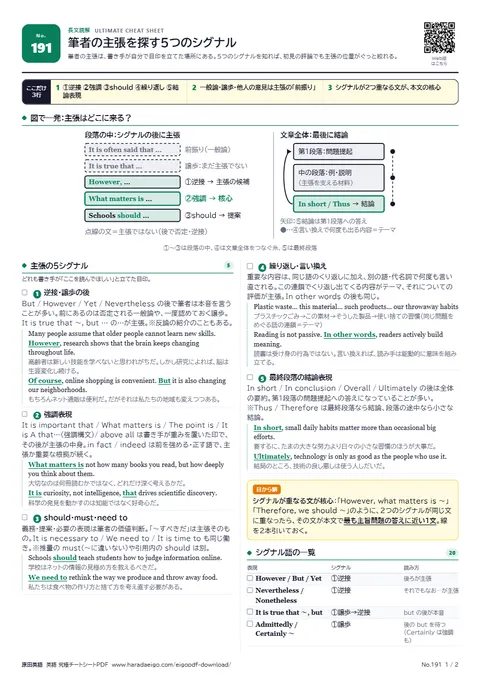
- ①逆接 ②強調 ③should ④繰り返し ⑤結論表現
- 一般論・譲歩・他人の意見は主張の「前振り」
- シグナルが2つ重なる文が、本文の核心
図で一発:主張はどこに来る?
主張の5シグナル5
どれも書き手が「ここを読んでほしい」と立てた目印。
- 1逆接・譲歩の後But / However / Yet / Nevertheless の後で筆者は本音を言うことが多い。前にあるのは否定される一般論や、一度認めておく譲歩。It is true that 〜, but … の…が主張。※反論の紹介のこともある。Many people assume that older people cannot learn new skills. However, research shows that the brain keeps changing throughout life.高齢者は新しい技能を学べないと思われがちだ。しかし研究によれば、脳は生涯変化し続ける。Of course, online shopping is convenient. But it is also changing our neighborhoods.もちろんネット通販は便利だ。だがそれは私たちの地域も変えつつある。
- 2強調表現It is important that / What matters is / The point is / It is A that…(強調構文)/ above all は書き手が重みを置いた印で、その後が主張の中身。in fact / indeed は前を強める・正す語で、主張か重要な根拠が続く。What matters is not how many books you read, but how deeply you think about them.大切なのは何冊読むかではなく、どれだけ深く考えるかだ。It is curiosity, not intelligence, that drives scientific discovery.科学の発見を動かすのは知能ではなく好奇心だ。
- 3should・must・need to義務・提案・必要の表現は筆者の価値判断。「〜すべきだ」は主張そのもの。It is necessary to / We need to / It is time to も同じ働き。※推量の must(〜に違いない)や引用内の should は別。Schools should teach students how to judge information online.学校はネットの情報の見極め方を教えるべきだ。We need to rethink the way we produce and throw away food.私たちは食べ物の作り方と捨て方を考え直す必要がある。
- 4繰り返し・言い換え重要な内容は、同じ語のくり返しに加え、別の語・代名詞で何度も言い直される。この連鎖でくり返し出てくる内容がテーマ、それについての評価が主張。In other words の後も同じ。Plastic waste… this material… such products… our throwaway habitsプラスチックごみ→この素材→そうした製品→使い捨ての習慣(同じ問題をめぐる語の連鎖=テーマ)Reading is not passive. In other words, readers actively build meaning.読書は受け身の行為ではない。言い換えれば、読み手は能動的に意味を組み立てる。
- 5最終段落の結論表現In short / In conclusion / Overall / Ultimately の後は全体の要約。第1段落の問題提起への答えになっていることが多い。※Thus / Therefore は最終段落なら結論、段落の途中なら小さな結論。In short, small daily habits matter more than occasional big efforts.要するに、たまの大きな努力より日々の小さな習慣のほうが大事だ。Ultimately, technology is only as good as the people who use it.結局のところ、技術の良し悪しは使う人しだいだ。
目から鱗
シグナルが重なる文が核心:「However, what matters is 〜」「Therefore, we should 〜」のように、2つのシグナルが同じ文に重なったら、その文が本文で最も主旨問題の答えに近い1文。線を2本引いておく。
シグナル語の一覧20
表現シグナル読み方
However / But / Yet①逆接後ろが主張
Nevertheless / Nonetheless①逆接それでもなお…が主張
It is true that 〜, but①譲歩→逆接but の後が本音
Admittedly / Certainly 〜①譲歩後の but を待つ(Certainly は強調も)
Instead / Rather①逆接「本当はこちら」
not A but B①否定→肯定B が主張
It is important that 〜②強調that 以下が主張
What matters is 〜②強調is の後が主張
The point is 〜②強調要点の宣言
It is A that 〜②強調構文A が焦点
in fact / indeed②強調前の内容を強める・正す
above all / most importantly②強調最重要の項目
should / must / ought to③義務・提案筆者の意見
need to / It is necessary to③必要筆者の意見
It is time to 〜③提案「もう〜すべき時だ」
In other words / That is④言い換え前の内容の易しい版
In short / In brief⑤結論全体の要約
In conclusion / To sum up⑤結論最終段落の定番
Thus / Therefore / Hence⑤結論論理の帰結(段落内の小結論も)
Ultimately / In the end⑤結論結局のところ
主張ではない「前振り」のサイン
これらの後の内容は、筆者が否定したり一度認めたりする前振りが多い。※支持する場合もあるので後の展開で確認。
| サイン | 中身 | 主張は |
|---|---|---|
| Many people believe / It is often said | 一般論 | 後の逆接の後 |
| Traditionally / For a long time | 昔の常識 | 今の新しい見方 |
| Some argue / Critics claim | 他人の意見 | 筆者の賛否の文 |
| Of course / It is true that | 譲歩 | 後の but の後 |
| At first glance / It may seem that | 見かけ | 「実は」の後 |
実演:シグナルで段落を読む
オリジナルの段落。シグナルを見つけた瞬間に、主張の位置が決まる。
| 英文 | シグナルと判断 |
|---|---|
| ① It is often said that young people read less than before. | 前振り(一般論)→後で否定される |
| ② It is true that fewer teenagers buy printed books. | 譲歩→まだ主張ではない |
| ③ However, they read more words than ever on their phones. | ①逆接→主張の候補 |
| ④ What matters, then, is not whether they read, but what and how they read. | ②強調+not A but B→核心 |
| ⑤ Schools should help students read online texts critically. | ③should→主張から出る提案 |
シグナルの読み違い4
- ✕最初の一般論を筆者の主張だと思う○Many people think の後は逆接を待つ一般論は否定される前振りであることが多い
- ✕引用された専門家の should を筆者の意見とする○誰の発言かを確認してから判断引用内の主張は他人の意見。筆者の賛否は別
- ✕However があれば必ず主張○前後の内容で主張か反論紹介かを確かめる筆者が反対意見を紹介する時にも逆接は使われる
- ✕具体例の中の強い言葉に線を引く○例の前後の抽象的な文を主張として取る例は主張を支える材料にすぎない
なぜ効く?
なぜシグナルで読むと速くなる? 読み手は文章を読みながら、細部を削り、まとめ、要点を組み立てて要旨を作る(Kintsch & van Dijk 1978)。シグナル語は、書き手が「どこを残し、どこを削るか」を読み手に教える道しるべ。シグナルに沿えば、要旨を作る作業を書き手が手伝ってくれる。
確認テスト
- 1Some say homework is useless. , it helps students build study habits. 空所に入り、後ろを主張にするのは?正解は However。①逆接の後が主張
- 2It is trust, not talent, makes a team strong. 空所は?正解は that。②強調構文 It is A that 〜
- 3主張ではなく前振りになりやすいのは?正解は Traditionally, 〜。昔の常識→後で新しい見方
- 4主旨問題の答えに最も近いのは?正解は Therefore, we should 〜 の文。⑤結論+③should の重なり
参考にした資料
主張を探すシグナルを一覧にまとめ、A4 2枚で印刷できる無料PDFにしました。Web版は赤シート・覚えたチェック・カード・4択テストつき。