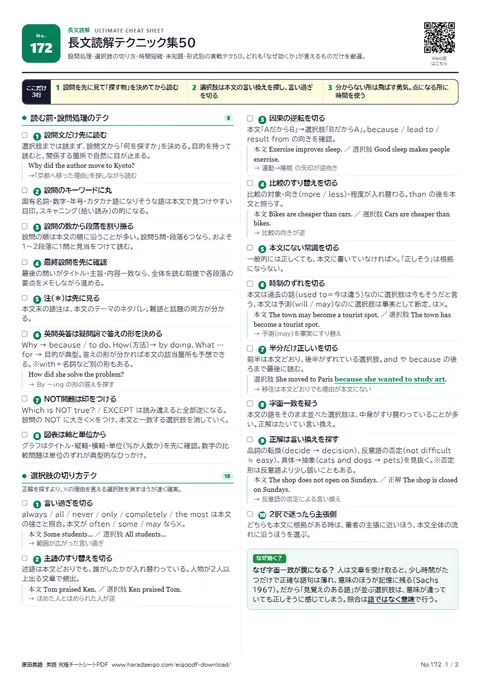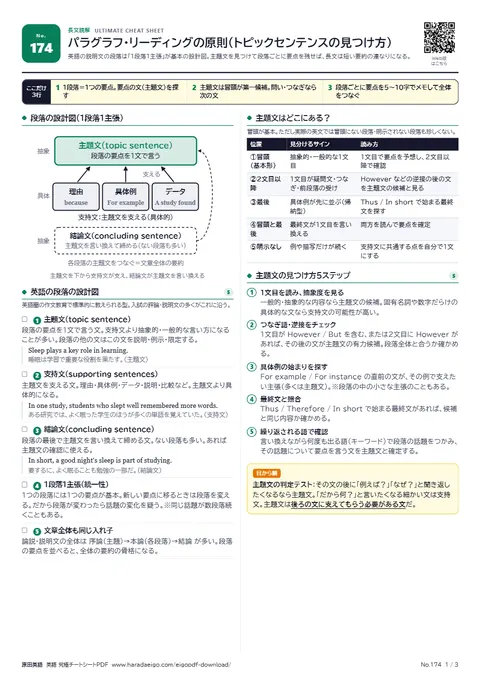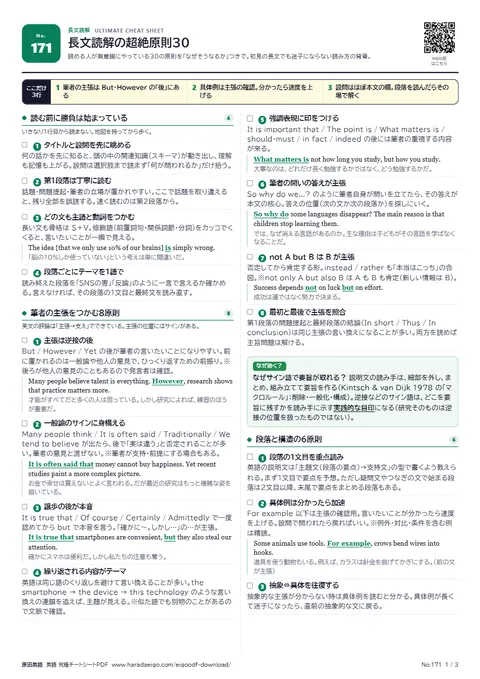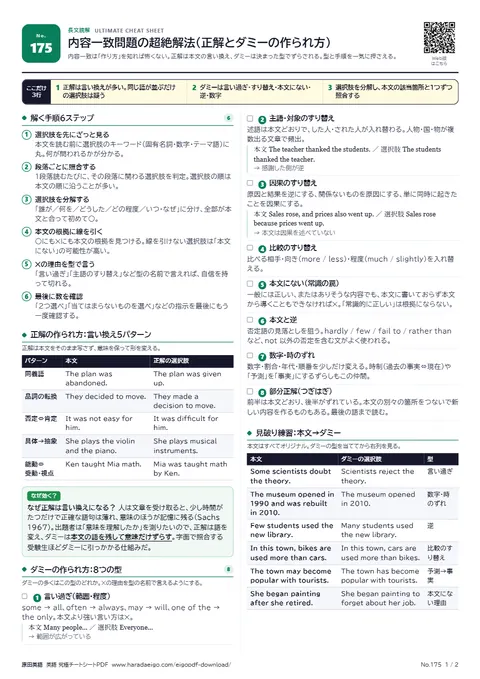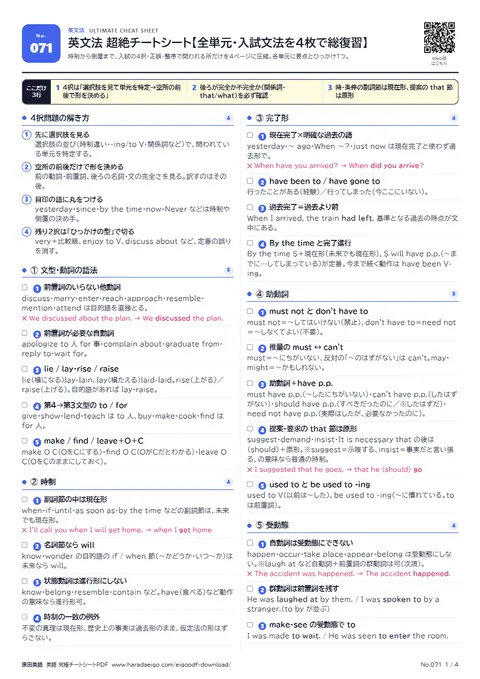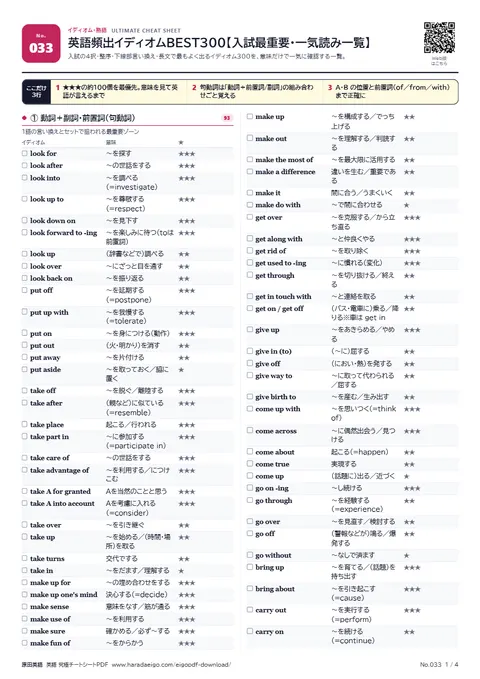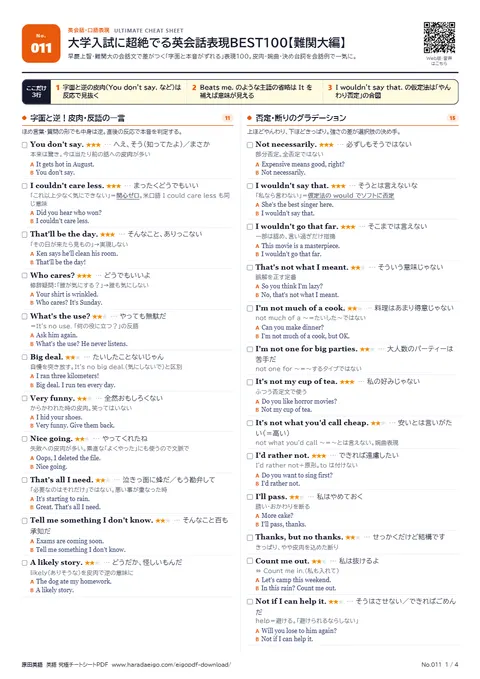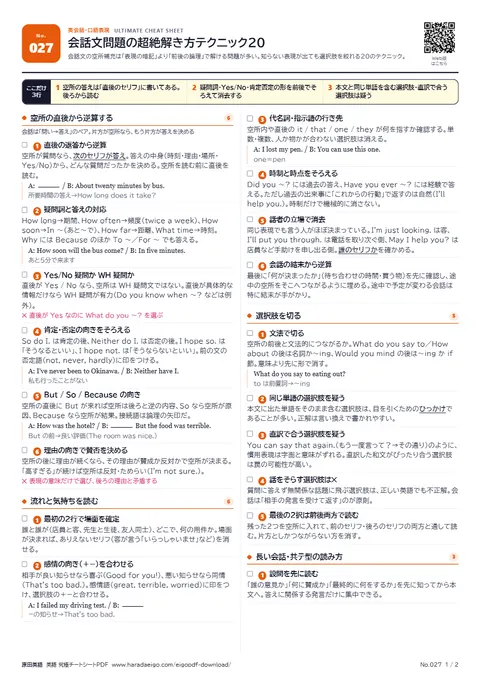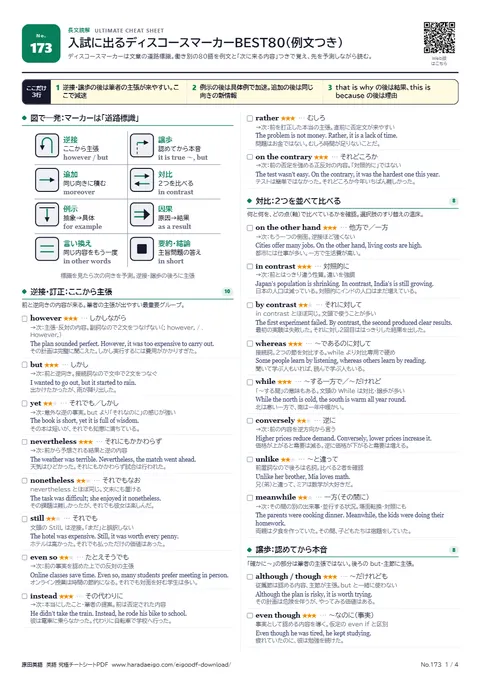
まずはこの3つ
- 逆接・譲歩の後は筆者の主張が来やすい。ここで減速
- 例示の後は具体例で加速。追加の後は同じ向きの新情報
- that is why の後は結果、this is because の後は理由
図で一発:マーカーは「道路標識」
逆接・訂正:ここから主張10
前と逆向きの内容が来る。筆者の主張が出やすい最重要グループ。
- however★★★しかしながら→次:主張・反対の内容。副詞なので2文をつなげない(; however, / . However,)The plan sounded perfect. However, it was too expensive to carry out.その計画は完璧に聞こえた。しかし実行するには費用がかかりすぎた。
- but★★★しかし→次:前と逆向き。接続詞なので文中で2文をつなぐI wanted to go out, but it started to rain.出かけたかったが、雨が降り出した。
- yet★★★それでも/しかし→次:意外な逆の事実。but より「それなのに」の感じが強いThe book is short, yet it is full of wisdom.その本は短いが、それでも知恵に満ちている。
- nevertheless★★★それにもかかわらず→次:前から予想される結果と逆の内容The weather was terrible. Nevertheless, the match went ahead.天気はひどかった。それにもかかわらず試合は行われた。
- nonetheless★★★それでもなおnevertheless とほぼ同じ。文末にも置けるThe task was difficult; she enjoyed it nonetheless.その課題は難しかったが、それでも彼女は楽しんだ。
- still★★★それでも文頭の Still, は逆接。「まだ」と誤訳しないThe hotel was expensive. Still, it was worth every penny.ホテルは高かった。それでも払っただけの価値はあった。
- even so★★★たとえそうでも→次:前の事実を認めた上での反対の主張Online classes save time. Even so, many students prefer meeting in person.オンライン授業は時間の節約になる。それでも対面を好む学生は多い。
- instead★★★その代わりに→次:本当にしたこと・筆者の提案。前は否定された内容He didn't take the train. Instead, he rode his bike to school.彼は電車に乗らなかった。代わりに自転車で学校へ行った。
- rather★★★むしろ→次:前を訂正した本当の主張。直前に否定文が来やすいThe problem is not money. Rather, it is a lack of time.問題はお金ではない。むしろ時間が足りないことだ。
- on the contrary★★★それどころか→次:前の否定を強める正反対の内容。「対照的に」ではないThe test wasn't easy. On the contrary, it was the hardest one this year.テストは簡単ではなかった。それどころか今年いちばん難しかった。
対比:2つを並べて比べる8
何と何を、どの点(軸)で比べているかを確認。選択肢のすり替えの温床。
- on the other hand★★★他方で/一方→次:もう一つの側面。逆接ほど強くないCities offer many jobs. On the other hand, living costs are high.都市には仕事が多い。一方で生活費が高い。
- in contrast★★★対照的に→次:前とはっきり違う性質。違いを強調Japan's population is shrinking. In contrast, India's is still growing.日本の人口は減っている。対照的にインドの人口はまだ増えている。
- by contrast★★★それに対してin contrast とほぼ同じ。文頭で使うことが多いThe first experiment failed. By contrast, the second produced clear results.最初の実験は失敗した。それに対し2回目ははっきりした結果を出した。
- whereas★★★〜であるのに対して接続詞。2つの節を対比する。while より対比専用で硬めSome people learn by listening, whereas others learn by reading.聞いて学ぶ人もいれば、読んで学ぶ人もいる。
- while★★★〜する一方で/〜だけれど「〜する間」の意味もある。文頭の While は対比・譲歩が多いWhile the north is cold, the south is warm all year round.北は寒い一方で、南は一年中暖かい。
- conversely★★★逆に→次:前の内容を逆方向から言うHigher prices reduce demand. Conversely, lower prices increase it.価格が上がると需要は減る。逆に価格が下がると需要は増える。
- unlike★★★〜と違って前置詞なので後ろは名詞。比べる2者を確認Unlike her brother, Mia loves math.兄(弟)と違って、ミアは数学が大好きだ。
- meanwhile★★★一方(その間に)→次:その間の別の出来事・並行する状況。場面転換・対照にもThe parents were cooking dinner. Meanwhile, the kids were doing their homework.両親は夕食を作っていた。その間、子どもたちは宿題をしていた。
譲歩:認めてから本音8
「確かに〜」の部分は筆者の主張ではない。後ろの but・主節に主張。
- although / though★★★〜だけれども従属節は認める内容、主節が主張。but と一緒に使わないAlthough the plan is risky, it is worth trying.その計画は危険を伴うが、やってみる価値はある。
- even though★★★〜なのに(事実)事実として認める内容を導く。仮定の even if と区別Even though he was tired, he kept studying.疲れていたのに、彼は勉強を続けた。
- even if★★★たとえ〜でも(仮定)→次:仮定しても変わらない主張Even if it rains tomorrow, the event will take place.たとえ明日雨が降っても、行事は行われる。
- despite / in spite of★★★〜にもかかわらず前置詞なので後ろは名詞・動名詞。despite of は誤りDespite the heavy snow, the trains ran on time.大雪にもかかわらず、電車は時間どおりに走った。
- admittedly★★★確かに(〜ではあるが)→次:認める内容。その後 but・however で主張Admittedly, the device is expensive, but it will save money in the long run.確かにその機器は高いが、長い目で見ればお金の節約になる。
- it is true (that) 〜, but …★★★確かに〜だが…評論で最頻出の譲歩。but の後に線を引くIt is true that AI makes mistakes, but it is improving quickly.確かにAIは間違えるが、急速に進歩している。
- of course 〜, but …★★★もちろん〜だが…この of course は「当然」でなく譲歩。but の後が本音Of course, practice is important, but rest matters too.もちろん練習は大切だが、休息も大事だ。
- granted★★★確かに(〜だとしても)Granted, 〜 の形で譲歩。続く but が主張Granted, the city is crowded. But it has a lot to offer.確かにその街は混んでいる。だが魅力がたくさんある。
目から鱗
主張が出る黄金パターン:「一般論(Many people think…)→ 譲歩(It is true that…)→ 逆接(However…)→ 主張」。逆接・譲歩のマーカーを見たら、その後ろが設問の根拠になると思って読む。
追加:同じ向きに積み上げる8
前と同じ方向の情報。主張の根拠が増えるだけなので、要点がつかめたら加速。
- moreover★★★さらに→次:同じ向きの別の根拠・情報を追加The app is free. Moreover, it works without the internet.そのアプリは無料だ。さらにネットなしで使える。
- furthermore★★★そのうえmoreover とほぼ同じ。論文調で多いWalking is good for your heart. Furthermore, it can improve your mood.歩くことは心臓によい。そのうえ気分も良くなりうる。
- in addition★★★加えてin addition to+名詞「〜に加えて」の形も頻出In addition to English, she speaks Korean.英語に加えて、彼女は韓国語も話す。
- besides★★★そのうえ/〜のほかに副詞は「それに」、前置詞は「〜のほかに」。beside(そばに)と区別I don't want to go out. Besides, it's too cold.出かけたくない。それに寒すぎる。
- what is more★★★さらに(重要なことに)→次:追加の点(強調の含みが多い)。what's more ともThe hotel was cheap. What is more, it was right next to the station.ホテルは安かった。さらに駅のすぐ隣だった。
- likewise★★★同様に→次:前と同じ種類の例・主張Children learn by copying adults. Likewise, young birds learn songs from older birds.子どもは大人をまねて学ぶ。同様に、若い鳥は年長の鳥から歌を覚える。
- similarly★★★同様に→次:似た例。likewise とほぼ同じSmoking harms the lungs. Similarly, air pollution can damage them over time.喫煙は肺を傷める。同様に大気汚染も時間とともに肺を傷めうる。
- not only A but also B★★★AだけでなくBも重点はB。文頭の Not only は倒置(Not only did he…)The festival attracts not only locals but also tourists from abroad.その祭りは地元の人だけでなく海外からの観光客も引きつける。
例示:抽象を具体で見せる6
主張は直前の文。例は主張の確認なので、分かったら流してよい。
- for example★★★例えば→次:前の抽象的な内容の具体例Some foods are good for the brain. For example, fish contains healthy fats.脳によい食べ物がある。例えば魚には体によい脂が含まれている。
- for instance★★★例えばfor example と同じ。文中に挟むこともできるMany English words come from French. Menu and café, for instance, are French.多くの英単語はフランス語由来だ。例えば menu や café はフランス語だ。
- such as★★★〜のような後ろは名詞の例。A such as B は B が A の一例Fruits such as oranges and lemons are rich in vitamin C.オレンジやレモンのような果物はビタミンCが豊富だ。
- to illustrate★★★例を挙げると→次:説明のための例・たとえ話Habits are hard to break. To illustrate, think of how often you check your phone.習慣はなかなか断てない。例えば、スマホを見る回数を考えてみよう。
- a case in point★★★その好例X is a case in point.=Xがまさにその例Technology can change daily life quickly. The smartphone is a case in point.技術は日常生活をすばやく変えうる。スマホがその好例だ。
- including★★★〜を含めて後ろはふつう例の一部。全部とは限らない点に注意Many animals, including dolphins and crows, can solve problems.イルカやカラスを含め、多くの動物は問題を解くことができる。
因果:理由と結果の矢印10
矢印の向き(原因→結果)を必ず確認。逆転は選択肢の定番の罠。
- because★★★〜なのでnot because A but because B は B が本当の理由I chose this school not because it is famous but because the teachers are kind.この学校を選んだのは有名だからではなく、先生が親切だからだ。
- since★★★〜なので既知・当然の理由を示しやすい。「〜以来」とは時制と文脈で区別Since you're here, could you help me move this desk?ここにいるなら、この机を動かすのを手伝ってくれない?
- as a result★★★その結果→次:前の原因から生じた結果He practiced every day. As a result, he won the contest.彼は毎日練習した。その結果、コンテストで優勝した。
- therefore★★★したがって→次:論理的な結論。筆者の主張になりやすいThe data are limited. Therefore, we cannot draw firm conclusions.データは限られている。したがって確かな結論は出せない。
- thus★★★このように/したがって結論・まとめ。, thus doing で「その結果〜する」The new road shortens the trip, thus saving drivers time.新しい道路は移動距離を縮め、その結果ドライバーの時間を節約する。
- hence★★★それゆえ結論。hence the name のように名詞だけが続くこともThe fruit is shaped like a star, hence its name.その果物は星の形をしている。だからその名がついた。
- consequently★★★その結果as a result とほぼ同じで硬めThe factory closed. Consequently, many people lost their jobs.工場が閉鎖された。その結果、多くの人が職を失った。
- that is why★★★だから〜なのだ前に理由、後に結果。This is why も同じHe missed the bus. That is why he was late.彼はバスに乗り遅れた。だから遅刻したのだ。
- this is because★★★これは〜だからだ前に結果、後に理由。that is why と向きが逆Many young people leave rural areas. This is because there are few jobs there.多くの若者が地方を離れる。これはそこに仕事が少ないからだ。
- lead to / result in★★★〜につながる/〜という結果になるA leads to / results in B=A→B。B results from A も A→B(語順が逆)Lack of sleep can lead to poor concentration.睡眠不足は集中力の低下につながりうる。
言い換え:難しい文の答え合わせ6
前の内容を別の言葉でもう一度言う。前が読めなくても、ここで取り返せる。
- in other words★★★言い換えれば→次:前の文を易しく言い直すShe is bilingual. In other words, she speaks two languages fluently.彼女はバイリンガルだ。つまり2つの言語を流暢に話す。
- that is (to say)★★★つまり→次:前の語句の説明・言い換えHe works remotely, that is, from home.彼はリモートで、つまり自宅で働いている。
- namely★★★すなわち→次:前の語の具体的な中身(名前)Only one student, namely Ken, solved the problem.その問題を解いたのはただ1人、すなわちケンだけだった。
- i.e.★★★すなわちラテン語 id est の略。e.g.(例えば)と区別The course is for beginners, i.e., people with no experience.その講座は初心者、すなわち未経験者向けだ。
- or★★★つまり/すなわちカンマ+or+名詞は「または」でなく言い換えのことがあるThe study of insects, or entomology, is a large field.昆虫の研究、すなわち昆虫学は大きな分野だ。
- put simply★★★簡単に言えば→次:専門的な内容の易しい言い換えInflation is rising. Put simply, prices are going up faster.インフレ率が上がっている。簡単に言えば、物の値段の上がり方が速くなっている。
要約・結論:主旨問題の答え8
- in short★★★要するに→次:全体の要点。主旨問題の答えになりやすいThe hotel was clean, quiet and cheap. In short, it was perfect.ホテルは清潔で静かで安かった。要するに完璧だった。
- in brief★★★手短に言えばin short とほぼ同じIn brief, the plan failed because of poor communication.手短に言えば、意思疎通の悪さで計画は失敗した。
- to sum up★★★まとめると→次:それまでの論点のまとめTo sum up, regular exercise benefits both body and mind.まとめると、定期的な運動は心身の両方に役立つ。
- in conclusion★★★結論として→次:最終的な主張。最終段落の頭に多いIn conclusion, schools should teach students how to manage money.結論として、学校はお金の管理の仕方を教えるべきだ。
- all in all★★★全体として→次:良い点・悪い点をふまえた総合評価There were some problems, but all in all, the trip was a success.問題もあったが、全体として旅行は成功だった。
- overall★★★全体的に→次:総合的な判断Overall, the results support the theory.全体的に、結果はその理論を支持している。
- ultimately★★★最終的に/結局のところ→次:最も根本的な点・最後の結果Ultimately, the decision is yours.結局のところ、決めるのは君だ。
- after all★★★なにしろ〜だから/結局理由を添える用法に注意。「最後に」の意味はないDon't be too hard on him. He is only a child, after all.彼にきつく当たらないで。なにしろまだ子どもなんだから。
順序・列挙:数を数える7
「理由は3つ」などの列挙は、内容一致で数やすり替えが狙われる。
- first(ly)★★★第一に→次:列挙の始まり。いくつ続くか数えるFirst, gather all the materials you need.まず、必要な材料をすべてそろえる。
- to begin with★★★まず第一に→次:理由・論点の1つ目To begin with, the plan costs too much.まず第一に、その計画は費用がかかりすぎる。
- second(ly)★★★第二に列挙の2つ目。どの論点が何番目かを確認Second, it would take years to complete.第二に、完成までに何年もかかるだろう。
- then / next★★★それから/次に時間・手順の順番Mix the flour and eggs. Then, add the milk slowly.小麦粉と卵を混ぜる。それから牛乳をゆっくり加える。
- finally★★★最後に/ついに列挙の最後か「ついに」。結論のマーカーとは限らないFinally, check your answers before you hand in the test.最後に、テストを提出する前に答えを確認する。
- last but not least★★★最後になったが大事なこと→次:最後の、しかし重要な点Last but not least, I'd like to thank my parents.最後になったが、両親に感謝したい。
- subsequently★★★その後→次:時間的に後に起きたことHe joined a small company and subsequently became its president.彼は小さな会社に入り、その後社長になった。
強調:筆者のイチオシ6
- indeed★★★実際/確かに→次:前の内容を強めて裏づけるThe test was hard. Indeed, only a few students passed.テストは難しかった。実際、合格者はわずかだった。
- in fact★★★実際は/それどころか前を補強する用法と、前を打ち消して事実を出す用法があるHe said he was fine. In fact, he had a high fever.彼は大丈夫だと言った。実際は高熱があった。
- actually★★★実は→次:予想と違う事実。「現実に」より「実は」I thought the shop was closed, but actually it was open.店は閉まっていると思ったが、実は開いていた。
- above all★★★何よりも→次:最も大事な点Above all, be honest with yourself.何よりも、自分に正直であれ。
- in particular★★★特に→次:前の全体の中の特定の1つI love Italian food, pasta in particular.イタリア料理が大好きで、特にパスタが好きだ。
- most importantly★★★最も重要なことに→次:筆者が最重視する点Most importantly, the new system protects users' privacy.最も重要なことに、新しい仕組みは利用者のプライバシーを守る。
条件:成り立つ範囲を決める3
- unless★★★〜しない限り多くは if … not に近い(「〜の場合を除いて」)。否定の意味を含むYou won't improve unless you practice regularly.定期的に練習しない限り上達しない。
- otherwise★★★さもなければ→次:前の条件が満たされない場合の結果。「その他の点では」の意味もLeave now; otherwise, you'll miss the train.今出なさい。さもないと電車に乗り遅れるよ。
- provided (that)★★★〜という条件でproviding (that) も同じ。as long as に近いYou can borrow my bike, provided that you return it by Friday.金曜までに返すなら、私の自転車を借りてもいいよ。
なぜ効く?
なぜマーカーで速く読める? 文と文を結びつける言葉は、文章のまとまり(結束性)を作る主要な手段の1つ(Halliday & Hasan 1976『Cohesion in English』の「接続」)。読み手はマーカーを見た瞬間に「次は理由」「次は反対」と予測でき、予測が当たった部分は確認だけで済む。だから減速すべき所と加速してよい所が分かる。
紛らわしいマーカー対決6
- howeverしかし(副詞)vsbutしかし(接続詞)however はカンマだけで2文をつなげない
- on the other hand他方で(別の面)vson the contraryそれどころか(打ち消し)比較なら前者、前の否定を強めるなら後者
- even though〜なのに(事実)vseven ifたとえ〜でも(仮定)本当に起きたことなら even though
- that is whyだから(後ろが結果)vsthis is becauseなぜなら(後ろが理由)why の後は結果、because の後は理由
- after allなにしろ/結局vsfinally最後に/ついにafter all に「最後に」の意味はない
- i.e.すなわち(言い換え)vse.g.例えば(例示)i.e. は言い換え、e.g. は例の一部
英作文でもやりがちなミス4
- ✕It was raining, however we went out.○It was raining; however, we went out.however は副詞。カンマだけで2文はつなげない
- ✕Despite of the rain, we went out.○Despite the rain, we went out.despite に of は付かない(in spite of は可)
- ✕Although it was cold, but we swam.○Although it was cold, we swam.although と but は二重に使わない
- ✕Dogs are loyal. On the contrary, cats are independent.○Dogs are loyal. In contrast, cats are independent.2者の比較は in contrast。on the contrary は打ち消し
確認テスト
- 1The museum is popular with tourists. , it gets very crowded on weekends.正解は As a result。人気→混雑の因果
- 2I don't dislike him. , I think he is very kind.正解は On the contrary。前の否定を強める
- 3the bad weather, the event was a great success.正解は Despite。後ろが名詞なので前置詞
- 4You will fail the test you study harder.正解は unless。もっと勉強しない限り
- 5Many birds, penguins and ostriches, cannot fly.正解は such as。飛べない鳥の例
- 6He overslept. he was late for school.正解は That is why。前が理由、後が結果
参考にした資料
- 原田英語「英語ディスコースマーカー完全一覧(全120+表現・12カテゴリー)」
- Halliday, M. A. K. & Hasan, R. (1976). Cohesion in English. Longman
ディスコースマーカーを一覧にまとめ、A4 4枚で印刷できる無料PDFにしました。Web版は赤シート・覚えたチェック・カード・4択テストつき。