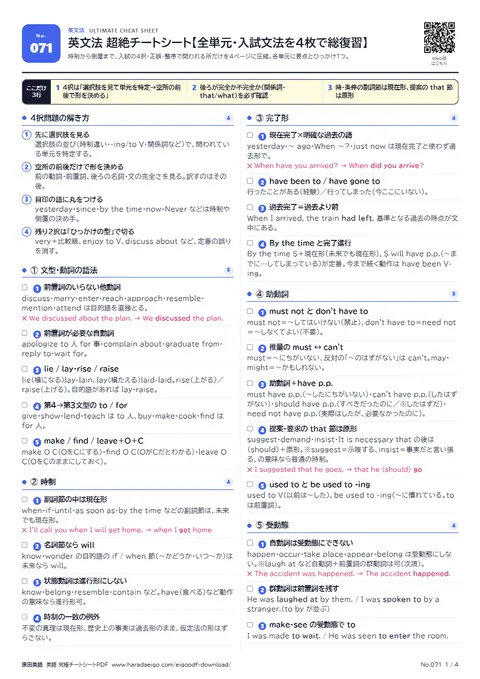
まずはこの3つ
- 4択は「選択肢を見て単元を特定→空所の前後で形を決める」
- 後ろが完全か不完全か(関係詞・that/what)を必ず確認
- 時・条件の副詞節は現在形、提案の that 節は原形
4択問題の解き方4
- 1先に選択肢を見る選択肢の並び(時制違い・-ing/to V・関係詞など)で、問われている単元を特定する。
- 2空所の前後だけで形を決める前の動詞・前置詞、後ろの名詞・文の完全さを見る。訳すのはその後。
- 3目印の語に丸をつけるyesterday・since・by the time・now・Never などは時制や倒置の決め手。
- 4残り2択は「ひっかけの型」で切るvery+比較級、enjoy to V、discuss about など、定番の誤りを消す。
1文型・動詞の語法5
- 1前置詞のいらない他動詞discuss・marry・enter・reach・approach・resemble・mention・attend は目的語を直接とる。✕We discussed about the plan. → We discussed the plan.
- 2前置詞が必要な自動詞apologize to 人 for 事・complain about・graduate from・reply to・wait for。
- 3lie / lay・rise / raiselie(横になる)lay-lain、lay(横たえる)laid-laid。rise(上がる)/raise(上げる)。目的語があれば lay・raise。
- 4第4→第3文型の to / forgive・show・lend・teach は to 人、buy・make・cook・find は for 人。
- 5make / find / leave+O+Cmake O C(OをCにする)・find O C(OがCだとわかる)・leave O C(OをCのままにしておく)。
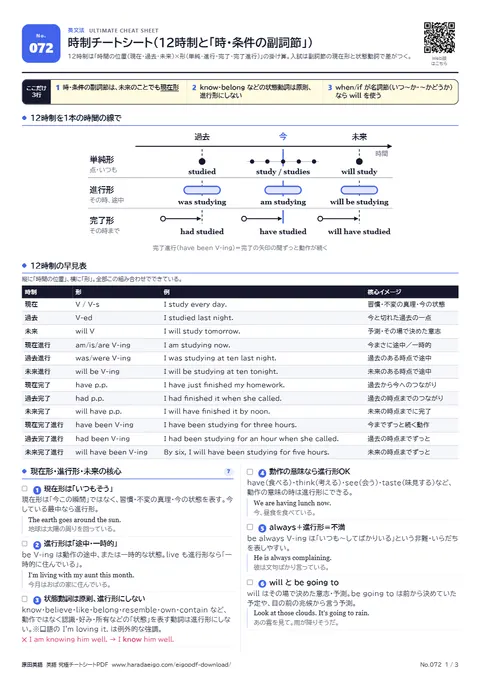
2時制4
- 1副詞節の中は現在形when・if・until・as soon as・by the time などの副詞節は、未来でも現在形。✕I'll call you when I will get home. → when I get home
- 2名詞節なら willknow・wonder の目的語の if / when 節(〜かどうか・いつ〜か)は未来なら will。
- 3状態動詞は進行形にしないknow・belong・resemble・contain など。have(食べる)など動作の意味なら進行形可。
- 4時制の一致の例外不変の真理は現在形、歴史上の事実は過去形のまま、仮定法の形はずらさない。
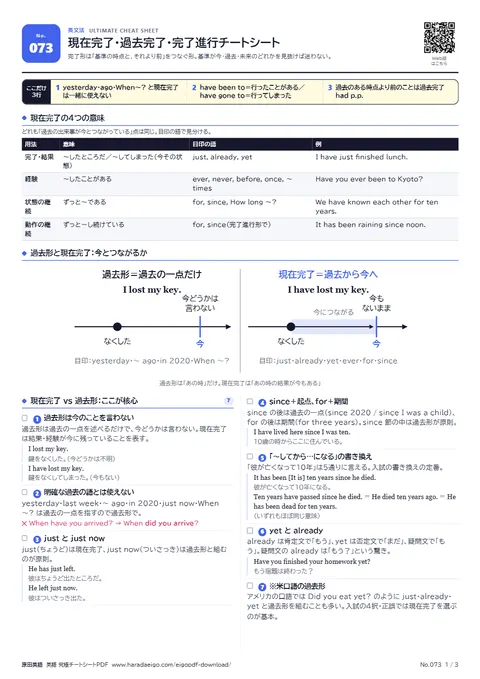
3完了形4
- 1現在完了×明確な過去の語yesterday・〜 ago・When 〜?・just now は現在完了と使わず過去形で。✕When have you arrived? → When did you arrive?
- 2have been to / have gone to行ったことがある(経験)/行ってしまった(今ここにいない)。
- 3過去完了=過去より前When I arrived, the train had left. 基準となる過去の時点が文中にある。
- 4By the time と完了進行By the time S+現在形(未来でも現在形), S will have p.p.(〜までに…してしまっている)が定番。今まで続く動作は have been V-ing。
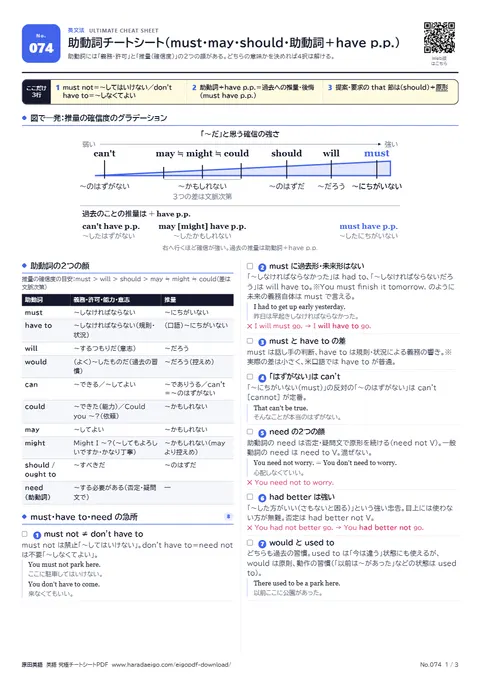
4助動詞5
- 1must not と don't have tomust not=〜してはいけない(禁止)、don't have to=need not=〜しなくてよい(不要)。
- 2推量の must ↔ can'tmust=〜にちがいない、反対の「〜のはずがない」は can't。may・might=〜かもしれない。
- 3助動詞+have p.p.must have p.p.(〜したにちがいない)・can't have p.p.(したはずがない)・should have p.p.(すべきだったのに/※したはずだ)・need not have p.p.(実際はしたが、必要なかったのに)。
- 4提案・要求の that 節は原形suggest・demand・insist・It is necessary that の後は(should)+原形。※suggest=示唆する、insist=事実だと言い張る、の意味なら普通の時制。✕I suggested that he goes. → that he (should) go
- 5used to と be used to -ingused to V(以前は〜した)、be used to -ing(〜に慣れている。to は前置詞)。
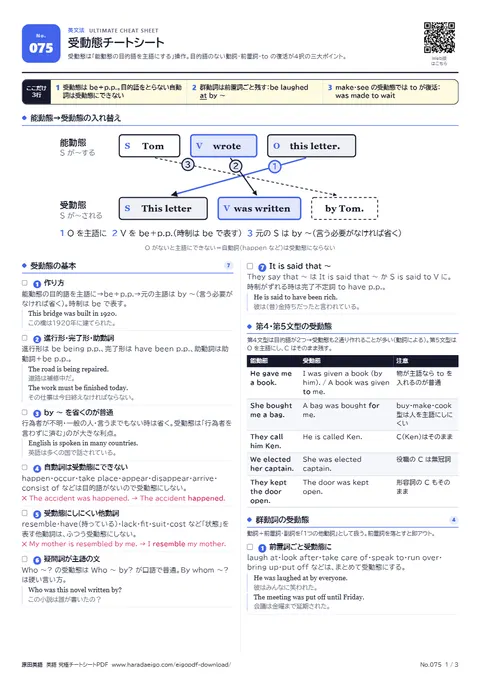
5受動態4
- 1自動詞は受動態にできないhappen・occur・take place・appear・belong は受動態にしない。※laugh at など自動詞+前置詞の群動詞は可(次項)。✕The accident was happened. → The accident happened.
- 2群動詞は前置詞を残すHe was laughed at by them. / I was spoken to by a stranger.(to by が並ぶ)
- 3make・see の受動態で toI was made to wait. / He was seen to enter the room.
- 4by 以外の前置詞be known to(人)・for(理由)・as(資格)、be made of(材料)・from(原料)、be covered with。
6不定詞5
- 1for 人 と of 人It is 形容詞 for 人 to V。kind・careless など人の性質を表す形容詞なら of 人。
- 2完了不定詞述語より前のことは to have p.p.。He seems to have been ill. = It seems that he was ill.
- 3O+原形 と O+to V使役 make・let・have と知覚 see・hear は O+原形(知覚は O+-ing も可)。get・want・tell・ask は O+to V。✕I made him to go. → I made him go.
- 4too 〜 to / enough totoo heavy (for me) to carry(✕ carry it)。old enough to drive(✕ enough old)。
- 5be to 不定詞予定・義務・可能・運命・意図の5つ。if 節の中なら「〜するつもりなら・〜したいなら」(意図)。
7動名詞4
- 1-ing だけをとる動詞mind・enjoy・give up・avoid・finish・escape・practice・put off・stop・suggest・consider・deny・admit・miss。※stop to V は「立ち止まって[手を止めて]〜する」(to は目的)。
- 2to V だけをとる動詞want・hope・decide・plan・promise・refuse・manage・afford・pretend(これから系)。
- 3意味が変わる動詞remember・forget・regret+-ing=したこと、+to V=これからすること。try -ing=試しに〜する、try to V=〜しようとする。
- 4to+-ing の熟語look forward to・be used to・object to・when it comes to・What do you say to+-ing。✕I'm looking forward to see you. → to seeing you
8分詞・分詞構文5
- 1-ing か p.p. か名詞が「する」側→-ing、「される」側→p.p.(a broken window)。SVOC も O との関係で決める(I had my hair cut)。
- 2感情動詞感情を引き起こす側→-ing(boring)、感じている側→-ed(bored)。人でも「退屈な人」なら boring。✕I was boring in class.(退屈した)→ I was bored.
- 3分詞構文の形接続詞と主語を消して -ing。主節より前は Having p.p.、受け身は(Being)p.p.:Seen from the sky, 〜。
- 4主語が違えば残すIt being fine, 〜/There being no bus, 〜(独立分詞構文)。主語がずれた分詞構文は誤り。
- 5with+O+分詞with his eyes closed(目を閉じて)・with the engine running(エンジンをかけたまま)。
9関係詞5
- 1完全か不完全か後ろが不完全(名詞が欠ける)→関係代名詞、完全→関係副詞か前置詞+which。the town (which) I visited / the town where I was born。
- 2what=the thing(s) which先行詞を含むので、先行詞の後には置けない。✕the book what I wanted → the book which [that] I wanted
- 3that が使えない所カンマの後(非制限用法)と前置詞の直後。非制限の which は前の文全体も指せる。
- 4挿入の I think は外すthe man who (I think) is honest → who は is の主語なので主格。
- 5複合関係詞whoever=anyone who(名詞節)/no matter who(譲歩)、however+形容詞+S V=どんなに〜しても。格は節の中で決まる(give it to whoever wants it)。
10仮定法5
- 1今の反対・過去の反対If S 過去形(be は were), S would+原形。If S had p.p., S would have p.p.。✕If I would have known, 〜 → If I had known, 〜
- 2混合型If S had p.p.(あの時), S would+原形+now(今)。now・today が目印。
- 3if の省略→倒置Were I you, 〜/Had I known, 〜/Should you need help, 〜。
- 4I wish・as if・It's timeI wish I could 〜/as if he knew 〜/It's time you went to bed.(過去形)
- 5Without・But for・otherwise=If it were not for(今)/If it had not been for(過去)。otherwise=そうでなかったら。
11比較6
- 1比較級の強調much・far・even・still・a lot。very は比較級に使わない。✕very better → much better
- 2比べる物をそろえるThe climate of Japan is milder than that of England.(複数なら those of)
- 3the 比較級, the 比較級形容詞+名詞はセットで前へ:The more money you have, the more you want.
- 4no と not の慣用no more than=たった、no less than=〜も、not more than=せいぜい、not less than=少なくとも。
- 5クジラ構文A is no more B than C is D=AがBでないのはCがDでないのと同じ(than 以下には当然成り立たない例を置く)。
- 6最上級相当・to をとる比較than any other+単数/No other+単数 〜 比較級。superior・senior・prefer A to B は than でなく to(※prefer to V なら rather than)。
12否定4
- 1部分否定not all・not every・not always・not necessarily=全部[いつも・必ずしも]〜とは限らない。
- 2準否定語hardly・scarcely(ほとんど〜ない)、seldom・rarely(めったに〜ない)、few・little。not と重ねない。✕I can't hardly believe it. → I can hardly believe it.
- 3否定語のない否定anything but・far from(決して〜ない)、the last 〜 to V(最も〜しそうにない)、have yet to V(まだ〜していない)。
- 4二重否定never 〜 without -ing=〜すると必ず…する。nothing but=〜だけ(only)。
13倒置・強調・省略4
- 1否定語が文頭→倒置Never have I seen 〜/Little did I dream 〜/Not until 〜 did I realize 〜(主節を倒置)。✕Never I have seen it. → Never have I seen it.
- 2So / Neither+助動詞+S肯定に So do I、否定に Neither do I。場所の句が文頭なら V+S(Here comes the bus.)。※代名詞主語は Here it comes.。
- 3強調構文の見分け方It is と that を外して文が完全なら強調構文、そうでなければ形式主語。
- 4S+be の省略When (I was) young, 〜/Though (he was) tired, 〜。if any・if possible も同じ仕組み。
14その他の単元:1行チェック
接続詞・前置詞・名詞・代名詞・形容詞・一致・疑問文で狙われる所。
| ポイント | 正しい形・意味 |
|---|---|
| 前置詞か接続詞か | during / because of+名詞、while / because+S V |
| by と until | by=〜までに(期限)、until=〜までずっと(継続) |
| for と during | for+期間の長さ(for a week)、during+特定の期間(during the vacation) |
| in と after | in an hour=(今から)1時間後に、after=(ある時点の)後に |
| whether と if | 主語・前置詞の後・or not の直前は whether(if は不可) |
| 不可算名詞 | information・advice・furniture・news・baggage は a・-s なし(a piece of 〜) |
| another / the other | 残りが1つ→the other、ほかの1つ→another、残り全部→the others |
| one と it | 同じ種類の別の物→one、まさにその物→it |
| by+無冠詞 | by bus・by train・by email(✕ by a bus) |
| -ly で意味が変わる | hard(熱心に)/ hardly(ほとんど〜ない)、late / lately(最近)、near / nearly(ほぼ) |
| 叙述用法だけの形容詞 | asleep・afraid・alike・alive は名詞の前に置かない(a sleeping baby) |
| ago と before | ago=今から〜前(過去形)、before=(過去の)その時から〜前(過去完了が多い) |
| 主語と動詞の一致 | A as well as B→A に一致、either A or B / not only A but also B→B に一致 |
| the number of / a number of | 〜の数(単数扱い)/多くの〜(複数扱い) |
| 間接疑問の語順 | Do you know where he lives?(S V の順)/What do you think he wants? |
| 付加疑問 | Let's 〜, shall we?/命令文, will you?/I'm 〜, aren't I? |
正誤問題で狙われる小さなミス8
⑭の単元から。1語の違いで誤文になるものばかり。
- ✕I need some informations.○I need some information.information は不可算名詞
- ✕I have to return this book until Monday.○I have to return this book by Monday.期限(〜までに)は by
- ✕I met him during I was in London.○I met him while I was in London.後ろが S V→接続詞 while
- ✕The number of students are increasing.○The number of students is increasing.the number(数)が主語→単数
- ✕Every student have a tablet.○Every student has a tablet.every+単数名詞→単数扱い
- ✕Do you know where does he live?○Do you know where he lives?間接疑問は S V の語順
- ✕I go to school by a bus.○I go to school by bus.手段の by+無冠詞
- ✕Look at that asleep baby.○Look at that sleeping baby.asleep は名詞の前に置かない
最後に差がつく考え方
文法問題の多くは「形の相性」で解ける。to=これから(未実現)、-ing=行為そのもの・現実(あくまで傾向で、最後は語法で確認)、過去形=距離(時間・現実・相手からの距離)、完了形=基準時までのつながり。この4つの軸を持つと、丸暗記だった項目の多くが理由つきで整理できる。
総復習テスト
- 1I'll wait here until you back.正解は come。時の副詞節→現在形
- 2My uncle in Canada for ten years. He still lives there.正解は has lived。今まで続く→現在完了
- 3You have seen him yesterday. He was in Paris.正解は can't。〜したはずがない
- 4The boy was made his room.正解は to clean。make の受動態→to V
- 5We enjoyed in the river.正解は swimming。enjoy+-ing
- 6from the hill, the town looks beautiful.正解は Seen。町は「見られる」側
- 7This is the museum I visited last week.正解は which。visit の目的語が欠ける
- 8If I harder, I would have passed the test.正解は had studied。過去の反対→had p.p.
- 9This movie is more exciting than that one.正解は much。比較級の強調
- 10I can hear you. Please speak louder.正解は hardly。ほとんど〜ない
- 11Little that she would become a famous writer.正解は did I dream。否定語文頭→倒置
- 12I have two brothers. One lives in Osaka, and lives in Kobe.正解は the other。2人のうち残りの1人
- 13Please finish the report Friday.正解は by。期限→by
- 14he will come or not is not important.正解は Whether。主語になる「〜かどうか」は whether
- 15A number of students absent today.正解は are。a number of=多くの→複数
- 16整序:彼女が何を考えているか知っていますか。Do you know (she / what / thinking / is)?
英文法 全単元まとめを一覧にまとめ、A4 4枚で印刷できる無料PDFにしました。Web版は赤シート・覚えたチェック・カード・4択テストつき。