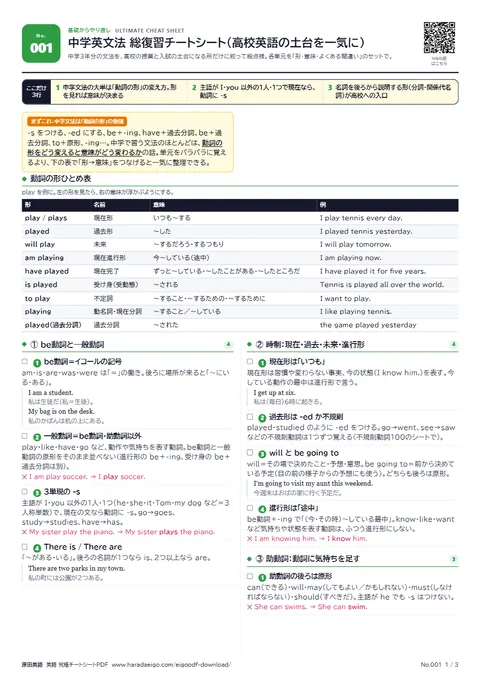
まずはこの3つ
- 中学文法の大半は「動詞の形」の変え方。形を見れば意味が決まる
- 主語が I・you 以外の1人・1つで現在なら、動詞に -s
- 名詞を後ろから説明する形(分詞・関係代名詞)が高校への入口
まずこれ:中学文法は「動詞の形」の勉強
-s をつける、-ed にする、be+-ing、have+過去分詞、be+過去分詞、to+原形、-ing…。中学で習う文法のほとんどは、動詞の形をどう変えると意味がどう変わるかの話。単元をバラバラに覚えるより、下の表で「形→意味」をつなげると一気に整理できる。
動詞の形ひとめ表
play を例に。左の形を見たら、右の意味が浮かぶようにする。
| 形 | 名前 | 意味 | 例 |
|---|---|---|---|
| play / plays | 現在形 | いつも〜する | I play tennis every day. |
| played | 過去形 | 〜した | I played tennis yesterday. |
| will play | 未来 | 〜するだろう・するつもり | I will play tomorrow. |
| am playing | 現在進行形 | 今〜している(途中) | I am playing now. |
| have played | 現在完了 | ずっと〜している・〜したことがある・〜したところだ | I have played it for five years. |
| is played | 受け身(受動態) | 〜される | Tennis is played all over the world. |
| to play | 不定詞 | 〜すること・〜するための・〜するために | I want to play. |
| playing | 動名詞・現在分詞 | 〜すること/〜している | I like playing tennis. |
| played(過去分詞) | 過去分詞 | 〜された | the game played yesterday |
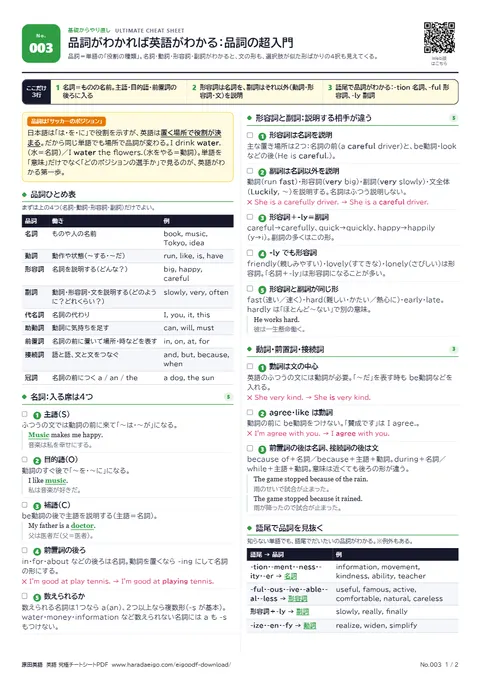
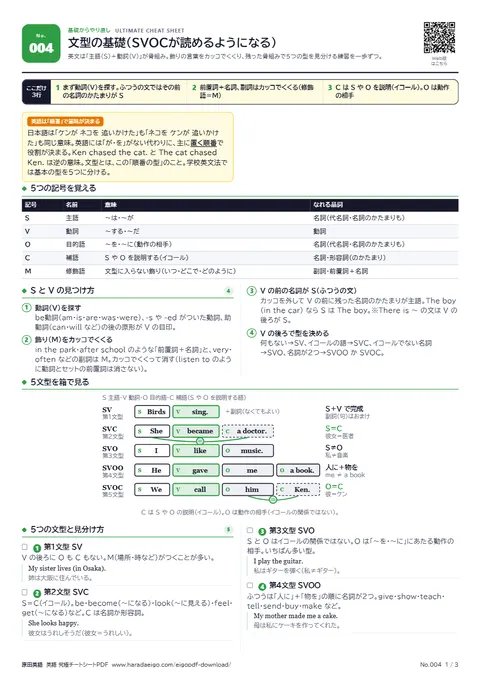
1be動詞と一般動詞4
- 1be動詞=イコールの記号am・is・are・was・were は「=」の働き。後ろに場所が来ると「〜にいる・ある」。I am a student.私は生徒だ(私=生徒)。My bag is on the desk.私のかばんは机の上にある。
- 2一般動詞=be動詞・助動詞以外play・like・have・go など、動作や気持ちを表す動詞。be動詞と一般動詞の原形をそのまま並べない(進行形の be+-ing、受け身の be+過去分詞は別)。✕I am play soccer. → I play soccer.
- 33単現の -s主語が I・you 以外の1人・1つ(he・she・it・Tom・my dog など=3人称単数)で、現在の文なら動詞に -s。go→goes、study→studies、have→has。✕My sister play the piano. → My sister plays the piano.
- 4There is / There are「〜がある・いる」。後ろの名詞が1つなら is、2つ以上なら are。There are two parks in my town.私の町には公園が2つある。
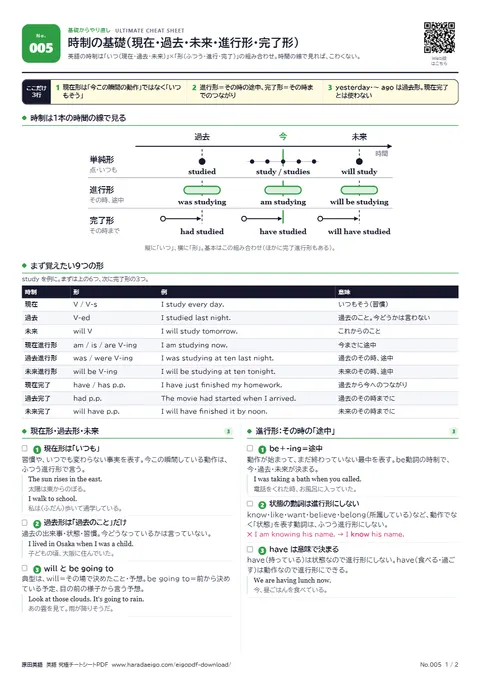
2時制:現在・過去・未来・進行形4
- 1現在形は「いつも」現在形は習慣や変わらない事実、今の状態(I know him.)を表す。今している動作の最中は進行形で言う。I get up at six.私は(毎日)6時に起きる。
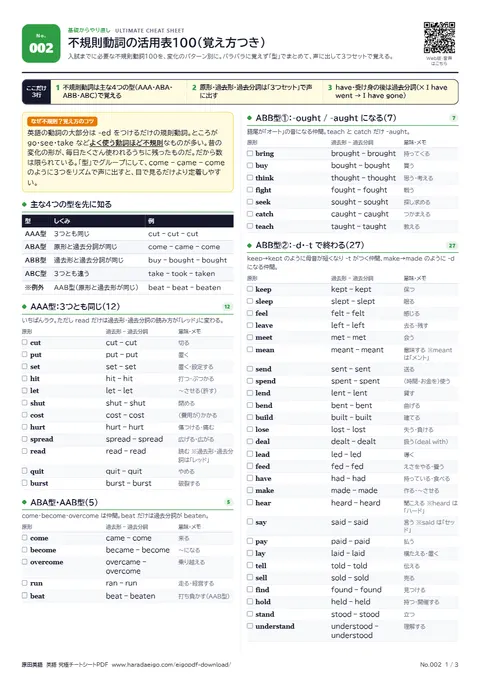
- 2過去形は -ed か不規則played・studied のように -ed をつける。go→went、see→saw などの不規則動詞は1つずつ覚える(不規則動詞100のシートで)。
- 3will と be going towill=その場で決めたこと・予想・意思。be going to=前から決めている予定(目の前の様子からの予想にも使う)。どちらも後ろは原形。I'm going to visit my aunt this weekend.今週末はおばの家に行く予定だ。
- 4進行形は「途中」be動詞+-ing で「(今・その時)〜している最中」。know・like・want など気持ちや状態を表す動詞は、ふつう進行形にしない。✕I am knowing him. → I know him.
3助動詞:動詞に気持ちを足す3
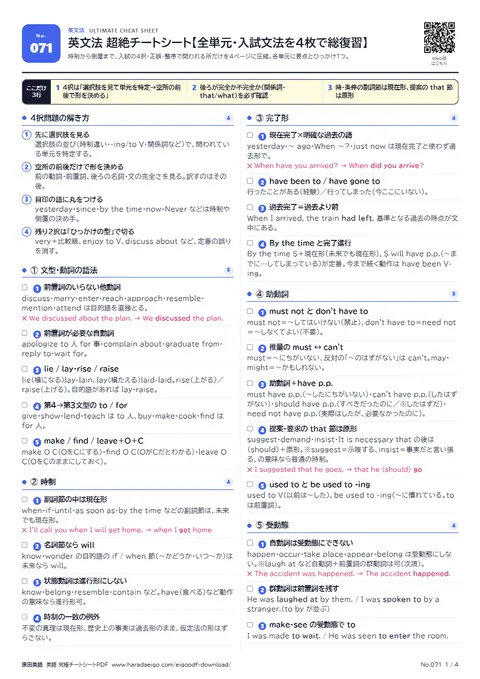
- 1助動詞の後ろは原形can(できる)・will・may(してもよい/かもしれない)・must(しなければならない)・should(すべきだ)。主語が he でも -s はつけない。✕She can swims. → She can swim.
- 2must not と don't have tomust not=〜してはいけない(禁止)。don't have to=〜しなくてよい(不要)。意味がまったく違う。You don't have to come early.早く来なくてもいいよ。
- 3会話の決まった形Can I 〜?(〜してもいい?)・Can you 〜?(〜してくれる?)・Shall I 〜?(〜しましょうか)・Shall we 〜?(〜しませんか)。
4比較4
- 1比較級=2つを比べる-er than か more 〜 than(長い単語)。tall→taller、big→bigger、easy→easier、interesting→more interesting。Ken is taller than his father.ケンはお父さんより背が高い。
- 2最上級=いちばんthe -est か the most 〜。範囲は in+場所・グループ(in my class)、of+複数・数(of the three / of all)。
- 3as 〜 as=同じくらいas 〜 as の間は元の形。not as 〜 as は「…ほど〜でない」。This box is not as heavy as that one.この箱はあの箱ほど重くない。
- 4形が変わる比較good / well→better→best、bad→worse→worst、many / much→more→most。
5受け身(受動態)2
- 1be動詞+過去分詞=される「する側」ではなく「される側」を主語にする形。時制は be動詞で表す(is・was・will be+過去分詞)。English is spoken in many countries.英語は多くの国で話されている。
- 2by は必要な時だけ「誰がしたか」を言いたい時だけ by 〜 をつける。わかりきっている時や不明な時は省く。This picture was painted by my grandfather.この絵は祖父が描いた。
6現在完了:過去から今へのつながり4
have / has+過去分詞。3つの意味は、いっしょに使う語で見分ける。
- 1継続(ずっと〜している)for(〜の間)・since(〜以来)・How long 〜? と使う。I have lived here for ten years.私はここに10年間住んでいる。
- 2経験(〜したことがある)ever・never・before・once・〜 times と使う。「行ったことがある」は have been to。Have you ever been to Kyoto?京都に行ったことはある?
- 3完了(〜したところだ)just・already・yet と使う。yet は疑問文で「もう」、否定文で「まだ」。I haven't finished my homework yet.まだ宿題が終わっていない。
- 4はっきりした過去の語とは使わないyesterday・last 〜・〜 ago・When 〜? は「過去の一点」なので過去形で言う。※since yesterday(昨日から)なら現在完了で可。✕I have visited Kyoto last year. → I visited Kyoto last year.
7不定詞と動名詞5
- 1to+原形の3つの意味名詞(〜すること)・形容詞(〜するための・〜すべき)・副詞(〜するために・〜して)。名詞を説明していれば形容詞、動作の目的なら副詞と、意味で見分ける。I want something to drink.何か飲み物(飲むための物)がほしい。I went to the park to play tennis.テニスをするために公園へ行った。
- 2動名詞 -ing=〜すること主語にもなり、前置詞の後にも置ける。前置詞の後ろに動詞を置くなら必ず -ing。Thank you for helping me.手伝ってくれてありがとう。
- 3-ing をとる動詞・to をとる動詞enjoy・finish・stop(〜するのをやめる)は -ing。want・hope・decide は to+原形。like・start はどちらも可。✕I enjoyed to talk with her. → I enjoyed talking with her.
- 4It is 〜 for 人 to V「(人が)…するのは〜だ」。It は仮の主語で、本当の主語は to 以下。It is easy for me to cook curry.私にとってカレーを作るのは簡単だ。
- 5疑問詞+to+原形how to 〜(〜のしかた)・what to 〜(何を〜すればよいか)・where to 〜(どこで/どこへ〜すればよいか)。
8名詞を後ろから説明する形4
日本語は説明が名詞の前、英語は2語以上のまとまった説明(分詞・関係代名詞など)が名詞の後ろに来ることが多い。高校の長文で一番効く単元。
- 1-ing(〜している)名詞が「する」側なら現在分詞 -ing。The boy running over there is my brother.向こうを走っている男の子は私の弟だ。
- 2過去分詞(〜された)名詞が「される」側なら過去分詞。1語だけならふつう名詞の前(a broken window)。This is a car made in Japan.これは日本で作られた車だ。
- 3関係代名詞 who・which・that人の説明は who、物・動物は which、どちらも that で可(※コンマの後ろでは that は使わない)。後ろに文の形で説明が続く。I have a friend who lives in Canada.私にはカナダに住んでいる友だちがいる。
- 4目的格は省略できる後ろが「主語+動詞」で続く which・that は省略できる。名詞の後に S V が直接続いたら、関係代名詞が隠れている。This is the book (that) I bought yesterday.これは私が昨日買った本だ。
9接続詞と間接疑問3
- 1when・if の中は現在形「〜したら」「もし〜なら」の when・if の中は、未来のことでも will を使わず現在形。✕If it will rain tomorrow, 〜 → If it rains tomorrow, 〜
- 2that=〜ということthink・know・hope などの後で「〜ということ」。この that はよく省略される。I think (that) she is right.彼女は正しいと思う。
- 3間接疑問は S V の順疑問文が文の中に入ると、普通の語順(主語→動詞)に戻る。✕Do you know where does he live? → Do you know where he lives?
ここでつまずく!中学文法のミス8
- ✕He don't like milk.○He doesn't like milk.主語が he(3人称単数)→doesn't
- ✕Did you went there?○Did you go there?did を使ったら動詞は原形
- ✕I'm interesting in music.○I'm interested in music.興味を「感じている」人→-ed
- ✕This is the most good idea.○This is the best idea.good の最上級は best
- ✕I have lived here since five years.○I have lived here for five years.期間の長さは for、始まった時点は since
- ✕The window was broke.○The window was broken.受け身は be動詞+過去分詞
- ✕I'm looking forward to see you.○I'm looking forward to seeing you.この to は前置詞→後ろは -ing
- ✕The man which lives next door is kind.○The man who lives next door is kind.人の説明は who(that も可)
総復習テスト
- 1My brother soccer every Sunday.正解は plays。3単現の -s
- 2I to the library yesterday.正解は went。yesterday→過去形
- 3Look! The baby .正解は is sleeping。今まさに途中→進行形
- 4You take pictures here. It's not allowed.正解は must not。禁止→must not
- 5Mt. Fuji is the mountain in Japan.正解は highest。the+最上級
- 6This temple about 500 years ago.正解は was built。建てられた→受け身の過去
- 7I have known her 2020.正解は since。始まった時点→since
- 8I haven't finished my lunch .正解は yet。否定文の「まだ」→yet
- 9We stopped when the teacher came in.正解は talking。話すのをやめた→stop -ing
- 10I don't know what .正解は to do。what to do=何をすべきか
- 11The main language in Brazil is Portuguese.正解は spoken。言語は「話される」側
- 12I'll call you when I home.正解は get。when の中は未来でも現在形
中学英文法の総復習を一覧にまとめ、A4 3枚で印刷できる無料PDFにしました。Web版は赤シート・覚えたチェック・カード・4択テストつき。