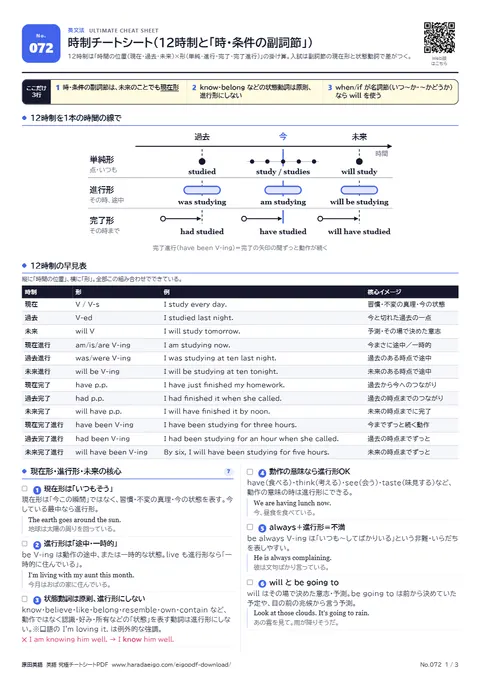
まずはこの3つ
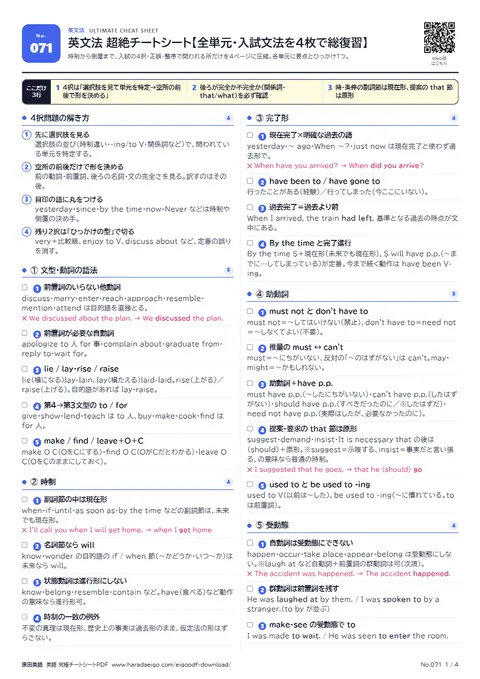
- 時・条件の副詞節は、未来のことでも現在形
- know・belong などの状態動詞は原則、進行形にしない
- when/if が名詞節(いつ〜か・〜かどうか)なら will を使う
12時制を1本の時間の線で
12時制の早見表
縦に「時間の位置」、横に「形」。全部この組み合わせでできている。
| 時制 | 形 | 例 | 核心イメージ |
|---|---|---|---|
| 現在 | V / V-s | I study every day. | 習慣・不変の真理・今の状態 |
| 過去 | V-ed | I studied last night. | 今と切れた過去の一点 |
| 未来 | will V | I will study tomorrow. | 予測・その場で決めた意志 |
| 現在進行 | am/is/are V-ing | I am studying now. | 今まさに途中/一時的 |
| 過去進行 | was/were V-ing | I was studying at ten last night. | 過去のある時点で途中 |
| 未来進行 | will be V-ing | I will be studying at ten tonight. | 未来のある時点で途中 |
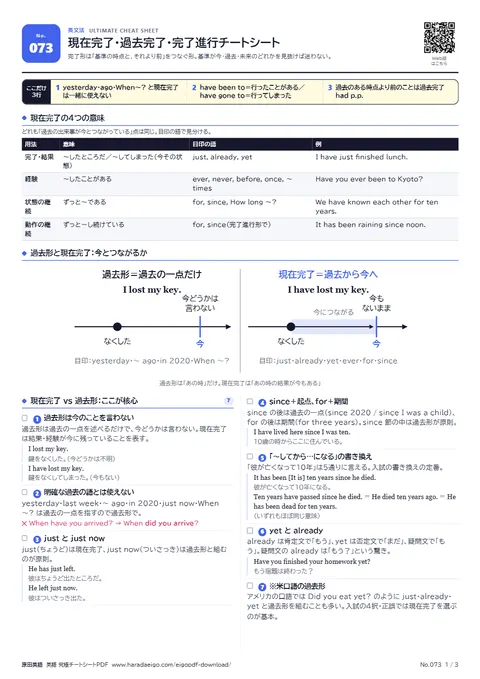
| 現在完了 | have p.p. | I have just finished my homework. | 過去から今へのつながり |
| 過去完了 | had p.p. | I had finished it when she called. | 過去の時点までのつながり |
| 未来完了 | will have p.p. | I will have finished it by noon. | 未来の時点までに完了 |
| 現在完了進行 | have been V-ing | I have been studying for three hours. | 今までずっと続く動作 |
| 過去完了進行 | had been V-ing | I had been studying for an hour when she called. | 過去の時点までずっと |
| 未来完了進行 | will have been V-ing | By six, I will have been studying for five hours. | 未来の時点までずっと |
現在形・進行形・未来の核心7
- 1現在形は「いつもそう」現在形は「今この瞬間」ではなく、習慣・不変の真理・今の状態を表す。今している最中なら進行形。The earth goes around the sun.地球は太陽の周りを回っている。
- 2進行形は「途中・一時的」be V-ing は動作の途中、または一時的な状態。live も進行形なら「一時的に住んでいる」。I'm living with my aunt this month.今月はおばの家に住んでいる。
- 3状態動詞は原則、進行形にしないknow・believe・like・belong・resemble・own・contain など、動作ではなく認識・好み・所有などの「状態」を表す動詞は進行形にしない。※口語の I'm loving it. は例外的な強調。✕I am knowing him well. → I know him well.
- 4動作の意味なら進行形OKhave(食べる)・think(考える)・see(会う)・taste(味見する)など、動作の意味の時は進行形にできる。We are having lunch now.今、昼食を食べている。
- 5always+進行形=不満be always V-ing は「いつも〜してばかりいる」という非難・いらだちを表しやすい。He is always complaining.彼は文句ばかり言っている。
- 6will と be going towill はその場で決めた意志・予測。be going to は前から決めていた予定や、目の前の兆候から言う予測。Look at those clouds. It's going to rain.あの雲を見て。雨が降りそうだ。
- 7確定した予定は進行形・現在形手配済みの近い予定は現在進行形。時刻表・公的な予定は現在形で未来を表す。I'm leaving for Osaka tomorrow.明日大阪へ発つ。The train leaves at 7:10.電車は7時10分に出る。
最重要!時・条件の副詞節6
4択・正誤で一番狙われる所。「副詞節か名詞節か」を先に判定する。
- 1副詞節の中は現在形when・before・after・until・as soon as・by the time・once・if・unless・in case などが作る副詞節では、未来のことも will を使わず現在形で表す(完了なら次項の現在完了)。I'll call you when I get home.家に着いたら電話する。If it rains tomorrow, the game will be canceled.明日雨なら試合は中止だ。
- 2未来完了の代わりは現在完了副詞節の中で「〜し終えたら」と完了を強調する時は、will have p.p. ではなく現在完了を使う。I'll lend you the book after I have read it.読み終えたらその本を貸すよ。
- 3名詞節なら will を使う「いつ〜するか」「〜するかどうか」が動詞の目的語(名詞節)なら、未来は普通に will で表す。I don't know when he will come back.彼がいつ戻るかわからない。I wonder if it will snow tomorrow.明日雪が降るかなあ。
- 4見分け方主節の「いつ・どんな条件なら」を表す→副詞節(現在形)。know・wonder・ask の「何を」にあたる目的語(いつ〜か・〜かどうか)→名詞節(will)。
- 5if 節の will は「意志」なら可If you will 〜 は「〜してくれるつもりなら」と相手の意志を表し、丁寧な依頼でも使う。入試の空所補充では、まず現在形を疑うのが原則。If you will wait here, I'll get the manager.ここで待っていてくれるなら、責任者を呼んでくる。
- 6関係副詞の節は will でよいthe day when 〜 のように名詞を修飾する節(形容詞節)は、未来なら will を使ってよい。I'm looking forward to the day when we will meet again.また会える日を楽しみにしている。
時制の一致と4つの例外
主節が過去なら、that 節も過去・過去完了へずらすのが原則。
| ケース | 例 |
|---|---|
| 原則:1つ過去へずらす | He said that he was tired. / He said that he had seen it. |
| 例外① 不変の真理・ことわざ | Our teacher told us that light travels faster than sound.(※ずらしても誤りではないが、入試は現在形が定番) |
| 例外② 歴史上の事実 | We learned that Columbus reached America in 1492.(過去形のままが原則。※前後関係を示す had reached も誤りではない) |
| 例外③ 仮定法 | She said that she wished she were taller.(仮定法の形はずらさない) |
| 例外④ 今も続く習慣・事実 | She said that she gets up at six every day.(※ずらして got も可) |
ここでハマる!時制のひっかけ8
- ✕I'll tell him the news when he will come.○I'll tell him the news when he comes.when 節=「来たら」の副詞節→現在形
- ✕I don't know if he comes tomorrow.○I don't know if he will come tomorrow.know の目的語=名詞節→未来は will
- ✕Wait here until I will come back.○Wait here until I come back.until も時の副詞節をつくる
- ✕This bag is belonging to me.○This bag belongs to me.belong(所属している)は状態動詞
- ✕I am resembling my mother.○I resemble my mother.resemble も状態動詞。進行形にしない
- ✕It is raining since this morning.○It has been raining since this morning.since=過去から今まで→完了進行形
- ✕By the time you arrive, we will leave.○By the time you arrive, we will have left.未来の時点までに完了→未来完了
- ✕He said that he will call me the next day.○He said that he would call me the next day.said に合わせて will→would(時制の一致)
なぜ副詞節では will を使わない?
when/if 節は「〜したら」という前提を置く場所。前提の中身は「起きるもの」として現在形で示し、未来であることは主節(will・命令文など)や文脈が表す、と考えると覚えやすい。日本語でも「明日雨が降ったら中止」と言い、「降るだろうなら」とは言わない。
確認テスト
- 1Let's go out as soon as the rain .正解は stops。as soon as の副詞節→現在形
- 2I wonder whether he the party next week.正解は will attend。wonder の目的語=名詞節
- 3This box ten apples.正解は contains。contain は状態動詞
- 4Look at the dark sky! It rain.正解は is going to。目の前の兆候からの予測
- 5She dinner when I called her, so she couldn't talk long.正解は was cooking。過去の一時点で途中→過去進行
- 6Our teacher told us that light faster than sound.正解は travels。不変の真理は現在形
- 7I'll lend you the novel after I it.正解は have finished。副詞節では未来完了→現在完了
- 8誤りを直せ:If it will be fine tomorrow, we'll go hiking.
時制を一覧にまとめ、A4 3枚で印刷できる無料PDFにしました。Web版は赤シート・覚えたチェック・カード・4択テストつき。