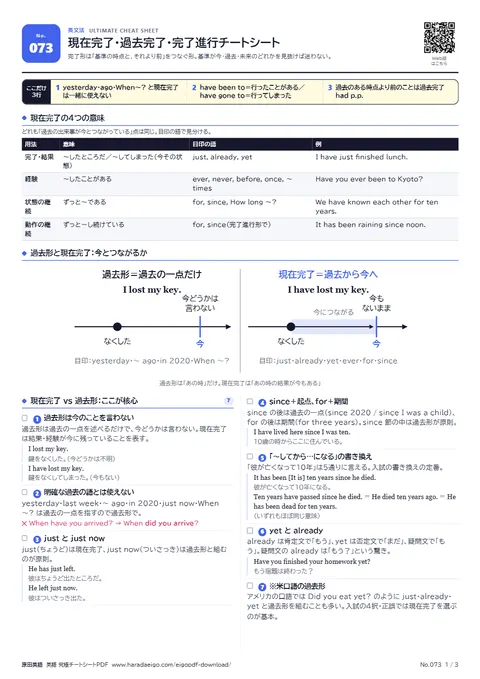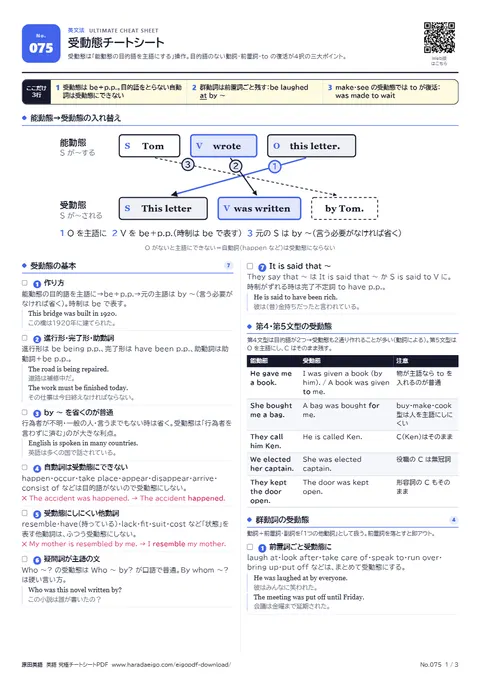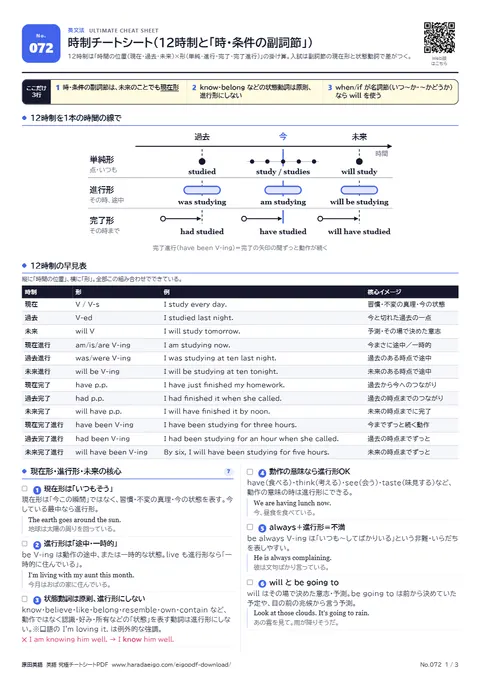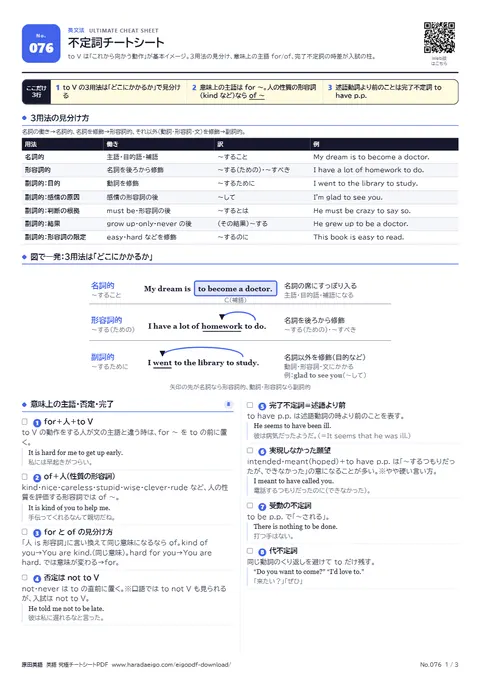
まずはこの3つ
- must not=〜してはいけない/don't have to=〜しなくてよい
- 助動詞+have p.p.=過去への推量・後悔(must have p.p.)
- 提案・要求の that 節は(should)+原形
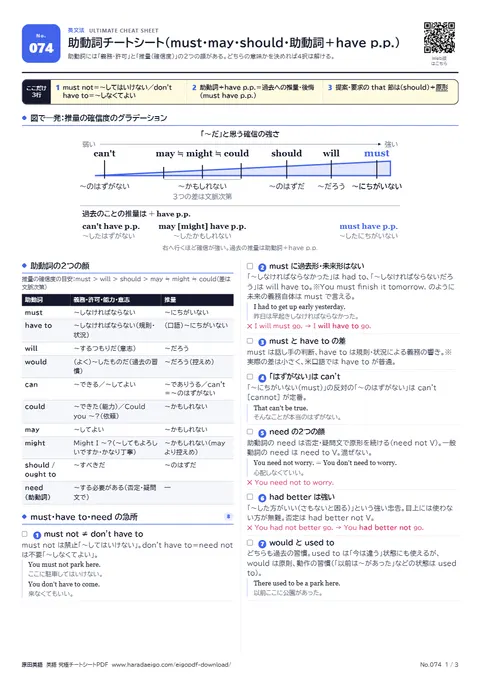
図で一発:推量の確信度のグラデーション
助動詞の2つの顔
推量の確信度の目安:must > will > should > may ≒ might ≒ could(差は文脈次第)
| 助動詞 | 義務・許可・能力・意志 | 推量 |
|---|---|---|
| must | 〜しなければならない | 〜にちがいない |
| have to | 〜しなければならない(規則・状況) | (口語)〜にちがいない |
| will | 〜するつもりだ(意志) | 〜だろう |
| would | (よく)〜したものだ(過去の習慣) | 〜だろう(控えめ) |
| can | 〜できる/〜してよい | 〜でありうる/can't=〜のはずがない |
| could | 〜できた(能力)/Could you 〜?(依頼) | 〜かもしれない |
| may | 〜してよい | 〜かもしれない |
| might | Might I 〜?(〜してもよろしいですか・かなり丁寧) | 〜かもしれない(may より控えめ) |
| should / ought to | 〜すべきだ | 〜のはずだ |
| need(助動詞) | 〜する必要がある(否定・疑問文で) | ― |
must・have to・need の急所8
- 1must not ≠ don't have tomust not は禁止「〜してはいけない」。don't have to=need not は不要「〜しなくてよい」。You must not park here.ここに駐車してはいけない。You don't have to come.来なくてもいい。
- 2must に過去形・未来形はない「〜しなければならなかった」は had to、「〜しなければならないだろう」は will have to。※You must finish it tomorrow. のように未来の義務自体は must で言える。I had to get up early yesterday.昨日は早起きしなければならなかった。✕I will must go. → I will have to go.
- 3must と have to の差must は話し手の判断、have to は規則・状況による義務の響き。※実際の差は小さく、米口語では have to が普通。
- 4「はずがない」は can't「〜にちがいない(must)」の反対の「〜のはずがない」は can't [cannot] が定番。That can't be true.そんなことが本当のはずがない。
- 5need の2つの顔助動詞の need は否定・疑問文で原形を続ける(need not V)。一般動詞の need は need to V。混ぜない。You need not worry. = You don't need to worry.心配しなくていい。✕You need not to worry.
- 6had better は強い「〜した方がいい(さもないと困る)」という強い忠告。目上には使わない方が無難。否定は had better not V。✕You had not better go. → You had better not go.
- 7would と used toどちらも過去の習慣。used to は「今は違う」状態にも使えるが、would は原則、動作の習慣(「以前は〜があった」などの状態は used to)。There used to be a park here.以前ここに公園があった。
- 8used to V と be used to -ingused to V は「以前は〜した」、be used to -ing は「〜に慣れている」(to は前置詞)。get used to -ing は「慣れる」。I'm used to getting up early.早起きには慣れている。
助動詞+have p.p.(過去への推量・後悔)
助動詞は「今の判断」、have p.p. が「過去のこと」を表す。
| 形 | 意味 | 例 |
|---|---|---|
| must have p.p. | 〜したにちがいない | He must have missed the bus. |
| can't have p.p. | 〜したはずがない | She can't have said that. |
| may [might] have p.p. | 〜したかもしれない | I may have left my umbrella on the train. |
| should [ought to] have p.p. | 〜すべきだったのに(しなかった)※〜した[している]はずだ、の推量も | You should have told me earlier. |
| shouldn't have p.p. | 〜すべきではなかったのに(した) | I shouldn't have eaten so much. |
| need not have p.p. | 〜する必要はなかったのに(した) | You needn't have hurried. |
| could have p.p. | 〜できたのに/〜したかもしれない | You could have won the game. |
| would have p.p. | 〜しただろう(仮定法) | I would have helped you. |
needn't have p.p. と didn't need to
You needn't have hurried. は「急いだが、その必要はなかった」(実際に急いだ)。You didn't need to hurry. は「急ぐ必要はなかった」(急いだかどうかは文脈次第)。※needn't have p.p. は主にイギリス英語で、硬めの言い方。
提案・要求の that 節は原形5
- 1(should)+原形suggest・propose・recommend・insist・demand・require・request・order・advise の後の that 節は(should)+原形。※米は原形、英は should が多い。The doctor suggested that he (should) stop smoking.医者は彼に禁煙を勧めた。
- 2主語が何でも原形3単現の -s も、時制の一致もつけない。否定は not+原形。She insisted that he not go alone.彼女は彼が1人で行かないよう強く求めた。
- 3It is 形容詞 that 〜necessary・essential・important・vital なども同じく(should)+原形をとる。It is important that everyone (should) be on time.全員が時間を守ることが大切だ。
- 4意外さの shouldIt is strange [surprising] that S should V で「〜するとは」という驚き・意外さを表す。It is strange that he should say so.彼がそんなことを言うとは不思議だ。
- 5「事実」なら普通の時制insist が「〜だと主張する」、suggest が「〜をほのめかす」という事実の意味なら、that 節は普通の時制。He insisted that he was innocent.彼は自分は無実だと言い張った。
入試頻出の助動詞の慣用表現
| 表現 | 意味 |
|---|---|
| may well V | 〜するのももっともだ/たぶん〜だろう |
| may [might] as well V | 〜した方がいい(ほかに手もないし) |
| might as well A as B | BするのはAするようなものだ |
| cannot help -ing = cannot but V | 〜せずにはいられない |
| cannot 〜 too … | いくら…に〜してもしすぎることはない |
| would rather A (than B) | (Bするより)むしろAしたい |
| would like to V | 〜したい(want to の丁寧形) |
| Would you mind -ing? | 〜していただけませんか |
ここでハマる!助動詞のひっかけ6
- ✕You mustn't bring lunch, but you can if you like.○You don't have to bring lunch, but you can if you like.持ってきてもよい=不要→don't have to
- ✕He must be at home yesterday.○He must have been at home yesterday.過去への推量→must have p.p.
- ✕I suggested that he goes to see a doctor.○I suggested that he (should) go to see a doctor.提案の that 節→原形
- ✕I will can swim soon.○I will be able to swim soon.助動詞は2つ重ねない
- ✕There would be a castle here.○There used to be a castle here.「以前は〜があった」(過去の状態)は used to
- ✕I'm used to get up early.○I'm used to getting up early.be used to の to は前置詞
確認テスト
- 1You hurry. We have plenty of time.正解は don't have to。時間は十分→急ぐ必要はない
- 2The ground is wet. It rained last night.正解は must have。地面がぬれている→降ったにちがいない
- 3I failed the test. I studied harder.正解は should have。すべきだったのに(後悔)
- 4The teacher demanded that the student the essay again.正解は write。要求の that 節→原形
- 5There a big tree in front of the station, but it was cut down.正解は used to be。過去の状態→used to
- 6You be too careful when you cross the street.正解は cannot。cannot 〜 too=いくら〜してもしすぎない
- 7Ken looks pale. He be sick.正解は must。顔色が悪い→病気にちがいない
- 8I couldn't laughing when I saw his face.正解は help。cannot help -ing=〜せずにいられない
- 9誤りを直せ:You had not better tell her.
助動詞を一覧にまとめ、A4 3枚で印刷できる無料PDFにしました。Web版は赤シート・覚えたチェック・カード・4択テストつき。